


Shower Strainers
In industrial and commercial fluid management, the integrity of drainage and wash-down systems depends heavily on the efficiency of primary filtration components. Shower strainers, while often associated with residential plumbing, serve a critical function in industrial environments such as pharmaceutical cleanrooms, food processing facilities, and chemical laboratories. These components act as the first line of defense, preventing solid debris from entering sensitive piping systems, protecting downstream pumps, and ensuring compliance with environmental discharge regulations.
For engineers and facility managers, selecting the appropriate industrial-grade shower strainer involves more than matching a drain diameter. It requires a deep understanding of material science, fluid dynamics, and the specific contaminants present in the waste stream. As a specialized manufacturer of Strainers & Baskets, Kaifil provides precision-engineered solutions designed to withstand the rigorous demands of industrial use.
The Role of Shower Strainers in Industrial Fluid Management
Industrial shower strainers are designed to handle significantly higher volumes of water and more aggressive chemical exposures than standard commercial versions. In sectors like food and beverage, high-pressure wash-down procedures are common. During these processes, large amounts of organic matter, packaging debris, and cleaning chemicals are flushed toward the drainage system.
Without a robust strainer, this debris can lead to several operational failures:
1. Clogging and Backflow: Accumulation of solids in the piping leads to drainage bottlenecks, which can cause flooding in sterile environments.
2. Pump Damage: If debris bypasses the initial filtration stage, it can reach centrifugal or positive displacement pumps, leading to impeller wear or catastrophic failure.
3. Environmental Non-Compliance: Many industrial permits require the removal of solids above a certain micron size before wastewater enters the treatment plant or municipal sewer.
By integrating high-quality shower strainers into the facility design, engineers ensure a reliable flow path and reduce the frequency of emergency maintenance interventions.
Material Engineering: Selecting the Right Stainless Steel Grade
Material selection is the most critical factor in determining the lifespan and performance of a shower strainer. In industrial settings, plastic or low-grade plated metals are insufficient due to their susceptibility to thermal shock, mechanical impact, and chemical corrosion. Kaifil focuses on high-performance stainless steel alloys to meet these challenges.
Stainless Steel 304
SS304 is the standard for most general-purpose industrial applications. It offers excellent resistance to atmospheric corrosion and is suitable for environments where water and mild cleaning agents are the primary fluids. It is widely used in commercial kitchens and general manufacturing wash stations.
Stainless Steel 316 and 316L
For environments involving high salinity, chlorides, or aggressive acids—such as chemical processing plants or marine facilities—SS316 is the preferred choice. The addition of molybdenum enhances its resistance to pitting and crevice corrosion. SS316L (low carbon) is often specified for applications requiring extensive welding to prevent carbide precipitation and maintain corrosion resistance at the joints.
Specialty Alloys
In extreme cases, such as highly acidic pharmaceutical manufacturing or high-temperature industrial processes, specialty alloys like Hastelloy or Duplex stainless steel may be required. These materials provide the necessary durability to prevent premature failure in environments where standard stainless steel would degrade rapidly.
Design Parameters for Optimal Flow and Retention
When specifying shower strainers for a project, engineers must balance two competing requirements: filtration efficiency (particle retention) and flow capacity (pressure drop).
Open Area Ratio
The "open area" refers to the total area of the holes or mesh openings relative to the total surface area of the strainer. A higher open area ratio allows for greater flow rates and a lower initial pressure drop. However, it may also reduce the structural integrity of the strainer if not properly engineered. Industrial strainers typically aim for an open area ratio of at least 2:1 or 3:1 relative to the cross-sectional area of the pipe to ensure that the strainer itself does not become a bottleneck.
Hole Pattern and Geometry
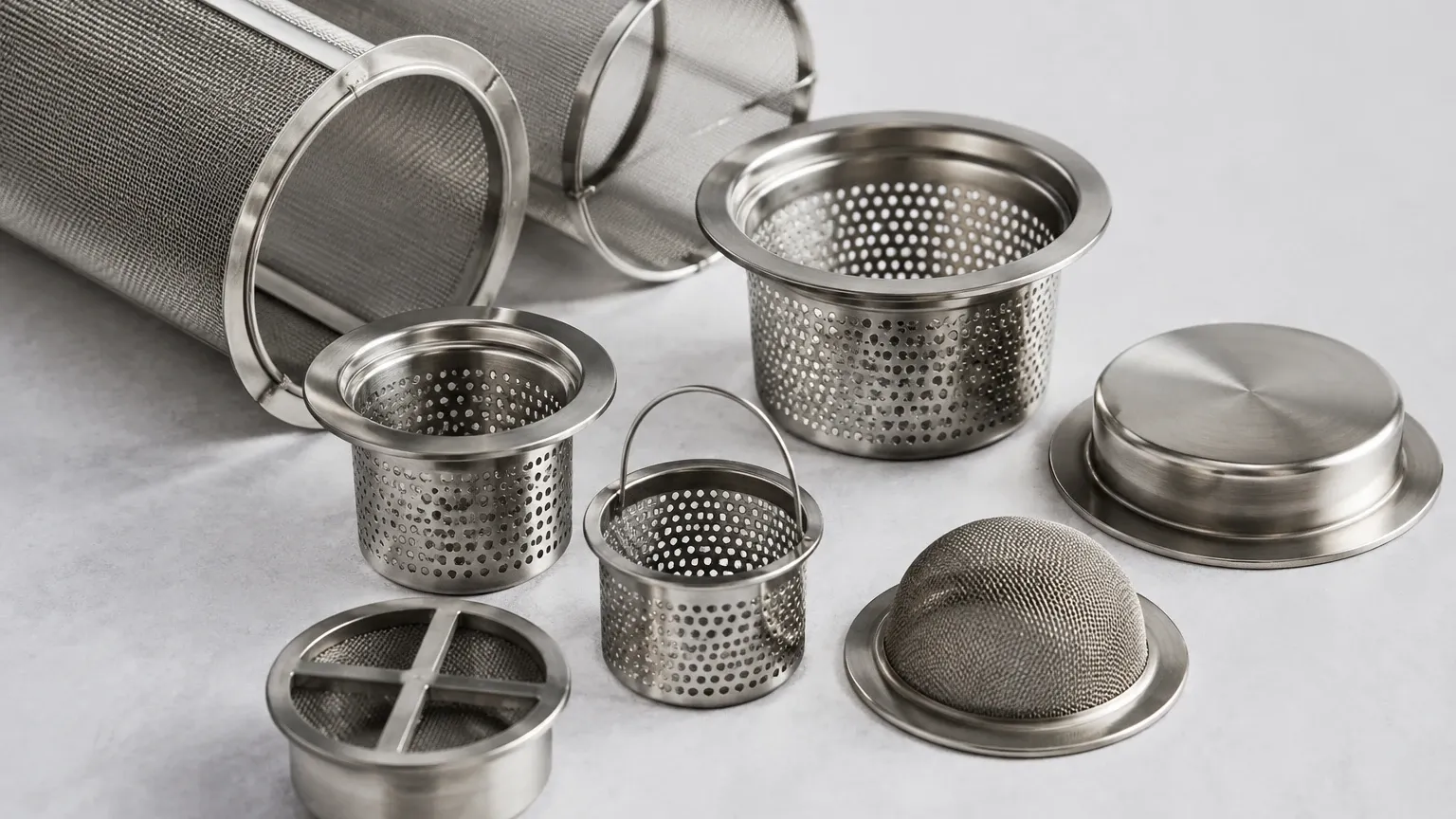
* Perforated Metal: These are ideal for heavy-duty applications where large debris is expected. Staggered hole patterns are generally preferred over straight rows as they provide more open area and better structural strength.
* Wire Mesh Liners: For applications requiring finer filtration, a stainless steel wire mesh can be sintered or welded to a perforated support basket. This allows for the capture of smaller particulates while maintaining the mechanical strength needed to withstand high-flow surges.
Profile Design
Shower strainers are available in flat, domed, or recessed profiles. Domed strainers are particularly effective in high-debris environments because they continue to allow fluid to pass through the sides even if the top surface becomes covered with solids. Flat strainers are preferred in areas with foot traffic or where a flush floor surface is required for safety.
Comparing Perforated and Mesh Filter Elements
Understanding the difference between perforation and mesh is essential for correct specification. Perforated elements are manufactured by punching holes into sheet metal. They are extremely durable and easy to clean, making them suitable for "rough" filtration where the goal is to catch large objects like hair, plastic scraps, or stones.
Wire mesh elements, conversely, consist of woven wires. These are categorized by "mesh count" (the number of openings per linear inch). Mesh strainers are used when the fluid contains fine particulates that could damage downstream equipment. In industrial shower applications, a hybrid approach is often used: a perforated outer shell for strength and a fine mesh inner layer for precision. This combination ensures the Strainers & Baskets remain functional under mechanical stress while providing the necessary filtration grade.
Customization Options for OEM and Industrial Retrofits
Many industrial facilities operate with legacy infrastructure that does not conform to modern standard pipe sizes. Furthermore, specific processes may require unique filtration characteristics that off-the-shelf products cannot provide. Customization is a core strength of Kaifil’s manufacturing process.
Dimensional Customization
We provide custom diameters, depths, and flange configurations to ensure a perfect fit in existing drain housings. This eliminates the need for costly plumbing modifications during facility upgrades.
Specialized Coatings and Finishes
In the food and pharmaceutical industries, surface finish is paramount. We offer electropolishing to achieve a smooth, mirror-like finish that minimizes bacterial adhesion and simplifies the sterilization process. For chemical applications, specialized coatings can be applied to further enhance corrosion resistance.
Integrated Features
Some industrial shower strainers require integrated handles for easy removal, locking mechanisms to prevent unauthorized tampering, or magnetic inserts to capture ferrous metal fragments before they enter the drainage system.
Maintenance Protocols and Total Cost of Ownership
The total cost of ownership (TCO) for industrial filtration components is determined by the initial purchase price, the frequency of replacement, and the labor costs associated with cleaning and maintenance. High-quality stainless steel shower strainers may have a higher upfront cost than plastic alternatives, but their longevity and reliability significantly reduce TCO over the life of the facility.
Cleaning Cycles
Maintenance schedules should be based on the volume of debris handled. In high-load environments, daily inspection and cleaning are recommended. Because stainless steel is resistant to high temperatures and harsh chemicals, these strainers can be cleaned using automated CIP (Clean-In-Place) systems or manual steam cleaning without risk of deformation.
Signs of Wear
Engineers should inspect strainers for:
* Mechanical Deformation: Often caused by heavy equipment driving over floor drains or extreme pressure surges.
* Pitting Corrosion: Small holes or dark spots that indicate the material is being attacked by chemicals.
* Bypass: Gaps between the strainer and the housing that allow unfiltered fluid to pass through.
Replacing a worn strainer early is a minor expense compared to the cost of clearing a blocked industrial sewer line or repairing a damaged high-pressure pump.
Engineering Support and Selection Advice
Selecting the right shower strainer requires a technical evaluation of the application's specific needs. At Kaifil, we assist engineering teams by providing detailed specifications and CAD support to ensure that every filtration component integrates seamlessly into the larger system. Whether you are designing a new facility or upgrading an existing wash-down station, our expertise in stainless steel fabrication ensures that your filtration needs are met with precision.
For more information on our full range of industrial filtration solutions, including custom designs and material specifications, we invite you to Review product options and application support. Our team is ready to help you optimize your fluid management systems for durability, efficiency, and long-term performance.
