


Strainer 1 1 2
In industrial fluid handling systems, the 1-1/2 inch (1.5") pipe size represents a critical threshold where flow volumes are significant enough to require robust protection for downstream equipment like pumps, meters, and spray nozzles, yet the systems remain compact enough for specialized, high-precision filtration. A strainer 1 1 2 is a mechanical device installed in a pipeline to remove unwanted solids from fluids via a perforated or mesh straining element.
For engineers and procurement teams, selecting the correct Strainers & Baskets involves more than just matching a pipe diameter. It requires a deep understanding of metallurgy, fluid dynamics, and the specific debris profile of the process media. This guide examines the technical specifications, engineering considerations, and application-specific requirements for 1.5-inch industrial strainers.
Understanding the 1-1/2 Inch Strainer Configuration
The designation "1 1 2" refers to the Nominal Pipe Size (NPS), which corresponds to an outside diameter of approximately 1.900 inches (48.3 mm). In the context of industrial filtration, this size is frequently utilized in chemical dosing lines, food processing bypass loops, and hydraulic return lines.
Connection Types
When specifying a strainer 1 1 2, the method of integration into the piping system is the first engineering decision. Common options include:
* Threaded (NPT/BSP): Common for low-pressure applications where ease of installation is a priority. These are typical in water treatment and light industrial settings.
* Flanged (ANSI/ASME): Preferred for high-pressure or high-temperature environments. Flanged connections provide a more secure, leak-proof seal and allow for easier removal of the entire unit for maintenance.
* Socket Weld: Used in systems where permanent, leak-free joints are required, such as in hazardous chemical processing or steam lines.
* Sanitary (Tri-Clamp): Essential for the food, beverage, and pharmaceutical industries, ensuring there are no crevices where bacteria can accumulate.
Engineering Considerations: Pressure Drop and Flow Rate
One of the most critical factors in selecting a strainer 1 1 2 is the "Clean Pressure Drop" ($ΔP$). Every strainer introduces a restriction to the flow. If the pressure drop is too high, it can lead to cavitation in pumps or insufficient flow to downstream processes.
The Open Area Ratio (OAR)
For a basket or Y-strainer, the Open Area Ratio is the relationship between the total open area of the strainer element and the internal cross-sectional area of the pipe. A well-engineered strainer 1 1 2 should ideally have an OAR of at least 4:1. This ensures that even as the basket begins to collect debris, there is sufficient bypass area to maintain flow without a significant spike in pressure.
Viscosity and Specific Gravity
The behavior of the fluid significantly impacts the performance of Strainers & Baskets. High-viscosity fluids (like oils or syrups) require larger perforation sizes or coarser meshes to prevent excessive resistance. Conversely, low-viscosity fluids allow for finer filtration but may require more frequent cleaning cycles if the particulate load is high.
Material Selection for Durability and Compatibility
Industrial environments demand materials that can withstand corrosive media and thermal cycling. Kaifil specializes in stainless steel solutions, which are the industry standard for high-performance filtration.
Stainless Steel 304 vs. 316
* Grade 304: Suitable for general-purpose applications, including water filtration and non-corrosive chemicals. It offers excellent strength and cost-effectiveness.
* Grade 316/316L: Contains molybdenum, providing superior resistance to chlorides and pitting. This is the mandatory choice for marine environments, pharmaceutical manufacturing, and acidic chemical processing.
Specialized Alloys
In extreme cases involving highly aggressive chemicals or high temperatures, exotic alloys like Hastelloy or Monel may be used for the internal baskets to prevent premature failure. The housing material must also be compatible with the process fluid to avoid galvanic corrosion.
Types of Strainers & Baskets for 1.5-Inch Lines
The internal geometry of the strainer dictates its capacity and maintenance requirements. For a 1-1/2 inch line, three primary designs dominate the market.
1. Y-Strainers
Named for their shape, Y-strainers are compact and primarily intended for applications where the amount of debris is relatively small. They are often used in steam lines or gas applications. Their main advantage is that they can be installed in either horizontal or vertical orientations (provided the "leg" points downward to collect debris).
2. Simplex Basket Strainers
A simplex basket strainer features a larger, vertical chamber that houses a removable basket. This design allows for a much higher dirt-holding capacity than a Y-strainer. Because the basket is accessed from the top, it is easier to clean, though the flow must be shut down during the cleaning process.
3. Duplex Basket Strainers
For critical processes that cannot be interrupted, a duplex strainer 1 1 2 consists of two separate strainer chambers connected by a diverter valve. When one basket becomes clogged, the flow is switched to the second chamber, allowing the first to be cleaned without stopping the system. This is common in fuel oil systems and continuous chemical reactors.
Filtration Media: Perforations and Mesh
The "heart" of the strainer is the internal element. Choosing the right media is a balance between protection and flow efficiency.
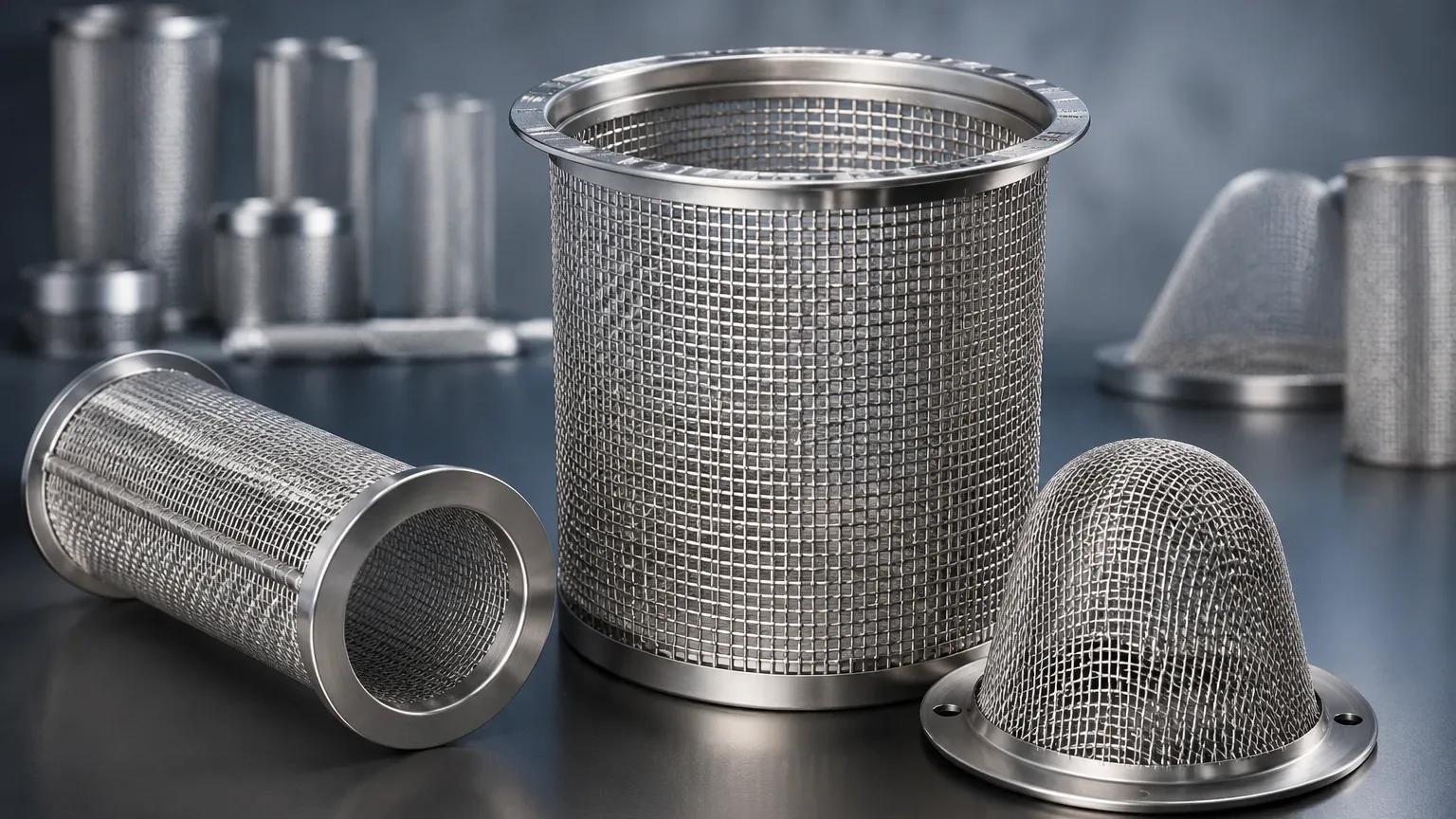
* Perforated Metal: These are heavy-duty screens with punched holes. They are typically used for "coarse" straining, removing large debris like scale, welding slag, or stones. Common hole sizes range from 1/32" to 1/4".
* Wire Mesh: For finer filtration, a stainless steel wire mesh is lined inside a perforated metal basket for structural support. Mesh sizes are defined by the number of openings per linear inch. A 100-mesh screen, for example, can capture particles as small as 150 microns.
* Magnetic Inserts: In systems where fine iron or steel particles (ferrous debris) are present, such as in hydraulic systems or gearboxes, magnetic inserts can be added to the basket to capture sub-micron metallic dust that might otherwise pass through the mesh.
Maintenance and Replacement Cycles
To ensure the longevity of a strainer 1 1 2, a proactive maintenance schedule is essential. Neglecting a clogged strainer can lead to basket collapse or "blow-by," where the pressure forces debris past the seals.
Differential Pressure Monitoring
Installing pressure gauges upstream and downstream of the strainer is the most effective way to monitor its condition. A common rule of thumb is to clean or replace the basket when the differential pressure reaches 5-10 psi over the clean reading. Many modern systems use differential pressure switches to trigger an alarm or automate the cleaning cycle.
Cleaning Procedures
When cleaning Strainers & Baskets, it is vital to inspect the gaskets and O-rings. Even the highest-quality stainless steel basket will fail to protect the system if the seals are compromised. Replacement baskets should be kept on-site to minimize downtime, especially in 24/7 manufacturing environments.
Application-Specific Requirements
Food and Beverage Industry
In these applications, the strainer 1 1 2 must meet strict hygienic standards. This includes polished internal surfaces (Ra < 0.8 µm) to prevent bacterial growth and the use of FDA-approved elastomers for seals. These strainers are often used to protect bottling lines from fruit pulp, seeds, or glass fragments.
Chemical Processing
Chemical compatibility is the primary concern. Engineers must verify that both the housing and the basket material can withstand the specific pH and temperature of the media. In these sectors, the 1.5-inch size is often used in pilot plants and specialty chemical batching.
Water Treatment and Irrigation
Here, the focus is on removing sand, silt, and organic matter. Because the particulate load can be high, basket strainers with high OARs are preferred to extend the time between cleanings.
How to Select the Right Strainer 1 1 2
When consulting with a manufacturer like Kaifil, providing the following data points will ensure an optimized filtration solution:
1. Fluid Properties: Name of the fluid, viscosity, specific gravity, and temperature.
2. Flow Parameters: Minimum, normal, and maximum flow rates (typically in GPM or m³/h).
3. Pressure Limits: Maximum operating pressure and design pressure.
4. Debris Profile: What is the nature of the solids being removed? What is the smallest particle size that must be captured?
5. Allowable Pressure Drop: What is the maximum $ΔP$ the system can tolerate when the strainer is clean?
6. Materials of Construction: Compatibility requirements for the housing, basket, and seals.
Total Cost of Ownership (TCO)
While the initial purchase price of a strainer 1 1 2 is a factor, the Total Cost of Ownership includes maintenance labor, replacement parts, and the cost of potential downtime. Investing in a high-quality stainless steel unit from a specialized manufacturer ensures that the component will survive years of service in demanding conditions. Custom-engineered baskets can also be designed to fit existing housings, allowing for performance upgrades without the need for extensive repiping.
By focusing on precision manufacturing and engineering expertise, Kaifil provides the reliable filtration components necessary to protect industrial infrastructure. Whether the requirement is for a standard Y-strainer or a custom-designed basket for a unique process, understanding the technical nuances of the 1-1/2 inch format is the first step toward system optimization.
For technical specifications and custom design support, engineers can Review product options and application support to find the ideal solution for their specific industrial requirements.
