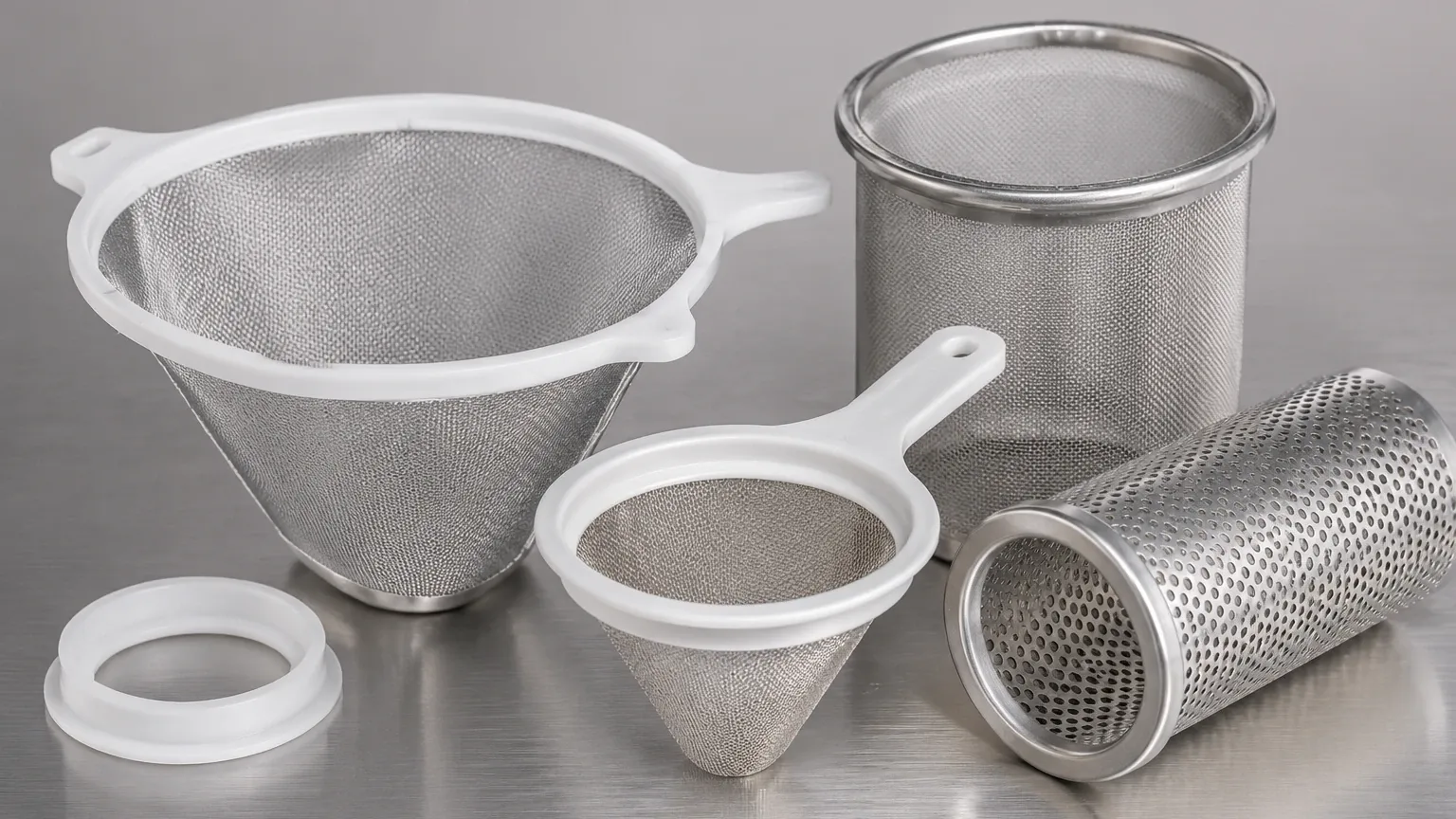
Zoro Paint Strainers
In the realm of industrial finishing and coating applications, the quality of the final surface is directly proportional to the purity of the liquid media. Whether in automotive assembly, aerospace manufacturing, or high-volume furniture production, contaminants such as dried paint skins, dust particles, and undissolved pigments can lead to significant rework costs and equipment downtime. Many procurement professionals and maintenance engineers frequently turn to distributors for zoro paint strainers to address these immediate needs. However, as production scales and technical requirements become more stringent, understanding the engineering nuances between basic disposable strainers and high-performance industrial filtration systems becomes critical for operational efficiency.
The Role of Paint Strainers in Industrial Finishing
Paint strainers serve as the primary line of defense for spray equipment and finished product quality. Their primary function is to remove oversized particles that could clog spray gun nozzles or create "seeds" and imperfections in a cured coating. When searching for zoro paint strainers, users typically encounter a variety of formats, ranging from simple paper cones with nylon mesh inserts to more robust plastic or metal inserts designed for gravity-fed or suction-fed systems.
From a technical perspective, the selection of a strainer is governed by the viscosity of the coating, the desired micron rating, and the volume of material being processed. In a B2B context, the choice is not merely about finding a filter that fits a bucket; it is about ensuring the filtration media can withstand the chemical properties of the solvents used and provide a consistent flow rate without premature blinding. For high-volume industrial lines, the transition from disposable options to permanent, cleanable Strainers & Baskets often marks a significant improvement in both waste reduction and filtration precision.
Technical Specifications: Mesh Count and Micron Ratings
When evaluating zoro paint strainers, the most critical specification is the mesh count or micron rating. Industrial coatings require different levels of filtration depending on their chemistry and application method:
1. Coarse Filtration (approx. 40-60 Mesh / 250-400 Microns): Generally used for heavy primers, latex paints, or high-build coatings where the goal is to remove large debris or skinning.
2. Medium Filtration (approx. 80-100 Mesh / 150-190 Microns): The standard for most industrial enamels and topcoats. This range balances flow rate with the removal of particles that could affect the spray pattern.
3. Fine Filtration (approx. 120-200 Mesh / 75-125 Microns): Reserved for high-gloss finishes, clear coats, and automotive-grade basecoats where even microscopic contaminants can cause visible defects.
Engineers must also consider the "open area" of the mesh. A higher open area percentage allows for faster flow and less pressure drop across the strainer, which is vital for maintaining consistent atomization in pneumatic spray systems. While many zoro paint strainers offer standard ratings, custom-manufactured stainless steel baskets allow for precise control over wire diameter and weave patterns, optimizing the balance between strength and throughput.
Comparing Disposable vs. Permanent Industrial Strainers
For many small-scale or intermittent operations, disposable zoro paint strainers are a logical choice due to their low upfront cost and ease of disposal. However, in a continuous manufacturing environment, the limitations of disposable media become apparent. Paper and nylon strainers can collapse under the weight of heavy coatings, and the adhesive used to bond the mesh to the paper frame can sometimes react with aggressive solvents, leading to secondary contamination.
In contrast, industrial-grade stainless steel Strainers & Baskets provide several engineering advantages:
* Structural Integrity: Stainless steel wire mesh, often reinforced with perforated metal backing, can handle high-viscosity fluids and significant pressure differentials without deforming.
* Chemical Compatibility: Unlike the materials found in some basic zoro paint strainers, 304 or 316L stainless steel is inert to almost all industrial solvents, thinners, and resins.
* Sustainability and Cost-Per-Use: While the initial investment is higher, a reusable stainless steel basket can be cleaned and returned to service thousands of times, significantly reducing the total cost of ownership (TCO) and the environmental footprint of the facility.
Material Compatibility and Engineering Considerations
The chemistry of the coating dictates the material requirements of the filtration system. Water-borne coatings, which are increasingly common due to VOC regulations, require corrosion-resistant materials. While basic zoro paint strainers often use nylon mesh, which is generally compatible with water-borne systems, the housings and support structures in a pressurized system must be made of high-grade stainless steel to prevent rust and contamination.
For solvent-based coatings involving MEK (Methyl Ethyl Ketone), toluene, or xylene, the durability of the strainer material is even more critical. Engineers must ensure that the gaskets and seals used in the strainer housing are made of compatible elastomers like Viton or PTFE. When upgrading from simple gravity strainers to an in-line basket strainer system, calculating the expected pressure drop ($ΔP$) is essential. If the mesh is too fine for the pump's capacity, the resulting cavitation can damage equipment and lead to inconsistent coating thickness.
Selection Criteria for High-Volume Paint Filtration
When moving beyond the scope of general-purpose zoro paint strainers, procurement teams should follow a structured selection process to ensure the filtration solution meets the specific needs of their production line:
* Flow Rate Requirements: Determine the maximum gallons per minute (GPM) the system must handle. The surface area of the strainer must be sufficient to prevent frequent clogging during a full shift.
* Solids Content: High-solids coatings require strainers with larger dirt-holding capacities. A basket-style strainer provides significantly more surface area than a flat or cone-shaped strainer, extending the time between cleaning cycles.
* Operating Pressure: In airless spray systems, pressures can exceed 3,000 PSI. In these cases, the strainer must be housed in a high-pressure vessel, and the internal basket must be engineered to withstand the mechanical stress of high-velocity fluid impact.
* Ease of Maintenance: In a B2B environment, time is money. Systems that feature quick-release lids or "swing bolt" closures allow operators to clean or replace the internal Strainers & Baskets in minutes, minimizing line downtime.
Optimization and Maintenance of Industrial Strainers
To maximize the lifespan of industrial filtration components, a rigorous maintenance schedule is required. Unlike disposable zoro paint strainers that are discarded after a single use, stainless steel components require proper cleaning protocols. Ultrasonic cleaning is often the most effective method for removing cured resins from fine wire mesh without damaging the delicate weave.
Furthermore, engineers should monitor the pressure differential across the strainer. Installing pressure gauges upstream and downstream of the filter housing provides real-time data on the state of the filter. A sudden increase in $ΔP$ indicates that the strainer is reaching its capacity, allowing for a proactive change-out rather than a reactive shutdown when the spray pattern begins to fail.
Customization also plays a role in optimization. For unique coatings or specialized equipment, standard off-the-shelf sizes found in catalogs for zoro paint strainers may not provide the optimal fit. Custom-designed baskets can be manufactured to specific dimensions, ensuring a perfect seal within the housing and preventing "bypass"—where unfiltered fluid leaks around the edges of the strainer.
Conclusion: Elevating Filtration Standards
While zoro paint strainers serve a vital role for general maintenance and small-batch processing, the demands of modern industrial manufacturing often require a more robust approach. By understanding the technical variables of mesh selection, material compatibility, and structural design, engineering teams can transition from temporary solutions to permanent, high-performance filtration systems.
Investing in precision-engineered Strainers & Baskets not only protects expensive spray equipment but also ensures a level of finish quality that meets the highest industry standards. As facilities look to optimize their processes, the move toward durable, cleanable, and technically superior filtration components remains a cornerstone of efficient industrial coating operations.