


Strainer 4×4
In the landscape of industrial fluid management, the "strainer 4×4" represents a critical component for ensuring the purity of process media and the protection of high-value downstream equipment. While the term may refer to a 4-inch nominal pipe size (NPS) strainer with a corresponding 4-inch basket depth, or a specific 4×4 mesh count in specialized filtration, its primary function remains the same: the mechanical removal of unwanted solids from liquid or gas streams. Selecting the appropriate Strainers & Baskets is a technical process that requires a balance of hydraulic efficiency, material science, and mechanical durability.
For engineers and procurement professionals, specifying a strainer 4×4 involves more than just matching pipe dimensions. It requires an evaluation of the total system environment, including flow velocity, pressure fluctuations, and the chemical nature of the fluid. A well-engineered strainer prevents debris from reaching pumps, valves, and heat exchangers, thereby reducing unplanned downtime and extending the service life of the entire system.
Understanding the Strainer 4×4 Configuration
The designation of a strainer 4×4 typically points to its physical footprint and capacity. In most industrial piping systems, a 4-inch strainer is designed to handle significant flow volumes, often found in main supply lines or large-scale processing loops. The "4×4" aspect often highlights a high-capacity basket design, where the filtration surface area is maximized to ensure that the ratio of the basket's open area to the pipe's cross-sectional area is optimized.
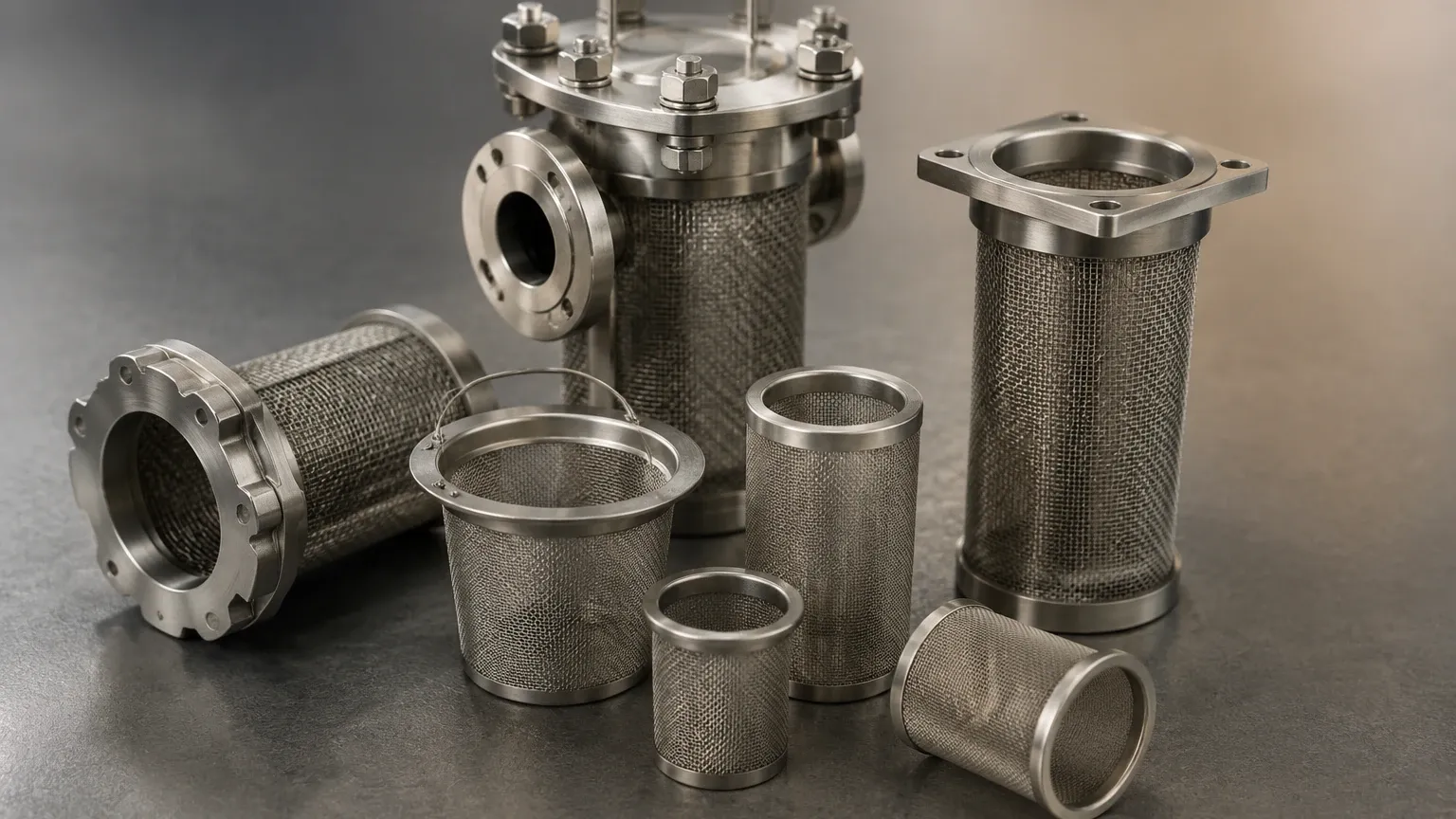
From a technical perspective, the geometry of the strainer 4×4 is designed to facilitate a smooth transition of fluid. Whether it is a simplex basket strainer or a Y-type configuration, the internal chamber must accommodate the strainer element without creating excessive turbulence. In a basket-style strainer 4×4, the vertical orientation of the basket allows for the collection of a large volume of solids before a cleaning cycle is required, making it ideal for systems with high particulate loading.
Metallurgical Selection and Corrosion Resistance
The longevity of a strainer 4×4 is fundamentally tied to its material composition. Because these components are often exposed to aggressive chemicals, high temperatures, and abrasive particles, selecting the correct alloy is paramount.
Stainless Steel Grades (304 vs. 316L)
Stainless steel is the preferred material for most industrial filtration applications due to its inherent strength and resistance to oxidation.
* Type 304 Stainless Steel: This is the standard choice for general industrial use, including water treatment and non-corrosive chemical handling. It provides excellent structural integrity for the strainer 4×4 frame and mesh.
* Type 316L Stainless Steel: For applications involving chlorides, acids, or marine environments, 316L is specified. The addition of molybdenum significantly improves resistance to pitting and crevice corrosion. In the pharmaceutical and food industries, 316L is often the baseline requirement to ensure product purity and compliance with sanitary standards.
Specialty Alloys and Coatings
In extreme cases where standard stainless steel may fail—such as in concentrated sulfuric acid or high-temperature petrochemical refining—specialty alloys like Hastelloy, Monel, or Duplex stainless steel may be employed. Furthermore, for highly abrasive slurries, the internal surfaces of the strainer 4×4 can be treated with wear-resistant coatings or hard-facing materials to prevent erosion of the housing and the basket support structure.
Hydraulic Performance: Pressure Drop and Flow Dynamics
One of the most critical engineering considerations when integrating a strainer 4×4 into a process line is the pressure drop ($ΔP$). Every filtration element acts as a restriction in the flow path. If the pressure drop is too high, it can lead to reduced system efficiency, increased energy consumption by pumps, and even cavitation.
Effective Open Area (EOA)
The EOA is the total area of the holes in the strainer media through which fluid can pass. For a strainer 4×4 to function efficiently, the EOA should typically be at least six times the cross-sectional area of the inlet pipe. This high ratio ensures that even as the basket begins to collect debris, there is still enough open path to maintain flow without a significant spike in pressure. Engineers must calculate the EOA based on the mesh count or perforation size of the strainer 4×4 to ensure it meets the system's hydraulic requirements.
Viscosity and Flow Rate
The physical properties of the fluid also dictate the performance of the strainer 4×4. Highly viscous fluids, such as heavy oils or resins, will experience a much higher pressure drop than water at the same flow rate. In these instances, a coarser mesh or a larger strainer housing may be required to maintain the desired flow velocity without exceeding the maximum allowable $ΔP$ of the system.
Advanced Manufacturing and Customization of Baskets
While standard sizes are available, many industrial applications require a customized strainer 4×4 to meet specific operational constraints. Custom manufacturing allows for the optimization of the filtration media and the structural reinforcement of the basket.
Sintered Mesh and Multi-Layer Construction
For high-pressure applications where a single layer of wire mesh might deform or burst, sintered mesh is often utilized. Sintering involves bonding multiple layers of stainless steel wire cloth together using heat and pressure. This creates a robust, integrated filter medium for the strainer 4×4 that offers high mechanical strength, precise filtration ratings, and the ability to be cleaned repeatedly without losing structural integrity.
Reinforced Support Structures
In a strainer 4×4 designed for heavy-duty service, the wire mesh is usually supported by a perforated metal cylinder. This support prevents the mesh from collapsing under the weight of collected solids or the force of high-pressure surges. Custom designs can include internal baffles to distribute flow evenly or magnetic inserts to capture fine ferrous particles that might otherwise pass through the mesh.
Application-Specific Requirements and Industry Standards
The operational environment of a strainer 4×4 varies significantly across different sectors, necessitating adherence to various industry-specific standards.
Chemical and Petrochemical Industry
In refineries and chemical plants, strainers must often comply with ASME B16.5 for flange dimensions and ASME Section VIII for pressure vessel construction. A strainer 4×4 in this sector is frequently used to protect expensive catalyst beds or to ensure the quality of feedstock. The focus here is on high-pressure ratings and absolute material traceability.
Food, Beverage, and Pharmaceuticals
For sanitary applications, the strainer 4×4 must meet 3-A or FDA standards. This involves using materials that are non-reactive and finishes that are polished to a specific roughness average (Ra). The design must eliminate "dead legs" or crevices where bacteria could proliferate. Quick-release covers are also common in these industries to facilitate frequent cleaning and inspection.
Power Generation and Cooling Water
In power plants, large-scale Strainers & Baskets are used to filter intake water from rivers or lakes. A strainer 4×4 might be used in a secondary cooling loop to remove scale and biological growth. In these high-volume applications, the durability of the strainer and its ability to withstand constant flow are the primary concerns.
Maintenance Protocols and Performance Optimization
To ensure the continued effectiveness of a strainer 4×4, a proactive maintenance strategy is essential. A clogged or damaged strainer not only fails to protect downstream equipment but can also become a point of failure itself.
Monitoring Differential Pressure
The most effective way to determine when a strainer 4×4 needs cleaning is by monitoring the differential pressure across the unit. Installing gauges on the inlet and outlet allows operators to see the exact moment the basket has reached its holding capacity. Many modern systems use automated sensors that trigger an alarm or a backwash cycle when the $ΔP$ reaches a predetermined threshold.
Cleaning and Inspection Procedures
When servicing a strainer 4×4, it is important to follow a standardized procedure:
1. Isolation: Ensure the flow is diverted or stopped and the housing is depressurized.
2. Extraction: Carefully remove the basket to avoid spilling collected debris back into the clean side of the housing.
3. Cleaning: Use appropriate methods such as high-pressure water, steam, or chemical soaking, depending on the nature of the contaminants. For fine mesh, ultrasonic cleaning is often the most effective way to remove embedded particles without damaging the wires.
4. Inspection: Check the basket for "pinholing," mesh separation, or deformation. Even a small breach in the mesh can allow damaging particles to pass through.
5. Gasket Replacement: Always inspect the cover gasket or O-ring. A compromised seal can lead to external leaks or internal bypassing.
Total Cost of Ownership (TCO)
When evaluating a strainer 4×4, engineers should consider the TCO rather than just the initial purchase price. A higher-quality stainless steel basket may have a higher upfront cost but will offer a longer service life, fewer replacements, and better protection for the system. Factors such as ease of cleaning, availability of replacement parts, and the manufacturer's ability to provide technical support all contribute to the long-term value of the filtration solution.
Conclusion: The Role of Precision Engineering
The strainer 4×4 is a deceptively simple component that plays a vital role in the reliability of industrial processes. By understanding the nuances of material selection, hydraulic design, and maintenance requirements, engineers can ensure that their filtration systems provide optimal performance. Whether it is a standard 4-inch basket or a custom-engineered solution for a high-pressure chemical line, the quality of the Strainers & Baskets utilized will directly impact the efficiency and safety of the entire operation. Investing in precision-manufactured filtration components is a fundamental step toward achieving operational excellence in any fluid-handling environment.
