


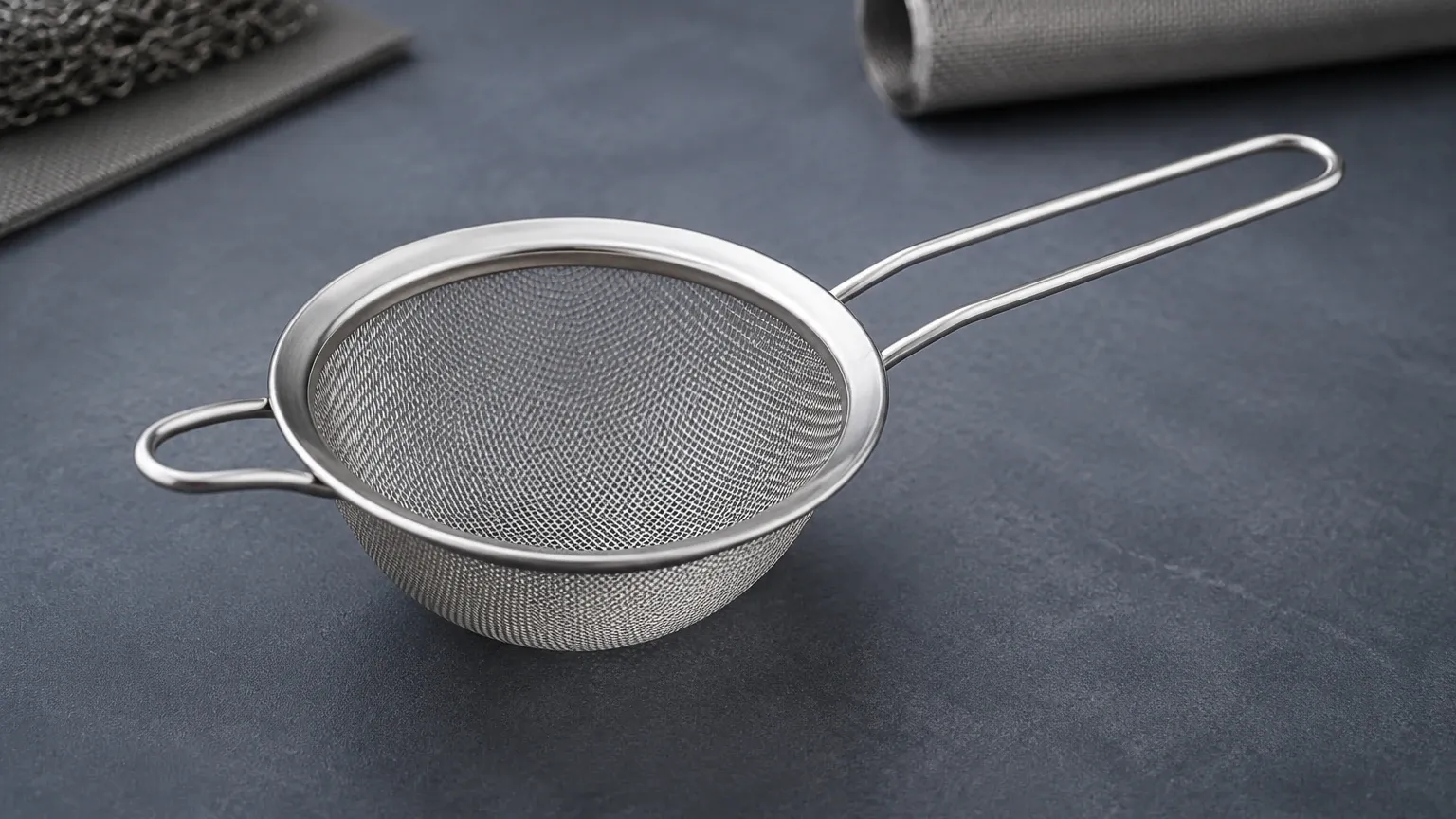
Strainer 9cm
In industrial filtration, precision is not merely a preference but a functional requirement. When engineers specify a strainer 9cm component, they are typically looking for a high-performance basket or insert designed to fit specific housing dimensions or suction intakes. At this size—approximately 3.5 inches in diameter—the strainer serves as a critical line of defense for pumps, valves, and downstream instrumentation. Selecting the correct configuration requires an understanding of fluid dynamics, material compatibility, and the mechanical stresses of the application environment.
Industrial Strainers & Baskets are engineered to remove coarse particles from liquids or gases. Unlike standard consumer-grade filters, a 9cm industrial strainer must withstand significant differential pressures and corrosive chemical exposures while maintaining its structural integrity. Kaifil specializes in the manufacture of these precision components, utilizing advanced stainless steel wire mesh and perforated metal technologies to meet the rigorous demands of sectors ranging from chemical processing to food and beverage production.
Technical Specifications and Material Selection
The performance of a strainer 9cm is fundamentally dictated by its material composition. In B2B industrial environments, stainless steel is the gold standard due to its durability and resistance to oxidation.
Stainless Steel Grades
1. AISI 304 Stainless Steel: This is the most common material for general-purpose industrial strainers. It offers excellent strength and good corrosion resistance for water treatment and food-grade applications. It is cost-effective for environments where high-acid or high-salinity exposure is not a primary concern.
2. AISI 316/316L Stainless Steel: For more demanding environments, such as pharmaceutical manufacturing or marine applications, Grade 316 is preferred. The addition of molybdenum enhances resistance to pitting and crevice corrosion, particularly in chloride-rich environments. The "L" (low carbon) variant is often specified for components requiring extensive welding to prevent carbide precipitation.
Mesh and Micron Ratings
A 9cm strainer can be configured with various filtration media depending on the required particle retention. Engineers must balance the need for fine filtration with the allowable pressure drop across the system. Common configurations include:
* Perforated Metal: Used for heavy-duty straining of large debris. Hole patterns can range from 1mm to several centimeters.
* Wire Mesh: For finer filtration, stainless steel wire mesh is layered over a perforated support basket. This allows for micron ratings as fine as 5 microns while maintaining the physical strength of the larger basket.
* Sintered Mesh: In high-pressure or high-temperature applications, multiple layers of mesh are sintered together to create a rigid, porous structure that will not deform under stress.
Design Considerations for 9cm Filtration Components
When designing or purchasing a strainer 9cm, the physical dimensions are only the starting point. The "9cm" measurement usually refers to the outer diameter (OD) of the basket or the flange, but several other geometric factors influence performance.
Open Area Ratio
The efficiency of a strainer is often measured by its open area ratio—the ratio of the total area of the holes in the mesh to the internal cross-sectional area of the inlet pipe. A well-designed 9cm strainer should ideally have an open area at least four to six times the area of the pipe to minimize pressure loss. If the open area is too small, the fluid velocity through the mesh increases, which can lead to premature clogging and excessive stress on the pump.
Structural Reinforcement
Because a 9cm diameter is relatively small, the basket must be rigid enough to prevent collapsing under the weight of captured solids or the force of the flow. Kaifil utilizes reinforced longitudinal ribs and heavy-duty top rings to ensure that the strainer remains seated correctly within its housing. For high-viscosity fluids, such as oils or resins, additional internal bracing may be required to handle the increased drag.
Connection and Seating Types
How the strainer interacts with the housing is vital for preventing bypass. Common seating designs include:
* Flat Flange: The 9cm strainer features a flat rim that rests on a shoulder within the housing, often secured by the housing cover.
* Angled or Sloped Seats: Used in Y-strainers to ensure a tight seal and easy removal.
* O-ring or Gasket Seals: For applications where zero-bypass is critical, the strainer rim may be machined to accept a Viton, EPDM, or PTFE gasket.
Industrial Applications of 9cm Strainers
The versatility of the strainer 9cm makes it a staple in various industrial processes. Its size is particularly suited for branch lines, pilot plants, and specialized machinery.
Chemical and Petrochemical Processing
In chemical plants, strainers protect sensitive flow meters and control valves from pipe scale, weld slag, and other contaminants. The 9cm size is frequently used in chemical dosing systems where precision and material purity are paramount. Using 316L stainless steel ensures that the strainer does not introduce metallic contaminants into the process stream.
Food and Beverage Industry
Hygiene is the primary concern in food processing. A 9cm strainer used in this sector must feature smooth welds and polished surfaces (often 2B or electropolished) to prevent bacterial growth in crevices. These strainers are used to filter pulp from juices, seeds from preserves, or particulates from dairy products. They must be easily removable for frequent Clean-in-Place (CIP) or manual cleaning cycles.
Pharmaceutical and Biotech
In pharmaceutical manufacturing, filtration components must meet stringent regulatory standards. A 9cm basket strainer might be used in the initial stages of raw material processing or as a pre-filter for more expensive membrane filtration systems. The ability to customize the mesh to exact micron specifications allows for repeatable process results.
Hydraulic and Lubrication Systems
Protecting hydraulic pumps from metal shavings and environmental dust is essential for preventing catastrophic equipment failure. A 9cm suction strainer is often submerged in the oil reservoir to provide a first stage of protection. The robust construction of stainless steel ensures that the strainer does not degrade or shed fibers into the hydraulic fluid.
Maintenance and Operational Longevity
The total cost of ownership for a strainer 9cm is heavily influenced by its maintenance requirements. A high-quality stainless steel strainer is a long-term investment, but its lifespan depends on proper care and monitoring.
Monitoring Pressure Drop
The most effective way to determine when a strainer needs cleaning is by monitoring the differential pressure (DP) across the unit. As debris accumulates, the DP will rise. Engineers should establish a maximum allowable DP based on the system's pump curve. Operating beyond this point risks damaging the strainer mesh or causing cavitation in the pump.
Cleaning Procedures
Stainless steel strainers offer the advantage of being reusable. Depending on the contaminant, cleaning methods may include:
* Backwashing: Reversing the flow of fluid to dislodge particles from the mesh.
* Ultrasonic Cleaning: Using high-frequency sound waves in a cleaning solution to remove fine particles trapped deep within the mesh layers.
* Chemical Soaking: For organic or mineral scaling, soaking the strainer in a compatible solvent or mild acid can restore flow capacity.
* Manual Scrubbing: Using soft brushes to remove heavy cake build-up, though care must be taken not to deform the wire mesh.
Replacement Cycles
While stainless steel is durable, it is not indestructible. Over time, the constant cycling of pressure and the abrasive nature of some particles can lead to wire thinning or fatigue cracks at weld points. Regular inspection of the strainer 9cm for signs of mechanical wear or "blinding" (permanent clogging of the pores) is essential. If the mesh shows signs of fraying or the support structure is warped, the unit should be replaced to prevent downstream damage.
Customization: The Kaifil Advantage
Every industrial process has unique variables, and a standard off-the-shelf solution may not always provide optimal performance. Kaifil’s strength lies in providing customized Strainers & Baskets tailored to specific engineering requirements.
When ordering a customized strainer 9cm, purchasing teams should provide the following data points to ensure an accurate fit:
1. Exact Dimensions: Beyond the 9cm diameter, specify the overall length, the thickness of the flange, and the internal clearance of the housing.
2. Fluid Characteristics: Provide the viscosity, temperature, and chemical composition of the fluid being filtered.
3. Contaminant Profile: Identify the type of solids (hard, soft, fibrous) and the expected loading rate.
4. Flow Rate: State the normal and maximum flow rates to calculate the required open area.
5. Compliance Needs: Indicate if the component must meet FDA, 3A, or other industry-specific certifications.
By focusing on these technical details, engineers can ensure that their 9cm strainer provides reliable service, protects expensive equipment, and maintains the purity of the end product. Whether it is a simple basket for a water line or a complex multi-layer sintered insert for a chemical reactor, the quality of the strainer is a fundamental component of operational success.
