


Strainer Assy Oil
In industrial fluid management, the integrity of a system is often determined by the quality of its primary filtration components. A strainer assy oil (oil strainer assembly) serves as the first line of defense in hydraulic circuits, lubrication systems, and fuel delivery lines. Its primary function is to remove coarse particulates—such as metal chips, scale, and debris—that could otherwise damage sensitive downstream components like high-pressure pumps, control valves, and precision nozzles.
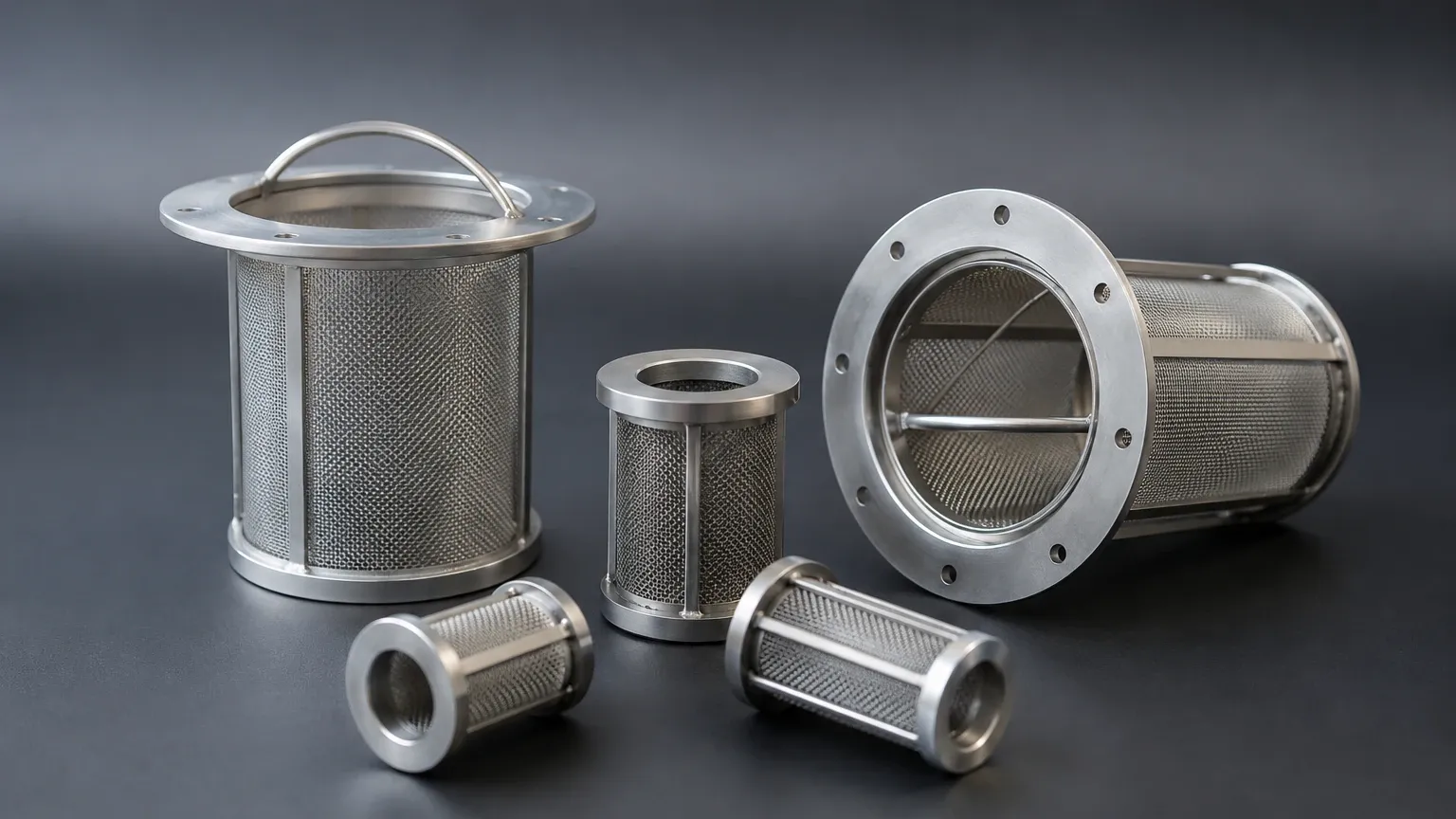
For engineers and procurement professionals, selecting the correct Strainers & Baskets involves more than simply matching a pipe size. It requires a deep understanding of fluid dynamics, material compatibility, and the specific rheological properties of the oil being processed. This guide examines the technical considerations essential for specifying and maintaining high-performance oil strainer assemblies in demanding industrial environments.
Technical Fundamentals of Oil Filtration
Industrial oil systems operate under a wide range of pressures and temperatures. Unlike water filtration, oil filtration must account for the fluid's viscosity, which changes significantly with temperature. A strainer assy oil is typically designed for "coarse" filtration, usually ranging from 40 microns up to several millimeters, depending on the application.
The Difference Between Strainers and Filters
While the terms are often used interchangeably, in a technical context, a strainer is used to remove larger particles to protect equipment, whereas a filter is designed to remove much finer contaminants to improve fluid cleanliness. In an oil assembly, the strainer is often placed on the suction side of the pump. This prevents large contaminants from entering the pump's internal cavities, where they could cause cavitation or mechanical wear.
Mesh and Micron Ratings
The performance of the internal basket or element is defined by its mesh count or micron rating. In oil applications, stainless steel wire mesh is the preferred medium due to its high open-area ratio and structural rigidity. Engineers must balance the need for high-efficiency particle capture with the requirement for low pressure drop. If the mesh is too fine, the resulting vacuum on the suction side of the pump can lead to cavitation, particularly when the oil is cold and at its highest viscosity.
Engineering Specifications for Strainer Assy Oil
When specifying a strainer assy oil, several engineering parameters must be confirmed to ensure the longevity of the assembly and the system it protects.
Material Selection and Chemical Compatibility
Most industrial oil strainers utilize stainless steel (Grade 304 or 316L) for the internal basket and often for the housing itself. Stainless steel offers superior resistance to the additives found in modern synthetic oils and hydraulic fluids. For offshore or highly corrosive chemical environments, 316L is preferred due to its molybdenum content, which provides enhanced resistance to pitting and crevice corrosion.
Pressure Ratings and Structural Integrity
The housing of the strainer assy oil must be rated for the maximum system pressure, including potential surges. In suction-side applications, the assembly must also be capable of withstanding vacuum pressures without collapsing the internal element. Heavy-duty baskets often feature a perforated metal support cylinder to reinforce the fine wire mesh, ensuring the element remains intact under high differential pressure (ΔP).
Seal and Gasket Materials
The choice of sealing material is critical. Standard Nitrile (Buna-N) is often sufficient for general mineral oils, but high-temperature applications or synthetic fluids may require Viton (FKM) or PTFE. A failure in the seal of a suction-side strainer can introduce air into the system, leading to foaming, oxidation of the oil, and erratic hydraulic performance.
Factors Influencing Performance: Viscosity and Flow Rate
The most significant variable in oil strainer performance is the relationship between viscosity and pressure drop. Oil is a non-Newtonian fluid in some contexts, but for most industrial calculations, it is treated as a viscous fluid where the pressure drop across the strainer is directly proportional to the viscosity.
Temperature Fluctuations
At cold startup, oil viscosity can be ten times higher than at operating temperature. A strainer assy oil must be sized based on the "worst-case" scenario—the highest viscosity at the lowest expected startup temperature. If the pressure drop exceeds the pump's allowable suction head during startup, the system may fail to prime or suffer internal damage.
Calculating Allowable Pressure Drop
Engineers typically aim for a clean pressure drop of less than 2 psi (0.14 bar) for suction strainers. As the strainer collects debris, the ΔP increases. Monitoring this differential is essential for predictive maintenance. Many modern assemblies include ports for differential pressure gauges or electronic sensors that alert operators when the basket requires cleaning.
Types of Strainers & Baskets for Oil Applications
The physical configuration of the strainer assembly is dictated by the piping layout and the required service frequency.
Simplex Basket Strainers
Simplex designs are used in systems where the flow can be intermittently stopped for cleaning. They feature a top-loading basket that can be quickly removed. These are common in batch processing or in systems with redundant pump lines.
Duplex (Twin) Strainers
In continuous-duty applications, such as steam turbine lubrication or large-scale hydraulic power units, a duplex strainer assy oil is required. These units consist of two separate strainer chambers connected by a diverter valve. When one side becomes clogged, the flow is switched to the clean chamber without interrupting the process, allowing the dirty basket to be serviced safely.
Y-Strainers
Y-strainers are typically used for smaller pipe diameters and where space is limited. While they offer a lower dirt-holding capacity than basket strainers, they are effective for protecting individual valves or sensitive instruments within an oil circuit. They are generally installed in horizontal or vertical-down pipelines.
Maintenance Protocols and Service Life
The reliability of a strainer assy oil is heavily dependent on the maintenance regime. Unlike disposable filters, stainless steel baskets are designed to be cleaned and reused, which significantly reduces the Total Cost of Ownership (TCO).
Cleaning Procedures
When the differential pressure reaches the pre-set limit, the basket must be removed. For oil applications, cleaning often involves a solvent wash followed by ultrasonic cleaning or high-pressure air blowing from the "clean" side to the "dirty" side (back-blowing). It is vital to inspect the mesh for signs of "blinded" areas where resins or lacquers from degraded oil have permanently blocked the apertures.
Inspection for Wear and Bypass
During maintenance, the seating surfaces of the strainer assy oil should be inspected. If the basket does not seat perfectly within the housing, oil will bypass the mesh, allowing contaminants to move downstream. This "bypass" is a common cause of premature pump failure in hydraulic systems. Engineers should check for deformed baskets or worn O-ring grooves that could compromise the seal.
Replacement Cycles
While the stainless steel mesh is durable, it is subject to fatigue from pressure pulsations and physical wear from abrasive particles. A basket should be replaced if there is any evidence of wire breakage, thinning of the mesh, or permanent deformation of the support structure. Keeping a spare set of Strainers & Baskets on-site is a standard best practice to minimize downtime during scheduled turnarounds.
Customization and OEM Considerations
Standard off-the-shelf strainers may not meet the specific requirements of specialized industrial machinery. Customization is often necessary to address unique flow paths, specific micron requirements, or unconventional mounting dimensions.
Tailored Filtration Accuracy
In some OEM applications, a standard mesh size may be too restrictive or too coarse. Custom-manufactured baskets allow for the selection of specific wire diameters and weave patterns (such as Dutch weave or Twilled weave) to optimize the balance between strength and filtration fineness.
Integration into Compact Modules
For manufacturers of hydraulic power units (HPUs) or lubrication skids, the strainer assy oil must often fit into a very tight footprint. Custom housing designs can incorporate integrated bypass valves, magnetic inserts (to capture fine ferrous particles), and multi-port configurations to simplify the overall system piping.
Conclusion: Selecting the Right Solution
Specifying a strainer assy oil requires a rigorous evaluation of the application's technical demands. By focusing on material integrity, pressure drop calculations, and maintenance accessibility, engineers can ensure that their oil systems remain protected against the costly effects of particulate contamination.
Whether for a standard industrial hydraulic system or a specialized chemical processing line, the choice of filtration component is a critical decision. Working with an experienced manufacturer like Kaifil ensures that the Strainers & Baskets provided are engineered to the highest standards of precision and durability, delivering reliable performance in the most demanding industrial environments.
