


Strainer Basket 4
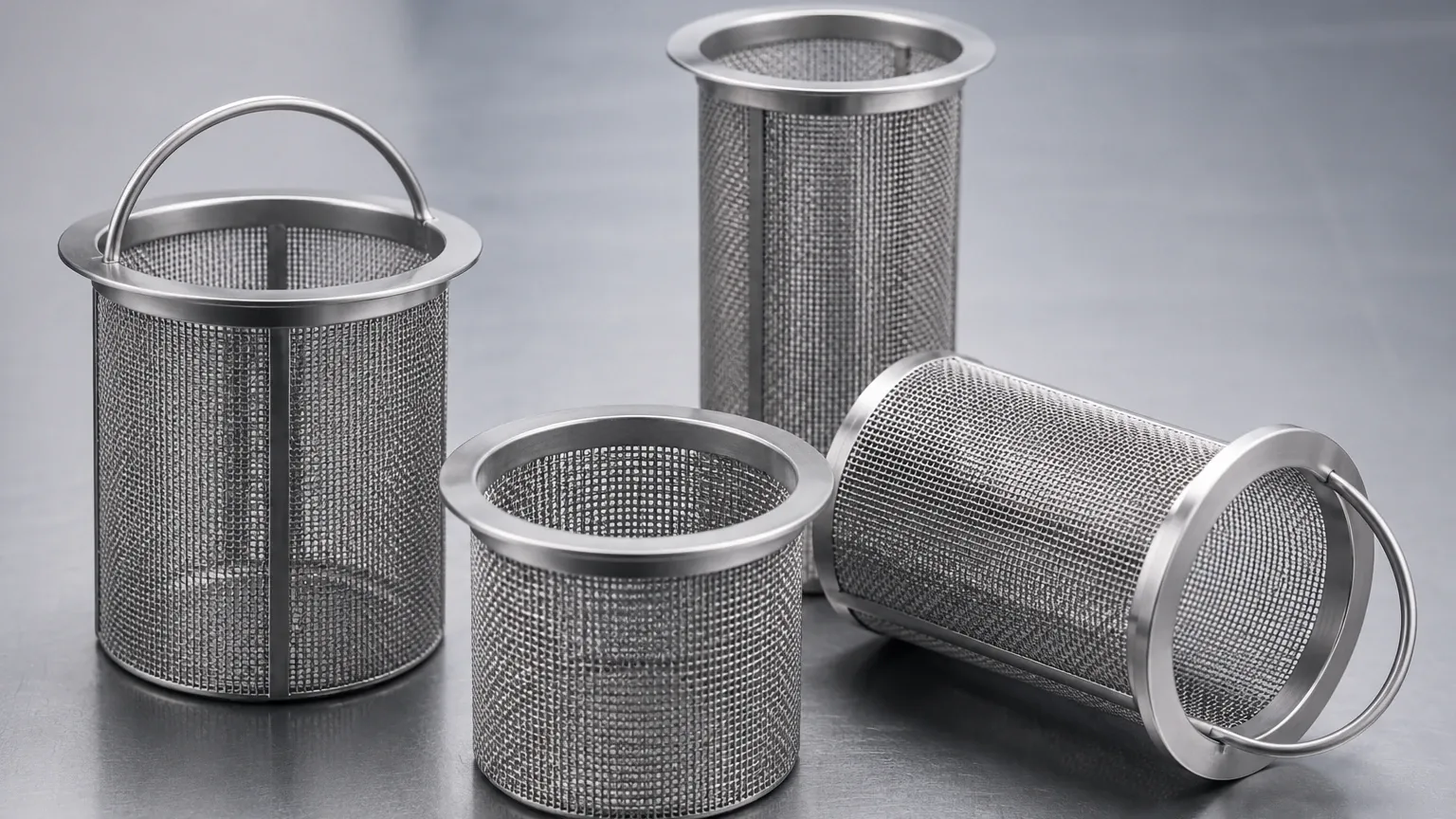
In industrial fluid handling, the integrity of downstream equipment such as pumps, valves, and heat exchangers depends heavily on the efficiency of primary filtration components. Among the most common configurations in mid-to-high flow piping systems is the 4-inch nominal size strainer. The internal component, often referred to as a strainer basket 4, serves as the sacrificial barrier that captures debris, scale, and particulate matter before it can cause mechanical failure or process contamination.
Selecting and specifying a Strainers & Baskets solution requires a deep understanding of hydraulic dynamics, material science, and the specific nuances of the application environment. For engineers and procurement teams, the "4-inch" designation is more than just a dimensional attribute; it defines the flow capacity, the potential pressure drop, and the structural requirements of the filtration media.
Understanding the Engineering Specifications of a Strainer Basket 4
A strainer basket designed for a 4-inch housing must balance two competing interests: the need to capture fine particles and the need to maintain a high flow rate with minimal pressure loss. When evaluating a strainer basket 4, technical professionals must look beyond the outer diameter and height.
Open Area Ratio (OAR)
One of the most critical metrics in basket design is the Open Area Ratio. This is the relationship between the total open area of the mesh or perforations and the cross-sectional area of the inlet pipe. For a 4-inch system, a high-quality basket should ideally provide an OAR of at least 6:1. This ensures that even as the basket begins to fill with debris, the system does not experience a significant spike in differential pressure, which could lead to pump cavitation or basket collapse.
Construction Materials
While various materials exist, stainless steel remains the industry standard for industrial applications due to its mechanical strength and resistance to corrosion.
* Type 304 Stainless Steel: Suitable for general industrial use, including water treatment and non-corrosive chemical processing.
* Type 316/316L Stainless Steel: Preferred for pharmaceutical, food and beverage, and marine environments where resistance to chlorides and organic acids is mandatory.
* Specialty Alloys: In highly aggressive chemical environments, alloys such as Monel or Hastelloy may be required to prevent premature pitting and structural failure.
Filtration Media: Perforated Metal vs. Wire Mesh
The choice of media for a strainer basket 4 depends on the target particle size and the nature of the fluid. Kaifil provides customized options that allow engineers to select the most efficient media for their specific process.
Perforated Plate
Perforated metal is typically used for coarse filtration. Common hole sizes for a 4-inch basket range from 1/32" to 1/4". These baskets are exceptionally durable and can withstand high differential pressures without deforming. They are often used as "roughing" filters to protect systems from large debris like welding slag, stones, or bolts.
Wire Mesh Liners
When finer filtration is required—down to the micron level—the perforated basket acts as a support structure for a fine wire mesh liner. This multi-layer construction provides the necessary mechanical strength while achieving precise filtration. In a strainer basket 4 configuration, mesh counts can range from 20 mesh (approx. 900 microns) to 400 mesh (approx. 35 microns).
Hydraulic Performance and Pressure Drop Considerations
Every component added to a piping system introduces a degree of resistance. In a 4-inch line, where flow rates can exceed hundreds of gallons per minute, the pressure drop (Delta P) across the strainer basket 4 is a vital calculation.
Calculating Clean Pressure Drop
The clean pressure drop is influenced by the fluid's viscosity, specific gravity, and velocity. A well-engineered basket minimizes turbulence at the entry and exit points. If the initial pressure drop is too high, it reduces the "dirt-holding capacity" of the basket, leading to frequent maintenance cycles and increased operational costs.
Structural Integrity under Load
As the basket accumulates debris, the differential pressure increases. A standard strainer basket 4 must be engineered to withstand the maximum system pressure in the event of a total blockage. Engineers should verify the "burst pressure" or collapse rating of the basket, especially in high-pressure hydraulic or steam applications. Reinforcing bands and heavy-duty handles are often added to ensure the basket can be safely removed even when heavily loaded.
Customization and OEM Integration
Not all 4-inch strainer housings are identical. Variations in flange standards (ANSI, DIN, JIS) and proprietary housing designs from different manufacturers mean that a one-size-fits-all approach often fails. Customization is a core strength of manufacturers like Kaifil, where the strainer basket 4 can be tailored to exact dimensions.
Tailored Dimensions and Fitment
Precision in the top flange or "O-ring" seat of the basket is essential to prevent bypass. Bypass occurs when fluid flows around the basket rather than through the media, rendering the filtration system useless. Custom-manufactured baskets ensure a tight seal within the housing, maintaining the integrity of the process.
Application-Specific Features
* Magnetic Inserts: For systems prone to fine metallic wear particles (such as hydraulic oil loops), magnetic rods can be integrated into the basket center to capture sub-micron ferrous debris.
* Sloping Bottoms: To facilitate easier cleaning and sediment removal in specific housing types.
* Reinforced Handles: For heavy-duty applications where the basket weight, when full, requires mechanical lifting assistance.
Industrial Applications for 4-Inch Strainer Baskets
The versatility of the strainer basket 4 makes it a staple in several key sectors. Each industry brings its own set of challenges regarding hygiene, temperature, and chemical compatibility.
Chemical Processing
In chemical plants, strainers protect expensive instrumentation and reactors. The baskets must be resistant to a wide range of pH levels. Stainless steel 316L is frequently specified here to ensure long-term reliability against corrosive reagents.
Food and Beverage Production
This sector requires baskets with smooth surface finishes (often electropolished) to prevent bacterial growth. The strainer basket 4 used in food processing must comply with stringent sanitary standards, ensuring that there are no "dead zones" where product can stagnate and spoil.
Water Treatment and Desalination
In large-scale water treatment, 4-inch lines often handle raw water intake. The baskets must be capable of filtering out organic matter, sand, and grit. In desalination plants, the high salt content necessitates the use of high-grade stainless steel or specialized coatings to prevent galvanic corrosion.
Maintenance Protocols and Replacement Cycles
The total cost of ownership (TCO) of a filtration system is heavily influenced by how the baskets are maintained. A strainer basket 4 is a reusable component, but its lifespan depends on proper handling and cleaning.
Monitoring Differential Pressure
Systems should be equipped with differential pressure gauges. A common industry standard is to clean or replace the basket when the pressure drop reaches 5-10 psi over the clean reading. Waiting too long increases the risk of basket deformation or forcing contaminants through the mesh.
Cleaning Procedures
Cleaning should be performed using methods that do not damage the mesh. For stainless steel baskets, ultrasonic cleaning or high-pressure water jets are effective. Abrasive wire brushes should be avoided on fine mesh liners as they can tear the wires and change the micron rating.
When to Replace
While stainless steel baskets are durable, they are not permanent. Signs that a strainer basket 4 needs replacement include:
1. Visible Tearing: Any breach in the mesh allows unfiltered fluid to pass.
2. Permanent Deformation: If the basket frame is warped, it will no longer seal correctly in the housing.
3. Corrosion Pitting: Even small pits can become stress-concentration points that lead to structural failure under pressure.
Selecting the Right Partner for Filtration Solutions
For engineers and purchasing managers, selecting a strainer basket 4 involves more than just looking at a price list. It requires a partner who understands the technical demands of industrial filtration. Kaifil’s expertise in manufacturing custom stainless steel filtration components ensures that each basket is built to the highest standards of precision and durability.
By focusing on material quality, engineering accuracy, and the specific needs of the application—whether it is chemical processing, pharmaceutical manufacturing, or water treatment—Kaifil provides reliable Strainers & Baskets that optimize process performance and protect critical infrastructure.
When specifying your next filtration component, consider the long-term impact of basket design on your system's efficiency. A well-designed strainer basket 4 is not just a commodity; it is a critical engineering component that ensures the continuity and safety of your industrial operations.
