


Strainer Basket for Garbage Disposal
In industrial and commercial environments, the management of solid waste within liquid streams is a critical operational challenge. Whether in a large-scale food processing facility, a commercial kitchen, or a pharmaceutical laboratory, the integrity of drainage systems and the efficiency of downstream equipment depend heavily on effective pre-filtration. A strainer basket for garbage disposal serves as the primary line of defense, capturing solids that could otherwise cause mechanical failure, line blockages, or environmental non-compliance. Unlike consumer-grade components, industrial-grade Strainers & Baskets are engineered to withstand high flow rates, corrosive chemical exposures, and significant mechanical stress.
Selecting the appropriate filtration component requires a deep understanding of fluid dynamics, material science, and the specific requirements of the disposal system. This article examines the technical specifications, engineering considerations, and selection criteria for high-performance strainer baskets designed for industrial-scale garbage and waste disposal applications.
The Role of Industrial Strainers & Baskets in Waste Management
In a professional setting, a garbage disposal system is often part of a larger wastewater treatment or solids recovery process. The strainer basket is not merely a collection vessel; it is a precision-engineered filter designed to protect the disposal unit's impellers and the facility's plumbing infrastructure.
Protecting Downstream Infrastructure
Industrial disposal units are designed to macerate organic waste, but they are susceptible to damage from non-organic debris or oversized solids. A robust strainer basket for garbage disposal ensures that only particles within the system's design capacity reach the grinding chamber. This prevents motor burnout and reduces the frequency of manual interventions to clear jams.
Enhancing Operational Continuity
In high-volume environments, such as food manufacturing, downtime is a significant cost driver. A well-designed basket allows for rapid removal and cleaning, ensuring that the disposal system remains operational for extended periods. By optimizing the open area of the mesh or perforation, engineers can maintain high flow rates even as the basket accumulates solids, preventing backups in the processing line.
Engineering Specifications for a Strainer Basket for Garbage Disposal
When specifying a strainer basket for industrial use, engineers must look beyond basic dimensions. The performance of the component is dictated by its material composition, structural design, and filtration accuracy.
Material Selection: Stainless Steel 304 vs. 316
Stainless steel is the industry standard for filtration components due to its inherent strength and resistance to oxidation. However, the specific grade must be chosen based on the chemical profile of the waste stream:
* Grade 304: Suitable for general-purpose applications where moisture is the primary concern. It offers excellent durability and cost-effectiveness for standard food waste and greywater.
* Grade 316: Essential for environments involving high salinity, acidic food waste (such as citrus processing), or harsh cleaning chemicals. The addition of molybdenum provides superior resistance to pitting and crevice corrosion, ensuring a longer service life in aggressive environments.
Structural Design: Perforated Metal vs. Woven Wire Mesh
The choice between perforated metal and woven wire mesh depends on the required filtration fineness and the mechanical load the basket must bear.
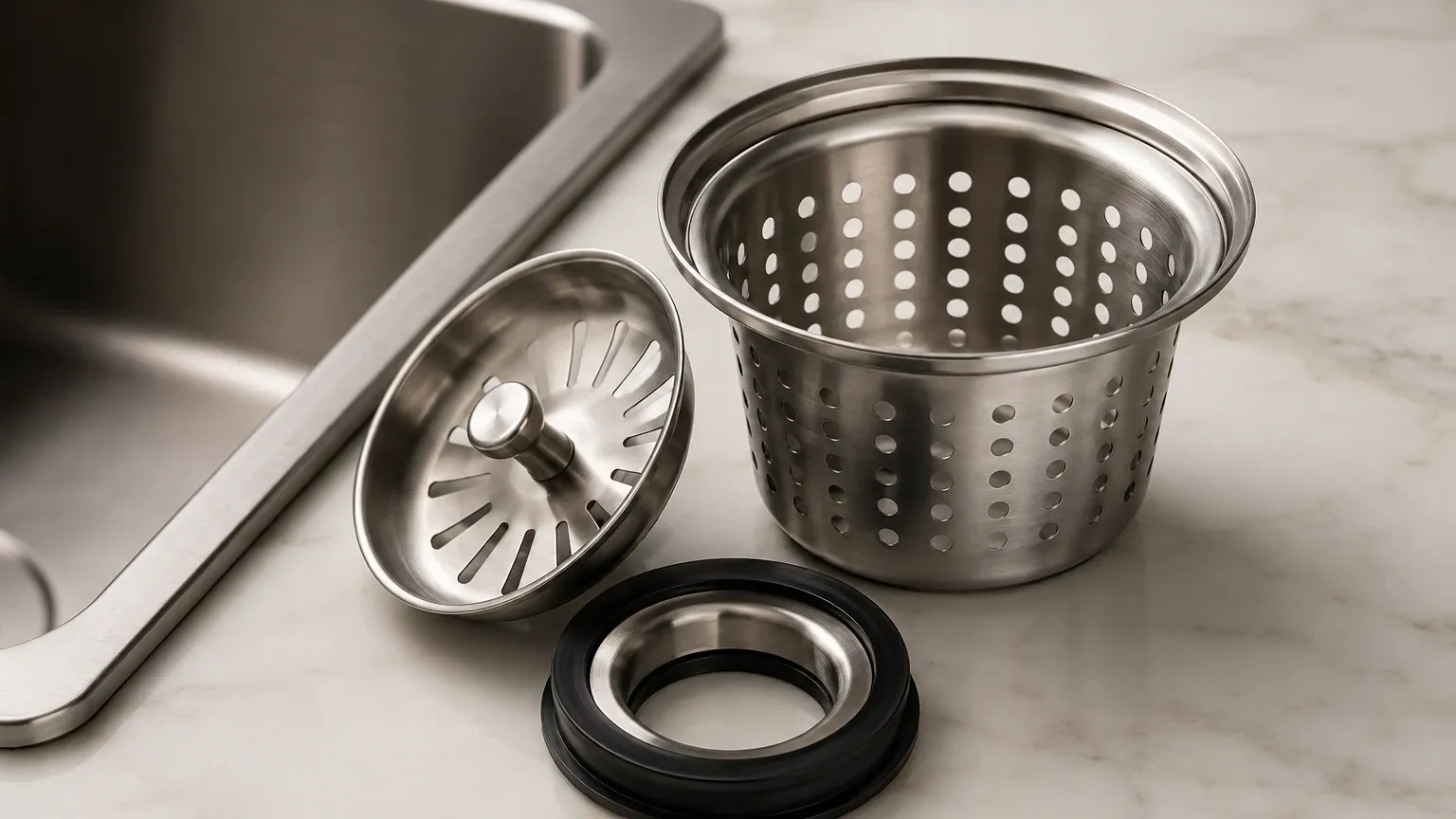
1. Perforated Metal Baskets: These are typically used for coarse filtration where high structural rigidity is required. The holes can be staggered or straight, providing a robust frame that can withstand the weight of heavy debris without deforming.
2. Woven Wire Mesh Liners: For finer filtration requirements, a wire mesh liner is often integrated into a perforated frame. This allows for precise micron-level filtration while maintaining the structural integrity of the basket. In a strainer basket for garbage disposal, this hybrid design is often used to capture small seeds or fibrous materials that could clog downstream fine-mesh filters.
Key Performance Indicators for Industrial Filtration Components
To evaluate the effectiveness of a strainer basket, engineering teams should focus on three primary metrics: flow capacity, pressure drop, and solids retention.
Flow Rate and Open Area Ratio
The open area ratio is the percentage of the total basket surface area that is open to fluid flow. A higher open area reduces the velocity of the fluid as it passes through the mesh, which minimizes the pressure drop across the filter. For a strainer basket for garbage disposal, maintaining a high open area is vital to prevent fluid from backing up into the sink or processing vat during peak usage.
Mechanical Strength and Burst Pressure
In pressurized systems or systems where heavy solids are dropped from a height, the basket must resist deformation. Engineers must consider the gauge of the metal and the reinforcement of the seams. TIG (Tungsten Inert Gas) welding is the preferred method for industrial baskets, as it provides clean, strong joints that do not harbor bacteria—a critical factor in food-grade applications.
Filtration Accuracy (Micron Rating)
The "mesh size" or "perforation diameter" determines the size of the particles that will be retained. In garbage disposal applications, the goal is usually to balance the retention of problematic solids with the need to allow fluid and manageable organic matter to pass through. Over-filtering can lead to rapid clogging, while under-filtering risks damage to the disposal unit.
Selection Criteria for High-Performance Strainer Baskets
Selecting the right strainer basket for garbage disposal involves a comprehensive audit of the application environment. Purchasing teams and engineers should confirm the following parameters before procurement:
1. Dimensional Compatibility
Industrial disposal units are not standardized across all manufacturers. It is essential to confirm the flange diameter, basket depth, and seat type. A poorly fitting basket can allow "bypass," where solids escape around the edges of the strainer, defeating the purpose of the filtration system.
2. Chemical and Thermal Resistance
If the disposal system processes hot liquids (e.g., from industrial dishwashers or boiling vats) or utilizes caustic cleaning agents (CIP – Clean-in-Place systems), the basket material and any gaskets must be rated for these temperatures and chemicals. High-grade stainless steel is generally stable, but synthetic seals or handles may require specific material ratings like EPDM or Viton.
3. Ease of Maintenance and Cleaning
In a B2B context, labor efficiency is paramount. Baskets should be designed with ergonomic handles and smooth internal surfaces to facilitate quick emptying and thorough cleaning. For industries with strict hygiene standards, such as pharmaceuticals or dairy, the basket should be designed with minimal crevices to prevent biofilm accumulation.
Common Risks and Mitigation Strategies
Failure to select the correct strainer basket for garbage disposal can lead to several operational risks:
* Corrosion Fatigue: In environments with high vibration (common near disposal motors) and corrosive fluids, low-grade metals can fail prematurely. Specifying 316L stainless steel and ensuring stress-relieved welds can mitigate this.
* Blinding/Clogging: If the waste stream contains high levels of fats, oils, and grease (FOG), the mesh may "blind" or seal over. Using a wedge wire or a specialized non-stick coating can help, as can increasing the frequency of the cleaning cycle.
* Bypass: As mentioned, bypass is the most common failure in filtration. This is often caused by the deformation of the basket rim. Utilizing a heavy-duty reinforced rim or a machined seating ring ensures a tight seal throughout the component's lifecycle.
Customization and OEM Solutions for Specialized Applications
Standard off-the-shelf solutions often fail to meet the rigorous demands of specialized industrial equipment. This is where custom manufacturing becomes essential. Manufacturers like Kaifil specialize in providing tailored Strainers & Baskets that are designed to meet specific OEM (Original Equipment Manufacturer) specifications.
Tailored Micron Ratings and Perforations
Customization allows engineers to specify the exact hole pattern and size needed for their specific waste profile. For instance, a vegetable processing plant may require long slots to capture fibrous stalks, whereas a chemical plant may need fine mesh to capture catalyst fines.
Integrated Features
Custom baskets can include integrated features such as magnetic inserts to capture metallic debris, specialized lifting lugs for automated removal systems, or multi-stage filtration layers within a single basket body. By working closely with a manufacturer, engineering teams can develop a strainer basket for garbage disposal that optimizes the performance of their specific machinery.
Total Cost of Ownership (TCO) Considerations
When evaluating the cost of a strainer basket, the initial purchase price is only one component. The Total Cost of Ownership includes:
1. Replacement Frequency: A cheap, low-gauge basket that requires replacement every six months is more expensive over a five-year period than a high-quality stainless steel basket that lasts for years.
2. Labor Costs: Baskets that are difficult to clean or frequently clog increase labor costs.
3. Downstream Damage: The most significant cost associated with a failed or inadequate strainer is the repair or replacement of the garbage disposal motor or the cost of professional plumbing services to clear main-line blockages.
Investing in high-quality, precision-engineered filtration components ensures that the disposal system operates at peak efficiency, protecting both the equipment and the facility's bottom line.
Conclusion
The humble strainer basket for garbage disposal is a critical engineering component in the industrial waste management chain. By focusing on material integrity, precise filtration specifications, and structural durability, engineers can significantly enhance the reliability of their disposal systems. Whether you are replacing a single component in a commercial kitchen or specifying filtration for a new industrial processing line, understanding the technical nuances of Strainers & Baskets is the key to long-term operational success. For demanding applications, partnering with an experienced manufacturer to develop customized filtration solutions ensures that every technical requirement—from flow rate to chemical resistance—is met with precision.
