


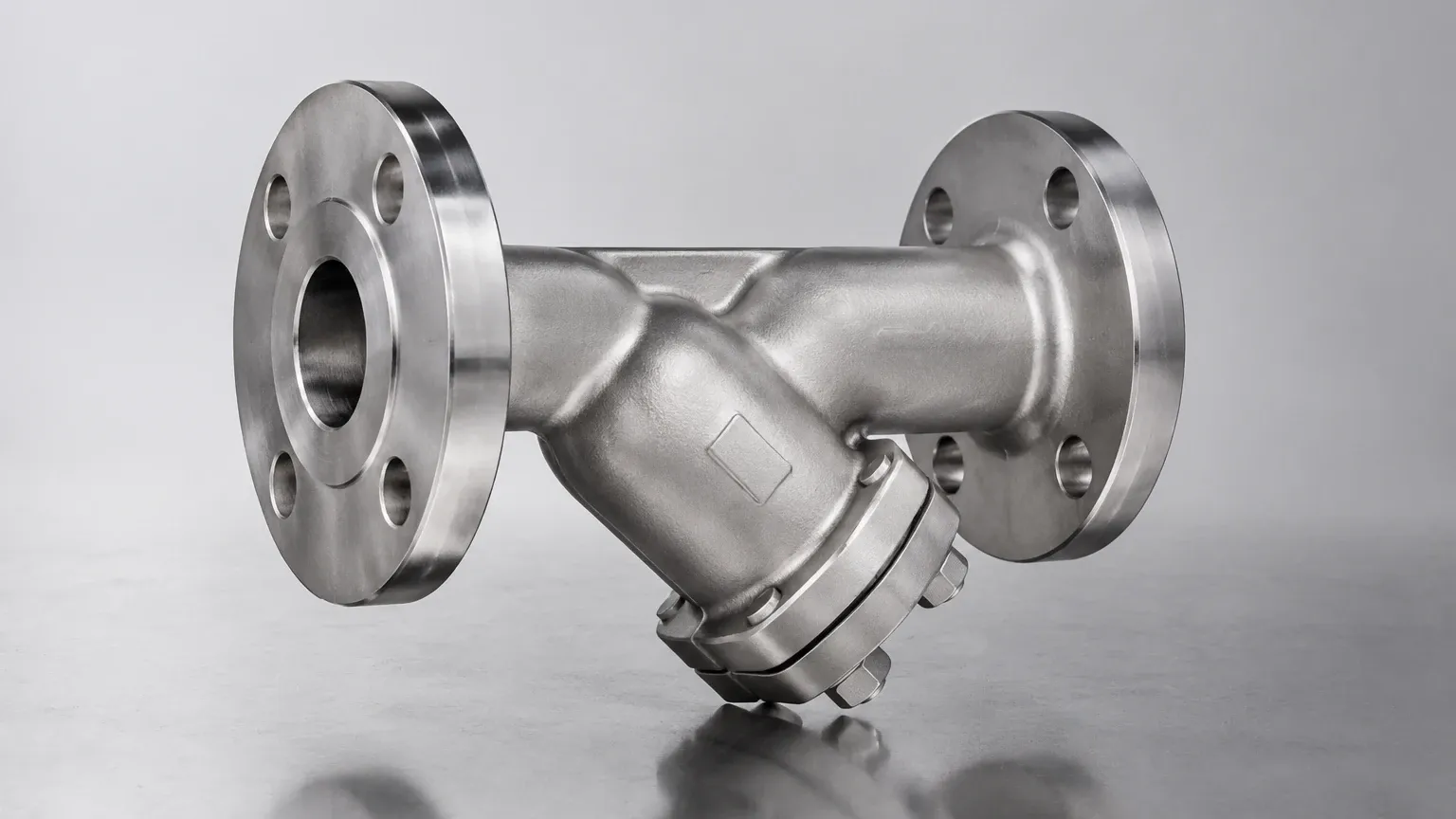
G Strainer
In industrial fluid handling and process engineering, the protection of sensitive downstream equipment—such as pumps, flow meters, and control valves—is a critical operational priority. The G strainer, a specialized configuration within the broader category of Strainers & Baskets, serves as a primary defense mechanism against particulate contamination. Characterized by its specific threading or designator, the G strainer is engineered to provide reliable coarse to medium filtration in piping systems where precision and mechanical integrity are paramount.
For engineers and procurement specialists, selecting a G strainer involves more than simply matching pipe diameters. It requires a deep understanding of fluid dynamics, material compatibility, and the specific mechanical stresses of the application environment. As a manufacturer specializing in custom stainless steel filtration, Kaifil provides the technical expertise necessary to integrate these components into complex industrial workflows, ensuring that filtration performance aligns with long-term system reliability.
Technical Specifications of G-Threaded Strainers
The "G" designation in industrial strainers frequently refers to the thread standard utilized for the inlet and outlet ports. Based on ISO 228-1, G threads are non-tapered (parallel) pipe threads. Unlike tapered threads (such as NPT or BSPT) that rely on thread deformation to create a seal, G threads utilize a flat seating surface and a gasket or O-ring to ensure leak-proof performance.
This design is particularly advantageous in high-vibration environments or systems subject to frequent thermal cycling. Because the seal is not dependent on the tightness of the thread itself, the risk of stress cracking in the strainer body—common in over-tightened tapered connections—is significantly reduced. In the context of stainless steel filtration, G-threaded strainers offer a compact and robust solution for hydraulic lines, pneumatic systems, and small-bore chemical process piping.
Beyond the connection type, the internal geometry of the G strainer is designed to minimize turbulence. The transition from the piping into the strainer body is engineered to maintain a steady flow velocity, preventing localized pressure drops that could lead to cavitation or reduced system efficiency. Engineers must confirm that the internal volume of the strainer allows for sufficient particulate accumulation without immediately impacting the flow rate.
Material Science and Corrosion Resistance
The performance of a G strainer is inextricably linked to its material composition. In industrial settings, stainless steel remains the gold standard due to its mechanical strength and resistance to oxidative and chemical degradation. Kaifil primarily utilizes Grade 304 and Grade 316L stainless steel to manufacture these components.
* Grade 304 Stainless Steel: Suitable for general industrial applications, including water treatment and standard hydraulic fluids. It provides excellent structural integrity and cost-effectiveness for non-corrosive environments.
* Grade 316L Stainless Steel: Specified for more demanding applications, such as chemical processing, pharmaceutical manufacturing, and marine environments. The addition of molybdenum enhances resistance to pitting and crevice corrosion, particularly in the presence of chlorides.
For specialized applications, surface treatments such as electropolishing or passivating are employed. Electropolishing is especially critical in the food and beverage or pharmaceutical sectors, as it removes surface irregularities where bacteria or contaminants could lodge. By ensuring a smooth, high-purity surface finish, the G strainer not only filters the process fluid but also maintains the hygienic integrity of the entire system.
Optimizing Filtration Efficiency and Flow Rates
The core of the G strainer is the internal filtration element, which can be configured as a perforated metal cylinder or a multi-layered wire mesh basket. The choice between these media depends on the target particle size and the required flow coefficient (Cv).
Perforated Metal Elements
Perforated stainless steel is typically used for coarse filtration, where the goal is to remove large debris such as scale, weld slag, or pebbles. Engineers must calculate the "open area ratio"—the percentage of the total surface area that consists of holes. A higher open area reduces the initial pressure drop across the strainer but may compromise the structural rigidity of the element if not properly supported.
Wire Mesh Liners
For finer filtration requirements, the perforated basket is often lined with a precision wire mesh. This allows the G strainer to capture particles down to the micron level. When specifying wire mesh, it is vital to consider the mesh count (the number of openings per linear inch) and the wire diameter. A finer mesh provides better filtration but increases the resistance to flow. Kaifil works with engineering teams to balance these factors, ensuring the strainer meets the required filtration rating without exceeding the allowable pressure drop (Delta P) of the system.
Custom Engineering and OEM Capabilities
Standard off-the-shelf strainers often fail to meet the unique constraints of specialized industrial equipment. This is where custom manufacturing becomes essential. A G strainer can be modified in several ways to suit specific OEM requirements:
1. Custom Dimensions: Adjusting the overall length or width of the strainer body to fit within tight spatial envelopes in skid-mounted systems.
2. Varied Micron Ratings: Designing multi-stage filtration elements that combine coarse and fine media to extend the service life between cleanings.
3. Reinforced Structures: For high-pressure applications, the internal basket can be reinforced with external support rings or heavy-duty mesh to prevent collapsing under high differential pressure.
4. Integrated Sensors: Some advanced G strainer designs include ports for differential pressure gauges or electronic sensors, allowing for real-time monitoring of the filter's status.
By collaborating with a manufacturer that understands the nuances of Strainers & Baskets, engineers can ensure that the filtration component is an integrated part of the system design rather than an afterthought. This proactive approach reduces the likelihood of field failures and simplifies the procurement process for complex projects.
Operational Maintenance and Service Life
The total cost of ownership (TCO) for a G strainer is determined largely by its maintenance requirements. Unlike disposable filters, stainless steel strainers are designed for long-term reuse. However, their effectiveness depends on a regular cleaning regimen.
Cleaning Cycles
As particles accumulate on the surface of the filtration element, the effective open area decreases, leading to an increase in differential pressure. If the pressure drop exceeds the design limit, it can cause the filtration element to deform or even rupture, allowing contaminants to bypass the filter. Establishing a maintenance schedule based on pressure drop readings is the most effective way to ensure longevity.
Ease of Access
The G strainer design often facilitates quick maintenance. Most models feature a threaded cap or a bolted cover that allows the internal basket to be removed without disconnecting the strainer body from the piping. During maintenance, the gaskets or O-rings should be inspected for signs of wear, compression set, or chemical degradation and replaced as necessary to maintain a secure seal.
Durability and Recovery
Because Kaifil utilizes high-grade stainless steel, the internal elements can be cleaned using ultrasonic baths, backwashing, or chemical cleaning agents, depending on the nature of the contaminants. This ability to restore the element to its original performance level makes the G strainer a more sustainable and cost-effective choice than plastic or disposable alternatives in industrial environments.
Procurement Guidelines for Industrial Systems
When purchasing G strainers for industrial applications, procurement teams and engineers should confirm several key data points to ensure the product is fit for purpose. These include:
* Maximum Operating Pressure and Temperature: Ensure the strainer body and the sealing materials are rated for the peak conditions of the process.
* Fluid Compatibility: Verify that the stainless steel grade and gasket material (e.g., Viton, EPDM, PTFE) are compatible with the chemical composition of the fluid.
* Flow Rate Requirements: Confirm that the strainer’s Cv value is sufficient to handle the maximum flow rate without causing excessive energy loss in the pumping system.
* Filtration Rating: Specify the exact micron or mesh size required to protect downstream components. Over-filtering (choosing a mesh that is too fine) can lead to unnecessarily frequent maintenance and higher pressure drops.
In conclusion, the G strainer is a vital component in the management of industrial fluid purity. By focusing on high-quality materials, precision threading, and customized filtration media, manufacturers like Kaifil enable industries to maintain high operational standards. Whether used in a simple water line or a complex chemical reactor, the right strainer configuration ensures that the system remains protected, efficient, and reliable over its entire service life.
