


Strainer Basket Industrial
In industrial fluid handling systems, the protection of downstream equipment—such as pumps, valves, flow meters, and heat exchangers—is a critical engineering priority. The primary component tasked with this protection is the industrial strainer basket. Unlike fine filtration systems designed to remove microscopic particles, a strainer basket industrial application focuses on the removal of larger solids, debris, and contaminants from liquids or gases.
As a specialized manufacturer, Kaifil provides high-performance Strainers & Baskets engineered to withstand the rigorous demands of chemical processing, water treatment, and food production. Understanding the technical nuances of basket design, material properties, and flow dynamics is essential for engineers and procurement teams to ensure system reliability and minimize operational downtime.
Engineering Fundamentals of Industrial Strainer Baskets
The fundamental purpose of an industrial strainer basket is to provide a high-capacity collection point for solids while maintaining a low pressure drop across the system. The "basket" design is preferred in many industrial settings over simple Y-strainers because it offers a larger surface area and a higher dirt-holding capacity. This is particularly important in batch processes or systems where high flow rates are constant.
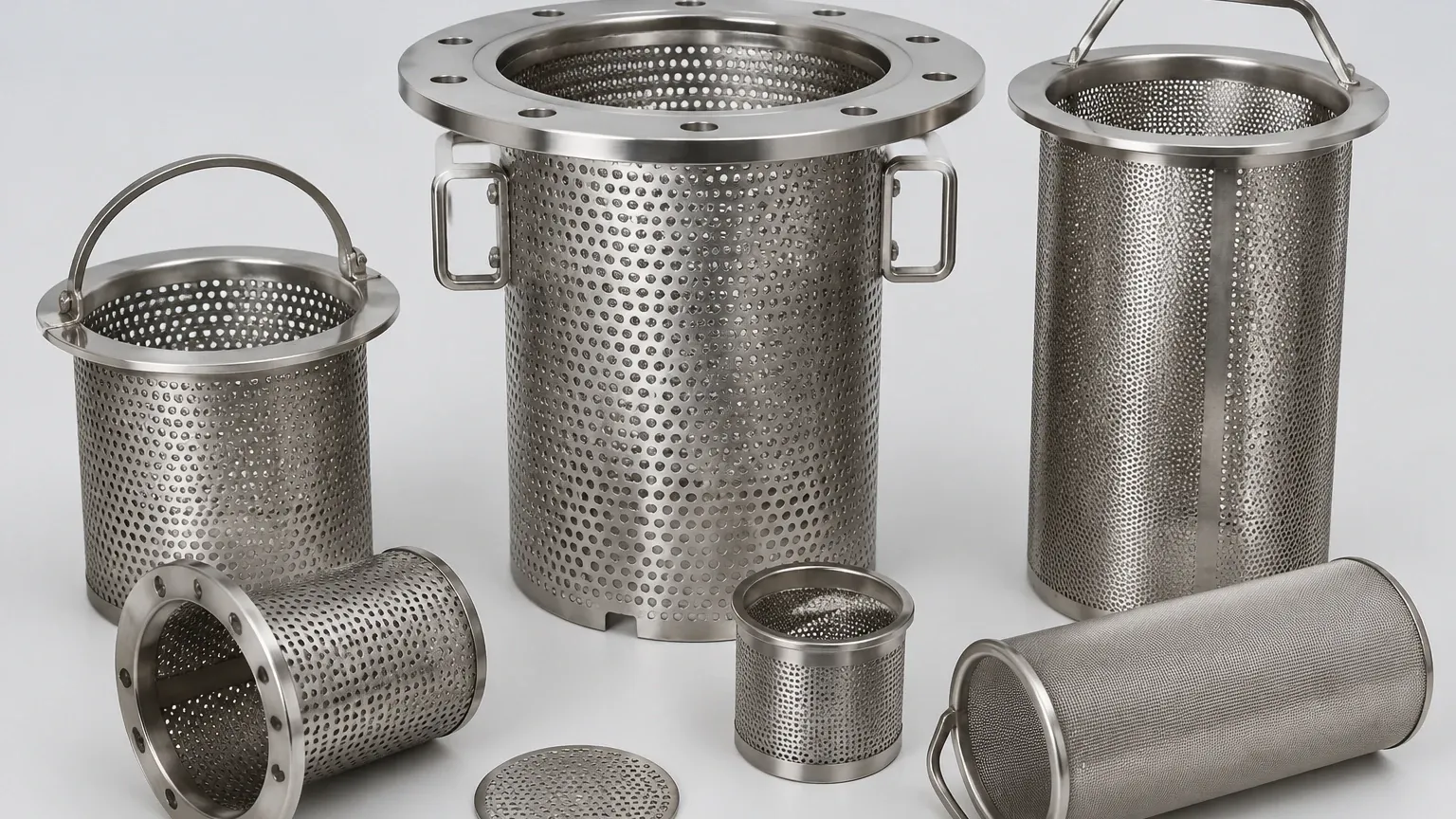
From an engineering perspective, the geometry of the basket dictates its efficiency. A standard basket consists of a perforated metal body, often lined with a finer wire mesh to achieve specific filtration ratings. The fluid enters the top or side of the basket, passes through the mesh, and exits through the outlet, leaving the debris trapped inside the basket. This design allows for easy removal and cleaning, which is a significant advantage in heavy-duty industrial environments.
Material Selection and Chemical Compatibility
Material selection is perhaps the most critical factor in the longevity of a strainer basket industrial component. Industrial fluids vary from neutral water to highly corrosive acids and high-temperature steam. Selecting the wrong alloy can lead to premature failure due to pitting, stress corrosion cracking, or general erosion.
1. Stainless Steel 304: This is the standard grade for most industrial applications. It offers excellent durability and good resistance to atmospheric corrosion and many organic and inorganic chemicals. It is commonly used in food processing and general water treatment.
2. Stainless Steel 316L: For more aggressive environments, SS316L is the preferred choice. The addition of molybdenum enhances its resistance to chlorides and acetic acid. It is the industry standard for pharmaceutical and marine applications where corrosion resistance is paramount.
3. Specialty Alloys: In extreme cases involving high-concentration acids or extreme temperatures, alloys such as Monel, Hastelloy, or Duplex stainless steel may be required.
Kaifil specializes in stainless steel fabrication, ensuring that the structural integrity of the basket remains intact even under high-pressure differentials. The use of high-quality alloys ensures that the filtration media does not leach contaminants into the process stream, a requirement that is non-negotiable in the pharmaceutical and food sectors.
Key Evaluation Criteria: Sizing and Flow Rates
When specifying a strainer basket industrial unit, engineers must calculate the appropriate size based on the flow rate, viscosity of the fluid, and the maximum allowable pressure drop. A common mistake in procurement is selecting a basket based solely on the pipe size. However, the internal open area of the basket is the true metric of performance.
The Open Area Ratio (OAR)
The Open Area Ratio is the relationship between the total open area of the strainer basket and the cross-sectional area of the inlet pipe. For industrial applications, a ratio of 6:1 or 8:1 is often targeted. A higher OAR means the strainer can operate longer before the accumulated debris causes a significant pressure drop. If the OAR is too low, the system will require frequent cleaning, leading to higher labor costs and potential process interruptions.
Micron Rating vs. Mesh Count
Industrial baskets are defined by their mesh count (the number of openings per linear inch) or their micron rating (the size of the smallest particle the mesh will trap). It is vital to balance the need for fine filtration with the reality of flow resistance. Using a mesh that is too fine for the application will result in rapid clogging, while a mesh that is too coarse will fail to protect downstream components.
Customization and Structural Reinforcement
Standard off-the-shelf strainer baskets often fail in demanding industrial environments because they lack the necessary structural reinforcement. A strainer basket industrial application often involves high-velocity flows that can cause a standard mesh basket to collapse or deform.
Perforated Support Cages
To prevent deformation, high-quality industrial baskets utilize a heavy-gauge perforated metal cage as a support structure. The fine wire mesh is then sintered or welded to the interior or exterior of this cage. This "double-layer" construction provides the precision of fine mesh with the mechanical strength of perforated plate.
Custom Handle and Sealing Designs
Customization also extends to the ease of maintenance. Heavy-duty baskets may include reinforced handles, lifting lugs, or slanted bottoms to facilitate debris removal. Furthermore, the sealing surface between the basket and the strainer housing must be precise. Kaifil offers various sealing options, including O-rings and machined flanges, to ensure that no fluid bypasses the basket—a critical requirement for protecting high-precision valves.
Operational Risks and Maintenance Protocols
The primary risk associated with industrial strainer baskets is neglect. As debris accumulates, the differential pressure (DP) across the basket increases. If the DP exceeds the structural limit of the basket, the mesh may rupture, allowing all captured debris to rush downstream simultaneously, which can be catastrophic for pumps and instrumentation.
Pressure Monitoring
Effective maintenance relies on the installation of differential pressure gauges. These gauges provide real-time data on the state of the basket. A common industrial standard is to clean or replace the basket when the pressure drop reaches 5-10 psi over the clean-start pressure.
Cleaning Cycles
Unlike disposable filter cartridges, industrial strainer baskets are designed to be cleaned and reused. The cleaning method depends on the contaminant. For loose particulates, high-pressure water or air may suffice. For sticky or oily residues, ultrasonic cleaning or chemical baths may be necessary to restore the full open area of the mesh. Regular inspection for mechanical wear, such as broken wires or thinning metal, is essential during every cleaning cycle.
Industry-Specific Applications
Different sectors have unique requirements for their strainer basket industrial components:
* Chemical Processing: Requires high chemical compatibility and the ability to handle varying temperatures. Baskets are often custom-designed to handle hazardous materials safely.
* Food and Beverage: Focuses on "hygienic design." Baskets must have smooth welds and be free of crevices where bacteria could grow. Stainless steel 316L is standard here for its passivated surface and resistance to cleaning agents.
* Oil and Gas: Deals with high-viscosity fluids and heavy sediment loads. These baskets require maximum structural reinforcement and often utilize magnetic inserts to capture fine metallic particles.
* Water Treatment: Often uses large-scale baskets to remove sand, scale, and organic matter from raw water intakes to protect membranes and desalination equipment.
Conclusion: Making Informed Purchasing Decisions
Selecting the right strainer basket industrial solution requires a deep understanding of the specific application environment. Engineers must look beyond the initial purchase price and consider the total cost of ownership, which includes maintenance labor, replacement frequency, and the potential cost of downstream equipment failure.
When evaluating suppliers, it is important to confirm their manufacturing capabilities regarding material certification, welding standards, and customization options. A manufacturer like Kaifil provides the technical expertise necessary to develop bespoke filtration components that meet exact micron ratings and structural requirements. By prioritizing high-quality materials and robust engineering designs, industrial facilities can ensure long-term operational efficiency and protect their most valuable assets.
For technical specifications and to explore custom design options, engineers are encouraged to Review product options and application support to find the optimal solution for their specific fluid handling challenges.
