


Strainer Basket Leaking
In industrial fluid handling systems, the integrity of filtration components is paramount to operational efficiency, safety, and product purity. A common yet disruptive issue encountered by maintenance engineers and plant managers is a strainer basket leaking. Whether the leak is external, resulting in fluid loss and environmental hazards, or internal, leading to unfiltered bypass and downstream equipment damage, identifying the root cause is essential for maintaining system performance.
Industrial Strainers & Baskets are designed to remove coarse particles from liquids to protect pumps, valves, and nozzles. However, when these components fail to seal correctly, the entire filtration process is compromised. This guide examines the technical causes of strainer basket leakage, diagnostic methods, and engineering considerations for selecting high-performance replacements.
Common Causes of Strainer Basket Leaking in Industrial Systems
Identifying why a strainer basket is leaking requires an understanding of both the mechanical assembly and the operational environment. Leaks typically manifest in two ways: at the housing interface (external) or at the basket seat (internal bypass).
1. Seal and Gasket Degradation
The most frequent cause of external leakage is the failure of the primary seal or gasket. In many industrial strainers, O-rings or flat gaskets made of EPDM, Viton (FKM), or PTFE are used to create a pressure-tight seal between the strainer cover and the housing. Over time, these materials can degrade due to chemical incompatibility, extreme temperatures, or compression set. If the seal hardens or cracks, fluid will escape the pressurized vessel.
2. Improper Basket Seating
For a strainer to function correctly, the basket must be seated firmly against the internal machined shoulder of the housing. If the basket is slightly misaligned or if debris is trapped on the seating surface, a gap is created. This leads to "bypass," where the fluid takes the path of least resistance around the basket rather than through the mesh. While this may not result in a visible external leak, it is a functional failure of the strainer basket.
3. Mechanical Deformation and Pressure Surges
Industrial systems often experience pressure fluctuations or "water hammer." If a strainer basket is not engineered to withstand the maximum differential pressure (ΔP) of the system, it may undergo structural deformation. A warped basket flange will no longer sit flush against the housing, leading to chronic strainer basket leaking issues that cannot be solved by simply replacing a gasket.
4. Corrosion and Erosion
In chemical processing or water treatment applications, the material of the strainer must be compatible with the media. Even stainless steel can suffer from localized pitting or galvanic corrosion if the grade (e.g., 304 vs. 316L) is improperly specified. Erosion-corrosion can also occur at high-velocity points, such as the sealing surfaces, gradually wearing down the metal until a tight seal is no longer possible.
Distinguishing Between External Leaks and Internal Bypass
Engineers must differentiate between a visible leak and an internal bypass, as the solutions differ significantly.
* External Leaks: These are identified by fluid appearing on the exterior of the strainer housing, usually around the lid or the flange bolts. This typically indicates a failure of the housing gasket or a loose closure mechanism. If left unaddressed, external leaks can lead to significant product loss, slip hazards, and potential regulatory fines in industries like pharmaceutical or food processing.
* Internal Bypass (Sealing Failure): This is often more dangerous because it is invisible. It is usually detected when downstream equipment, such as a high-pressure pump or a fine filter cartridge, begins to fail or clog prematurely. If the strainer basket is leaking internally, it means the particles the strainer was supposed to catch are reaching sensitive components. This is often caused by a worn basket seat or a missing spring-loaded hold-down device that should keep the basket in place.
The Impact of Material Selection on Leak Prevention
Material science plays a critical role in preventing strainer basket leaking. As a professional manufacturer, Kaifil emphasizes the importance of selecting the correct alloy for the specific industrial environment.
Stainless Steel Grades
* Type 304 Stainless Steel: Suitable for general industrial applications, including water filtration and mild chemical environments. It provides good strength and basic corrosion resistance.
* Type 316L Stainless Steel: Essential for pharmaceutical, food and beverage, and marine applications. The addition of molybdenum provides superior resistance to chlorides and pitting, ensuring that the sealing surfaces of the Strainers & Baskets remain smooth and intact over long service cycles.
Structural Integrity of the Mesh and Perforation
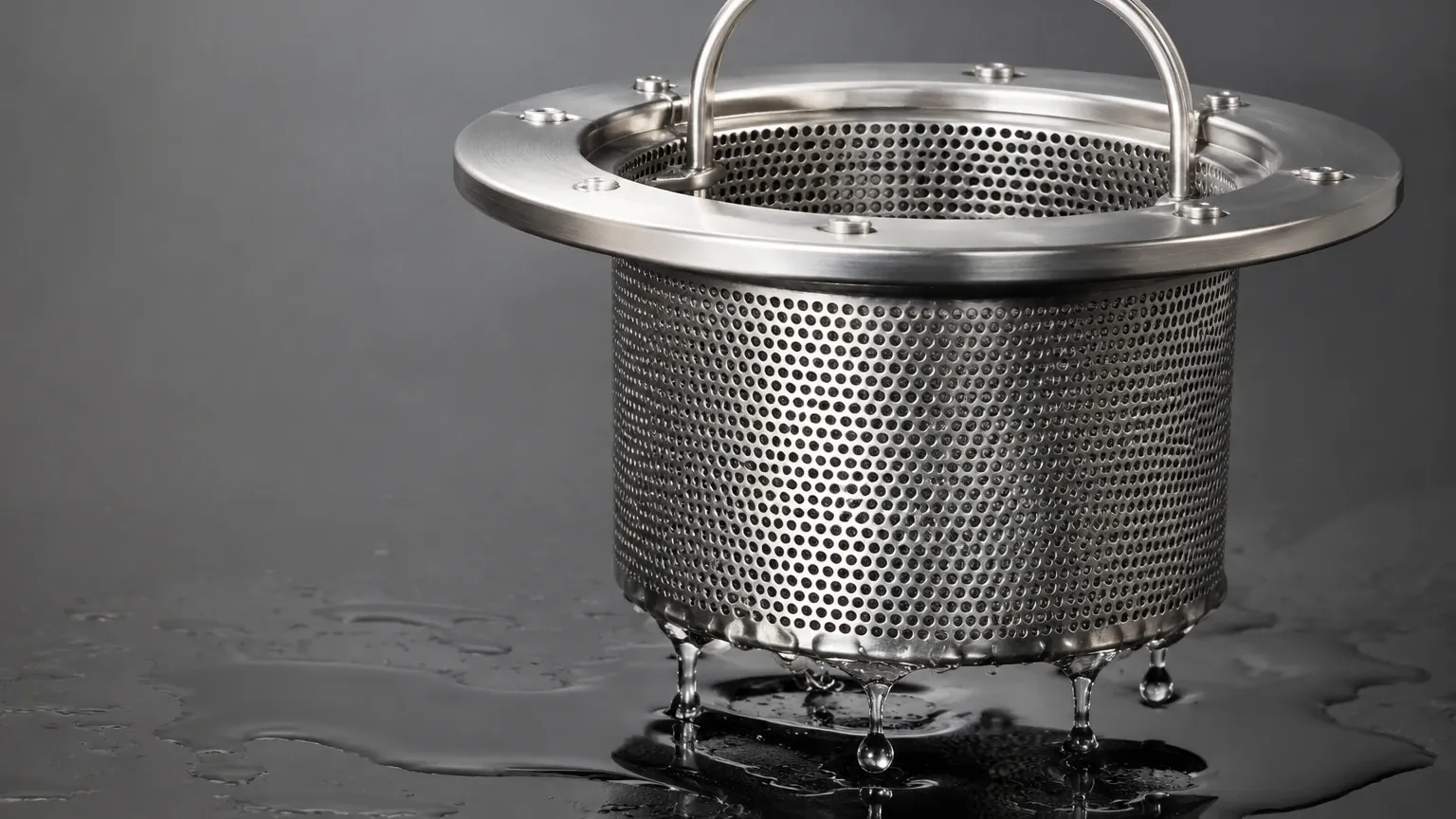
A leaking basket is often a result of structural failure. High-quality baskets utilize a combination of a heavy-duty perforated metal support and a fine wire mesh overlay. If the welding between these layers is substandard, the mesh can pull away under pressure, creating a leak path. Precision TIG welding and reinforced longitudinal seams are standard requirements for industrial-grade filtration components to ensure they maintain their shape under high differential pressure.
Engineering Considerations for Preventing Leaks
When designing or purchasing replacement strainers, engineers should evaluate several technical factors to ensure long-term, leak-free operation.
Sealing Interface Design
The design of the basket flange is critical. Some designs use a simple metal-on-metal fit, which requires high-precision machining of both the basket and the housing. Others incorporate a "V-post" or an O-ring groove directly on the basket flange to provide a positive seal. For applications where zero-bypass is required, a spring-loaded basket handle or a bolted-down cover that applies direct downward pressure on the basket is recommended.
Filtration Accuracy and Flow Rates
Strainer basket leaking can sometimes be a symptom of an undersized strainer. If the open area of the mesh is too small for the required flow rate, the differential pressure will rise rapidly. This high ΔP can force the basket off its seat or cause the mesh to rupture. Engineers should aim for a "6 to 1" ratio (where the open area of the basket is six times the cross-sectional area of the inlet pipe) to minimize pressure drop and mechanical stress.
Customization for Specific Applications
Standard off-the-shelf baskets may not fit perfectly in older or specialized housings. A gap of even a few millimeters can lead to significant bypass. Custom-manufactured baskets, designed to the exact dimensions of the existing housing, are often the most cost-effective way to solve persistent leaking issues in OEM equipment.
Troubleshooting and Maintenance Protocols
To prevent a strainer basket leaking, a proactive maintenance schedule must be implemented. Engineers should focus on the following areas during routine inspections:
1. Gasket Inspection: Every time the strainer is opened for cleaning, the gasket or O-ring should be inspected for signs of swelling, flattening, or brittleness. It is often best practice to replace the seal at every cleaning interval in critical processes.
2. Surface Cleaning: Ensure that the seating shoulder inside the strainer housing is free of scale, rust, or old gasket material. Even a small amount of buildup can prevent the basket from seating properly.
3. Differential Pressure Monitoring: Install pressure gauges upstream and downstream of the strainer. A sudden drop in differential pressure often indicates that the basket has failed or is leaking internally (bypass), while a rapid increase indicates clogging that could lead to mechanical failure.
4. Ultrasonic Cleaning: For baskets used in heavy oil or resin applications, manual cleaning may not be sufficient. Ultrasonic cleaning ensures that the pores of the wire mesh are completely clear, reducing the backpressure that contributes to leaking.
Selecting High-Performance Strainers & Baskets
When a strainer basket begins leaking due to wear or poor design, selecting a high-quality replacement is the only way to restore system integrity. At Kaifil, we specialize in manufacturing custom stainless steel filtration solutions that address the specific challenges of industrial environments.
Our Strainers & Baskets are engineered with precision-machined flanges and reinforced structures to ensure a perfect fit and zero-bypass performance. Whether you are dealing with high-viscosity fluids in chemical processing or strict hygiene requirements in the pharmaceutical industry, our technical team works with you to select the right materials and designs to eliminate leakage and optimize flow.
Key Questions to Confirm Before Purchasing:
* What is the maximum operating pressure and temperature? This determines the seal material and the required thickness of the stainless steel.
* What is the chemical composition of the fluid? This dictates the grade of stainless steel (304, 316L, or specialty alloys).
* Is the leak internal or external? This helps determine if you need a new housing gasket or a more precisely engineered basket flange.
* What is the required micron rating? Ensuring the mesh size is appropriate for the debris load prevents excessive pressure build-up.
By addressing these factors and choosing precision-manufactured components, industrial facilities can significantly reduce downtime and maintenance costs associated with strainer basket leaking. Investing in durable, high-performance filtration components ensures that your system remains protected and your processes stay efficient.
