


Strainer Basket Lock Nut
In industrial filtration systems, the integrity of the filtration process depends not only on the mesh size or the material of the filter element but also on the mechanical security of the assembly. The strainer basket lock nut is a critical component designed to ensure that the strainer basket remains firmly seated within its housing. For engineers and maintenance professionals, understanding the technical nuances of this fastener is essential for preventing fluid bypass, ensuring seal integrity, and maintaining the long-term reliability of Strainers & Baskets.
As a specialized manufacturer of stainless steel filtration solutions, Kaifil emphasizes the importance of precision-engineered components. A lock nut might seem like a secondary hardware item, but in high-pressure or high-vibration environments, it is the primary safeguard against mechanical failure and process contamination.
The Mechanical Function of a Strainer Basket Lock Nut
The primary role of a strainer basket lock nut is to provide the necessary axial force to compress the basket against the internal seat of the strainer housing. This compression is vital for several reasons:
1. Prevention of Bypass: If a strainer basket is not securely locked in place, pressurized fluid can lift the basket or create gaps between the basket flange and the housing seat. This allows unfiltered media to bypass the mesh, potentially damaging downstream equipment like pumps, valves, and heat exchangers.
2. Vibration Dampening: Industrial processes involving reciprocating pumps or high-velocity fluid flow generate significant vibration. A properly torqued lock nut prevents the basket from rattling, which can lead to fatigue failure of the wire mesh or the basket frame.
3. Seal Compression: Many strainer designs utilize O-rings or flat gaskets at the basket interface. The lock nut provides the uniform pressure required to energize these seals, ensuring a leak-proof boundary between the dirty and clean sides of the filter.
Engineering Considerations for Material Selection
When specifying a strainer basket lock nut, material compatibility is the most critical engineering decision. Because these nuts are often in direct contact with the process fluid, they must exhibit the same level of chemical and thermal resistance as the strainer basket itself.
Stainless Steel 304 vs. 316
In most industrial applications, stainless steel is the standard material due to its durability and corrosion resistance.
* SS304: Suitable for general industrial use, water treatment, and food-grade applications where chloride exposure is minimal. It offers excellent mechanical strength and cost-effectiveness.
* SS316/316L: Required for chemical processing, marine environments, and pharmaceutical applications. The addition of molybdenum provides superior resistance to pitting and crevice corrosion, particularly in the presence of chlorides or acidic solutions.
Thread Galling and Prevention
One technical challenge specific to stainless steel fasteners is thread galling (cold welding). During installation, the friction between the threads of the lock nut and the housing stud can cause the surfaces to seize. To prevent this, Kaifil recommends the use of anti-seize lubricants compatible with the process fluid or the application of specialized surface treatments like passivating or electropolishing to smooth the thread profile.
Design Variations and Threading Standards
Strainer basket lock nuts are not universal; they must be matched to the specific geometry of the strainer housing and the basket design. Common variations include:
Thread Types
* NPT (National Pipe Taper): Often used in North American piping systems where a pressure-tight seal is required through the threads themselves.
* Metric Threads: Standard in European and Asian machinery, providing precise pitch control for fine adjustments.
* ACME Threads: Preferred for heavy-duty applications where the nut must frequently be removed and reinstalled. The trapezoidal thread form is more robust and less prone to damage than standard V-threads.
Nut Geometries
* Hexagonal Nuts: The standard for most applications, allowing for the use of conventional wrenches and torque tools.
* Wing Nuts / Hand-Tighten Nuts: Used in low-pressure systems where frequent cleaning is required. These allow operators to remove the basket without tools, though they are limited in the amount of seating force they can generate.
* Knurled Nuts: Common in laboratory or precision instrumentation where finger-tightening is sufficient and space is constrained.
Common Failure Modes and Risk Mitigation
Failure of a strainer basket lock nut can lead to catastrophic system downtime. Identifying potential risks early in the design or maintenance phase is crucial for operational safety.
1. Stress Corrosion Cracking (SCC)
In high-temperature environments or those with high halogen concentrations, stainless steel nuts can develop micro-cracks. If the nut is under high tension, these cracks can propagate rapidly, leading to a sudden snap. Regular ultrasonic testing or visual inspection for discoloration is recommended in high-risk environments.
2. Vibration Loosening
In systems with constant pulsation, a standard nut may gradually back off. To mitigate this, engineers may specify lock nuts with nylon inserts (Nyloc), though these are limited by temperature. For high-temperature industrial use, all-metal prevailing torque nuts or the use of safety wires and tab washers are more appropriate solutions.
3. Over-Torquing
Applying excessive torque can deform the strainer basket flange or strip the threads of the housing. It is essential to follow the manufacturer’s specified torque values, which are calculated based on the seal material and the operating pressure of the system.
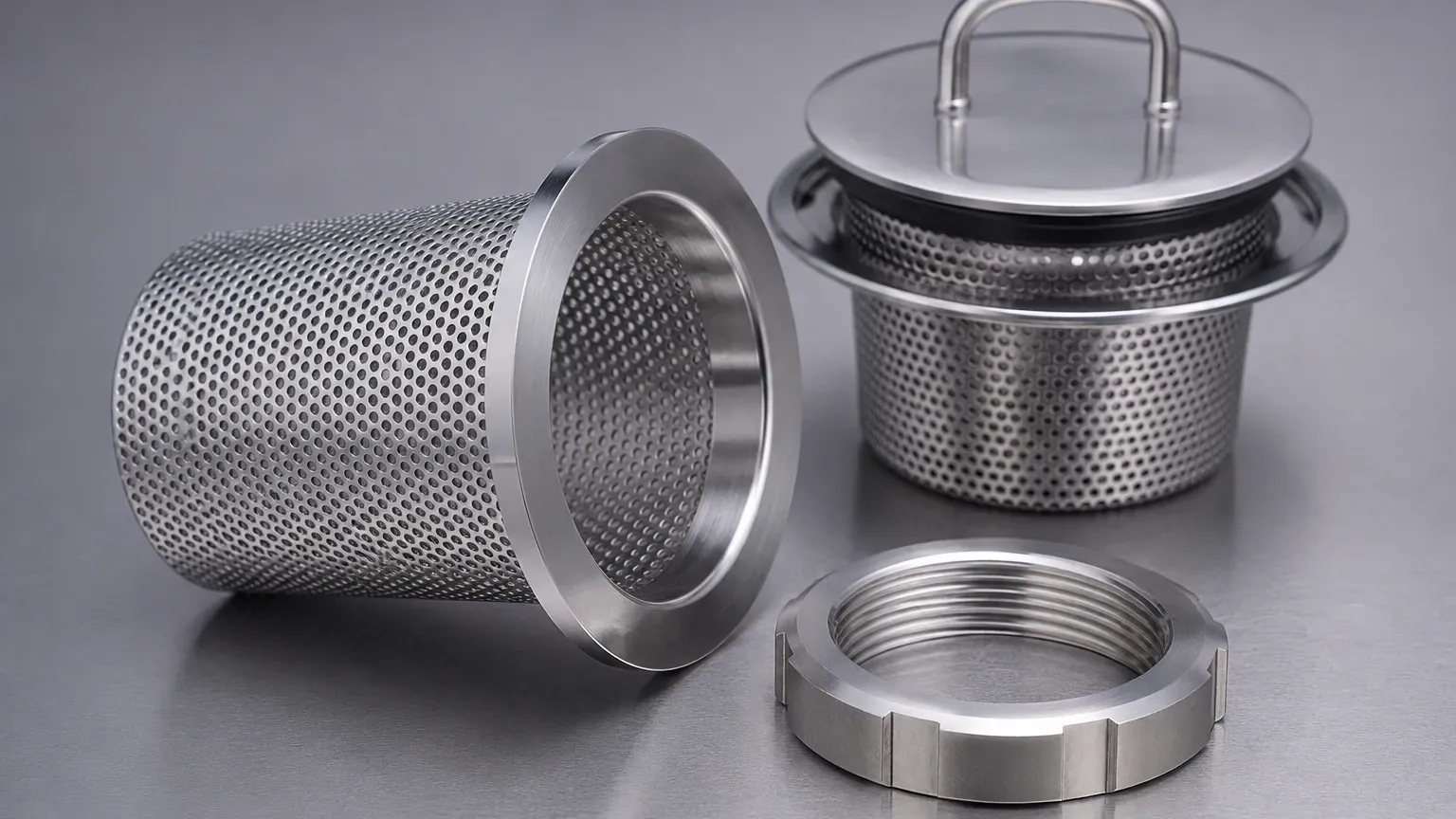
Customization and OEM Integration
For many specialized industrial applications, off-the-shelf fasteners do not meet the rigorous requirements of the process. Kaifil provides OEM and customized filtration components, including bespoke strainer basket lock nut designs that integrate seamlessly with unique housing geometries.
Customization options often include:
* Specific Alloy Grades: Utilizing Duplex stainless steel or Monel for extreme chemical environments.
* Integrated Seals: Designing the nut with a recessed groove for an O-ring to provide secondary containment.
* Extended Grips: Modifying the nut height to allow for easier access in recessed housings or when operators are wearing heavy protective equipment.
When working with an OEM partner, engineers should provide the maximum operating pressure, temperature range, and a detailed chemical analysis of the process media to ensure the lock nut is engineered for the specific application.
Best Practices for Installation and Maintenance
To maximize the lifespan of both the lock nut and the Strainers & Baskets, a standardized maintenance protocol should be implemented.
1. Inspection Upon Removal: Every time the strainer basket is removed for cleaning, the lock nut should be inspected for thread wear, deformation, or signs of corrosion. If the nut does not spin freely by hand (before tightening), it may be reaching the end of its service life.
2. Cleanliness: Ensure that the threads on both the nut and the housing are free of debris. Small particles trapped in the threads can cause false torque readings, leading to an under-tightened assembly.
3. Lubrication: Unless the process forbids it (e.g., high-purity oxygen lines), apply a thin layer of food-grade or industrial-grade lubricant to the threads to facilitate smooth installation and prevent galling.
4. Replacement Cycles: In critical applications, the lock nut should be treated as a semi-consumable item. Replacing the nut periodically—even if it appears functional—can prevent the much higher costs associated with a seized or broken fastener.
Conclusion: The Impact on Total Cost of Ownership
While the strainer basket lock nut is a small component, its impact on the total cost of ownership (TCO) of a filtration system is significant. A failed nut leads to bypassed contaminants, which can ruin expensive downstream machinery or result in rejected product batches. By selecting high-quality materials, ensuring precise thread matches, and following rigorous maintenance schedules, industrial facilities can ensure their filtration systems operate at peak efficiency.
Kaifil remains committed to providing the technical expertise and manufacturing precision required for these demanding components. Whether you are designing a new system or looking to optimize an existing one, focusing on the mechanical integrity of your basket retention system is a vital step toward operational excellence.
