


Strainer Basket Pipe
In industrial fluid management, the integrity of downstream equipment—such as pumps, valves, heat exchangers, and flow meters—hinges on the effective removal of solid contaminants. A strainer basket pipe assembly serves as a critical line of defense within a piping system. Unlike simpler filtration components, these systems are designed to handle high flow rates while providing a large surface area for debris collection, ensuring that industrial processes remain efficient and downtime is minimized.
For engineers and procurement professionals, selecting the right Strainers & Baskets involves more than simply matching a pipe diameter. It requires a deep understanding of fluid dynamics, material compatibility, and the specific mechanical stresses of the application environment. This guide examines the technical considerations, design variations, and maintenance protocols essential for optimizing strainer basket pipe performance.
The Functional Role of Strainer Basket Pipe Systems
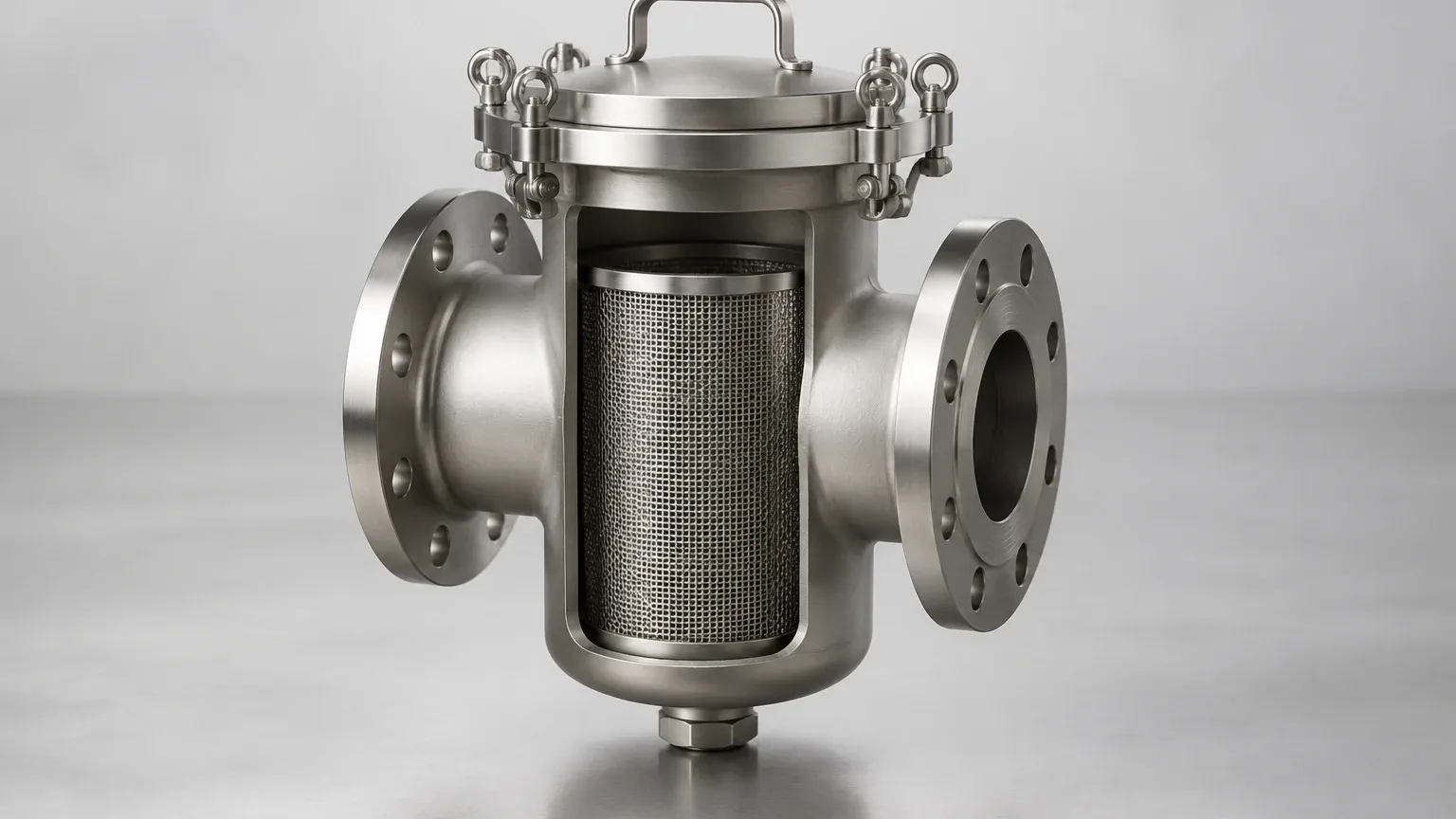
A basket strainer is a closed vessel with a removable screen (the basket) that intercepts solids from a flowing liquid or gas. The term "strainer basket pipe" generally refers to the integration of these units into the primary process piping. Their primary function is the mechanical separation of solids, but their design offers several advantages over alternative filtration methods like Y-strainers.
High Dirt-Holding Capacity
Because the basket design allows for a larger internal volume compared to Y-strainers, these units can accumulate a significant amount of debris before requiring cleaning. This is particularly vital in B2B sectors like chemical processing or water treatment, where process interruptions are costly. The larger surface area of the basket also results in a lower initial pressure drop across the system.
Ease of Maintenance
One of the defining features of a basket strainer integrated into a pipe network is its top-opening design. This allows maintenance teams to remove the basket for cleaning without dismantling the entire piping assembly. In many industrial configurations, a "simplex" design is used for batch processes, while "duplex" designs (two strainers connected by a diverter valve) are employed for continuous operations where flow cannot be stopped.
Engineering Criteria for Selection and Sizing
When integrating a strainer basket pipe into a system, engineers must evaluate several variables to ensure the component does not become a bottleneck or a point of failure.
Flow Rate and Pressure Drop (Delta P)
The most critical calculation in strainer selection is the pressure drop. Every strainer introduces some resistance to flow. As the basket fills with debris, this resistance increases. Engineers must calculate the "clean pressure drop" based on the fluid's viscosity and specific gravity. A common rule of thumb is to size the strainer so that the clean pressure drop does not exceed 2 PSI at the maximum intended flow rate.
The Open Area Ratio
The efficiency of a strainer basket pipe is often measured by its open area ratio (OAR). This is the ratio of the total open area of the basket mesh to the internal cross-sectional area of the inlet pipe. For most industrial applications, an OAR of 6:1 or 8:1 is preferred. A higher OAR means the strainer can operate longer between cleaning cycles and handles surges in particulate load more effectively.
Micron Rating and Mesh Selection
Selection of the mesh or perforation size is a balance between protection and performance. If the mesh is too coarse, harmful particles pass through; if it is too fine, the strainer will clog prematurely.
* Perforated Metals: Typically used for larger particles (1/32" to 1/2"). These provide the structural strength for the basket.
* Wire Mesh Liners: For finer filtration (down to 5 microns), a stainless steel wire mesh is often lined inside a perforated basket to provide both filtration accuracy and mechanical support.
Material Compatibility and Durability
In heavy industrial environments, the material of the strainer basket pipe determines its service life. Stainless steel is the industry standard for high-performance applications due to its corrosion resistance and thermal stability.
SS304 vs. SS316L
* Type 304 Stainless Steel: Suitable for most general industrial applications, including water treatment and hydraulic systems. It offers excellent durability and cost-effectiveness.
* Type 316L Stainless Steel: Required for more aggressive environments, such as chemical processing, pharmaceutical manufacturing, or marine applications. The addition of molybdenum provides superior resistance to chlorides and pitting corrosion.
Gasket and Seal Selection
While the metal housing and basket are crucial, the seals prevent bypass and external leaks. Depending on the fluid being processed, seals may be made of EPDM, Viton (FKM), or PTFE. For high-temperature steam or volatile chemical lines, specialized metallic or spiral-wound gaskets may be necessary to ensure the integrity of the strainer basket pipe connection.
Installation Best Practices for Piping Systems
Proper installation is vital to ensure the longevity of both the strainer and the downstream equipment. A poorly installed strainer can lead to turbulence, accelerated wear, or mechanical failure.
1. Orientation: Basket strainers are typically designed for horizontal pipe runs. Installing them in a vertical line can lead to debris falling back into the inlet pipe when the flow stops, or improper seating of the basket.
2. Support and Alignment: Large strainer housings can be heavy, especially when filled with fluid. The piping must be adequately supported to prevent stress on the strainer flanges. Misalignment during installation can lead to gasket failure and leaks.
3. Upstream/Downstream Clearance: To minimize turbulence and ensure a uniform flow profile through the basket, it is recommended to have a straight run of pipe (typically 5 to 10 pipe diameters) before the strainer inlet.
4. Pressure Gauges: Installing differential pressure gauges at the inlet and outlet of the strainer basket pipe is an industrial best practice. This allows operators to monitor the "clogging state" of the basket in real-time, enabling predictive maintenance rather than reactive repairs.
Maintenance and Cleaning Protocols
The total cost of ownership (TCO) of a filtration system is heavily influenced by maintenance requirements. For a strainer basket pipe, the cleaning cycle is determined by the particulate load of the process fluid.
Cleaning Procedure
When the differential pressure reaches a pre-set limit (often 10-15 PSI above the clean pressure drop), the basket must be cleaned. The process involves:
* Isolating the strainer using upstream and downstream valves.
* Venting the internal pressure and draining the housing.
* Opening the cover and removing the basket.
* Cleaning the basket using a high-pressure water jet or ultrasonic bath, depending on the nature of the contaminants.
* Inspecting the basket for signs of mechanical fatigue or mesh breakthrough before re-installation.
Common Risks of Neglect
Failure to clean the basket can lead to "basket collapse." When the pressure differential becomes too high, the structural integrity of the basket is compromised, potentially sending both the accumulated debris and shards of the basket itself into the downstream equipment. Regular inspection of the strainer basket pipe assembly prevents these catastrophic failures.
Customization and OEM Solutions
Standard off-the-shelf strainers do not always meet the rigorous demands of specialized industrial processes. Customization is often required to match specific pipe dimensions, pressure ratings (such as ASME Class 150, 300, or 600), or filtration requirements.
Customized features may include:
* Specialized Coatings: Such as ETFE or rubber lining for handling highly corrosive acids.
* Magnetic Inserts: To capture fine iron or steel particles that might otherwise pass through a standard mesh.
* Heating Jackets: For high-viscosity fluids like resins or chocolate that must be kept at a specific temperature to flow through the pipe.
* Automatic Self-Cleaning Mechanisms: For applications where manual cleaning is impractical due to safety concerns or high debris loads.
Conclusion: Ensuring System Reliability
The integration of a high-quality strainer basket pipe is a fundamental requirement for any industrial piping system handling non-pure fluids. By selecting the appropriate materials, sizing the unit for optimal pressure drop, and adhering to a strict maintenance schedule, facilities can significantly extend the life of their mechanical assets.
When evaluating suppliers, it is essential to partner with manufacturers who understand the nuances of metal filtration and can provide technical documentation for flow coefficients (Cv) and material certifications. A well-engineered strainer is not just a consumable part; it is a critical component of industrial risk management and process efficiency.
