


Strainer Basket Tailpiece
In industrial filtration systems, the efficiency of a process depends not only on the filter media itself but also on the structural integrity and design of the housing components. The strainer basket tailpiece serves as a critical interface between the filtration element and the downstream piping system. While often overlooked in favor of the mesh micron rating, the tailpiece is essential for maintaining flow dynamics, ensuring a leak-proof seal, and facilitating the structural stability of the entire basket assembly. For engineers and procurement specialists, understanding the technical specifications of the strainer basket tailpiece is vital for optimizing system uptime and reducing long-term maintenance costs.
Industrial Strainers & Baskets are engineered to handle high-pressure environments, corrosive fluids, and varying flow rates. The tailpiece, typically located at the discharge end of the basket or as part of the connection assembly, must be manufactured to precise tolerances to prevent bypass—a condition where unfiltered fluid escapes around the filter element. This guide examines the engineering considerations, material requirements, and selection criteria for industrial strainer basket tailpieces.
The Functional Role of the Tailpiece in Industrial Filtration
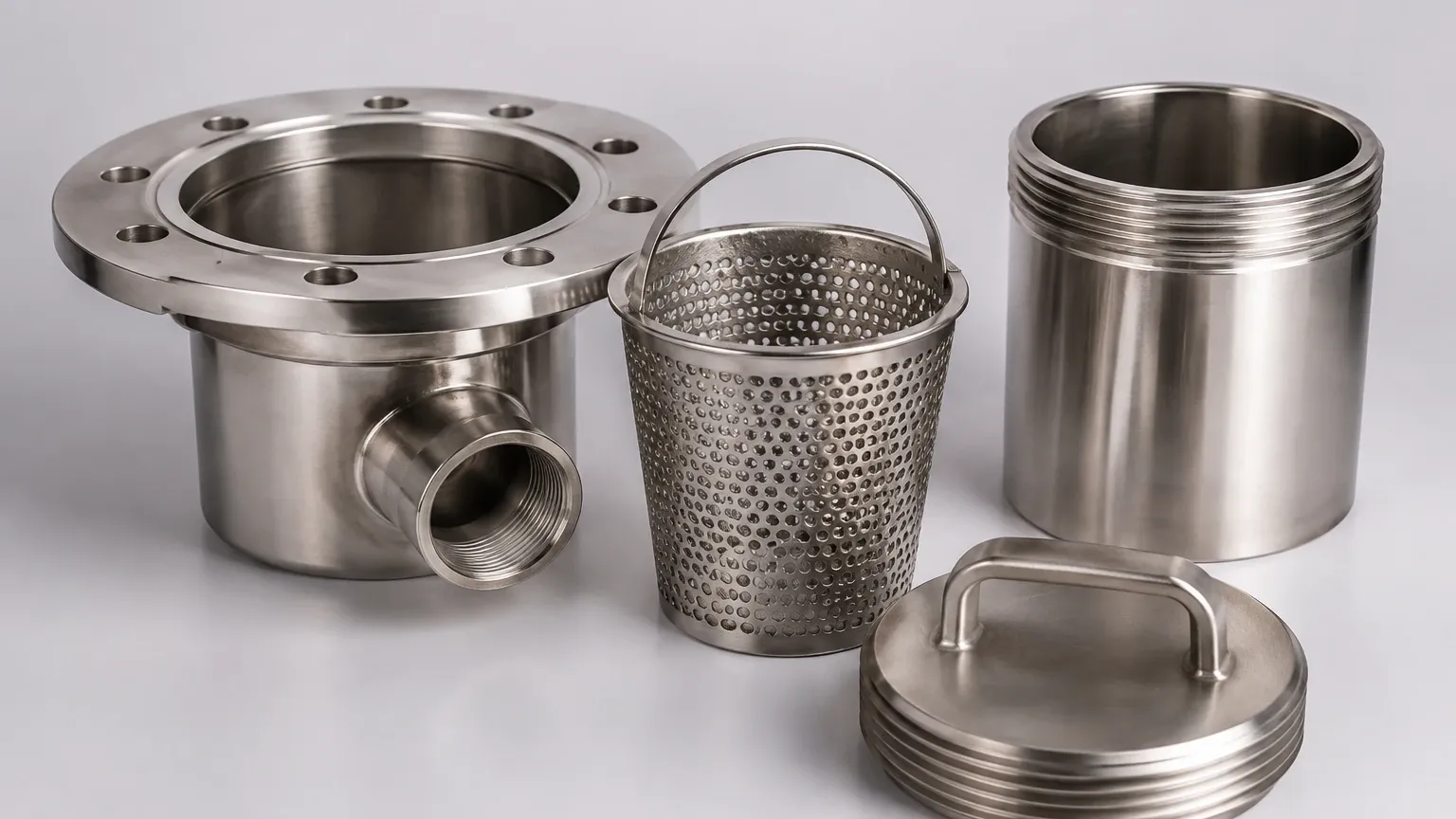
The primary function of a strainer basket tailpiece is to provide a secure and stable exit point for filtered media. In many heavy-duty industrial strainers, the basket is suspended within a housing. The tailpiece acts as the conduit that directs the fluid from the interior of the basket into the outlet port of the housing.
From an engineering perspective, the tailpiece must fulfill three main roles:
1. Alignment and Support: It ensures the basket remains centered within the housing. Improper alignment can lead to uneven wear on the mesh or mechanical stress on the basket frame, eventually causing structural failure.
2. Sealing Interface: The tailpiece often incorporates a machined surface or a flange that mates with a gasket or O-ring. This seal is the primary defense against fluid bypass. If the tailpiece is not perfectly concentric or if the surface finish is inadequate, the integrity of the filtration process is compromised.
3. Flow Transition: As fluid moves through the filter media, it converges toward the outlet. The internal geometry of the tailpiece must be designed to minimize turbulence and pressure drop (ΔP). Sudden changes in diameter or sharp internal edges can create vortices that increase energy consumption and may lead to cavitation in high-velocity systems.
Material Selection and Corrosion Resistance
Because the strainer basket tailpiece is constantly exposed to the process fluid, material selection is dictated by the chemical compatibility and temperature requirements of the application. At Kaifil, we prioritize high-grade alloys to ensure longevity in demanding environments.
Stainless Steel 304 vs. 316L
Stainless steel is the industry standard for most industrial filtration components due to its mechanical strength and resistance to oxidation.
* SS304: Suitable for general industrial use, water treatment, and food and beverage applications where corrosive agents are minimal. It provides excellent structural support and is cost-effective for non-acidic environments.
* SS316L: The preferred choice for chemical processing, pharmaceutical manufacturing, and marine environments. The addition of molybdenum enhances resistance to pitting and crevice corrosion, particularly in the presence of chlorides. The "L" designation (low carbon) is crucial if the tailpiece requires welding, as it prevents carbide precipitation and maintains corrosion resistance at the weld zones.
Specialty Alloys
For highly aggressive media, such as concentrated acids or high-temperature steam, exotic alloys like Hastelloy, Monel, or Duplex stainless steel may be required. These materials are selected based on their specific resistance to stress corrosion cracking and thermal expansion coefficients, ensuring the tailpiece maintains its dimensions under extreme fluctuations.
Engineering Specifications: Connection Types and Tolerances
The method by which a strainer basket tailpiece connects to the rest of the system is a significant factor in both installation ease and operational safety. There are several standard configurations utilized in industrial settings:
Threaded Tailpieces (NPT/BSPT)
Threaded connections are common in smaller diameter systems (typically under 2 inches). They offer a secure mechanical bond but require careful attention to thread quality to prevent galling, especially with stainless steel components. In these designs, the tailpiece is often integrated into a screw-in basket base.
Flanged Connections
For larger industrial Strainers & Baskets, flanged tailpieces are the standard. These follow ANSI, DIN, or JIS standards to ensure compatibility with global piping infrastructure. Flanged designs allow for easier removal of the basket for cleaning and inspection without disturbing the primary piping. The thickness and bolt-hole pattern of the tailpiece flange must be engineered to withstand the maximum system pressure, including potential pressure surges.
Machined O-Ring Grooves
In high-precision applications, such as hydraulic oil filtration or pharmaceutical processing, the tailpiece may feature precision-machined grooves for elastomeric seals. The surface roughness (Ra) of these grooves is critical; a finish that is too rough will tear the seal, while a finish that is too smooth may not allow for proper seal lubrication and seating.
Optimizing Flow Dynamics and Pressure Drop
One of the most critical metrics for any filtration system is the pressure drop across the unit. While the mesh size is the primary contributor to ΔP, the design of the strainer basket tailpiece plays a secondary but vital role.
When fluid exits the basket, it undergoes a transition from a large volume (the basket body) to a narrower volume (the tailpiece and outlet pipe). If the tailpiece diameter is too small, it creates a bottleneck. Engineers must calculate the "open area ratio" of the entire basket assembly, ensuring that the exit velocity through the tailpiece does not exceed recommended limits for the specific fluid viscosity.
A well-designed tailpiece features a tapered internal geometry to facilitate a smooth transition. This reduces the energy required to pump fluid through the system and prevents the buildup of debris at the base of the basket, which can occur if flow stagnates in dead zones created by poor tailpiece design.
Maintenance, Inspection, and Replacement Cycles
The strainer basket tailpiece is subject to mechanical wear over time, particularly in systems handling abrasive slurries or high-velocity particulates. Regular inspection is necessary to ensure the continued performance of the filtration system.
Identifying Wear Patterns
* Erosion: High-velocity fluid containing solids can cause "washout" or thinning of the tailpiece walls. This is most common at the point where the fluid changes direction.
* Corrosion: Even stainless steel can succumb to localized corrosion if the fluid chemistry changes or if stagnant pockets of fluid are allowed to sit in the tailpiece during shutdowns.
* Mechanical Deformation: If the basket is subjected to a high differential pressure (due to clogging), the force can be transferred to the tailpiece, causing it to bend or crack at the attachment point.
Replacement Considerations
When evaluating whether to replace a tailpiece or the entire basket, engineers should consider the total cost of ownership. If the tailpiece is integrated into the basket structure, any sign of structural compromise usually necessitates a full basket replacement. However, in modular systems, the tailpiece can sometimes be replaced independently. It is essential to confirm that the replacement part matches the original OEM specifications for length, diameter, and sealing surface to avoid introducing bypass risks.
Customization and OEM Solutions
Every industrial environment presents unique challenges, and standard off-the-shelf components may not always suffice. Customization of the strainer basket tailpiece allows for optimized performance in specific scenarios:
* Extended Tailpieces: Used in deep housing configurations where the basket must reach a specific depth to align with the outlet.
* Reinforced Structures: For high-viscosity fluids or high-pressure differentials, the tailpiece can be reinforced with gussets or thicker wall sections to prevent collapse.
* Specialty Coatings: In some cases, applying a PTFE coating or electropolishing the tailpiece can reduce friction and prevent the adhesion of sticky or biological materials.
Kaifil specializes in providing customized filtration solutions, working closely with engineering teams to develop tailpieces that meet exact dimensional and material requirements. By controlling the manufacturing process from material selection to final machining, we ensure that every component contributes to the overall reliability of the filtration system.
Technical Confirmation Before Procurement
Before finalizing a purchase or specifying a strainer basket tailpiece for a new project, technical professionals should confirm several key parameters:
1. Fluid Compatibility: Ensure the alloy (SS304, SS316L, etc.) is rated for the specific chemicals and temperatures of the process.
2. Pressure Rating: Confirm the tailpiece and its connection method can handle the maximum operating pressure plus a safety margin.
3. Dimensional Accuracy: Verify the length and diameter of the tailpiece to ensure it seats correctly within the existing housing.
4. Seal Type: Determine if the tailpiece requires a specific gasket material (EPDM, Viton, PTFE) based on the fluid properties.
5. Flow Requirements: Check that the internal diameter of the tailpiece does not restrict flow beyond the system’s allowable pressure drop limits.
By focusing on these technical details, purchasing teams can avoid the common pitfalls of improper fitment and premature component failure. A high-quality tailpiece is an investment in the stability and efficiency of the entire industrial process.
For more information on technical specifications and custom design options for industrial filtration components, Review product options and application support to find the right solution for your specific operational needs.
