


Strainer Basket Use
In industrial fluid handling, the integrity of downstream equipment often depends on the efficiency of primary filtration components. Among these, the implementation of high-quality filtration hardware is a critical engineering decision. Proper strainer basket use ensures that pumps, valves, heat exchangers, and sensitive instrumentation remain protected from particulate contamination, scale, and debris. As a specialized manufacturer of stainless steel filtration solutions, Kaifil emphasizes that understanding the technical nuances of these components is essential for optimizing system uptime and reducing the total cost of ownership.
The Fundamental Role of Strainers & Baskets in Industrial Systems
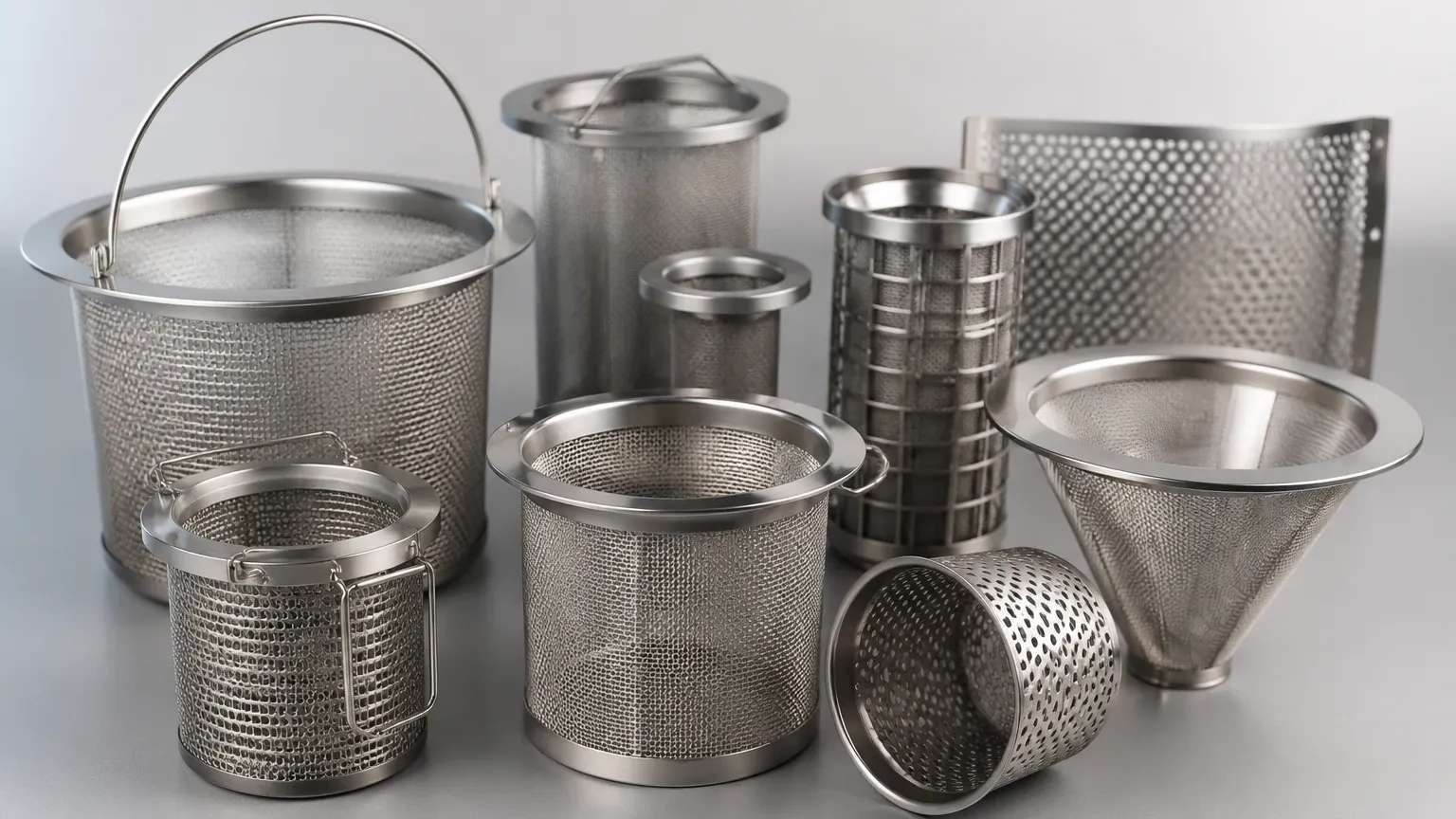
Industrial strainers are essentially coarse filters designed to remove larger particles from a flowing liquid or gas. While the terms "filter" and "strainer" are sometimes used interchangeably, in an engineering context, strainers typically handle larger particulates and are often designed for higher flow rates with lower initial pressure drops. The core of this system is the basket, a removable, cleanable component that captures solids while allowing the fluid to pass through.
Effective Strainers & Baskets serve as the first line of defense in various piping systems. Whether used in a simplex, duplex, or Y-strainer configuration, the basket must be engineered to withstand the mechanical stresses of the flow while maintaining the required filtration accuracy. For engineers, the selection process involves more than just matching a pipe size; it requires a deep dive into fluid dynamics, material compatibility, and the specific nature of the contaminants being removed.
Defining Filtration vs. Straining
Straining is generally defined as the removal of particles 40 microns or larger. However, with advanced manufacturing techniques, modern strainer baskets can be lined with fine stainless steel wire mesh to achieve much higher levels of precision. The primary objective of strainer basket use in most industrial settings is the protection of expensive mechanical equipment. For example, a small piece of welding slag or a stray bolt left in a new piping system can cause catastrophic failure in a high-speed centrifugal pump if not captured by a suction-side strainer.
Engineering Considerations for Material Selection
Material selection is perhaps the most critical factor in determining the service life of a strainer basket. Because these components are often subjected to corrosive fluids, high temperatures, and abrasive particulates, the choice of alloy must be dictated by the specific application environment.
Stainless Steel Grades and Chemical Compatibility
Stainless steel is the industry standard for high-performance strainer baskets due to its mechanical strength and corrosion resistance. The two most common grades used are:
* Type 304 Stainless Steel: This is the most widely used grade, offering excellent resistance to atmospheric corrosion and many organic and inorganic chemicals. It is suitable for most water treatment, food processing, and general industrial applications.
* Type 316 Stainless Steel: Containing molybdenum, Type 316 provides superior resistance to chlorides and pitting. This makes it the preferred choice for marine environments, chemical processing plants, and pharmaceutical applications where aggressive cleaning agents or corrosive process fluids are present.
Beyond the alloy, the construction method also matters. Precision-welded baskets provide better structural integrity than those that are simply crimped. For high-pressure applications, baskets may require heavy-duty reinforcement bands or perforated metal backings to prevent collapsing under heavy particulate loading.
Operational Parameters for Effective Strainer Basket Use
To ensure optimal performance, engineers must evaluate several operational parameters before finalizing a design. Miscalculating these factors can lead to frequent clogging, equipment cavitation, or structural failure of the basket.
Calculating Open Area Ratio (OAR)
The Open Area Ratio is the relationship between the total open area of the strainer basket (the sum of all the holes or mesh openings) and the cross-sectional area of the inlet pipe. A common industry standard is to maintain an OAR of at least 6:1. A higher OAR means the strainer can accumulate more debris before the pressure drop becomes excessive, which extends the time between cleaning cycles. In high-viscosity fluid applications, an even higher OAR may be required to maintain efficient flow.
Managing Differential Pressure
Differential pressure ($ΔP$) is the difference in pressure between the inlet and the outlet of the strainer. Every strainer basket use case must account for both the clean pressure drop and the maximum allowable pressure drop. As the basket collects debris, the open area decreases, and the $ΔP$ increases. If the $ΔP$ exceeds the structural limits of the basket, it may burst or bypass, sending all the collected contaminants downstream. Monitoring this via differential pressure gauges is a best practice for any industrial installation.
Application-Specific Implementation Strategies
The versatility of stainless steel strainer baskets allows them to be utilized across a vast spectrum of industries. However, the specific requirements for strainer basket use vary significantly depending on the sector.
Protection of Pumps and Heat Exchangers
In hydraulic and cooling water systems, strainers are typically installed on the suction side of pumps. This prevents large solids from entering the pump casing and damaging the impeller or mechanical seals. In heat exchangers, strainers prevent the narrow tubes from becoming fouled with scale or biological growth, which would otherwise drastically reduce heat transfer efficiency. For these applications, a robust perforated metal basket is often sufficient.
Food, Beverage, and Pharmaceutical Standards
In sanitary applications, the requirements for Strainers & Baskets are much more stringent. Baskets must be manufactured with smooth, crevice-free welds to prevent bacterial growth. The materials must be FDA-compliant, and the finish often requires electro-polishing to achieve a specific Ra (roughness average) value. In these industries, the strainer basket use is often focused on ensuring product purity and protecting downstream homogenization or bottling equipment.
Chemical and Petrochemical Processing
Chemical plants often deal with volatile or highly corrosive fluids at elevated temperatures. Here, the strainer basket must be engineered for extreme durability. Heavy-gauge stainless steel and specialized gasket materials (such as PTFE or Viton) are used to ensure a leak-proof seal and long-term resistance to chemical attack. In batch processing, duplex strainers are frequently used, allowing one basket to be cleaned while the other remains in service, ensuring continuous operation.
Maintenance Best Practices and Replacement Cycles
Even the best-engineered strainer basket will fail if not maintained correctly. Establishing a clear maintenance protocol is essential for preventing system downtime.
Cleaning Procedures for Reusable Baskets
One of the primary advantages of stainless steel strainer baskets is that they are reusable. The cleaning method depends on the nature of the contaminant:
1. Manual Cleaning: For large, non-adhesive debris, the basket can be removed and rinsed with water or compressed air. It is vital to clean from the outside in (backwashing) to push particles out of the mesh or perforations.
2. Chemical Cleaning: For sticky resins, oils, or biological fouling, baskets may need to be soaked in a compatible solvent or caustic solution. Care must be taken to ensure the cleaning agent does not degrade the stainless steel or the gaskets.
3. Ultrasonic Cleaning: For fine mesh-lined baskets where particles are deeply embedded, ultrasonic cleaning is the most effective method to restore the original open area.
Identifying When to Replace
While reusable, strainer baskets do have a finite service life. Signs that a basket needs replacement include:
* Visible Deformation: Any bowing or crushing of the basket indicates it has been subjected to pressure beyond its design limit.
* Broken Welds or Mesh: Even a small tear in the mesh allows contaminants to bypass the filter, rendering it useless.
* Persistent Pressure Drop: If the clean pressure drop remains high even after thorough cleaning, it suggests that the mesh is permanently fouled or blinded.
Customization and OEM Solutions for Complex Systems
Standard off-the-shelf strainers do not always meet the needs of specialized industrial processes. This is where custom manufacturing becomes invaluable. Customization options for strainer basket use include unique dimensions to fit existing housings, specialized handle designs for easier removal, and the integration of magnetic inserts to capture fine ferrous particles that might pass through a standard mesh.
Kaifil specializes in these bespoke solutions, working closely with engineers to develop filtration components that match specific flow rates, micron ratings, and structural requirements. By choosing a custom-engineered basket, facilities can often improve their filtration efficiency and reduce the frequency of maintenance, leading to significant long-term savings.
Conclusion: Optimizing Filtration Performance
Successful strainer basket use is the result of careful engineering, appropriate material selection, and disciplined maintenance. By understanding the relationship between flow velocity, pressure drop, and particulate loading, technical professionals can ensure their systems operate at peak efficiency. Whether the goal is to protect a multi-million dollar turbine or to ensure the purity of a food product, the humble strainer basket remains an indispensable component in modern industrial infrastructure. Investing in high-quality stainless steel components and following rigorous selection criteria will always yield better performance and reliability in the long run.
