


Basket Strainer Uk
In industrial fluid handling, the protection of downstream equipment is a primary engineering concern. Whether in chemical processing, food production, or water treatment, debris and particulate matter can cause significant damage to pumps, valves, and heat exchangers. The use of a basket strainer is a standard technical solution designed to remove these solids from liquid streams. For engineers and procurement specialists seeking a basket strainer uk solution, understanding the technical specifications, material compatibility, and design variations is essential for ensuring system longevity and operational efficiency.
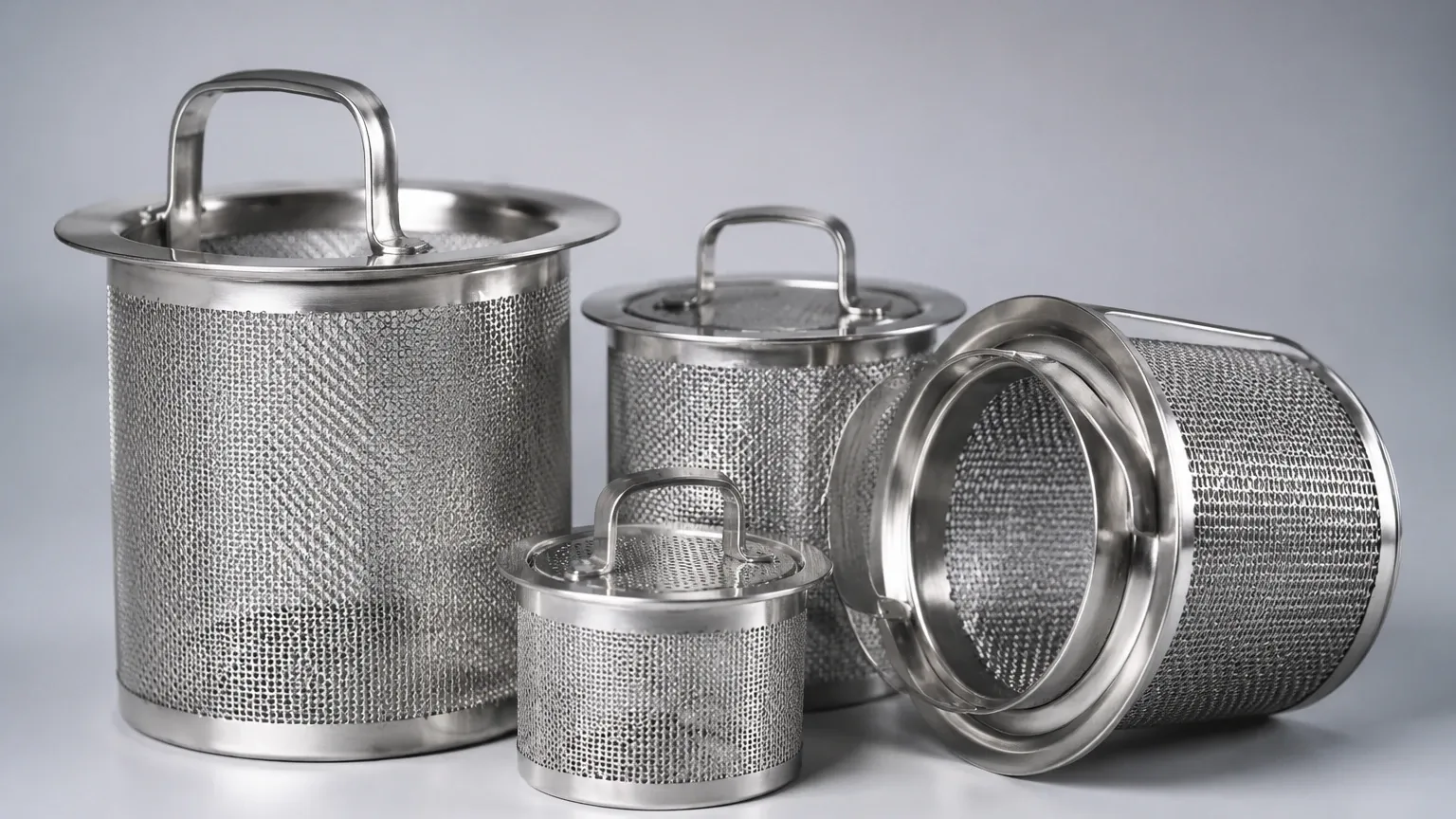
Basket strainers, often referred to as pot strainers, are closed vessels with a removable screen or basket that intercepts particles as fluid passes through. Unlike Y-strainers, which are typically used for smaller amounts of debris in high-pressure steam lines, basket strainers are designed for systems where a higher volume of solids is expected. Their vertical configuration allows for a larger holding capacity and a lower pressure drop, making them the preferred choice for liquid applications across various UK industrial sectors.
Engineering Fundamentals of Basket Strainers
The fundamental purpose of Strainers & Baskets is to provide a mechanical barrier. The design consists of an inlet and an outlet, with a basket-shaped element positioned in the flow path. As the liquid enters the strainer, it flows into the basket; the liquid passes through the mesh or perforated metal, while the solids are trapped inside.
Simplex vs. Duplex Configurations
One of the first decisions an engineer must make is whether a simplex or duplex configuration is required. A simplex basket strainer is used in batch processes where the flow can be temporarily interrupted to clean or replace the basket. In contrast, a duplex strainer (or twin strainer) consists of two separate strainer chambers connected by a diverting valve. This allows one side to remain in operation while the other is serviced, which is critical for continuous-flow industries like chemical refining or power generation, where downtime is prohibitively expensive.
Flow Dynamics and Pressure Drop
In the context of fluid engineering, the pressure drop (Delta P) across a strainer is a critical performance metric. A well-designed basket strainer provides a large open area ratio—often 6:1 or higher—compared to the cross-sectional area of the pipe. This high ratio ensures that even as the basket begins to fill with debris, the impact on the system’s flow rate remains minimal. For UK-based facilities operating under strict energy efficiency guidelines, minimizing pressure drop is not just a matter of performance, but also a way to reduce pump energy consumption.
Material Selection and Durability
Material selection is governed by the chemical properties of the fluid, the operating temperature, and the external environment. In the UK, where many industrial sites are located in coastal or high-humidity areas, corrosion resistance is a top priority.
Stainless Steel 304 and 316
Stainless steel is the industry standard for high-performance filtration. Grade 304 is suitable for general-purpose applications, providing good resistance to atmospheric corrosion and many organic and inorganic chemicals. However, for more demanding environments, Grade 316 is preferred. It contains molybdenum, which significantly enhances resistance to pitting and crevice corrosion in chloride-rich environments. For pharmaceutical and food-grade applications, 316L (low carbon) is often specified to prevent carbide precipitation during welding, ensuring the highest levels of hygiene and structural integrity.
Specialty Alloys and Coatings
Beyond standard stainless steel, some applications require specialty alloys like Monel, Hastelloy, or Duplex Stainless Steel. These are typically reserved for highly corrosive chemical processing or offshore oil and gas applications. In some cases, carbon steel strainers may be used for non-corrosive fluids like oils or lubricants, often with an internal epoxy coating to extend service life.
Selection Criteria for Industrial Applications
When sourcing a basket strainer uk for a specific project, several technical variables must be confirmed to ensure the component is fit for purpose.
Filtration Accuracy (Micron Rating)
The "tightness" of the filtration is determined by the basket's mesh or perforation size. Perforated metals are typically used for coarse filtration (removing stones, scale, or large debris), with hole sizes ranging from 1/32" to 1/2". For finer filtration, the perforated basket acts as a support for a fine wire mesh lining. This mesh can filter down to 20 microns or less, depending on the application requirements. Engineers must balance the need for fine filtration with the reality that finer meshes clog more quickly and increase the initial pressure drop.
Connection Standards
In the UK market, connection types must align with existing piping standards. Common options include:
- Flanged Connections: Conforming to BS EN 1092-1 (formerly BS 4504) or ANSI/ASME B16.5. These are preferred for larger pipe sizes and high-pressure applications due to their ease of installation and secure sealing.
- Threaded Connections: Often NPT or BSP, used for smaller diameter pipes (typically 2" and below) where a compact design is required.
- Socket Weld: Used in high-pressure systems where a permanent, leak-proof joint is necessary.
Seal and Gasket Materials
The choice of seal material is as important as the metal itself. Common options include EPDM for water applications, Viton (FKM) for high temperatures and chemicals, and PTFE for extreme chemical resistance. Ensuring the seal is compatible with the process fluid prevents leaks and bypass, which could compromise downstream equipment.
Customization and OEM Solutions
Standard off-the-shelf strainers do not always meet the unique requirements of specialized industrial processes. This is where custom manufacturing and OEM capabilities become vital. A manufacturer like Kaifil specializes in tailoring the design of the basket and the housing to meet specific operational constraints.
Custom Basket Designs
Baskets can be customized in terms of height, diameter, and handle design. For example, in applications with high-viscosity fluids, a slanted basket or a pleated mesh design may be used to increase the surface area and reduce the frequency of cleaning. Ergonomic handles can also be added to facilitate easier removal of heavy, debris-laden baskets.
Magnetic Inserts
In many industrial systems, fine ferrous particles (iron or steel fines) can pass through even a fine mesh. Adding magnetic assemblies to the basket strainer allows for the capture of these metallic contaminants, providing an extra layer of protection for precision machinery like meters and high-speed pumps.
Heating Jackets
For fluids that solidify or become highly viscous at ambient temperatures (such as chocolate in food processing or certain resins in chemical plants), steam or hot water jackets can be integrated into the strainer housing. This ensures the fluid remains at the correct temperature for efficient filtration and prevents the strainer from becoming a bottleneck in the system.
Maintenance and Operational Longevity
The total cost of ownership (TCO) for a basket strainer is heavily influenced by how easily it can be maintained. A strainer that is difficult to clean will often be neglected, leading to increased pressure drop and potential system failure.
Monitoring Differential Pressure
The most effective way to manage a strainer is through differential pressure monitoring. By installing pressure gauges on the inlet and outlet, operators can see exactly when the basket is reaching its capacity. It is generally recommended to clean the basket when the pressure drop reaches 5-10 psi above the clean-state drop. Waiting too long can lead to "basket burst," where the pressure differential exceeds the structural strength of the mesh, causing it to collapse and release all trapped debris into the downstream system.
Cleaning Procedures
Cleaning a stainless steel basket usually involves removing it from the housing and washing it with a high-pressure hose or a cleaning solution. For very fine meshes or sticky contaminants, ultrasonic cleaning may be required to clear the pores of the mesh fully. Regular inspection of the basket for signs of wear, such as broken wires or distorted frames, is essential for maintaining filtration integrity.
Spare Parts Management
For critical systems, maintaining a stock of spare baskets and gaskets is a best practice. This minimizes downtime during routine cleaning and ensures that if a basket is damaged, it can be replaced immediately. When sourcing a basket strainer uk, confirming the availability of long-term replacement parts is a key part of the procurement process.
Why Choose Kaifil for Strainers & Baskets?
As a professional manufacturer, Kaifil provides high-quality, precision-engineered filtration solutions that go beyond standard components. By focusing on the specific needs of industrial engineers, Kaifil ensures that every basket strainer is built to withstand demanding environments.
Our expertise in stainless steel fabrication allows us to offer:
- Precise Filtration Performance: Custom mesh and perforation combinations to meet exact micron requirements.
- Durability: High-grade materials and robust construction techniques that ensure a long service life.
- Technical Support: Engineering guidance to help select the right strainer configuration for your specific flow rates and fluid types.
- OEM Capability: The ability to manufacture bespoke components that fit seamlessly into existing systems or new equipment designs.
For UK businesses looking to optimize their filtration processes, partnering with a manufacturer that understands both the engineering principles and the practical realities of industrial maintenance is crucial. Whether you are dealing with water treatment, chemical processing, or food production, the right basket strainer is a small investment that protects much larger assets.
To explore our full range of technical specifications and customization options, please Review product options and application support to find the ideal solution for your facility.
