


Strainer Basket Valve
In industrial fluid handling, the term strainer basket valve typically refers to a specialized filtration assembly where a basket-style strainer is integrated with isolation or diversion valves. This configuration is essential for protecting downstream equipment—such as pumps, meters, and heat exchangers—from particulate matter while allowing for maintenance without complete system depressurization. For engineers and procurement teams, understanding the technical nuances of these components is critical for ensuring system longevity and operational efficiency.
Industrial filtration requires a balance between high flow rates and precise particle retention. A well-engineered Strainers & Baskets system acts as the first line of defense, capturing debris that could otherwise cause mechanical wear or process contamination. This article examines the engineering principles, material considerations, and selection criteria for strainer basket valve assemblies in demanding B2B environments.
Technical Anatomy of a Strainer Basket Assembly
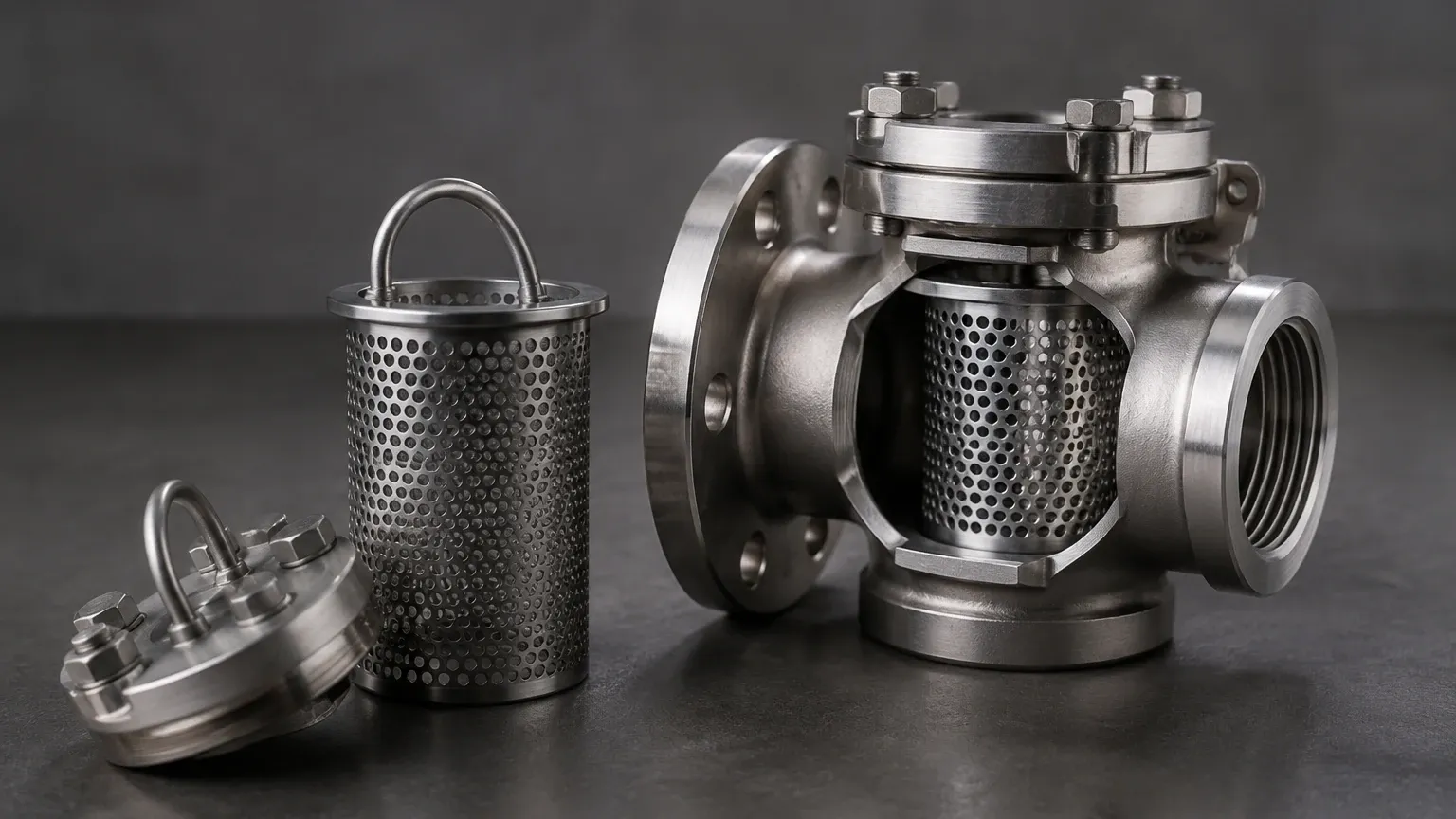
A strainer basket valve system is more than a simple filter; it is a pressure-rated vessel designed to manage fluid dynamics. The assembly generally consists of three primary components: the housing (or body), the internal basket (the straining element), and the valve mechanism (for flow control or diversion).
The Straining Element
The basket is the core of the system. Unlike Y-strainers, which are typically used for smaller amounts of debris, basket strainers have a larger surface area, allowing for greater dirt-holding capacity. These are usually fabricated from stainless steel (SS304 or SS316) and can feature:
* Perforated Metal: Used for coarse filtration, providing high structural strength.
* Wire Mesh Linings: Fine mesh (ranging from 20 to 400 mesh or finer) is often spot-welded to the interior or exterior of a perforated basket to achieve specific micron ratings.
* Magnetic Inserts: Optional components used to capture fine ferrous particles that might pass through the mesh.
The Valve Mechanism
The "valve" aspect of a strainer basket valve assembly serves different purposes depending on the system design:
1. Blow-down Valves: Located at the bottom of the strainer housing, these allow for the flushing of accumulated sediment without removing the basket.
2. Isolation Valves: Positioned at the inlet and outlet, these allow the strainer to be isolated for cleaning.
3. Diverter Valves (Duplex Systems): In a duplex strainer basket valve setup, a central valve (often a plug or ball valve) directs flow between two separate strainer chambers. This allows one side to be cleaned while the other remains in operation, ensuring zero downtime.
Engineering Considerations: Flow Rate and Pressure Drop
When specifying a strainer basket valve, the most critical technical metric is the pressure drop (Delta P). Every filtration element introduces resistance to the flow. If the pressure drop is too high, it can lead to cavitation in pumps or reduced throughput in the process line.
Open Area Ratio (OAR)
Engineers must calculate the Open Area Ratio, which is the relationship between the internal cross-sectional area of the inlet pipe and the total open area of the basket's mesh or perforations. A standard industrial rule of thumb is to maintain an OAR of at least 6:1. This ensures that even as the basket begins to fill with debris, the pressure drop remains within acceptable limits for a longer period, extending the maintenance interval.
Viscosity and Flow Velocity
The viscosity of the fluid significantly impacts the performance of the strainer basket valve. Highly viscous fluids (like heavy oils or resins) require larger baskets and coarser mesh to prevent excessive pressure buildup. Conversely, low-viscosity fluids (like water or solvents) can handle finer mesh at higher velocities. For most industrial applications, flow velocity should be kept between 5 to 10 feet per second to prevent erosion of the mesh and minimize turbulence.
Material Selection for Corrosive and High-Temperature Environments
The longevity of a strainer basket valve depends heavily on its material compatibility with the process fluid. Kaifil specializes in stainless steel solutions because of the material's inherent durability and resistance to oxidation.
* SS304: Suitable for general industrial applications, including water treatment and mild chemical processing. It offers good corrosion resistance at a lower cost point.
* SS316/316L: The preferred choice for pharmaceutical, food and beverage, and marine applications. The addition of molybdenum provides superior resistance to chlorides and pitting corrosion.
* Specialty Alloys: For highly aggressive chemical environments, alloys like Monel or Hastelloy may be required for the internal mesh to prevent premature failure.
Beyond the metal components, the choice of seals and O-rings is equally vital. EPDM is common for water applications, while Viton (FKM) is utilized for high-temperature or hydrocarbon-based fluids. PTFE is the standard for maximum chemical inertness, though it lacks the elasticity of elastomers, requiring precision-machined seating surfaces.
Types of Strainer Basket Valve Configurations
Selecting the correct configuration depends on whether the process can tolerate periodic shutdowns.
Simplex Strainer Assemblies
A simplex strainer is a single-chamber unit. It is the most cost-effective solution for batch processes where the system can be stopped to clean the basket. When equipped with a blow-down valve, these units can handle moderate debris loads with minimal manual intervention.
Duplex Strainer Assemblies
For continuous processes—such as chemical refining or power generation—a duplex strainer basket valve is mandatory. These units consist of two identical strainer housings connected by a common valve manifold. By turning a single lever or handwheel, the operator diverts the flow from the dirty chamber to the clean one. This transition must be "overlap-designed" to ensure that flow is never completely restricted during the switchover, preventing pressure spikes.
Maintenance and Operational Safety
A common question from plant engineers involves the replacement cycle of the internal baskets. While the housing of a strainer basket valve can last for decades, the internal mesh is a wear item.
Monitoring Differential Pressure
The most effective way to manage maintenance is through differential pressure monitoring. Gauges installed across the inlet and outlet provide real-time data on the basket's condition. Typically, a basket should be cleaned when the pressure drop reaches 5-10 psi over the clean-start pressure. Allowing the pressure drop to exceed 20 psi can result in "basket burst," where the structural integrity of the mesh fails, allowing all captured debris to rush downstream.
Cleaning Protocols
In food and beverage or pharmaceutical applications, the strainer basket valve must adhere to sanitary standards. This often involves Electropolished surfaces to prevent bacterial growth and the use of Quick-Opening covers (such as swing bolts or V-band clamps) to facilitate rapid, tool-free cleaning. For industrial chemical applications, safety remains the priority; vent valves must be used to bleed off internal pressure before the cover is opened.
Customization and OEM Requirements
In many B2B scenarios, off-the-shelf strainers do not meet specific spatial or performance requirements. Customization options for a strainer basket valve include:
* Custom Flange Orientations: Offset inlets and outlets to fit into existing tight piping footprints.
* High-Capacity Baskets: Extra-deep baskets for applications with high solids loading.
* Steam Jacketing: For fluids that must be maintained at a specific temperature to remain pumpable (e.g., liquid sulfur or chocolate).
* Automated Backwashing: Integrating motorized valves and sensors to automate the cleaning process based on timer or pressure triggers.
As a manufacturer, Kaifil provides the engineering expertise necessary to tailor these components to specific industrial needs, ensuring that the Strainers & Baskets provided are optimized for the intended flow dynamics and chemical environment.
Conclusion: Selecting the Right Solution
Choosing the appropriate strainer basket valve requires a comprehensive understanding of the process parameters: fluid type, flow rate, operating pressure, temperature, and the nature of the contaminants. By focusing on the Open Area Ratio and material compatibility, engineers can significantly reduce the total cost of ownership through lower maintenance costs and protected downstream assets.
Before finalizing a purchase, technical teams should confirm the required micron rating and ensure that the housing's pressure rating (ANSI or DIN) matches the system's design limits. Whether for a simple water line or a complex chemical reactor, the integration of high-quality strainer baskets and valves is a fundamental requirement for reliable industrial operation.
