


Strainer Bucket
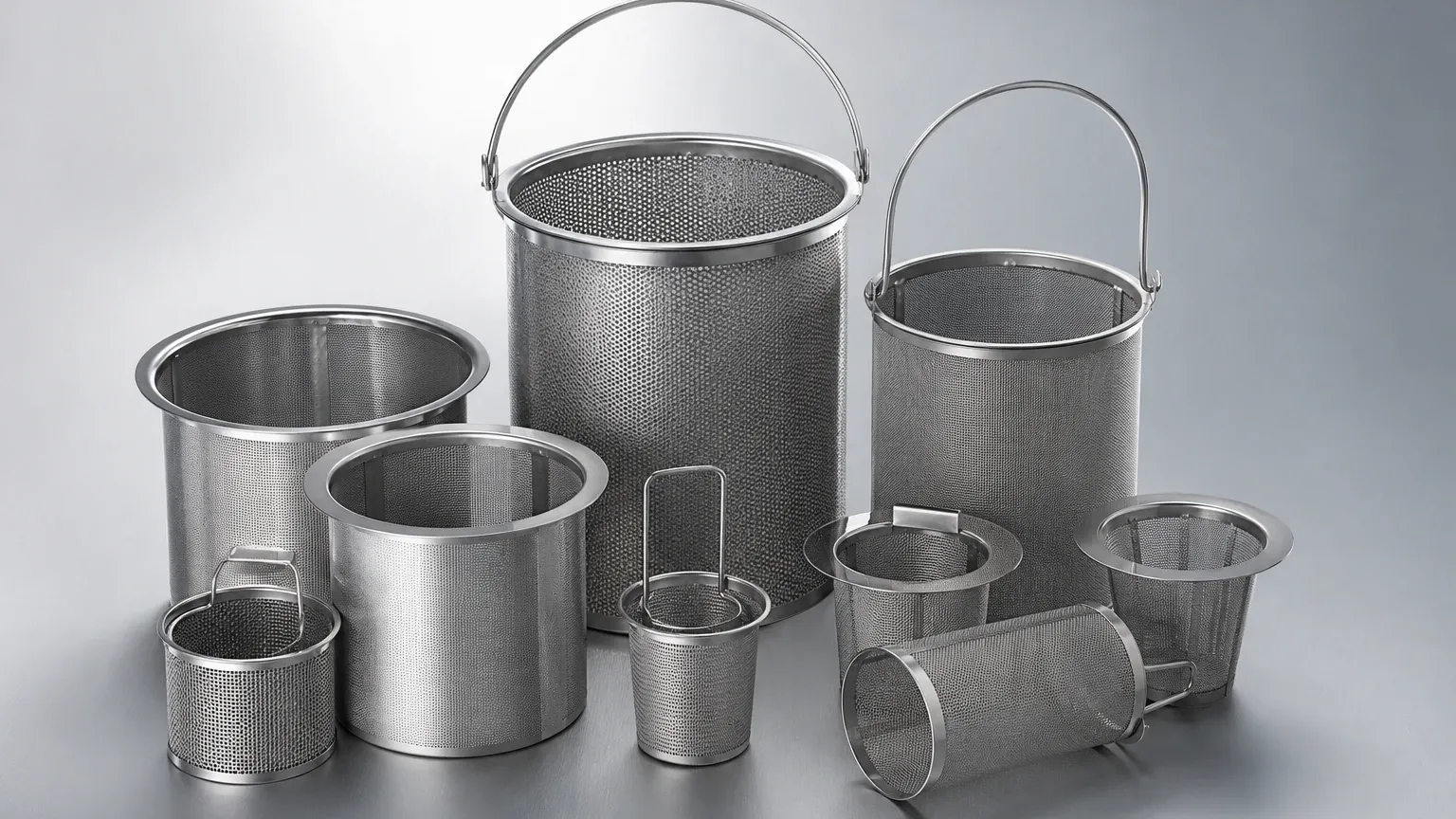
In industrial fluid handling, the strainer bucket serves as a critical line of defense for downstream equipment. Often referred to as a basket or insert, this component is the functional core of Strainers & Baskets used in piping systems to remove unwanted solids from liquids, gases, or steam. Unlike disposable filter cartridges, a strainer bucket is designed for durability, high-volume flow, and repeated cleaning, making it a cost-effective solution for protecting pumps, valves, heat exchangers, and spray nozzles from debris-related damage.
For engineers and procurement professionals, selecting the correct strainer bucket involves more than just matching a diameter. It requires a technical understanding of material science, fluid dynamics, and the specific mechanical stresses of the application environment. This guide examines the engineering considerations, design variations, and selection criteria essential for optimizing filtration performance.
The Role of the Strainer Bucket in Industrial Filtration Systems
The primary function of a strainer bucket is to intercept particulate matter while allowing the fluid to pass through with minimal resistance. In a typical basket strainer housing, the fluid enters the top or side, passes through the bucket, and exits through the outlet. The debris is trapped within the bucket, which can then be removed, emptied, and reinstalled.
From a system design perspective, the strainer bucket is often the first stage of filtration. In chemical processing or water treatment, it removes large scale, rust, or foreign objects that could otherwise clog finer secondary filters or damage precision instrumentation. Because these components are subjected to constant flow and occasional pressure surges, their structural integrity is paramount. A failed bucket does not just stop filtering; it becomes a source of metallic debris that can cause catastrophic failure in downstream rotating equipment.
Material Selection and Chemical Compatibility
The longevity of a strainer bucket depends heavily on the alloy used in its construction. Industrial environments vary from mildly corrosive water systems to highly aggressive chemical reactors. Kaifil specializes in stainless steel solutions, which are the industry standard due to their balance of strength and corrosion resistance.
Stainless Steel 304
This is the most common material for general industrial use. It offers excellent resistance to atmospheric corrosion and many organic and inorganic chemicals. It is suitable for food and beverage applications where high-temperature sterilization is required but where chloride concentrations are low.
Stainless Steel 316 and 316L
For marine environments, pharmaceutical processing, or chemical plants handling acids and halides, SS316 is preferred. The addition of molybdenum enhances resistance to pitting and crevice corrosion. SS316L (low carbon) is specifically chosen for components requiring extensive welding, as it minimizes the risk of carbide precipitation which can lead to intergranular corrosion at the weld seams.
Specialty Alloys
In extreme cases involving high-concentration sulfuric acid or high-temperature oxidizing environments, engineers may specify exotic alloys like Monel, Hastelloy, or Duplex stainless steel. These materials ensure that the strainer bucket maintains its mechanical properties and does not contaminate the process fluid through corrosion.
Engineering Specifications: Mesh, Perforation, and Micron Ratings
The filtration efficiency of a strainer bucket is determined by its opening size. This is typically achieved through two methods: perforated metal or woven wire mesh.
Perforated Metal Bases
Most industrial strainer buckets use a perforated metal sheet as the structural base. Common hole patterns include staggered or straight rows, with hole diameters ranging from 1/32" to 1/2". The choice of perforation depends on the size of the smallest particle that must be removed. However, perforated metal alone is often insufficient for fine filtration.
Woven Wire Mesh Linings
To achieve finer filtration (measured in microns), a woven wire mesh is lined inside or outside the perforated basket. This allows the strainer bucket to capture particles as small as 5 to 40 microns. When specifying mesh, engineers must consider the "Open Area Ratio" (OAR). A higher OAR results in a lower initial pressure drop and longer intervals between cleanings, but it may reduce the mechanical strength of the mesh.
Micron vs. Mesh Size
It is vital to distinguish between nominal and absolute ratings. In most basket strainer applications, ratings are nominal, meaning the mesh will trap a high percentage of particles of a specific size but may allow some elongated or deformable particles to pass. Understanding the particle size distribution of the contaminant is essential for selecting the correct mesh count.
Structural Design and Reinforcement for High-Pressure Applications
A strainer bucket is not a static component; it is a pressure vessel internal. As debris accumulates, the pressure differential ($ΔP$) across the bucket increases. If the bucket is not engineered to withstand the maximum system pressure or the maximum possible differential pressure, it may collapse or "blow out."
Reinforcement Rings and Longitudinal Bars
For high-pressure or high-viscosity applications, standard baskets are reinforced with heavy-duty rings at the top and bottom. Longitudinal bars may also be welded to the exterior of the perforated sheet to prevent deformation under heavy loads. This is particularly important in hydraulic systems or heavy oil processing where fluid thickness increases the stress on the mesh.
Welding Integrity
At Kaifil, the quality of the weld is a primary focus. Resistance spot welding or TIG (Tungsten Inert Gas) welding is used to ensure that the mesh is securely bonded to the perforated substrate. Poor welding can lead to "bypass," where fluid escapes through gaps at the seams, rendering the filtration process ineffective.
Operational Considerations: Flow Rate and Pressure Drop
The efficiency of a strainer bucket is often measured by its impact on system pressure. Every strainer introduces some resistance to flow. The total pressure drop is the sum of the drop across the housing and the drop across the clean strainer bucket.
Calculating the Clean Pressure Drop
Engineers must ensure that the clean pressure drop does not exceed 2 psi (0.14 bar) for liquid systems. If the initial drop is too high, the system will reach its maximum allowable differential pressure too quickly, requiring frequent shutdowns for cleaning. Factors affecting this include:
* Fluid Viscosity: Thicker fluids require larger openings or a larger total surface area.
* Velocity: High-velocity systems can cause turbulence around the bucket, increasing the $ΔP$.
* Solids Loading: A high concentration of solids requires a "high-capacity" bucket design with a deeper profile to increase the holding volume.
The 6:1 Ratio Rule
A well-designed strainer bucket should ideally have an open area at least six times the cross-sectional area of the inlet pipe. This 6:1 ratio provides a safety margin, ensuring that even when the bucket is 50% clogged, the pressure drop remains within operational limits.
Maintenance, Cleaning, and Replacement Cycles
One of the main advantages of the strainer bucket is its reusability. However, improper maintenance can lead to premature failure or decreased process efficiency.
Cleaning Protocols
When the differential pressure reaches a predetermined limit (usually 10-15 psi), the bucket must be removed and cleaned. In food and beverage or pharmaceutical applications, this often involves ultrasonic cleaning or high-pressure steam to ensure all biological or chemical residues are removed. In industrial water applications, a simple backwash or manual brushing may suffice.
Signs of Wear and Fatigue
During cleaning, buckets should be inspected for:
* Mesh Blinding: Particles wedged so deeply in the mesh that they cannot be removed, permanently increasing the pressure drop.
* Erosion: High-velocity fluid containing abrasive particles can thin the metal over time, especially near the inlet.
* Mechanical Deformation: Any bowing or twisting of the basket indicates that the system has exceeded the bucket's design pressure.
Total Cost of Ownership (TCO)
While a low-cost strainer bucket may seem attractive initially, a high-quality stainless steel bucket from a specialized manufacturer like Kaifil often results in a lower TCO. Durable construction reduces the frequency of replacements and prevents the massive costs associated with downstream equipment repair.
Customization Options for OEM Integration
Many industrial systems require non-standard filtration components. Customization is a core capability at Kaifil, allowing engineers to tailor the strainer bucket to specific spatial or functional requirements.
Handle and Lift Options
For large-scale strainers, the weight of a debris-filled bucket can be significant. Custom handles, including slanted handles for easy gripping or heavy-duty bails for crane lifting, improve operator safety and reduce maintenance downtime.
Specialized Geometries
Standard buckets are cylindrical, but some housings require conical, square, or multi-tiered designs. Multi-tiered buckets utilize concentric layers of mesh to increase the total filtration surface area within a compact footprint.
Magnetic Inserts
In applications involving ferrous metal particles (such as engine testing or metal machining), magnetic rods can be integrated into the strainer bucket. This provides a dual-stage cleaning process: the mesh captures non-metallic debris, while the magnets pull fine iron and steel particles out of the flow, even if they are smaller than the mesh openings.
Conclusion: Selecting the Right Solution
The selection of a strainer bucket is a technical decision that impacts the reliability and efficiency of the entire fluid system. By considering material compatibility, structural reinforcement, and flow dynamics, engineers can ensure that their Strainers & Baskets provide maximum protection with minimal operational overhead.
Whether you are designing a new system or looking to optimize an existing process, working with a manufacturer that understands the nuances of custom stainless steel filtration is essential. For detailed specifications or to discuss custom engineering requirements for your next project, review product options and application support from industry experts who specialize in high-performance filtration components.
