


Strainer Element Sediment
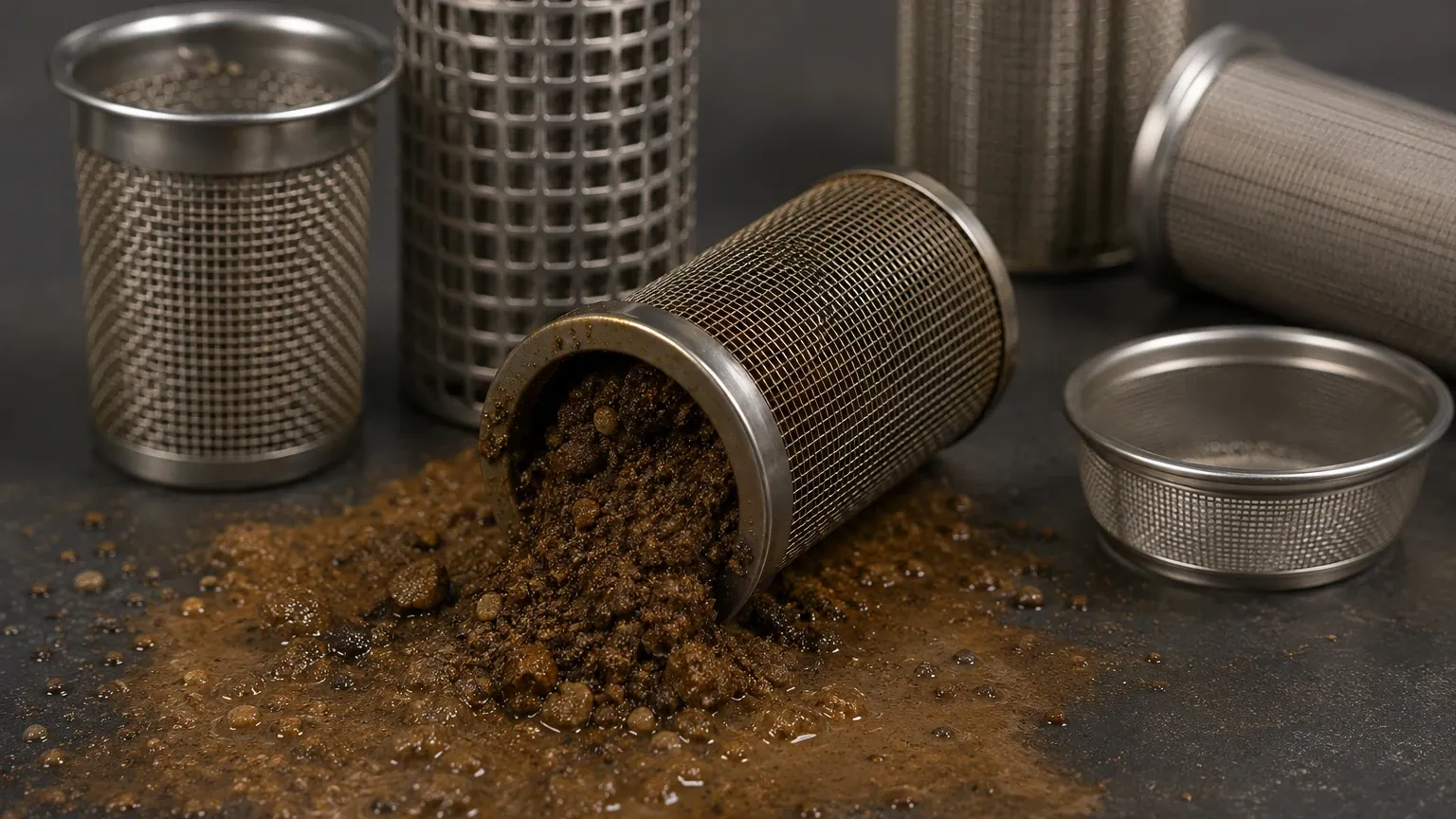
In industrial fluid systems, the management of particulate matter is a primary concern for maintaining the integrity of downstream equipment such as pumps, valves, and heat exchangers. The term "strainer element sediment" refers to the accumulation of solid particles—ranging from scale and rust to sand and process byproducts—that are captured by a filtration component during operation. Understanding the behavior of this sediment, its impact on flow dynamics, and the engineering requirements for its removal is essential for any technical professional responsible for system design or maintenance.
Industrial strainers are coarse filters designed to remove larger particles from a process stream. Unlike fine filters that may require frequent disposable cartridge changes, Strainers & Baskets are typically engineered for durability and cleanability. However, the efficiency of these components depends heavily on how the strainer element handles the sediment load it encounters.
The Nature of Sediment in Industrial Processes
Sediment is rarely uniform. In a typical industrial environment, the strainer element sediment may consist of several distinct types of debris:
1. Pipe Scale and Corrosion Products: In older piping systems or those involving carbon steel, iron oxide (rust) often flakes off and enters the flow. These particles are often jagged and can cause abrasive wear if not captured.
2. Environmental Contaminants: For systems drawing from open water sources, sediment may include sand, silt, and organic matter.
3. Process Byproducts: In chemical processing or food production, sediment may consist of undissolved solids, precipitates, or fragments of raw materials.
4. Construction Debris: During system startup, items like welding slag, gasket fragments, and metal shavings are common forms of sediment that must be removed to prevent catastrophic equipment failure.
Characterizing the sediment—specifically its particle size distribution, hardness, and concentration—is the first step in selecting an appropriate strainer element.
Engineering Considerations for Sediment Capture
The performance of a strainer is measured by its ability to capture sediment while maintaining an acceptable pressure drop. When designing or selecting a strainer element, engineers must evaluate several technical parameters.
Micron Rating and Mesh Size
The "micron rating" defines the size of the particles the strainer is intended to stop. For strainer elements, this is usually achieved through perforated metal or woven wire mesh. If the mesh is too coarse, the strainer element sediment will pass through and potentially damage downstream components. If it is too fine, the element will clog rapidly, leading to excessive pressure drops and frequent maintenance intervals.
Open Area Ratio
The open area ratio is the relationship between the total area of the holes in the strainer element and the cross-sectional area of the inlet pipe. A high open area ratio is desirable because it allows for more sediment accumulation before the pressure drop becomes critical. Typically, industrial strainers aim for an open area ratio of at least 4:1 or 6:1. This ensures that even as the strainer element sediment begins to coat the surface, the fluid can still pass through the remaining open apertures without significant resistance.
Flow Velocity and Turbulence
High flow velocities can influence how sediment interacts with the strainer element. If the velocity is too high, particles may be forced through the mesh (deforming the wires) or may cause localized erosion on the element surface. Conversely, low-velocity areas within the strainer housing may allow sediment to settle in the bottom of the basket rather than on the screen, which can be advantageous for cleaning but may require specific housing geometries.
Types of Strainer Elements for Sediment Management
Depending on the application, different strainer element designs are utilized to manage sediment effectively. Kaifil specializes in manufacturing these components to meet specific industrial tolerances.
Perforated Plate Elements
Perforated plates are the most robust option for heavy sediment loads. They are typically used for "coarse" straining where particle sizes are 0.5 mm or larger. The structural integrity of a perforated plate allows it to withstand high differential pressures that occur when a significant amount of strainer element sediment has accumulated.
Wire Mesh Liners
For finer filtration, a wire mesh liner is often added to a perforated metal support basket. The mesh provides the necessary filtration fineness, while the perforated plate provides the mechanical strength to prevent the mesh from collapsing under the weight of the sediment or the force of the fluid flow.
Wedge Wire Elements
Wedge wire, or V-wire, is an advanced engineering solution for sediment management. The V-shaped profile of the wire creates a slot that widens inwardly. This design is particularly effective at preventing "pegging" or "blinding," where particles become wedged in the openings. Wedge wire is often preferred in applications where the strainer element sediment is sticky or irregularly shaped.
The Impact of Sediment Accumulation on System Performance
As the strainer element sediment builds up, it creates a "filter cake." In some scenarios, this layer of sediment actually improves filtration efficiency by capturing particles smaller than the mesh size. However, this comes at the cost of increased differential pressure ($ΔP$).
Monitoring $ΔP$ is the most reliable method for determining the status of the strainer. A clean strainer will have a baseline pressure drop. As sediment accumulates, the pressure drop increases slowly at first, then exponentially as the remaining open area diminishes. If the pressure drop exceeds the structural limit of the element, the strainer may bypass or collapse, releasing all the captured sediment into the downstream system at once.
Maintenance and Cleaning Protocols
Effective management of strainer element sediment requires a structured maintenance schedule. For B2B industrial operations, downtime is costly, so the cleaning process must be efficient.
1. Differential Pressure Monitoring: Installing pressure gauges upstream and downstream of the strainer allows operators to see exactly when the sediment load has reached a critical level.
2. Blow-down Valves: Some strainers are equipped with a blow-down connection at the bottom of the housing. This allows for the removal of heavy sediment that has settled in the bottom of the basket without stopping the flow or opening the housing.
3. Manual Cleaning: For baskets and elements, manual cleaning involves removing the element and using a pressurized water or air spray to dislodge the sediment. It is crucial to clean from the "clean side" to the "dirty side" to push particles out of the mesh rather than further into it.
4. Ultrasonic Cleaning: In applications where the strainer element sediment consists of fine, hard-to-remove particulates (such as in chemical or pharmaceutical processes), ultrasonic cleaning may be required to restore the element to its original flow capacity.
Material Selection for Sediment-Rich Environments
The abrasive and corrosive nature of many sediments necessitates high-quality materials. Stainless steel is the industry standard due to its durability and resistance to a wide range of process fluids.
* Grade 304 Stainless Steel: Suitable for most general-purpose industrial applications where corrosion risk is moderate.
* Grade 316L Stainless Steel: Preferred for environments involving chlorides or high acidity, as well as pharmaceutical and food-grade applications. The "L" (low carbon) designation is important for components that require welding, as it prevents sensitized corrosion at the weld joints.
* Exotic Alloys: In extreme cases where the sediment is highly abrasive or the fluid is chemically aggressive, materials like Monel or Hastelloy may be specified for the strainer element.
Customization and OEM Solutions
Every industrial system has unique requirements based on flow rate, fluid viscosity, and the specific characteristics of the sediment. Off-the-shelf solutions may not always provide the necessary balance of filtration fineness and structural longevity.
Customization options often include:
* Reinforced Baskets: Adding longitudinal ribs or circumferential rings to handle higher pressure differentials.
* Multi-Layered Mesh: Combining different mesh counts to provide graduated filtration.
* Custom Dimensions: Tailoring the length and diameter of the element to fit existing housings while maximizing the surface area available for sediment capture.
As a professional manufacturer, Kaifil works with engineering teams to develop custom Strainers & Baskets that are optimized for the specific strainer element sediment challenges of their application. By focusing on precision manufacturing and material integrity, these solutions help reduce the total cost of ownership through extended service life and reduced maintenance frequency.
Conclusion: Best Practices for Procurement
When specifying a strainer element for sediment control, engineers should confirm the following details before proceeding with a purchase:
* Maximum Allowable Pressure Drop: What is the limit the system can tolerate before performance is compromised?
* Sediment Characteristics: Is the sediment hard, soft, fibrous, or abrasive?
* Cleaning Frequency: How often can the system be taken offline for manual cleaning, or is an automated solution required?
* Compatibility: Are the materials of construction compatible with both the process fluid and the expected contaminants?
By addressing these factors, purchasing teams can ensure they select a strainer element that provides reliable protection and efficient sediment management for their industrial operations.
