


Strainer Gasket Seal Ring
In industrial filtration systems, the efficiency of the entire process often hinges on the smallest components. While the filtration media—whether wire mesh, perforated plate, or wedge wire—performs the primary task of particle separation, the integrity of the system is maintained by the sealing mechanism. The strainer gasket seal ring is a critical interface component designed to prevent fluid bypass and ensure that 100% of the process media passes through the filter element.
For engineers and procurement teams managing Strainers & Baskets, understanding the technical nuances of seal selection is as vital as selecting the micron rating of the filter itself. A failure in the sealing ring leads to contaminated downstream fluids, potential damage to sensitive equipment like pumps and valves, and costly unscheduled downtime. This guide examines the engineering considerations, material science, and selection criteria for strainer gasket seal rings in demanding industrial environments.
The Functional Role of the Strainer Gasket Seal Ring
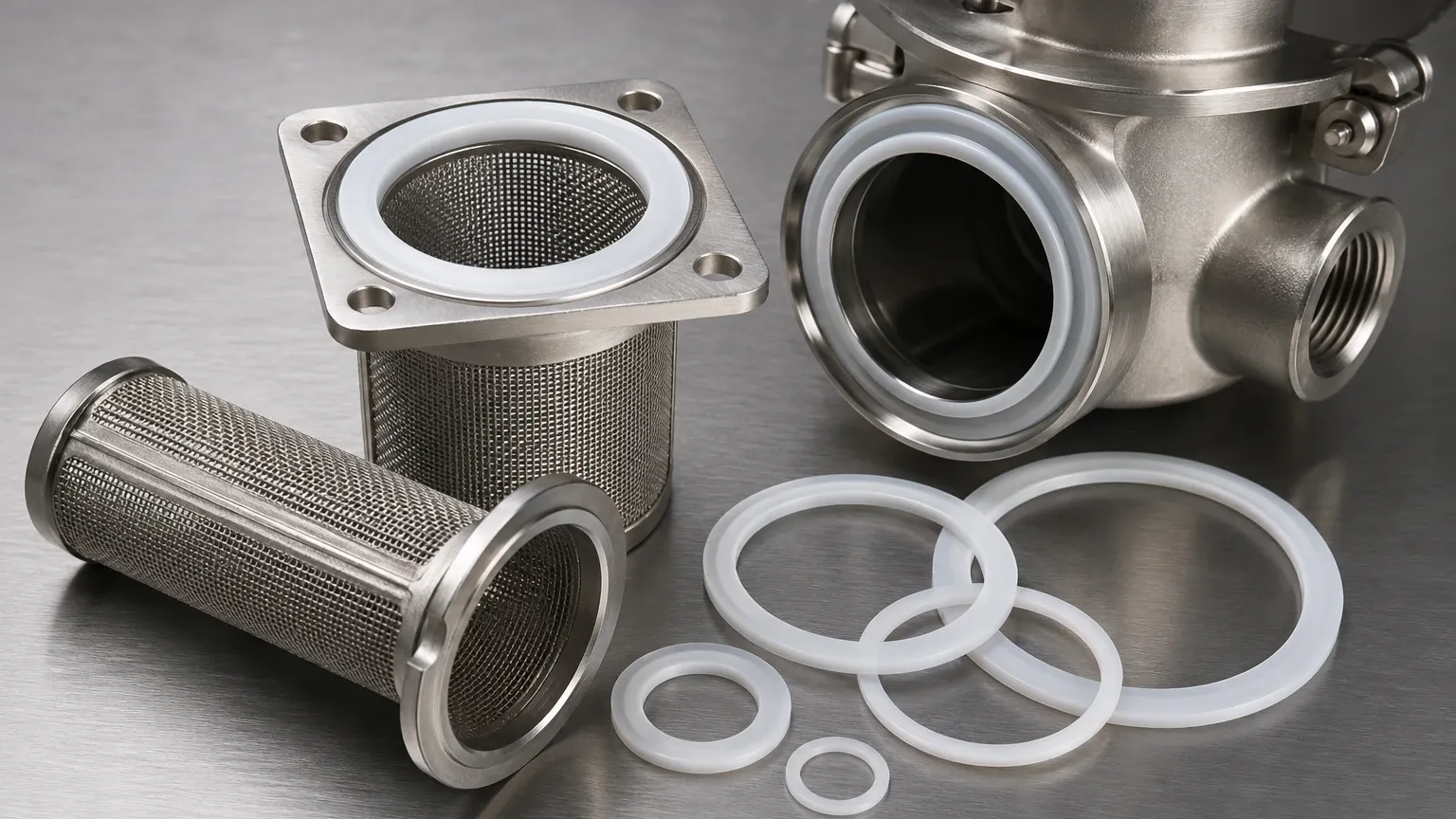
The primary function of a strainer gasket seal ring is to create a leak-proof barrier between the strainer element (the basket or cartridge) and the strainer housing. In high-pressure or high-flow applications, fluid naturally seeks the path of least resistance. Without a robust seal, process fluid will bypass the filtration media through the gap between the basket flange and the housing seat.
Preventing Bypass and Maintaining Efficiency
Bypass is the most common cause of filtration system failure. Even a gap of a few microns can allow significant quantities of oversized particulates to pass through. In industries such as pharmaceutical manufacturing or fine chemical processing, such a breach can compromise product purity. The seal ring ensures that the differential pressure across the filter element is maintained, forcing the fluid through the mesh or perforated media as intended.
Pressure Containment and Safety
Beyond internal bypass, external seals (often referred to as cover gaskets) prevent the process fluid from leaking into the environment. In systems handling hazardous chemicals, high-temperature steam, or flammable hydrocarbons, the strainer gasket seal ring serves as a critical safety component. It must withstand the maximum operating pressure of the system, including potential pressure spikes during pump start-up or valve closure.
Material Selection: Engineering for Chemical and Thermal Compatibility
Selecting the right material for a strainer gasket seal ring requires a deep dive into the chemical composition of the process fluid and the thermal profile of the application. Using an incompatible elastomer can lead to swelling, hardening, or chemical degradation, all of which result in seal failure.
EPDM (Ethylene Propylene Diene Monomer)
EPDM is a versatile elastomer widely used in water treatment, food and beverage, and pharmaceutical applications. It offers excellent resistance to heat, ozone, and weather.
* Temperature Range: -50°C to +150°C.
* Best For: Hot water, steam, dilute acids, and ketones.
* Avoid: Petroleum-based oils and mineral oils.
Viton™ (FKM / Fluoroelastomer)
For high-temperature applications and aggressive chemical environments, Viton is often the industry standard. It maintains its mechanical properties even when exposed to harsh solvents and fuels.
* Temperature Range: -20°C to +200°C (special grades can go higher).
* Best For: Hydrocarbons, acids, vegetable oils, and high-vacuum applications.
* Avoid: Low-molecular-weight organic acids (like formic acid) and certain phosphates.
PTFE (Polytetrafluoroethylene)
PTFE is virtually inert to almost all chemicals, making it the preferred choice for the most aggressive chemical processing environments. However, because PTFE is a thermoplastic rather than an elastomer, it lacks "memory" and can be prone to cold flow or creep under constant pressure.
* Temperature Range: -200°C to +260°C.
* Best For: Strong acids, bases, and aggressive solvents.
* Engineering Note: Often used as an encapsulated seal (a silicone or Viton core with a PTFE jacket) to combine chemical resistance with elastomeric recovery.
Buna-N (Nitrile / NBR)
Buna-N is the workhorse of the hydraulic and oil industries. It provides excellent resistance to petroleum-based fluids and has good mechanical properties, including abrasion resistance.
* Temperature Range: -40°C to +120°C.
* Best For: Hydraulic fluids, oils, and water.
* Avoid: High-concentration ozone and polar solvents.
Design Variations: O-Rings vs. Flat Gaskets
The geometry of the strainer gasket seal ring is dictated by the design of the strainer housing and the basket flange. There are two primary configurations used in industrial Strainers & Baskets.
O-Ring Seals
O-rings are typically used in high-pressure applications or where a compact, high-integrity seal is required. They are seated in a machined groove (the gland). When the strainer cover is tightened or the basket is seated, the O-ring is compressed, creating a contact stress that blocks the fluid path. The advantage of an O-ring is its ability to seal in both directions and its relative ease of replacement.
Flat Gaskets and Precision Machined Rings
Flat gaskets are common in larger basket strainers. They provide a larger surface area for sealing and are often used when the mating surfaces are not perfectly machined or where lower clamping forces are available. In precision stainless steel filtration systems, these may be replaced by metal-jacketed gaskets or solid metal rings for extreme temperature or high-purity requirements.
Engineering Considerations for Optimal Sealing
When specifying a strainer gasket seal ring, engineers must look beyond just the material and dimensions. Several mechanical factors influence the longevity and effectiveness of the seal.
Compression Set
Compression set refers to the permanent deformation of an elastomer after being compressed for a period. If a seal ring has a high compression set, it will lose its ability to "spring back" when the strainer is opened for cleaning. This leads to leaks upon reassembly. High-quality industrial seals are engineered for low compression set to ensure multiple cycles of use.
Durometer (Hardness)
The hardness of the seal ring, measured on the Shore A scale, affects how well it conforms to surface irregularities. A softer seal (e.g., 60 Shore A) conforms easily but may extrude under high pressure. A harder seal (e.g., 90 Shore A) resists extrusion but requires higher clamping force to achieve a seal. Most industrial strainer applications utilize a 70 to 80 Shore A hardness.
Surface Finish of the Housing
The effectiveness of the strainer gasket seal ring is also dependent on the surface finish of the strainer housing and the basket flange. A surface that is too rough will provide leak paths, while a surface that is too smooth may not allow the gasket to "grip," leading to seal displacement under pressure. Typically, a surface finish of 32 to 64 RMS (Root Mean Square) is recommended for elastomeric seals.
Identifying and Preventing Seal Failure
Understanding why a strainer gasket seal ring fails is essential for developing effective preventative maintenance protocols. Common failure modes include:
1. Chemical Degradation: The seal becomes brittle, soft, or gummy. This is usually caused by an incorrect material choice for the process fluid.
2. Thermal Hardening: Over time, exposure to temperatures above the material's limit causes the elastomer to lose its flexibility, leading to cracking.
3. Extrusion and Nibbling: High differential pressure forces the seal material into the clearance gaps between metal components. This is often a sign that the seal is too soft for the operating pressure or that the tolerances in the housing are too wide.
4. Improper Installation: If the seal ring is twisted or pinched during the installation of the basket, it will fail immediately. Lubrication with a compatible grease can often prevent this.
Maintenance and Replacement Cycles
In B2B industrial environments, the strainer gasket seal ring should be treated as a consumable item. Even if a seal appears intact during a routine basket cleaning, its elastomeric properties may have diminished.
* Inspection Protocol: Every time the strainer is opened, the seal should be inspected for nicks, tears, swelling, or permanent flattening.
* Replacement Strategy: For critical processes, it is standard practice to replace the seal ring every time the basket is removed. This "one-time use" policy is the most effective way to prevent bypass and unscheduled leaks.
* Spare Parts Inventory: Facilities should maintain a stock of seal rings in various materials if they run multiple types of process fluids through the same filtration equipment.
Customization and OEM Solutions
Standard off-the-shelf seals do not always meet the requirements of specialized industrial equipment. Custom stainless steel filtration solutions often require bespoke seal ring dimensions or non-standard material blends to handle unique chemical concentrations or extreme pressure differentials.
Manufacturers like Kaifil specialize in providing integrated filtration components where the strainer basket and its associated sealing mechanism are designed as a single, high-performance unit. By controlling the tolerances of both the metal basket and the elastomeric seal, OEM providers can guarantee a level of filtration precision that generic components cannot match.
Conclusion
The strainer gasket seal ring is the silent guardian of filtration integrity. Whether you are managing a high-flow water treatment plant or a precision chemical reactor, the choice of seal material, hardness, and geometry will directly impact your total cost of ownership and system reliability. By aligning the technical specifications of the seal with the operational demands of your Strainers & Baskets, you ensure that your filtration system performs at its peak efficiency, protecting both your product quality and your downstream equipment.
When evaluating your next filtration project, consider the seal ring not as an afterthought, but as a primary engineering component. Proper selection, combined with a rigorous maintenance schedule, is the key to achieving long-term, leak-free operation in any industrial filtration application.
