


Strainer Kitchen Tool
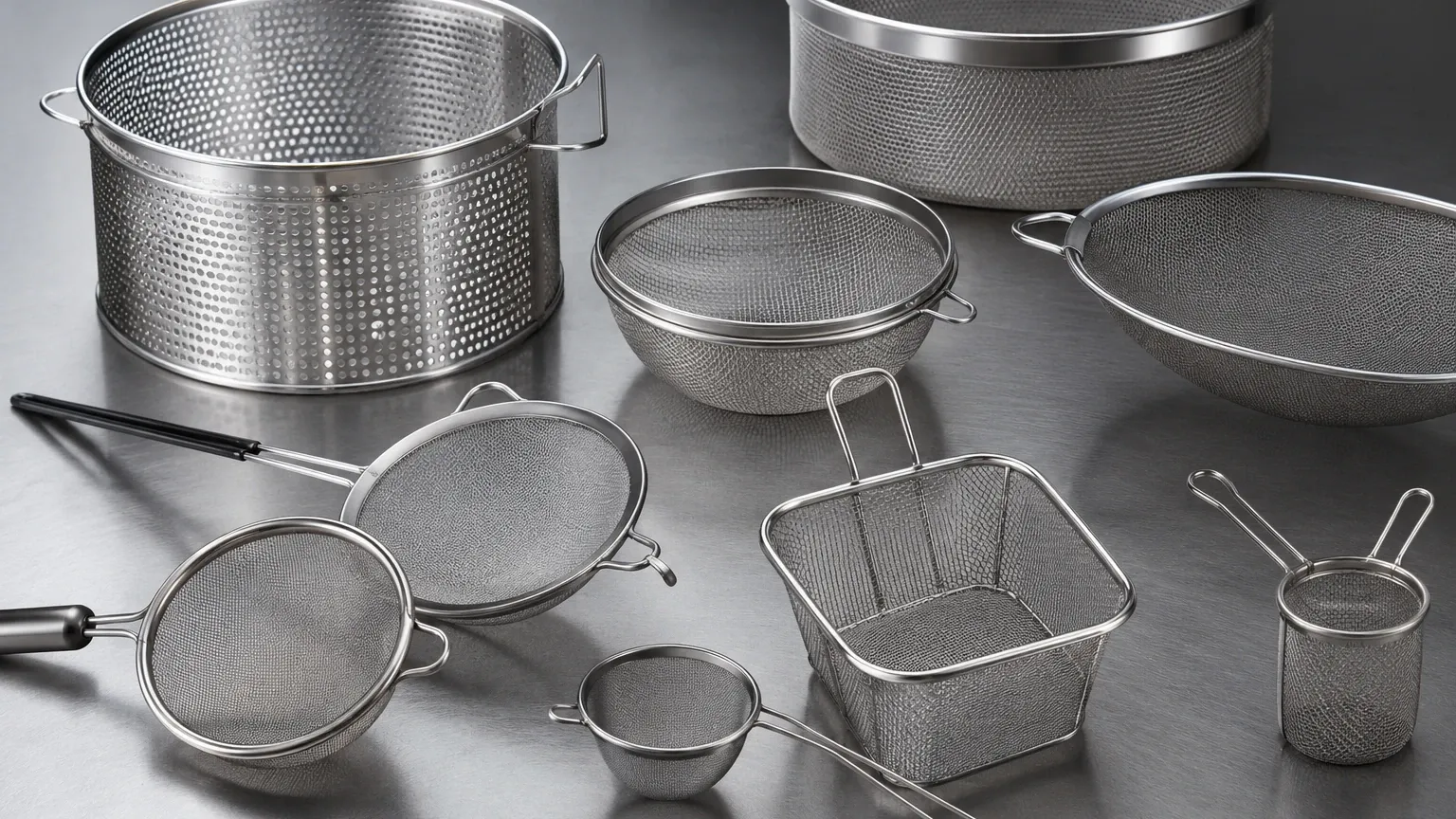
In the realm of professional food processing and commercial culinary operations, the term "strainer kitchen tool" refers to a wide array of critical filtration components designed to ensure product purity, consistency, and safety. While a home cook might view a strainer as a simple handheld utensil, engineers and procurement specialists in the food and beverage industry recognize these items as precision-engineered Strainers & Baskets that must withstand rigorous sanitation protocols, high-pressure environments, and continuous duty cycles.
For industrial applications, selecting the right filtration tool involves a deep understanding of material science, fluid dynamics, and regulatory compliance. This article explores the technical nuances of industrial-grade strainers and baskets, providing the factual foundation necessary for making informed purchasing and engineering decisions.
The Engineering Transition: From Utensil to Industrial Component
The fundamental purpose of any strainer kitchen tool is the separation of solids from liquids. However, the scale of operation in a commercial facility or food processing plant changes the engineering requirements entirely. Where a domestic tool might handle a few liters of liquid, industrial strainers must manage thousands of gallons per hour without compromising the structural integrity of the mesh or the quality of the filtrate.
Industrial strainers are typically integrated into larger processing lines. They serve as the first line of defense for downstream equipment, such as pumps, heat exchangers, and spray nozzles, which can be easily damaged or clogged by oversized particulates. In this context, the "tool" is a ruggedized assembly consisting of a housing and a removable basket or screen made from high-grade stainless steel.
Material Selection: Why Stainless Steel is Non-Negotiable
In the food, beverage, and pharmaceutical industries, material selection is dictated by both performance and hygiene. Stainless steel is the industry standard for any professional strainer kitchen tool due to several key properties:
1. Corrosion Resistance
Food products often contain organic acids (like citric or acetic acid) and salts that can be highly corrosive to lesser metals. Furthermore, the cleaning agents used in CIP (Clean-in-Place) systems, such as caustic soda or nitric acid, require materials that will not pit or degrade. Grade 304 stainless steel is suitable for most general food applications, while Grade 316L is preferred for high-salinity environments or more aggressive chemical processing due to its molybdenum content.
2. Surface Finish and Sanitation
Bacteria can thrive in microscopic crevices. Industrial-grade strainers are manufactured with smooth surface finishes (often measured in Ra or Roughness Average) to prevent microbial attachment. Electropolishing is frequently employed to further enhance the surface smoothness and improve the passivity of the protective oxide layer on the steel.
3. Thermal Stability
Many food processes involve high temperatures, from boiling syrups to pasteurizing dairy. Stainless steel maintains its structural integrity across a wide temperature range, ensuring that the filtration mesh does not warp or lose its micron rating during thermal cycling.
Technical Specifications of Industrial Strainers and Baskets
When evaluating a strainer kitchen tool for an industrial line, engineers must look beyond the basic dimensions. The performance of the filter is defined by its internal geometry and the characteristics of the filtration media.
Mesh Count and Micron Rating
The "fineness" of a strainer is described by its mesh count (the number of openings per linear inch) or its micron rating (the size of the largest particle that can pass through). In industrial food processing, this can range from coarse 1/4-inch perforated plate for removing large vegetable chunks to fine 20-micron woven wire mesh for polishing oils or clarifying juices.
Weave Types
The way the wires are woven significantly impacts the flow rate and strength of the strainer:
* Plain Weave: The most common type, offering high flow rates and easy cleaning.
* Twill Weave: Used for finer filtration, where wires are woven over and under two wires at a time, allowing for a heavier wire diameter for a given mesh count.
* Dutch Weave: Provides a dense, strong mesh with high pressure resistance, often used in heavy-duty basket strainers.
Structural Support and Reinforcement
Because fine mesh is inherently fragile, industrial baskets often feature a dual-layer construction. A fine inner mesh provides the required filtration accuracy, while a heavy-duty perforated metal outer layer provides the structural support needed to withstand the differential pressure (Delta P) that occurs as the strainer becomes loaded with solids.
Applications Across the Food and Beverage Sector
The utility of a specialized strainer kitchen tool extends across various segments of the industry. Each application presents unique challenges that dictate the design of the filtration component.
Dairy Processing
In dairy production, strainers are used to remove any potential contaminants from raw milk and to ensure the smooth consistency of creams and yogurts. These strainers must be designed for easy disassembly and manual cleaning or be fully compatible with automated CIP systems to meet strict sanitary standards.
Beverage and Juice Production
Juice processing requires the removal of seeds, pulp, and skin fragments. Depending on the desired end product (e.g., clear apple juice vs. pulpy orange juice), the strainer must be precisely calibrated. Strainers & Baskets used in this sector often deal with high acidity, making 316L stainless steel a common requirement.
Confectionery and Syrups
High-viscosity liquids, such as molten chocolate or thick sugar syrups, require strainers that can handle significant pressure drops. In these cases, the open area of the basket is a critical calculation to ensure that the flow is not overly restricted, which could lead to pump cavitation or process delays.
Key Evaluation Criteria for Purchasing Managers
Selecting a strainer kitchen tool for a professional environment involves more than just matching a part number. Purchasing teams and engineers should confirm the following factors before finalizing a specification:
1. Flow Rate and Pressure Drop
Every filter introduces a resistance to flow. It is essential to calculate the clean pressure drop and determine the maximum allowable pressure drop before the basket must be cleaned. An undersized strainer will require frequent maintenance, leading to costly downtime.
2. Ease of Maintenance
In a fast-paced production environment, the time required to pull, clean, and replace a strainer basket is a direct operational cost. Quick-opening covers and ergonomic basket handles are features that can significantly improve efficiency. For continuous processes, duplex strainers—which allow flow to be diverted from one basket to another without stopping the line—are often the preferred solution.
3. Customization Requirements
Standard off-the-shelf components rarely fit perfectly into complex industrial machinery. Whether it is a specific flange connection, a unique basket shape (conical, flat-bottom, or truncated), or a specific reinforcement pattern, working with a manufacturer that offers OEM and customized filtration solutions is often necessary to achieve optimal performance.
4. Regulatory Compliance
Ensure that the manufacturer provides documentation for material traceability and compliance with relevant standards, such as FDA (U.S. Food and Drug Administration) requirements for food contact surfaces or 3-A Sanitary Standards for dairy equipment.
Common Risks in Industrial Filtration
Ignoring technical boundaries when selecting a strainer kitchen tool can lead to several operational risks:
* Bypass: If the basket does not seat perfectly within the housing, unfiltered liquid can "bypass" the mesh, allowing contaminants into the final product.
* Media Migration: In low-quality strainers, individual wires can break loose from the mesh and enter the product stream, creating a severe safety hazard.
* Structural Collapse: If the differential pressure exceeds the basket's design limit, the entire component can collapse, potentially sending metal shards into downstream pumps.
To mitigate these risks, it is vital to source Strainers & Baskets from manufacturers who utilize advanced welding techniques (such as plasma or TIG welding) and rigorous quality control measures.
Total Cost of Ownership (TCO) Considerations
While the initial purchase price of a strainer kitchen tool is a factor, the Total Cost of Ownership is a more accurate metric for industrial buyers. TCO includes:
* Durability: How many cleaning cycles can the basket withstand before the mesh begins to fray?
* Cleaning Efficiency: Does the design allow for rapid removal of trapped solids, or do particles become permanently wedged in the mesh (blinding)?
* Yield Loss: How much product is lost during the cleaning and blow-down process?
High-quality stainless steel filtration components from experienced manufacturers like Kaifil are designed to maximize service life and minimize operational interruptions, providing a better long-term value than cheaper, less durable alternatives.
Conclusion: Selecting the Right Solution
The transition from a generic "strainer kitchen tool" to a high-performance industrial filtration component is defined by precision, material integrity, and application-specific design. For engineers and purchasing professionals in the food, beverage, and chemical sectors, the goal is to find a solution that balances filtration accuracy with structural robustness.
By focusing on the technical requirements—such as micron ratings, material grades, and pressure tolerances—and partnering with manufacturers capable of delivering customized Strainers & Baskets, facilities can ensure the safety of their products and the longevity of their equipment. Whether you are clarifying a delicate beverage or protecting a high-pressure pump in a chemical processing plant, the right filtration tool is an investment in process reliability and product quality.
