


Strainer Meaning in Bengali
In the context of industrial procurement and mechanical engineering, understanding technical terminology across different languages is essential for global supply chain management. For engineers and purchasing managers operating in regions such as West Bengal, India, or Bangladesh, identifying the precise strainer meaning in Bengali is the first step toward selecting the correct filtration equipment for complex fluid handling systems.
While the literal translation of "strainer" in Bengali is often "ছাঁকুনি" (Chhaukuni) or "চালনি" (Chaloni), these terms in a domestic sense do not fully capture the engineering complexity of industrial Strainers & Baskets. In heavy industry, a strainer is a critical component designed to protect downstream equipment—such as pumps, valves, and heat exchangers—from damage caused by particulate matter, scale, and debris.
This guide explores the technical foundations of industrial strainers, the nuances of their application, and the engineering criteria required to ensure optimal performance in demanding environments.
Defining the Industrial Strainer: Beyond the Translation
When searching for the strainer meaning in Bengali, it is important to distinguish between a simple household tool and an industrial-grade component. In an industrial setting, a strainer is a closed-vessel device containing a removable screen or basket that intercepts solid particles from a flowing liquid or gas.
Unlike fine filters, which are often designed to remove microscopic contaminants and are frequently disposed of after use, industrial strainers are typically used for coarser filtration (above 40 microns) and are designed to be cleaned and reused. The primary function is the protection of the mechanical integrity of the piping system.
Linguistic Context in Engineering
In professional Bengali engineering circles, the English term "Strainer" is frequently used directly (transliterated as স্ট্রেইনার). However, when communicating with local fabrication teams or maintenance staff, the following terms may be encountered:
* Chhaukuni (ছাঁকুনি): Generally refers to the act of straining or the device itself.
* Chaloni (চালনি): More commonly used for dry material separation or sieving, but occasionally applied to coarse liquid strainers.
* Filter (ফিল্টার): Often used interchangeably in common parlance, though technically distinct in engineering precision.
The Role of Strainers & Baskets in Fluid Systems
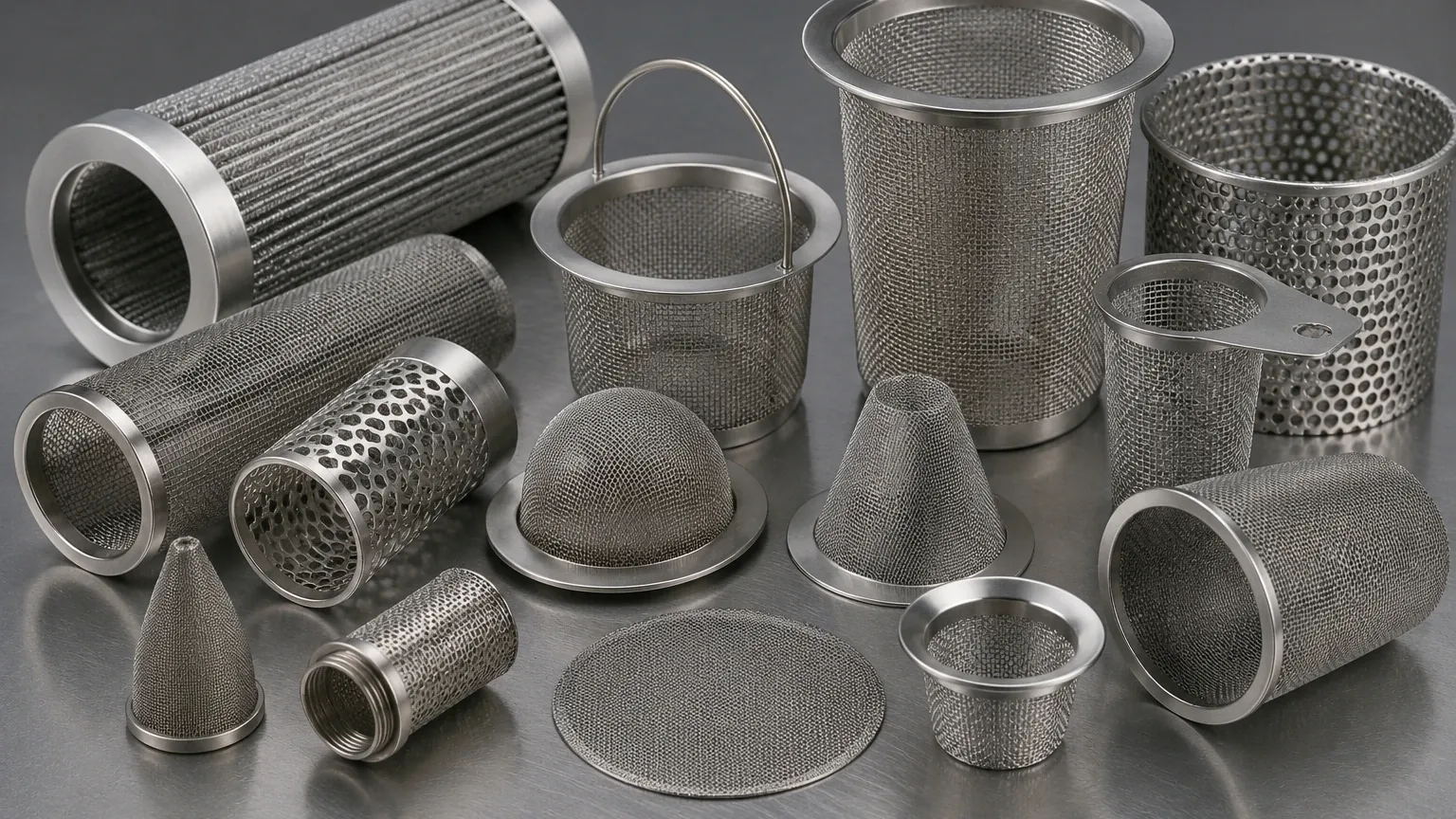
Industrial Strainers & Baskets serve as the first line of defense in fluid handling. Their presence prevents catastrophic failure in high-value components. Without an appropriately specified strainer, debris such as welding slag, pipe scale, or external contaminants can enter a pump casing, leading to impeller damage or seal failure.
Key Functions
1. Equipment Protection: Safeguarding meters, nozzles, and control valves from clogging.
2. Product Purity: In industries like food and beverage or pharmaceuticals, strainers ensure that the final product is free from visible particulate matter.
3. Process Efficiency: Maintaining the flow characteristics of a system by preventing the buildup of solids in narrow passages.
Technical Classifications of Industrial Strainers
Selecting the right equipment requires more than just knowing the strainer meaning in Bengali; it requires an understanding of the various configurations available. The geometry of the strainer significantly impacts the pressure drop and the ease of maintenance.
1. Y-Strainers
Named for their "Y" shape, these are typically used in pressurized lines, either for liquid or gas. They are preferred when the amount of material to be removed is small, as they have a lower dirt-holding capacity than basket types. Their compact design makes them ideal for installations where space is limited.
2. Basket Strainers (Simplex and Duplex)
Basket strainers feature a vertical cylinder that houses a basket-shaped screen. They offer a much larger surface area than Y-strainers, resulting in a lower pressure drop and longer intervals between cleanings.
* Simplex Strainers: Used in systems where the process can be shut down for cleaning.
* Duplex Strainers: Consist of two separate basket chambers with a diverting valve. This allows one side to be cleaned while the other remains in operation, making them essential for continuous-flow processes.
3. Temporary Strainers
Often shaped like cones or hats, these are installed between flanges during the initial startup of a piping system to catch construction debris. They are usually removed once the system has been flushed clean.
Engineering Considerations for Selection
When specifying Strainers & Baskets, engineers must evaluate several technical parameters to ensure the component survives the operating conditions and performs its intended function effectively.
Material Compatibility
The choice of material is governed by the chemical properties of the fluid and the temperature of the process.
* Stainless Steel (SS304/SS316L): The industry standard for corrosion resistance. SS316L is particularly preferred in pharmaceutical and marine applications due to its superior resistance to pitting and chloride-induced stress corrosion cracking.
* Carbon Steel: Suitable for non-corrosive oil and gas applications.
* Specialty Alloys: Monel or Hastelloy may be required for highly aggressive chemical processing.
Filtration Accuracy (Mesh vs. Micron)
The "tightness" of the strainer is defined by its mesh size or micron rating.
* Mesh: Refers to the number of openings per linear inch. A higher mesh count indicates a finer screen.
* Micron (μm): A metric unit of length equal to one-millionth of a meter.
It is a common engineering mistake to specify a mesh that is too fine. While a finer mesh removes more particles, it also increases the pressure drop (ΔP) and requires more frequent cleaning. The rule of thumb is to select a screen with openings slightly smaller than the smallest particle that could damage downstream equipment.
Pressure Drop and Flow Rate
Every strainer introduces a restriction in the flow path. Engineers must calculate the "clean pressure drop" to ensure the pump has sufficient head to overcome the resistance. As the basket fills with debris, the pressure drop increases. If it exceeds the structural limit of the basket, the screen may collapse, bypassing the filtration media and sending a concentrated slug of debris downstream.
Maintenance and Total Cost of Ownership
Understanding the strainer meaning in Bengali and its technical role also involves planning for its lifecycle. A strainer is not a "fit and forget" component. Its effectiveness is entirely dependent on a rigorous maintenance schedule.
Cleaning Cycles
In many industrial plants, differential pressure gauges are installed across the strainer inlet and outlet. When the pressure differential reaches a predetermined limit (typically 5-10 psi), the basket must be removed and cleaned. In Bengali industrial environments, this process is often referred to as "পরিষ্কারকরণ" (Porishkarkoron) or maintenance.
Replacement and Durability
High-quality stainless steel baskets from specialized manufacturers like Kaifil are designed for longevity. However, mechanical wear, erosion from high-velocity particles, and chemical fatigue can eventually necessitate replacement. Investing in precision-engineered baskets with reinforced frames reduces the frequency of replacement and prevents bypass leakage.
Common Risks in Strainer Procurement
When purchasing industrial filtration components, especially when navigating language barriers or local translations, several risks can emerge:
1. Incorrect Sizing: Purchasing a strainer based solely on the pipe size rather than the flow rate can lead to excessive pressure drops.
2. Material Mismatch: Using lower-grade stainless steel in a corrosive environment to save costs, which leads to premature failure.
3. Lack of Documentation: Failing to confirm material test reports (MTRs) or pressure test certifications, which are vital for safety compliance.
Before taking the next step in procurement, technical professionals should confirm the following with their supplier:
* The specific grade of stainless steel used for both the housing and the internal basket.
* The open area ratio (the ratio of the total area of the holes to the cross-sectional area of the pipe).
* The availability of custom mesh linings for specific filtration requirements.
Conclusion
While the literal strainer meaning in Bengali provides a basic linguistic foundation, the industrial reality of Strainers & Baskets is defined by material science, fluid dynamics, and precision manufacturing. Whether you are operating a chemical plant in Haldia or a food processing facility in Dhaka, selecting the right strainer requires a deep dive into technical specifications rather than just a simple translation.
By focusing on high-quality materials, accurate filtration ratings, and robust structural designs, engineers can ensure their systems remain protected, efficient, and cost-effective over the long term. For those seeking reliable, custom-engineered filtration solutions, partnering with a manufacturer that understands these technical nuances is the most effective way to optimize industrial performance.
