


Strainer Meaning in Urdu
In the context of industrial fluid handling and mechanical engineering, understanding the precise terminology of filtration components is essential for effective communication between global manufacturers and local engineering teams. For professionals operating in regions where Urdu is spoken—such as Pakistan and parts of India—the term "strainer" is frequently encountered in technical specifications.
When exploring the strainer meaning in Urdu, the most direct translation is *chalni* (چھلنی), which refers to a device used for separating solids from liquids. However, in a B2B and industrial engineering environment, a simple translation does not capture the technical complexity of these components. An industrial strainer is more accurately described as a *safai karne wala ala* (صفائی کرنے والا آلہ) or specifically an *industrial strainer* used for the protection of pumps, valves, and downstream equipment.
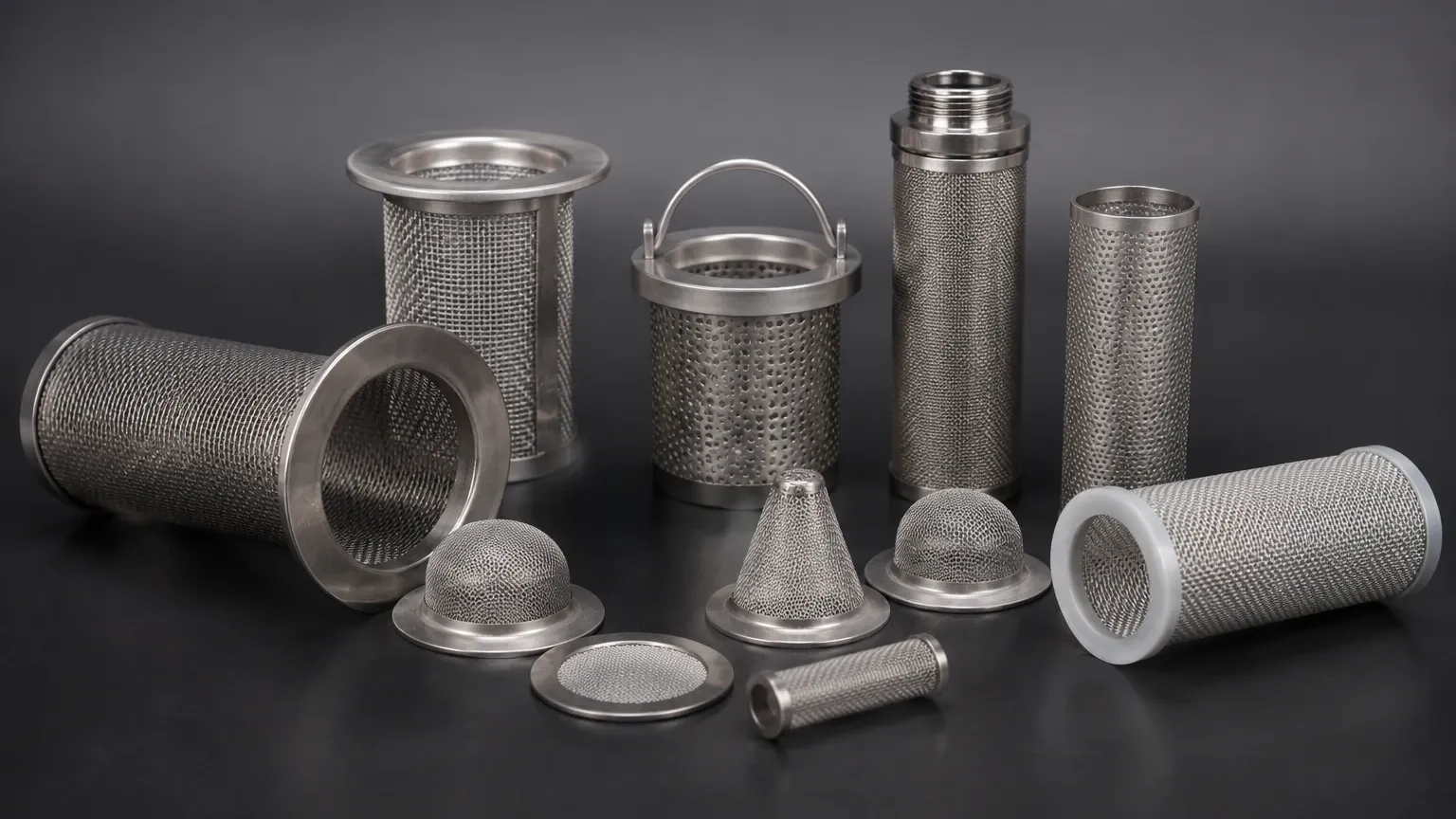
At Kaifil, we specialize in the design and manufacture of high-performance Strainers & Baskets tailored to meet the rigorous demands of chemical processing, food production, and hydraulic systems. This guide examines the technical nuances of strainers, their Urdu linguistic context, and the engineering criteria required for industrial selection.
The Linguistic and Technical Context of Strainers
While the general strainer meaning in Urdu (*chalni*) suffices for household items, industrial applications require a more nuanced understanding. In engineering Urdu, a strainer is often referred to as a "filter mesh" or "screening element." The primary function of these components is to remove coarse particles from a process stream.
Unlike a standard filter, which is designed to remove microscopic contaminants, a strainer typically handles larger debris that could cause mechanical damage to sensitive components. In Urdu-speaking technical circles, the distinction between a "filter" (*filter*) and a "strainer" (*strainer*) is maintained to ensure that the correct level of filtration (micron rating) is applied to the system.
Why Terminology Matters in Procurement
For procurement officers and engineers, knowing the strainer meaning in Urdu helps in bridging the gap between local maintenance staff and international suppliers. When a technician requests a *chalni* for a high-pressure pipeline, they are referring to a heavy-duty stainless steel basket or Y-strainer. Understanding this allows for the correct specification of materials, pressure ratings, and connection types.
Types of Industrial Strainers and Baskets
Industrial strainers are categorized based on their configuration and the specific requirements of the piping system. Each type serves a unique purpose in protecting industrial infrastructure.
1. Y-Strainers
Y-strainers are named for their shape and are commonly used in pressurized lines, whether liquid or gas. They are preferred for applications where the amount of material to be removed is relatively small. In Urdu, these might be described as *Y-shakal ki chalni*. Their compact design allows for installation in both horizontal and vertical positions.
2. Basket Strainers (Simplex and Duplex)
Basket strainers feature a larger surface area than Y-strainers, making them ideal for systems with a higher concentration of debris.
- Simplex Strainers: Used in systems where the flow can be shut down for cleaning.
- Duplex Strainers: These consist of two separate strainer baskets with a diverting valve. This allows for continuous operation; while one basket is being cleaned (*safai*), the other remains in service. This is critical for industries that cannot afford downtime.
3. Temporary Strainers
Often used during the commissioning phase of a plant, these are installed between flanges to catch welding slag and construction debris. They are usually removed once the system is clean.
Engineering Considerations: Beyond the Translation
Selecting the right Strainers & Baskets requires more than just knowing the strainer meaning in Urdu. Engineers must evaluate several technical parameters to ensure the longevity and efficiency of the filtration system.
Material Selection
Kaifil utilizes high-grade stainless steel (SS304, SS316, and SS316L) to manufacture strainer elements. Stainless steel is chosen for its:
- Corrosion Resistance: Essential for chemical and water treatment applications.
- Durability: Able to withstand high-pressure differentials without deforming.
- Hygiene: Stainless steel is the standard for food, beverage, and pharmaceutical industries where contamination must be avoided.
Mesh vs. Perforation
The straining element can be made of perforated metal or woven wire mesh.
- Perforated Metal: Best for removing large debris.
- Wire Mesh: Used for finer straining requirements. The "mesh count" refers to the number of openings per linear inch. A higher mesh count indicates a finer level of straining.
Pressure Drop (Delta P)
A critical engineering factor is the pressure drop across the strainer. If the strainer is too fine for the application, it will clog rapidly, leading to a significant drop in pressure and potential damage to pumps. Engineers must calculate the "clean pressure drop" and establish a maintenance schedule based on the "dirty pressure drop" limit.
Customization and OEM Solutions
Every industrial environment has unique challenges. A standard off-the-shelf strainer may not suffice for specialized chemical reactors or high-viscosity food processing lines. Kaifil provides extensive OEM and customization services, ensuring that the filtration component fits the exact dimensions and performance needs of the client.
Customization options include:
- Custom Dimensions: Tailoring the basket height, diameter, and flange connections.
- Reinforced Structures: Adding support cages for high-pressure applications where the mesh might otherwise collapse.
- Specialty Coatings: For environments involving highly aggressive chemicals that may exceed the limits of standard stainless steel.
In the Urdu-speaking industrial market, providing customized solutions ( *makhsoos hal* ) is vital for upgrading legacy systems that may not follow modern international standard dimensions.
Maintenance and Cleaning Protocols
The efficiency of a strainer is directly linked to its maintenance. In Urdu, maintenance is referred to as *dekh bhaal* or *marammat*. For a strainer, this primarily involves the regular cleaning of the basket or screen.
Signs That Cleaning is Required:
1. Increased Pressure Drop: Monitored via pressure gauges installed before and after the strainer.
2. Reduced Flow Rate: A noticeable decrease in the volume of fluid passing through the system.
3. Pump Noise: Cavitation in pumps often indicates a clogged suction-side strainer.
Cleaning Procedure:
To clean a basket strainer, the system (or the specific side of a duplex strainer) must be depressurized. The cover is removed, and the basket is lifted out. It should be cleaned using a soft brush or high-pressure air/water, depending on the nature of the debris. It is essential to inspect the mesh for any signs of tearing or bypass during this process.
Applications Across Global Industries
Industrial strainers are ubiquitous in modern manufacturing. By understanding the strainer meaning in Urdu and its technical application, companies can better implement these solutions in various sectors:
- Chemical Processing: Protecting expensive flow meters and control valves from particulates.
- Food and Beverage: Ensuring product purity by removing pips, skins, or unintended solids during processing.
- Oil and Gas: Removing sand and scale from crude oil or refined products to prevent pipeline erosion.
- Water Treatment: Acting as a pre-filter for membrane systems to extend the life of expensive RO (Reverse Osmosis) units.
Why Choose Kaifil for Your Filtration Needs?
Kaifil combines advanced manufacturing capabilities with deep engineering expertise. We understand that a strainer is a critical line of defense for your machinery. Whether you are looking for a standard Y-strainer or a complex custom basket assembly, our products are designed for precision and durability.
Our commitment to quality ensures that every component we produce meets international standards, providing peace of mind to engineers and purchasing teams worldwide. We bridge the gap between technical requirements and practical application, ensuring that whether you call it a *chalni* or an industrial strainer, the performance remains world-class.
Conclusion
Understanding the strainer meaning in Urdu serves as a starting point for effective communication in South Asian industrial markets. However, the successful implementation of filtration technology depends on a rigorous analysis of flow rates, material compatibility, and maintenance requirements.
By selecting high-quality Strainers & Baskets, industrial operators can significantly reduce equipment downtime, lower maintenance costs, and ensure the purity of their process fluids. At Kaifil, we remain dedicated to providing the technical guidance and manufacturing excellence needed to solve the most challenging filtration problems in the global B2B landscape.
