


Strainer Meaning in Marathi
In the context of industrial engineering and fluid handling, precise terminology is essential for effective communication between manufacturers, procurement teams, and on-site technical staff. For professionals operating in Maharashtra or working with Marathi-speaking technical personnel, understanding the strainer meaning in Marathi is more than a linguistic exercise; it is a fundamental step in ensuring that the correct filtration equipment is specified, ordered, and maintained.
In Marathi, the word for strainer is generally translated as गाळणी (Gāḷaṇī) or चाळणी (Chāḷaṇī). While both terms refer to the act of separation, *Gāḷaṇī* is most commonly used for liquid filtration—the process of removing solid contaminants from a fluid stream—whereas *Chāḷaṇī* often refers to sifting or grading dry, solid particles. In a B2B industrial environment, identifying the exact Strainers & Baskets required for a project involves bridging the gap between these local terms and global engineering standards.
Defining the Industrial Strainer: Technical and Linguistic Context
An industrial strainer is a closed-vessel device designed to remove solid particles from flowing liquids or gases by means of a perforated or wire mesh straining element. Unlike fine filters, which are designed to remove microscopic particles and often require frequent replacement of disposable media, strainers are typically used for coarser filtration. Their primary role is to protect expensive downstream equipment, such as pumps, valves, meters, and heat exchangers, from damage caused by debris, scale, or foreign objects.
When discussing the strainer meaning in Marathi in a workshop or factory setting, engineers often use the term *Gāḷaṇī* to describe the physical component that performs this protective function. However, the technical specifications—such as mesh count, open area ratio, and pressure rating—remain universal. For a manufacturer like Kaifil, providing custom stainless steel filtration solutions means ensuring that these technical parameters are met, regardless of the local terminology used by the end-user.
Strainer Meaning in Marathi: Technical Terminology for Engineers
To facilitate better communication in regional industrial hubs like Pune, Mumbai, or Nashik, it is helpful to categorize the Marathi terminology based on the specific function of the equipment:
1. Liquid Filtration (द्रव गाळण – Drava Gāḷaṇa): This refers to the process of straining liquids. The device used is the *Gāḷaṇī*. In industrial piping, this is the most common application for basket and Y-strainers.
2. Solid Separation (घन विलगीकरण – Ghana Vilagīkaraṇa): When a strainer is used to separate different sizes of solid materials, the term *Chāḷaṇī* is more appropriate. This is frequently seen in the food processing and pharmaceutical sectors.
3. Mesh/Screen (जाळी – Jāḷī): The actual straining element, usually made of stainless steel wire mesh, is referred to as the *Jāḷī*. The density of this mesh determines the filtration accuracy.
Understanding these nuances helps procurement officers avoid errors when translating technical requirements into purchase orders. A "basket strainer" might be described locally as a *Basket Gāḷaṇī*, but the engineering focus must remain on the material grade (e.g., SS304 or SS316) and the micron rating required for the specific process.
Core Components of Industrial Strainers & Baskets
Industrial Strainers & Baskets are engineered assemblies consisting of several critical components. Each part must be designed to withstand the chemical and mechanical stresses of the application.
The Housing (Body)
The outer shell of the strainer, often referred to as the body or vessel, is designed to hold the straining element and manage the flow of the medium. In high-pressure applications, the housing must be rated according to standards such as ASME or DIN. Materials like cast iron, carbon steel, and stainless steel are common, with stainless steel being the preferred choice for corrosive environments or hygienic applications.
The Straining Element (The Basket or Screen)
This is the heart of the device. It is typically a perforated metal sheet or a multi-layered wire mesh structure. The "basket" design provides a larger surface area for debris collection compared to a simple flat screen, which results in a lower pressure drop and longer intervals between cleanings. In Marathi technical discussions, this is the component most frequently identified as the *Gāḷaṇī* element.
Seals and Gaskets
To prevent bypass (where fluid escapes around the straining element without being filtered) and external leaks, high-quality seals are required. These are chosen based on the temperature and chemical compatibility of the fluid being processed.
Engineering Selection Criteria for Custom Filtration
Selecting the right strainer involves more than just knowing the strainer meaning in Marathi. Engineers must evaluate several technical factors to ensure the longevity and efficiency of the filtration system.
1. Material Compatibility
Stainless steel (SS304, SS316, or SS316L) is the industry standard for most chemical, pharmaceutical, and food-grade applications. It offers excellent resistance to corrosion and oxidation. For highly aggressive chemicals, specialized alloys may be required. Kaifil specializes in these custom material selections to match specific industrial environments.
2. Mesh Size and Micron Rating
The "mesh size" refers to the number of openings per linear inch. A higher mesh number indicates a finer screen. The "micron rating" defines the smallest particle size the strainer can reliably capture. It is a common mistake to specify a mesh that is too fine, which leads to rapid clogging and excessive pressure drops. The rule of thumb is to select a mesh that is slightly smaller than the smallest particle that needs to be removed to protect downstream equipment.
3. Flow Rate and Pressure Drop (ΔP)
As fluid passes through the strainer, there is an inherent loss of pressure. This is known as the pressure drop. A well-designed strainer should have a large open area ratio (the ratio of the total area of the holes to the total area of the screen) to minimize this loss. If the pressure drop becomes too high, it can starve pumps or reduce the efficiency of the entire system.
4. Connection Type
Strainers can be integrated into piping systems via flanged, threaded, or socket-weld connections. The choice depends on the system pressure, the frequency of removal for maintenance, and local piping standards.
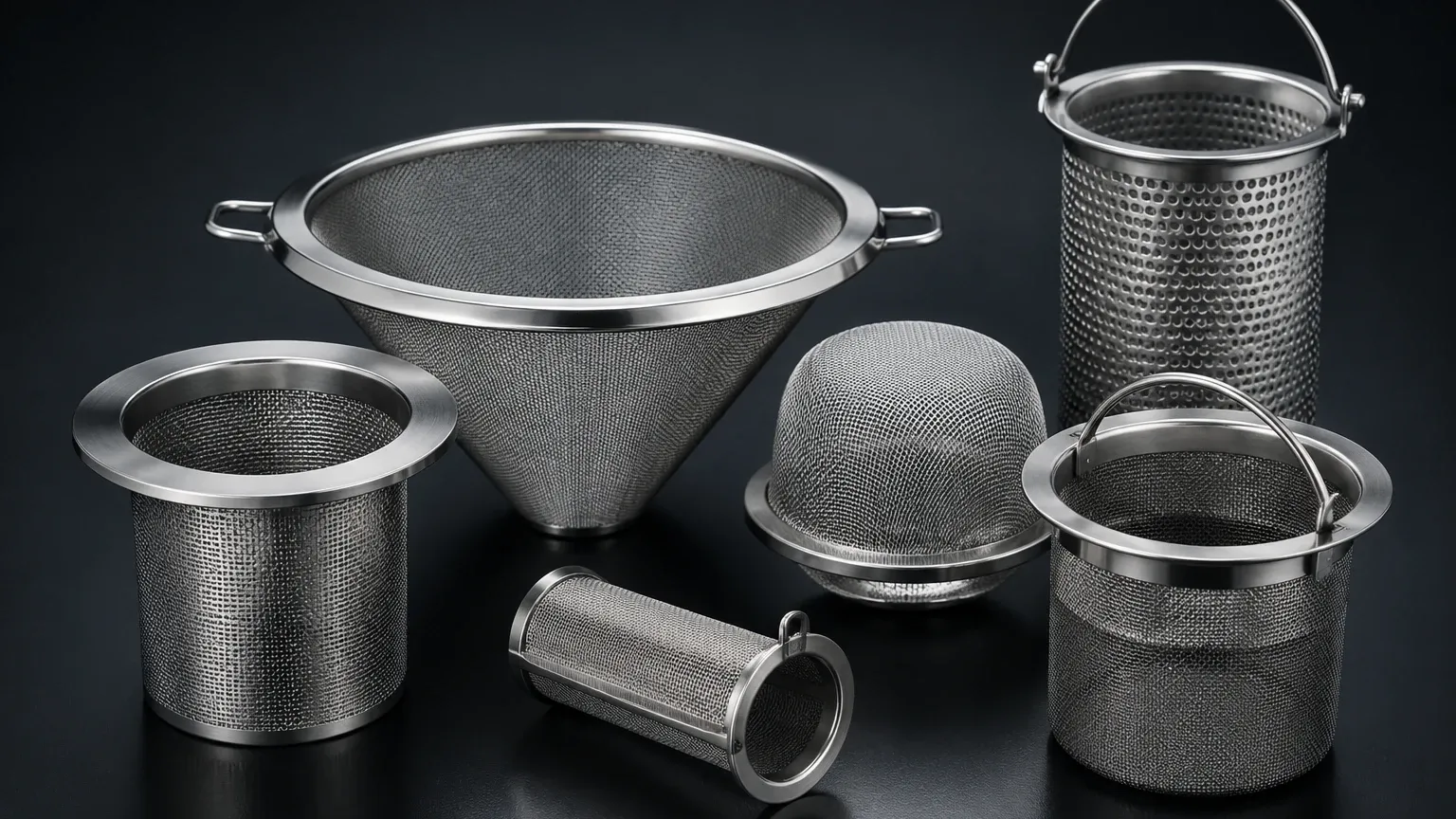
Industrial Applications of Stainless Steel Strainers
The versatility of Strainers & Baskets makes them indispensable across various sectors. By understanding the functional requirements, companies can optimize their processes.
* Chemical Processing: Protecting valves and flow meters from corrosive particulates and undissolved solids. Stainless steel's resistance to chemical attack is vital here.
* Food and Beverage: Ensuring product purity by removing large particles or accidental contaminants. In this sector, "hygienic" or "sanitary" strainers are used, which feature smooth surfaces to prevent bacterial growth.
* Water Treatment: Removing sand, grit, and organic matter from raw water sources before it enters fine filtration or RO (Reverse Osmosis) systems.
* Hydraulic Systems: Protecting sensitive hydraulic pumps and actuators from metal shavings or scale that could cause catastrophic failure.
* Oil and Gas: Straining crude oil or refined products to prevent pipeline blockages and equipment wear.
In each of these industries, the term *Gāḷaṇī* might be used by the local workforce to describe the equipment, but the engineering necessity remains a high-performance, durable metal component.
Maintenance and Operational Longevity
One of the primary advantages of using high-quality stainless steel strainers is their ability to be cleaned and reused. Unlike disposable filter cartridges, a basket strainer can be removed, washed, and reinstalled, significantly reducing the total cost of ownership.
Cleaning Cycles
Maintenance schedules should be determined by monitoring the pressure differential across the strainer. Many systems utilize a differential pressure gauge. When the pressure drop reaches a predetermined limit, it indicates that the basket is full of debris and requires cleaning. In Marathi-speaking workshops, this maintenance task is often described as *Gāḷaṇī swachha karane* (cleaning the strainer).
Replacement Considerations
While the housings of stainless steel strainers can last for decades, the internal mesh elements may eventually suffer from mechanical wear, erosion, or "blinding" (permanent clogging). Regular inspection is necessary to check for broken wires or deformed baskets. Using high-quality OEM components from a manufacturer like Kaifil ensures that replacement parts fit perfectly and maintain the original filtration efficiency.
Conclusion: Bridging Language and Engineering
While the strainer meaning in Marathi—*Gāḷaṇī*—provides a linguistic bridge for local teams, the success of an industrial filtration system depends on rigorous engineering standards. Whether you are specifying a simple Y-strainer for a water line or a complex custom basket strainer for a chemical reactor, the focus must remain on material integrity, filtration accuracy, and robust construction.
For engineers and procurement professionals, partnering with a manufacturer that understands both the technical complexities and the practical application of these components is crucial. By focusing on high-quality Strainers & Baskets, industries can ensure the protection of their infrastructure, minimize downtime, and maintain the highest standards of operational efficiency. Understanding the local terminology is the start of the conversation; delivering precision-engineered stainless steel solutions is the goal that ensures long-term industrial success.
