


Strainer Nz
In the industrial landscape of New Zealand, from the intensive dairy processing plants of the Waikato to the chemical manufacturing hubs in Auckland, the integrity of fluid handling systems depends heavily on effective primary filtration. Industrial strainers and baskets serve as the first line of defense, protecting downstream equipment such as pumps, valves, meters, and heat exchangers from damage caused by scale, weld beads, and other foreign solids. For engineers and procurement teams sourcing a strainer nz solution, understanding the technical nuances of basket design, material compatibility, and flow dynamics is essential to ensuring operational uptime and reducing the total cost of ownership.
Industrial filtration is not a one-size-fits-all discipline. While a standard Y-strainer might suffice for simple water lines, complex process fluids require specialized Strainers & Baskets that can withstand high pressures, corrosive environments, and stringent sanitary requirements. This guide explores the engineering principles and selection criteria necessary for optimizing filtration performance in demanding industrial applications.
The Role of Strainers and Baskets in Industrial Process Loops
Unlike fine filters that remove microscopic particles, strainers are designed to remove larger solids from liquids or gases. In a typical process loop, the strainer is installed upstream of sensitive components. The primary objective is to prevent mechanical failure or clogging that could lead to expensive downtime.
In the context of the New Zealand market, where the food and beverage sector—particularly dairy—is a cornerstone of the economy, strainers must do more than just trap debris. They must often meet sanitary standards that prevent bacterial growth and allow for efficient Cleaning-in-Place (CIP) cycles. A well-designed basket strainer provides a large surface area for debris collection, which minimizes the frequency of cleaning and prevents significant pressure drops that could starve a pump or disrupt a chemical reaction.
Key Engineering Specifications for Strainer NZ Applications
When evaluating a strainer nz for a specific project, engineers must look beyond the pipe size and connection type. Several critical technical specifications dictate the performance and longevity of the component.
Open Area Ratio (OAR)
One of the most overlooked metrics in strainer selection is the Open Area Ratio. This is the ratio of the total area of all the holes in the strainer element to the internal cross-sectional area of the inlet pipe. A high-quality industrial basket should ideally have an OAR of at least 4:1. An OAR of 6:1 or higher is preferred for high-viscosity fluids or systems where rapid loading of solids is expected. A higher OAR ensures that as the basket begins to fill with debris, the increase in pressure drop is gradual rather than immediate, providing a wider safety margin for maintenance.
Micron Rating and Mesh Selection
The filtration accuracy is determined by the perforated plate or the wire mesh lining of the basket. Perforated plates are generally used for coarser filtration (typically 1mm and above) and provide the structural strength required to withstand high differential pressures. For finer filtration, a stainless steel wire mesh is layered over the perforated metal.
Engineers must balance the desire for "cleaner" fluid with the physical reality of flow resistance. Specifying a mesh that is too fine for the application will lead to frequent clogging and excessive pressure drop. Conversely, a mesh that is too coarse will allow harmful particles to pass through. Understanding the particle size distribution of the contaminants is the first step in selecting the correct mesh or perforation size.
Material Selection: Why Stainless Steel Dominates NZ Filtration
Material compatibility is a non-negotiable factor in industrial filtration. In New Zealand, many industrial facilities are located near coastal areas, where the salt-laden air can accelerate the corrosion of external components. Internally, the process fluid itself may be corrosive or require high-purity handling.
Grade 304 vs. 316 Stainless Steel
Most industrial Strainers & Baskets are manufactured from Grade 304 or Grade 316 stainless steel. Grade 304 is suitable for general-purpose applications, offering good corrosion resistance and durability. However, for the chemical processing industry or food production where chloride exposure is common, Grade 316 (which contains molybdenum) is the standard choice due to its superior resistance to pitting and crevice corrosion.
Advanced Alloys and Surface Treatments
In extreme environments, such as geothermal energy production or specialized chemical synthesis, even Grade 316 may be insufficient. In these cases, 316L (low carbon) is used to prevent sensitization during welding, or higher-grade alloys like Duplex stainless steel are employed. Surface finishes also play a role; electropolishing is often required for sanitary strainers to remove surface irregularities where bacteria could harbor, ensuring the component meets the strict hygiene standards required by New Zealand’s primary industries.
Evaluating Flow Dynamics and Pressure Drop
Pressure drop ($ΔP$) is the difference in pressure between the inlet and outlet of the strainer. Every strainer introduces some resistance to flow, but an engineered solution aims to keep this resistance within acceptable limits.
The total pressure drop is the sum of the drop across the strainer body and the drop across the clean basket. As the basket collects debris, the $ΔP$ increases. If the differential pressure exceeds the structural limit of the basket, the mesh or perforated plate can collapse, sending both the debris and fragments of the basket into the downstream system.
Factors Influencing Pressure Drop:
1. Viscosity: Higher viscosity fluids (like honey, resins, or heavy oils) require larger strainers and coarser mesh to maintain flow.
2. Velocity: As the flow velocity increases, the pressure drop increases exponentially (roughly by the square of the velocity).
3. Specific Gravity: Denser fluids create higher resistance.
4. Percentage of Clogging: Designers usually calculate the maximum allowable pressure drop at a 50% clogged state to ensure the system remains functional between maintenance intervals.
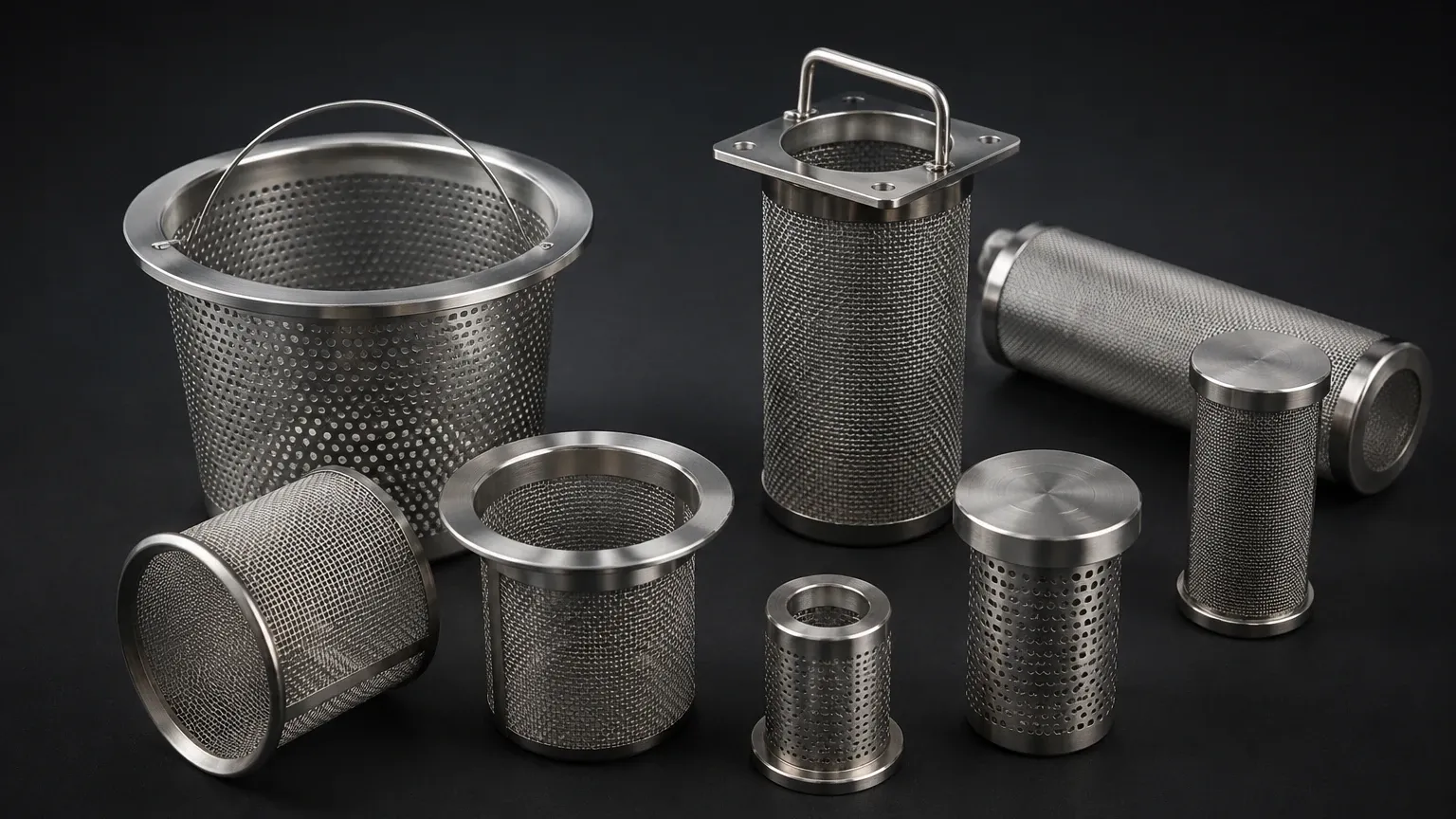
Customization and OEM Capabilities for Specialized Requirements
Standard off-the-shelf strainers often fail to meet the specific spatial or performance requirements of complex industrial plants. This is where custom manufacturing becomes vital. For a strainer nz project with unique constraints, OEM capabilities allow for the modification of several design elements:
* Custom Dimensions: Adjusting the height or diameter of the basket to fit within existing housing constraints while maintaining the required OAR.
* Reinforcement: Adding internal or external support rings to the basket to handle high-pressure surges or heavy solid loading.
* Handle and Seal Designs: Custom handles for easy removal and specialized gasket materials (like Viton, PTFE, or EPDM) to ensure chemical compatibility.
* Multi-Stage Filtration: Designing baskets with multiple layers of different mesh sizes to capture a range of particle sizes in a single pass.
By working with a manufacturer that understands these engineering variables, procurement teams can secure components that are purpose-built for their specific application, rather than trying to adapt a generic product to a specialized task.
Maintenance, Cleaning, and Operational Longevity
The total cost of ownership for Strainers & Baskets is largely determined by their maintenance requirements. A basket that is difficult to clean or prone to damage during handling will quickly become a liability.
Cleaning Procedures
In most industrial settings, baskets are cleaned manually. The design should allow for the basket to be easily lifted out of the housing. For non-sanitary applications, high-pressure water or air is usually sufficient. In food or pharmaceutical applications, the basket must be able to withstand caustic cleaning agents and high temperatures.
Replacement Cycles
While stainless steel strainers are durable, they are not permanent. The wire mesh can fatigue over time due to pressure fluctuations, and the sealing surfaces can wear. It is recommended to keep spare baskets on-site to ensure that production does not stop while a basket is being cleaned or repaired. Monitoring the differential pressure via gauges is the most effective way to determine when a basket needs attention before a failure occurs.
Technical Checklist for Procurement
Before finalizing a purchase for industrial strainers, engineers should confirm the following data points with their supplier:
1. Design Pressure and Temperature: Does the strainer meet the maximum operating conditions of the system, including potential surges?
2. Fluid Characteristics: Is the material compatible with the chemical composition and viscosity of the process fluid at operating temperature?
3. Filtration Goal: What is the specific particle size that must be removed to protect downstream equipment?
4. Connection Standards: Does the unit comply with local piping standards (e.g., ANSI, DIN, or Table D/E common in NZ)?
5. Certification Requirements: Are material mill certificates or food-grade compliance documents required for the project?
By addressing these technical details early in the procurement phase, New Zealand industrial operators can ensure they receive a strainer nz solution that provides reliable, long-term protection for their critical infrastructure. High-quality Strainers & Baskets are an investment in process stability, preventing the catastrophic costs associated with equipment damage and unplanned downtime.
