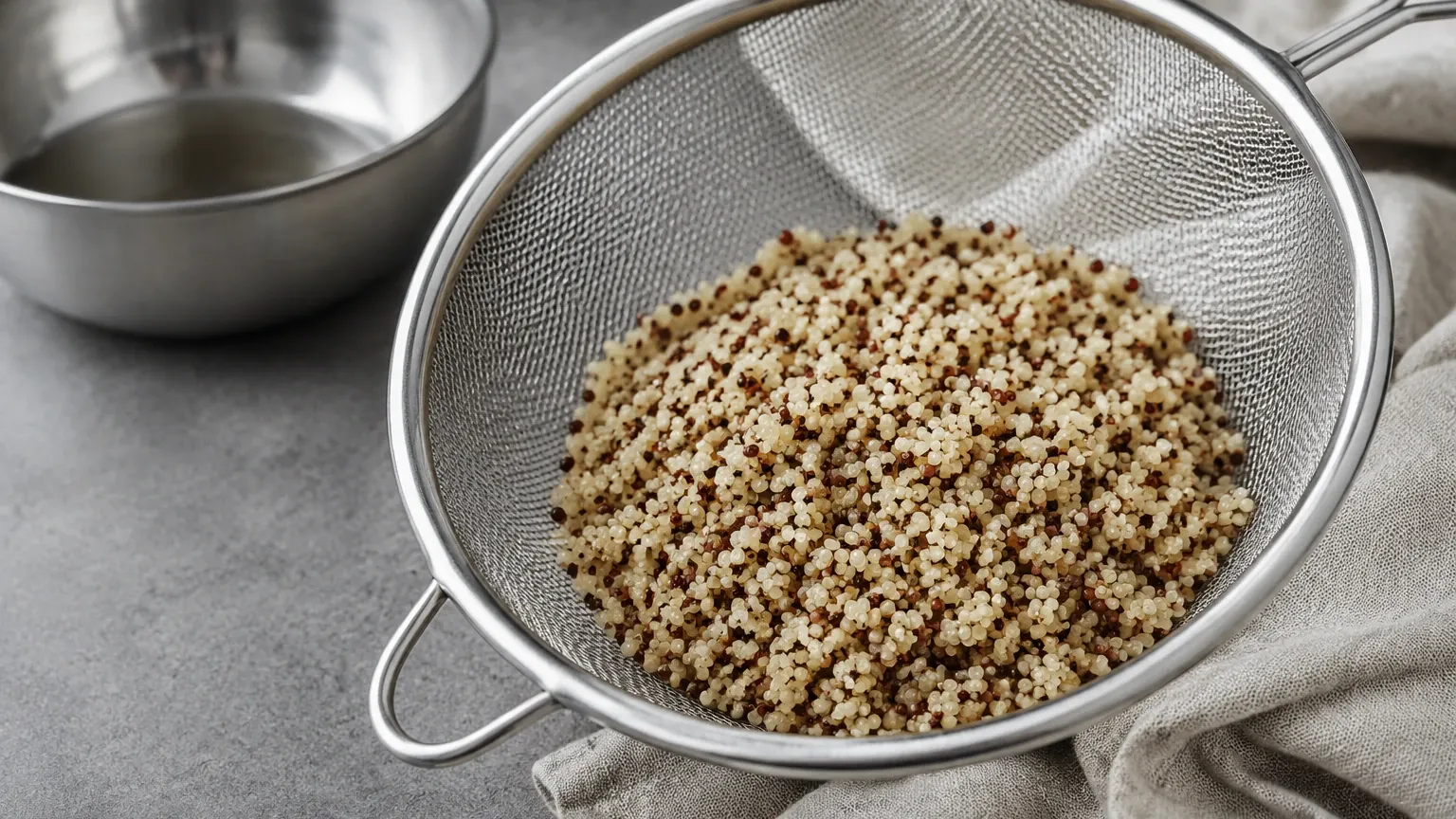
Strainer Quinoa
In the industrial food processing sector, the processing of pseudocereals like quinoa presents unique engineering challenges that demand high-precision filtration equipment. Quinoa seeds are notably small, typically ranging from 1.0 to 2.0 millimeters in diameter, depending on the variety. For large-scale production facilities, the transition from raw harvest to a shelf-ready product requires rigorous washing and rinsing phases to remove saponins—the naturally occurring bitter compounds found on the seed's outer layer. This process necessitates the use of high-performance Strainers & Baskets designed to handle high flow rates while ensuring zero grain loss. Selecting the correct strainer quinoa processing equipment is a critical decision for plant engineers focused on yield optimization, food safety compliance, and operational longevity.
The Engineering Challenges of Industrial Quinoa Processing
Industrial quinoa processing is a water-intensive operation that relies heavily on mechanical separation. The primary goal of the rinsing stage is to agitate the seeds in water to dissolve saponins and then rapidly separate the seeds from the effluent. A standard domestic or commercial-grade strainer is insufficient for these industrial volumes; instead, heavy-duty stainless steel baskets are integrated into automated processing lines.
In these systems, the strainer acts as a critical mechanical barrier. It must be engineered to withstand the hydraulic pressure of high-velocity water jets used to scrub the seeds. If the mesh is too coarse, valuable product is lost to the waste stream, directly impacting the facility's bottom line. Conversely, if the mesh is too fine, the strainer may clog prematurely due to the viscous nature of the soapy saponin residue. This leads to backpressure issues, mechanical strain on pumps, and frequent downtime for cleaning. Therefore, the specification for a "strainer quinoa" solution must balance aperture size with structural integrity to ensure continuous flow and maximum retention.
Technical Specifications for Quinoa Filtration Systems
When designing or selecting strainers for quinoa applications, engineers must evaluate several technical parameters beyond simple dimensions. Unlike general-purpose filtration, food-grade pseudocereal processing requires a specific focus on mesh geometry and open area percentages.
1. Mesh Precision and Micron Ratings
For quinoa processing, a mesh size of approximately 30 to 40 mesh (roughly 400 to 600 microns) is often the baseline. This ensures that even the smallest seeds in a batch are retained while allowing the wash water and dissolved solids to pass through freely. In high-speed centrifugal dryers or large-scale gravity strainers, the precision of the weave is paramount. Any deviation in the wire spacing can result in "bypass," where seeds escape the system. Engineers must look for mesh that maintains its aperture shape under the weight of several hundred kilograms of wet product.
2. Open Area and Flow Velocity
The "open area" of a strainer refers to the percentage of the mesh surface that is not occupied by wire. A higher open area reduces the pressure drop across the filter, allowing for faster processing. However, in quinoa applications, the wire diameter must be thick enough to prevent mechanical deformation. Balancing the wire diameter with the aperture size is a key engineering task when customizing Strainers & Baskets for high-throughput lines.
Material Science and Hygiene Standards
In the food and beverage industry, material choice is dictated by corrosion resistance, hygiene standards, and regulatory compliance. Stainless steel is the industry standard due to its inert properties and ability to withstand aggressive cleaning cycles.
* Stainless Steel 304: This is the standard grade for many food processing applications where water chemistry is neutral and the environment is relatively non-corrosive. It offers good durability and is cost-effective for large-scale basket manufacturing.
* Stainless Steel 316L: This grade is preferred if the processing environment involves high-salinity water or aggressive cleaning-in-place (CIP) chemicals. The addition of molybdenum in 316L provides superior resistance to pitting and crevice corrosion. For quinoa processors located in regions with hard water or those using chlorinated sanitizers, 316L is the safer long-term investment.
* Surface Finish and Ra Values: The internal surface of the strainer should have a low Roughness Average (Ra). A smoother surface prevents the adhesion of organic matter and biofilms. Processes such as electropolishing can further enhance the surface finish, making the strainer quinoa components easier to sanitize and more resistant to the buildup of saponin foam.
Customization and OEM Integration for Processing Lines
Standard off-the-shelf components rarely meet the specific throughput requirements of a modern, automated quinoa processing facility. Custom-engineered filtration solutions offer several advantages that directly contribute to plant efficiency.
* Reinforced Structural Support: Large baskets holding significant volumes of wet quinoa are subject to intense gravitational and centrifugal forces. Custom designs often incorporate a perforated metal outer shell or internal ribs to support the fine wire mesh. This prevents the screen from sagging, stretching, or tearing under the load of the saturated grain.
* Optimized Flow Dynamics: The geometry of the basket—whether cylindrical, conical, or multi-layered—influences how water moves through the seed bed. Conical designs can help distribute water more evenly, ensuring that seeds in the center of the mass are as thoroughly rinsed as those on the periphery. This uniformity is essential for meeting the strict saponin-level requirements of premium quinoa brands.
* Precision Flanges and Seals: For strainers integrated into pressurized pipelines, the quality of the flange and sealing surface is critical. Precision-machined flanges ensure a tight fit within the housing, preventing bypass and ensuring that 100% of the fluid passes through the mesh. Custom handles and lifting points can also be added to facilitate safer and faster manual handling during maintenance intervals.
Managing Saponin Blinding and Maintenance Cycles
One of the most significant operational hurdles in quinoa filtration is the foam generated by saponins. As the wash water passes through the strainer, the agitation creates a thick, stable lather that can trap fine particulates and air bubbles within the mesh openings. This phenomenon, known as "blinding," can bring a production line to a halt if not managed correctly.
To mitigate this, industrial strainers often utilize specialized wedge wire designs or specific weave patterns that facilitate easier release of the foam. Wedge wire (V-wire) is particularly effective for strainer quinoa applications because it only has two points of contact with the particles, significantly reducing the risk of clogging compared to traditional square mesh. Furthermore, the smooth surface of high-grade stainless steel allows for more efficient backwashing.
Maintenance Recommendations:
1. Regular Backwashing: Implementing an automated backwash cycle can clear the mesh of accumulated saponins without requiring the removal of the basket.
2. Ultrasonic Cleaning: For deep cleaning of fine mesh baskets, ultrasonic baths can remove microscopic residues that manual scrubbing might miss.
3. Inspection for Mesh Fatigue: Over time, the constant vibration and hydraulic pressure can cause wire fatigue. Regular inspections should focus on the weld points and the integrity of the mesh weave to prevent catastrophic failure during production.
Selection Criteria for Purchasing and Engineering Teams
For purchasing teams and plant managers, the initial cost of a strainer is only one part of the total cost of ownership (TCO). A lower-quality basket may save capital expenditure initially but can lead to higher costs through frequent replacements, increased labor for cleaning, and lost product yield.
When evaluating Strainers & Baskets for quinoa processing, consider the following checklist:
* Filtration Accuracy: Does the micron rating align with the smallest grain size in your specific quinoa variety (e.g., white vs. black quinoa)?
* Throughput Capacity: Can the basket handle the peak flow rate of your pumps without excessive pressure drop?
* Durability: Is the mesh supported by a perforated plate or frame to prevent deformation?
* Regulatory Compliance: Does the manufacturer provide certifications for food-grade materials (FDA/EU standards)?
* Ease of Integration: Are the dimensions and connection types compatible with existing housing or automated systems?
By focusing on these engineering fundamentals, food processing facilities can achieve a more efficient, hygienic, and cost-effective quinoa production process. Partnering with a manufacturer that possesses deep expertise in stainless steel fabrication and industrial filtration allows for the development of customized solutions that address the specific challenges of pseudocereal processing. The right industrial strainer does more than just retain seeds; it protects the quality of the final product and ensures the reliability of the entire manufacturing operation.