


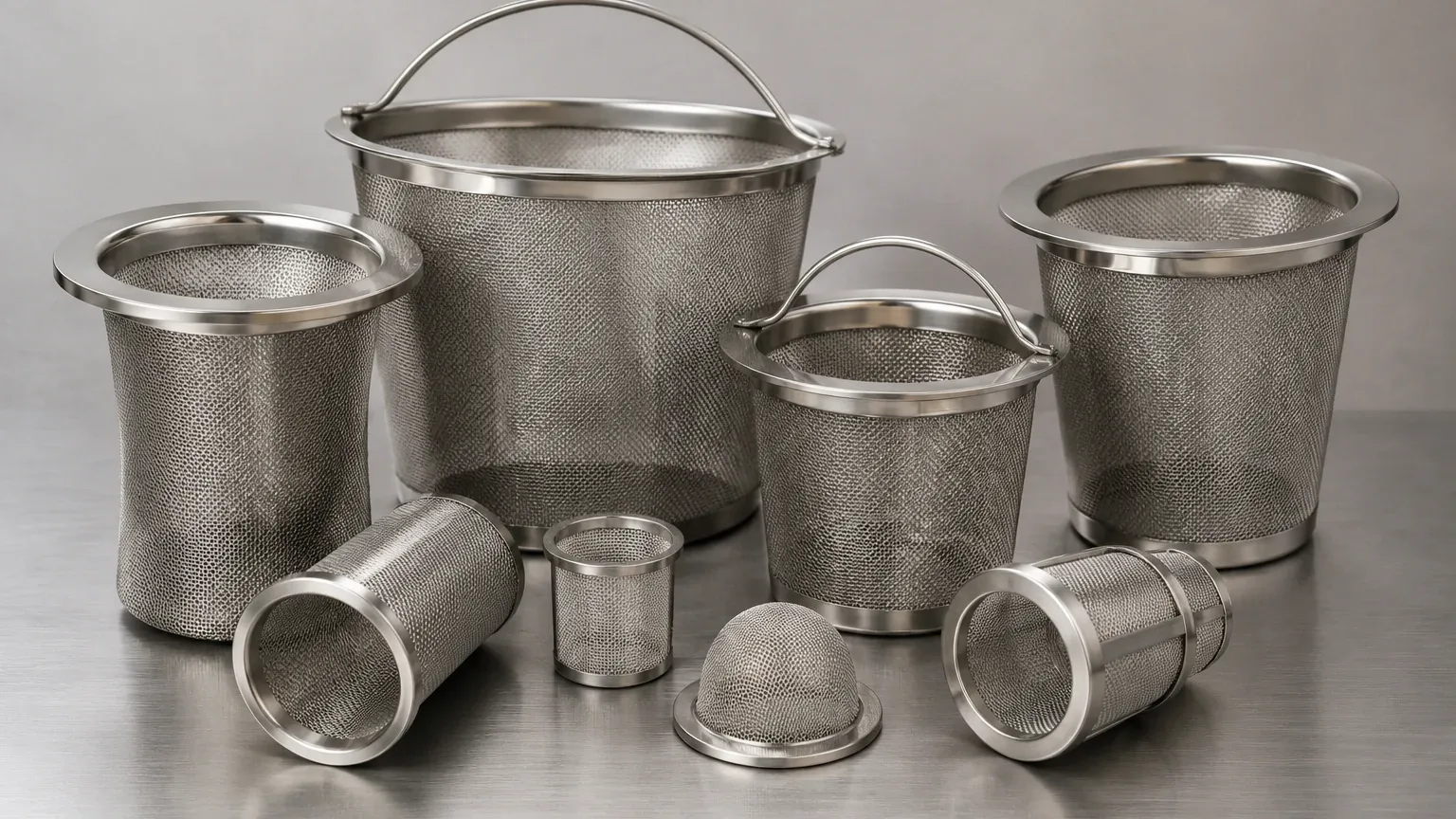
Strainer Set
In industrial fluid handling, the integrity of downstream equipment—such as pumps, valves, and precision nozzles—depends heavily on the efficiency of primary filtration. A professional industrial strainer set is not merely a collection of mesh baskets; it is a strategically engineered assembly of components designed to manage particle loads, protect mechanical assets, and maintain system pressure within specified parameters. For engineers and procurement teams, selecting the right configuration of Strainers & Baskets requires a deep understanding of fluid dynamics, material compatibility, and the specific mechanical stresses of the application environment.
Industrial strainers serve as the first line of defense in piping systems. Whether utilized in chemical processing, water treatment, or food and beverage production, these components must withstand high flow rates while capturing debris that could cause catastrophic mechanical failure or product contamination. This guide explores the technical nuances of specifying a strainer set, focusing on the engineering criteria that dictate performance and longevity.
Technical Specifications and Material Selection
The performance of a strainer set begins with the selection of the base material. In most industrial contexts, stainless steel is the standard due to its mechanical strength and resistance to corrosion. However, the specific grade of stainless steel must be matched to the chemical profile of the fluid being processed.
Stainless Steel 304 vs. 316L
* Grade 304: This is the most common material for general industrial applications. It offers excellent durability and cost-effectiveness for water-based systems and mildly corrosive environments.
* Grade 316L: For applications involving chlorides, acids, or high-salinity environments (such as marine or chemical processing), 316L is preferred. The addition of molybdenum provides superior resistance to pitting and crevice corrosion. In the pharmaceutical and food sectors, 316L is often the requirement to meet stringent sanitary standards.
Mesh and Perforation Configurations
A functional strainer set often utilizes a combination of perforated metal and fine wire mesh. The perforated metal acts as a structural support (the basket skeleton), providing the mechanical rigidity necessary to withstand differential pressure. The wire mesh liner, often sintered or welded to the support, determines the actual filtration rating.
When specifying a strainer set, engineers must define the "open area ratio." This is the ratio of the total area of the holes to the total area of the strainer medium. A higher open area ratio typically results in a lower initial pressure drop, which extends the time between cleaning cycles.
Engineering Design: Flow Rates and Pressure Drop
One of the most critical factors in industrial filtration is the relationship between the strainer set and the system’s pressure drop (ΔP). Every filter component introduces resistance to the flow. If the strainer is undersized or the mesh is too fine for the particle load, the pressure drop will increase rapidly, leading to decreased pump efficiency or even system cavitation.
Calculating Differential Pressure
Engineers must calculate the clean pressure drop based on the fluid's viscosity, density, and flow rate. A well-designed strainer set should ideally operate with a clean pressure drop of less than 2 PSI. As the basket collects debris, the pressure drop increases. Monitoring this differential pressure is essential; most industrial systems are designed to trigger a cleaning cycle or a switch to a standby strainer when the ΔP reaches a predetermined limit (often 10–15 PSI).
Flow Velocity Considerations
The velocity of the fluid as it enters the strainer housing affects the turbulence and the distribution of particles within the basket. If the velocity is too high, particles may be forced through the mesh or cause premature erosion of the strainer material. Customizing the dimensions of the strainer set allows for an optimized internal volume that slows the fluid down, allowing for more efficient particle capture.
Customization and Configuration Options
No two industrial processes are identical, which is why a standardized, off-the-shelf strainer set rarely meets the needs of complex systems. Customization allows for the integration of specific features that enhance operational efficiency.
Basket Styles and Handle Designs
* Slant-Top Baskets: Designed for easy removal in specific housing types, ensuring that the seal remains intact during high-pressure operations.
* Flat-Bottom Baskets: Provide maximum volume for heavy particle loads.
* Reinforced Bottoms: For applications involving high-viscosity fluids or heavy debris, the bottom of the strainer basket can be reinforced with additional plate or heavy-duty mesh to prevent sagging or bursting.
* Handle Configurations: Specialized handles, such as grip bars or lifting lugs, are essential for larger strainer sets used in heavy industries, where manual extraction might be difficult or require overhead lifting equipment.
Multi-Stage Filtration Sets
In some scenarios, a single strainer is insufficient. A multi-stage strainer set might involve a series of baskets with decreasing micron ratings. The primary basket removes large debris (e.g., scale, stones, or wood chips), while subsequent liners target finer particulates. This progressive filtration strategy prevents the fine mesh from clogging prematurely, thereby optimizing the total cost of ownership by reducing maintenance frequency.
Performance Evaluation and Maintenance
The reliability of a strainer set is measured by its ability to maintain structural integrity over thousands of cycles. In industrial environments, strainers are subject to "pressure spikes" and mechanical vibrations.
Cleaning and Reusability
Unlike disposable filter cartridges, stainless steel strainers are designed to be cleaned and reused. The ease of cleaning depends on the mesh type. Plain square weave mesh is easier to backwash or manually clean than complex Dutch weave patterns. For sticky or fibrous contaminants, ultrasonic cleaning may be required to restore the strainer set to its original flow capacity.
Structural Integrity Checks
During routine maintenance, the strainer set should be inspected for:
1. Bypass: Check the seals and flanges for any signs that fluid is bypassing the filtration medium.
2. Deformation: Look for "bowing" in the mesh or support structure, which indicates that the strainer has been subjected to excessive differential pressure.
3. Corrosion: Even stainless steel can succumb to stress-corrosion cracking in specific chemical environments.
Industry-Specific Applications
The requirements for a strainer set vary significantly across different sectors. Understanding these nuances is vital for correct procurement.
Chemical Processing
In chemical plants, the primary concern is chemical compatibility and safety. Strainer sets must be designed to handle aggressive solvents and high temperatures. Often, these strainers are used to protect expensive catalysts or heat exchangers from upstream pipe scale.
Food and Beverage
Sanitary strainers require smooth, crevice-free surfaces (often polished to a specific Ra value) to prevent bacterial growth. The strainer set must be compatible with CIP (Clean-In-Place) systems, where high-temperature caustic solutions are circulated to sterilize the equipment.
Hydraulic and Lube Oil Systems
In hydraulic systems, the strainer set is used to protect high-pressure pumps. The focus here is on removing metallic shavings and environmental dust that could cause internal wear. These strainers must be able to handle high-viscosity oils, especially during cold-start conditions.
Technical Verification Before Purchase
Before finalizing a purchase for a strainer set, engineering teams should confirm several critical data points with the manufacturer. This ensures that the components will perform as expected under actual operating conditions.
1. Fluid Characteristics: Confirm the viscosity (at operating temperature), specific gravity, and chemical composition.
2. Particle Profile: Identify the size and type of particles to be removed. Is the debris hard and abrasive, or soft and deformable?
3. Operating Parameters: Define the maximum operating pressure, temperature, and flow rate.
4. Connection Requirements: Specify flange types (ANSI, DIN, etc.) or threaded connections to ensure seamless integration into existing piping.
5. Certification Needs: Determine if the application requires specific certifications, such as FDA compliance for food contact or ASME pressure vessel standards.
By focusing on these technical details, procurement professionals can move beyond simple price comparisons and select a strainer set that offers the best long-term value through durability and process efficiency. Whether you are replacing an existing system or designing a new facility, the engineering of your Strainers & Baskets is a foundational element of system reliability.
