


Strainer Utensil
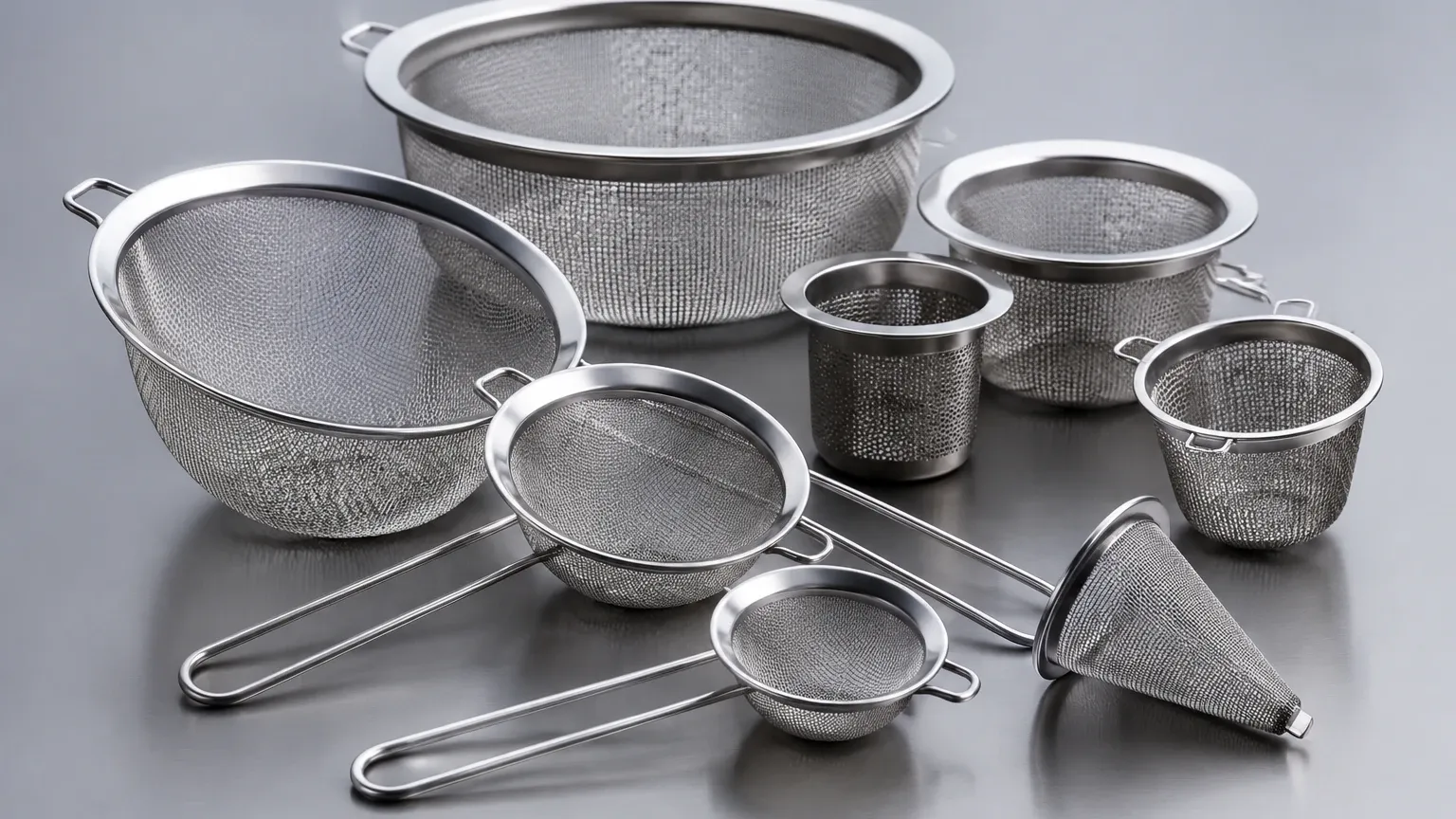
In the landscape of industrial processing, the term "strainer utensil" often refers to specialized, manual, or semi-manual filtration components designed for batch processing, laboratory sampling, and precision screening. While consumer-grade utensils are common in domestic kitchens, industrial-grade Strainers & Baskets are engineered to withstand rigorous chemical environments, high temperatures, and strict hygienic standards. For engineers and procurement professionals, selecting the correct straining tool requires a deep understanding of material science, fluid dynamics, and the specific mechanical stresses of the production line.
Industrial filtration is not merely about separating solids from liquids; it is about protecting downstream equipment, ensuring product purity, and maintaining process efficiency. Whether used in a pharmaceutical lab or a large-scale food processing plant, the technical specifications of a strainer—ranging from the weave of the wire mesh to the grade of the stainless steel—determine its long-term viability and performance.
Understanding Industrial Strainer Utensil and Basket Systems
At the industrial level, a strainer utensil functions as a primary or secondary filtration stage. Unlike automated self-cleaning filters, these components are often designed for manual intervention, allowing operators to remove large particulates, debris, or clumps from a process flow. They are frequently utilized in batch-based manufacturing where flexibility and ease of cleaning are paramount.
Industrial baskets and strainers are typically categorized by their installation method and flow direction. Baskets are often used in "top-in" configurations where the fluid enters the center and exits through the mesh walls, trapping contaminants inside for easy removal. The design of the "utensil" aspect—such as handles, reinforced rims, and specialized mounting brackets—is critical for operational safety and ergonomic handling by plant personnel.
Kaifil specializes in manufacturing these components using high-grade stainless steel wire mesh and perforated metals. The choice between a simple mesh strainer and a complex reinforced basket depends on the viscosity of the fluid, the expected particle load, and the required flow rate. For high-viscosity fluids like syrups or resins, a heavy-duty basket with a high open-area ratio is necessary to prevent excessive pressure drops.
Key Engineering Considerations for Material Selection
The performance of a strainer utensil is fundamentally tied to its material composition. In industrial settings, stainless steel is the gold standard due to its mechanical strength and resistance to environmental degradation. However, not all stainless steel is equal, and selecting the wrong grade can lead to premature failure via pitting, crevice corrosion, or stress corrosion cracking.
Stainless Steel 304 vs. 316L
* Type 304: This is the most common grade used for general-purpose industrial strainers. It provides excellent durability and resistance to oxidation. It is suitable for water treatment and most food-grade applications where chloride exposure is minimal.
* Type 316/316L: For more demanding environments, particularly in chemical processing or marine applications, Type 316 is preferred due to the addition of molybdenum. This increases resistance to chloride-induced pitting. The "L" (low carbon) variant is essential for components that require welding, as it prevents carbide precipitation and maintains corrosion resistance at the weld joints.
Beyond the alloy grade, surface finish is a critical consideration. In the pharmaceutical and food industries, a strainer utensil must often undergo electropolishing. This process removes microscopic peaks and valleys on the metal surface, creating a "mirror finish" that prevents bacterial adhesion and facilitates more effective cleaning and sterilization.
Filtration Accuracy and Mesh Specifications
The primary function of a strainer is defined by its filtration accuracy, measured in microns or mesh count. Engineers must balance the need for fine filtration with the practicalities of flow resistance.
Mesh Count and Micron Rating
* Mesh Count: Refers to the number of openings per linear inch. A higher mesh count indicates a finer screen.
* Micron Rating: Refers to the physical size of the particles the strainer can effectively block. For example, a 100-micron strainer will stop most particles visible to the naked eye, while a 5-micron strainer is required for microscopic contaminants.
Weave Types
The method by which the wires are woven significantly impacts the strength and flow characteristics of the strainer utensil:
1. Plain Weave: The simplest and most common weave, offering a high open area and low pressure drop.
2. Dutch Weave: Uses larger diameter warp wires and smaller diameter shute (weft) wires. This creates a dense, strong mesh that can achieve much finer filtration ratings while maintaining the structural integrity needed for high-pressure applications.
3. Twill Weave: Allows for thicker wires in a given mesh count, increasing the mechanical durability of the strainer for abrasive media.
When specifying a strainer, it is vital to calculate the "Open Area Ratio." This is the ratio of the total area of the holes to the total area of the mesh. A higher open area reduces the frequency of cleaning cycles but may require a larger physical footprint to maintain structural strength.
Structural Design and Customization for Industrial Applications
Unlike standard off-the-shelf products, an industrial strainer utensil often requires customization to fit specific vessel geometries or piping configurations. Customization ensures that there is no "bypass"—a situation where fluid flows around the filter element rather than through it.
Reinforcement and Support
In high-flow environments, a fine mesh screen lacks the structural rigidity to withstand the force of the fluid. To solve this, manufacturers like Kaifil use a multi-layer approach. A fine inner mesh is bonded to or supported by a coarser, perforated metal outer basket. This "backup" layer provides the necessary mechanical support to prevent the mesh from collapsing or tearing under differential pressure.
Handle and Rim Designs
For manual strainers, the design of the handle is an engineering consideration. It must be robust enough to support the weight of the basket when it is fully loaded with heavy debris. Furthermore, the rim must provide a precision seal against the housing. If the strainer is used in a sanitary application, the handles and rims must be free of crevices where organic material could accumulate.
Maintenance, Cleaning, and Replacement Cycles
The total cost of ownership (TCO) for a strainer utensil is heavily influenced by its maintenance requirements. In many industrial processes, the ability to clean and reuse a filter is a significant advantage over disposable cartridges.
Cleaning Protocols
Stainless steel strainers can be cleaned using several methods:
* Backwashing: Reversing the flow of fluid to dislodge particles from the mesh surface.
* Ultrasonic Cleaning: Using high-frequency sound waves in a solvent bath to remove fine particles trapped deep within the weave.
* Chemical Cleaning: Using acids or alkalis to dissolve organic or mineral buildup, provided the chemical is compatible with the stainless steel grade.
Identifying Replacement Needs
While stainless steel is durable, it is not infinite. Engineers should monitor the "differential pressure" (the difference in pressure before and after the strainer). A sudden spike in differential pressure indicates that the strainer is clogged. Conversely, a sudden drop could indicate a breach or tear in the mesh. Regular physical inspections are necessary to look for signs of wire fatigue or mechanical deformation. If the mesh begins to fray, it can release metal fragments into the process stream, which is a critical failure in food and pharmaceutical production.
Selecting the Right Strainer for Specific Industries
Different industries have unique regulatory and functional requirements that dictate the design of the strainer utensil.
Food and Beverage
In this sector, compliance with FDA or 3A Sanitary Standards is mandatory. Strainers must be made from non-toxic materials and designed for easy disassembly. The mesh must be smooth to prevent food particles from becoming trapped and fermenting. Common applications include straining fruit pulps, clarifying juices, and removing seeds.
Chemical and Petrochemical
These applications often involve aggressive solvents and high temperatures. The focus here is on chemical compatibility and the ability to withstand high pressure. Heavy-duty baskets with reinforced welds are standard to ensure safety and prevent environmental leaks.
Pharmaceuticals
Filtration in the pharmaceutical industry requires the highest levels of precision. Strainers are used for catalyst recovery, active pharmaceutical ingredient (API) filtration, and protecting sensitive downstream membranes. The materials must be fully traceable, and the manufacturing process must ensure that no lubricants or contaminants are introduced during fabrication.
Conclusion: Making Informed Purchasing Decisions
Choosing the right strainer utensil or basket is a technical decision that impacts the safety, quality, and efficiency of an entire production line. By focusing on material grades, mesh geometry, and structural reinforcement, engineers can select a solution that minimizes downtime and maximizes product purity.
When evaluating suppliers, it is essential to partner with a manufacturer that understands these engineering nuances. Kaifil provides the technical expertise and manufacturing precision required to develop custom Strainers & Baskets that meet the specific demands of diverse industrial environments. Whether you require a standard basket for water treatment or a highly specialized utensil for a pharmaceutical cleanroom, understanding the factual boundaries of filtration performance is the first step toward process optimization.
