Strainers Uses
In industrial fluid handling systems, the integrity of downstream equipment often depends on the effectiveness of mechanical separation. Industrial strainers serve as the primary line of defense, removing oversized solids and debris from liquid and gas streams. While often grouped with filtration, the specific strainers uses in engineering contexts focus on protecting expensive components like pumps, valves, and heat exchangers from damage caused by particulates. Understanding the technical nuances of strainer application is essential for engineers and procurement teams looking to optimize system uptime and reduce maintenance costs.
Understanding the Primary Strainers Uses in Industrial Systems
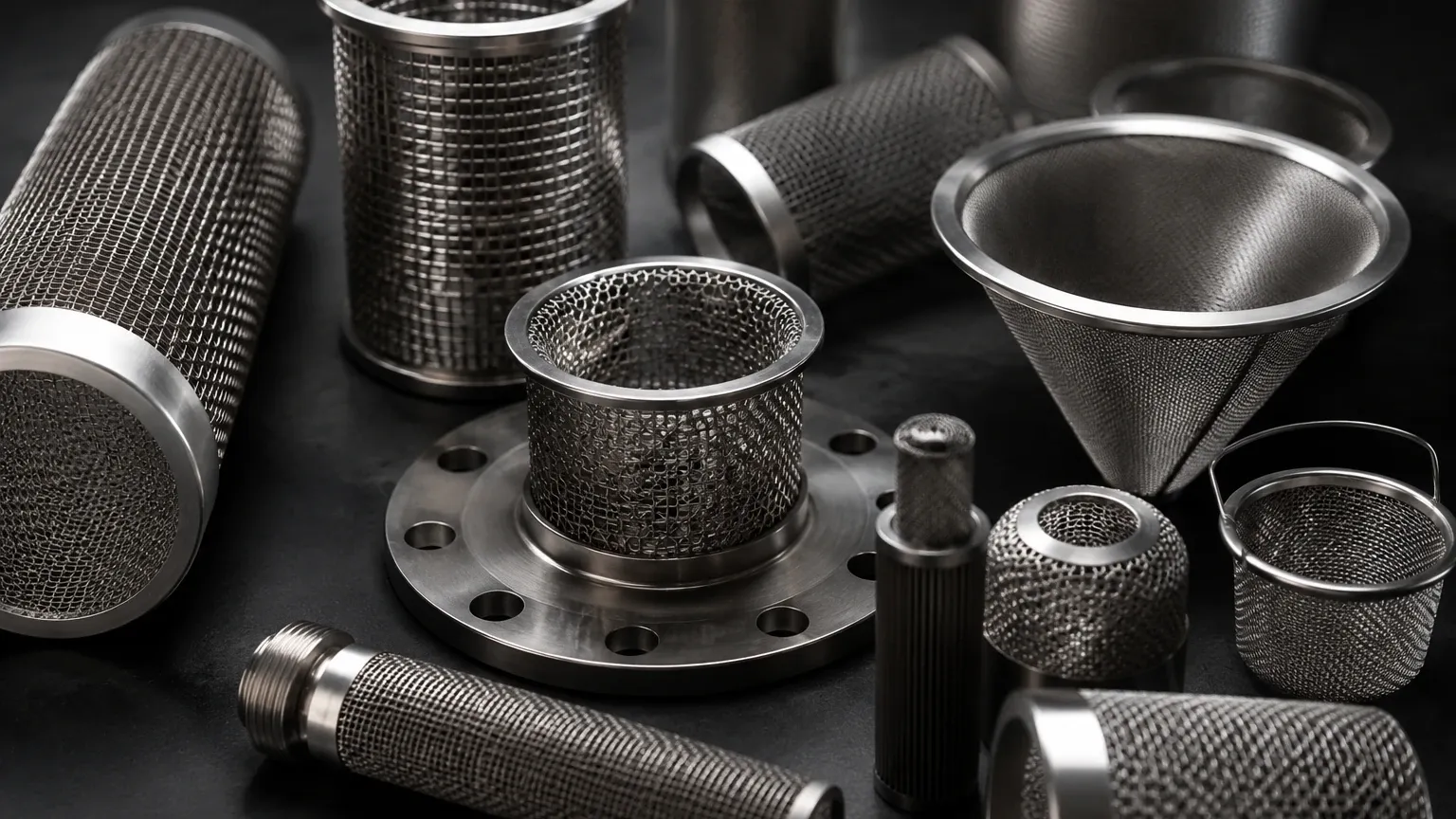
The primary function of a strainer is to capture large particles that could cause mechanical failure or process inefficiency. Unlike fine filters, which are designed to remove microscopic contaminants, Strainers & Baskets are typically installed to manage "tramp" solids—materials like pipe scale, weld slag, or foreign objects that enter the system during installation or maintenance.
1. Pump and Compressor Protection
Pumps are highly susceptible to damage from solids. In centrifugal pumps, large particles can erode the impeller or lodge in the casing, leading to cavitation, vibration, and eventual mechanical seal failure. By installing a strainer on the suction side of the pump, engineers ensure that only fluid within the allowable particle size enters the chamber. This is one of the most critical strainers uses in chemical processing and water treatment plants, where the cost of pump repair far exceeds the investment in a high-quality stainless steel strainer.
2. Protecting Precision Valves and Nozzles
Control valves and spray nozzles often feature narrow orifices and tight tolerances. Even a small amount of debris can lead to clogging or seat damage, preventing the valve from closing properly. In industrial cleaning or coating applications, consistent spray patterns are vital. Strainers ensure that solids do not reach the nozzle tip, maintaining process consistency and preventing unscheduled stops for manual cleaning.
3. Heat Exchanger Efficiency
Heat exchangers, particularly plate-and-frame models, have narrow flow paths. If solids accumulate on the heat transfer surfaces, the system experiences "fouling," which drastically reduces thermal efficiency and increases the pressure drop across the unit. Using strainers to pre-treat the cooling water or process fluid prevents this buildup, extending the intervals between intensive chemical or mechanical cleanings of the exchanger.
Engineering Differences: Strainers vs. Filters
While the terms are sometimes used interchangeably, engineers distinguish between them based on the particle size they are designed to remove and the pressure drop they can tolerate.
* Particle Size: Strainers are generally used for removing particles larger than 40 microns (visible to the naked eye). Filters are used for sub-micron or fine particulate removal.
* Pressure Drop ($ΔP$): Because strainers use coarser mesh or perforated metal, they typically offer a lower initial pressure drop than fine filters. This allows for higher flow rates without requiring massive increases in pumping power.
* Cleaning Frequency: Strainers are designed for high-solids loading and are often easier to clean. Basket-style strainers allow for the removal of the internal element without disturbing the piping, making them ideal for systems where regular maintenance is expected.
Specific Applications Across Key Industries
The versatility of stainless steel construction allows for diverse strainers uses across various demanding sectors. The choice of material, such as 304 or 316L stainless steel, is dictated by the chemical compatibility of the fluid and the environmental conditions.
Chemical and Petrochemical Processing
In these environments, strainers must withstand corrosive fluids and high temperatures. They are used to protect flow meters and sensitive instrumentation from pipeline scale. For highly corrosive applications, 316L stainless steel is the standard due to its superior resistance to pitting and crevice corrosion.
Food and Beverage Production
Hygiene is the priority in food-grade applications. Strainers are used to remove pulp from juices, seeds from preserves, or clumps from liquid chocolate. These strainers must feature smooth internal surfaces and specialized mesh that can be thoroughly sanitized to prevent bacterial growth. Kaifil provides customized filtration solutions that meet these stringent cleanliness requirements.
Pharmaceutical Manufacturing
In the pharmaceutical sector, strainers are used in the early stages of raw material processing to ensure that bulk liquids are free of large contaminants before they enter more refined filtration stages. The use of precision-engineered wire mesh ensures that the filtration rating is consistent, which is critical for batch repeatability.
Water Treatment and Desalination
Large-scale water treatment facilities use strainers to protect reverse osmosis (RO) membranes and ultrafiltration modules. Removing sand, grit, and organic debris at the intake stage prevents premature membrane fouling, which is one of the most significant operational costs in desalination plants.
Technical Selection Criteria for Strainers & Baskets
Selecting the right strainer requires more than just matching the pipe size. Engineers must evaluate several technical parameters to ensure the component performs reliably under field conditions.
1. Open Area Ratio (OAR)
The Open Area Ratio is the relationship between the total area of the holes in the strainer element and the cross-sectional area of the inlet pipe. A common industry standard is an OAR of 4:1. This means the strainer's flow area is four times larger than the pipe's area. A higher OAR results in a lower pressure drop and longer service intervals before the strainer requires cleaning.
2. Mesh vs. Perforation
Strainer elements are typically made from perforated metal or wire mesh. Perforated metal is used for coarser straining (e.g., 1/8" or 1/16" holes), while wire mesh is layered over a perforated backup tube for finer applications. Engineers must specify the required micron rating or mesh count based on the smallest particle they need to capture.
3. Flow Rate and Viscosity
High-viscosity fluids, such as heavy oils or resins, create a higher pressure drop across the strainer. If the fluid is viscous, the strainer size may need to be increased (oversized) to keep the pressure drop within acceptable limits. It is essential to calculate the clean pressure drop using the specific gravity and viscosity of the process fluid at operating temperature.
4. Pressure and Temperature Ratings
The housing and the internal basket must be rated for the maximum operating pressure and temperature of the system. In high-pressure hydraulic systems, for instance, the strainer must be robust enough to withstand pressure surges without collapsing the internal mesh.
Maintenance, Cleaning, and Total Cost of Ownership (TCO)
One of the most overlooked aspects of strainers uses is the long-term maintenance strategy. A strainer that is difficult to clean will eventually be bypassed or ignored, leading to equipment failure downstream.
* Simplex vs. Duplex: In processes that cannot be shut down, duplex strainers are used. These consist of two separate strainer chambers connected by a diverting valve. When one basket becomes full, the flow is diverted to the second chamber, allowing the first to be cleaned without interrupting the process.
* Differential Pressure Monitoring: Installing differential pressure gauges across the strainer is the most effective way to determine when cleaning is necessary. A sudden jump in $ΔP$ indicates a clogged basket. Setting a clear "terminal pressure drop" (the point at which the strainer must be cleaned) prevents damage to the internal element.
* Durability of Stainless Steel: While plastic or carbon steel strainers may have a lower initial cost, stainless steel baskets offer a much lower TCO. They are resistant to mechanical wear during cleaning and can be reused indefinitely if maintained properly.
Customization and OEM Solutions
Standard off-the-shelf strainers do not always meet the specific needs of specialized industrial equipment. Customization is often required for unique flow paths, non-standard flange connections, or specific material requirements.
Kaifil specializes in manufacturing custom stainless steel filtration solutions, including precision-engineered baskets and wire mesh filters. Whether an application requires a reinforced basket for high-pressure differentials or a specific alloy for chemical resistance, customized designs ensure that the strainer integrates perfectly with the existing system architecture. This level of precision is particularly important for OEM manufacturers who need to guarantee the performance of their own equipment by including high-quality protection components.
Technical Checklist for Procurement
Before finalizing a purchase for industrial strainers, engineers and purchasing teams should confirm the following data points:
1. Fluid Characteristics: What is the fluid, its viscosity, and its chemical compatibility with 304 or 316L stainless steel?
2. Particle Size: What is the size of the smallest particle that must be removed to protect downstream equipment?
3. Flow Conditions: What are the minimum, normal, and maximum flow rates? What is the maximum allowable pressure drop when the strainer is clean?
4. Operating Environment: What are the maximum operating pressure and temperature? Are there any sanitary or food-grade requirements?
5. Installation Space: Is there sufficient clearance for basket removal? Would a Y-strainer or a basket strainer be more appropriate for the piping layout?
Conclusion
The effective use of strainers is a fundamental aspect of industrial engineering that directly impacts the reliability and efficiency of fluid systems. By understanding the various strainers uses—from protecting high-value pumps to ensuring the purity of food products—technical professionals can make informed decisions that prevent costly downtime. Investing in high-quality, stainless steel Strainers & Baskets ensures that industrial processes remain productive, safe, and cost-effective over the long term.