


Strainer vs Cheesecloth
In the realm of industrial filtration and separation, selecting the appropriate medium is critical for maintaining process efficiency, product purity, and equipment longevity. A common point of comparison for those transitioning from small-scale laboratory trials or artisanal production to full-scale industrial manufacturing is the debate of strainer vs cheesecloth. While both serve the fundamental purpose of separating solids from liquids, their mechanical properties, material compositions, and performance capabilities differ significantly.
For engineers and procurement specialists, understanding these differences is not merely about convenience; it is about technical specifications, compliance with safety standards, and the total cost of ownership. This guide evaluates the technical nuances of industrial Strainers & Baskets compared to traditional cheesecloth to help professionals make informed decisions for their specific applications.
Material Composition and Structural Integrity
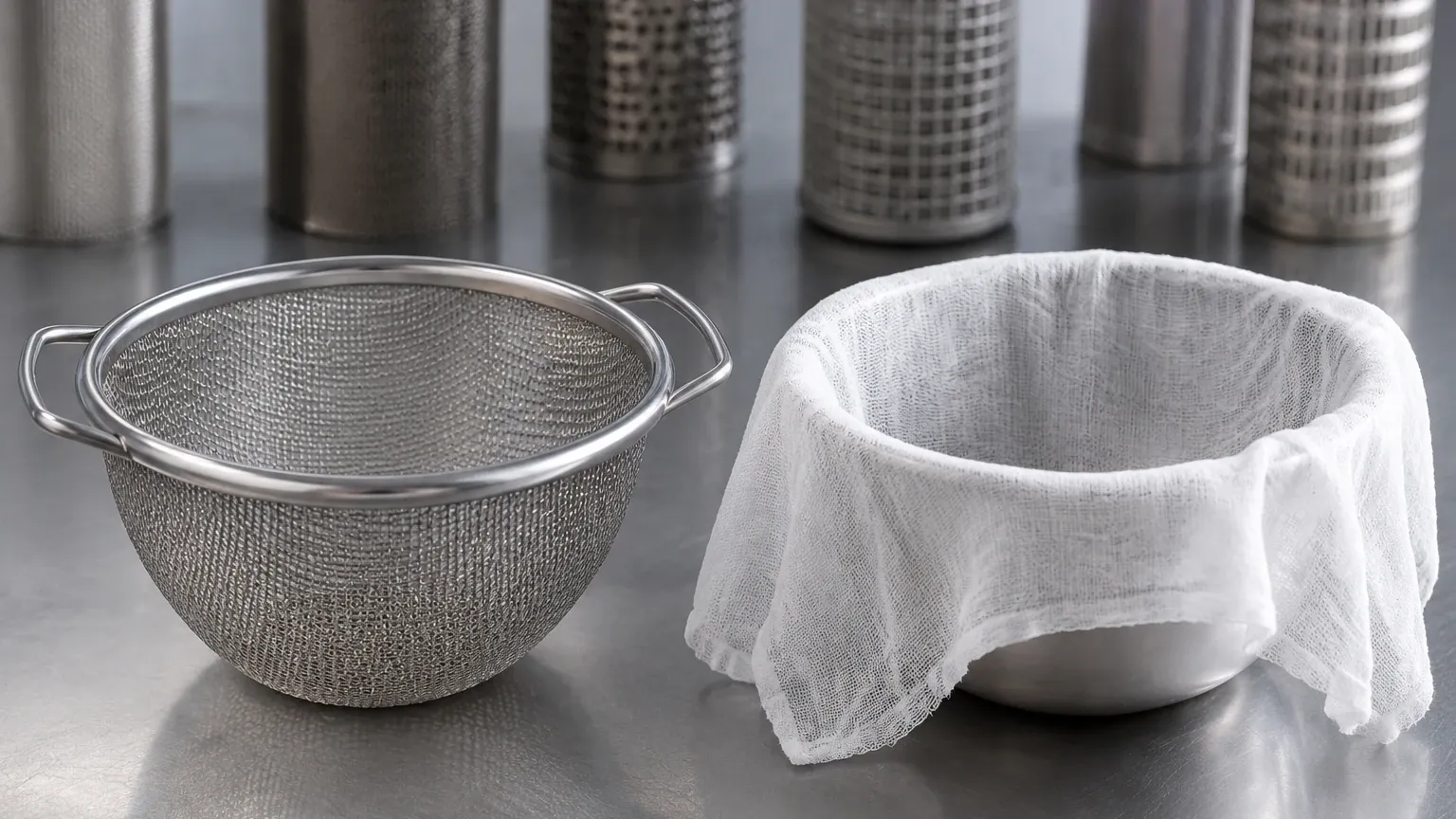
The most immediate difference in the strainer vs cheesecloth comparison lies in the material science. Cheesecloth is typically made from woven cotton fibers. It is categorized by "grades" based on the number of threads per inch in each direction. While effective for low-pressure, ambient-temperature applications where the medium is intended to be disposable, cotton is inherently soft and susceptible to structural failure under mechanical stress.
In contrast, industrial strainers are engineered from high-grade metals, most commonly stainless steel (Type 304 or 316L). These materials provide a rigid structure that can withstand significant hydraulic pressure without deforming. In demanding environments like chemical processing or hydraulic systems, the structural integrity of the filtration medium is paramount. A stainless steel mesh strainer maintains a consistent aperture size, ensuring that the filtration rating remains stable throughout the production cycle. Unlike cheesecloth, which can stretch or tear, a precision-manufactured metal basket provides a reliable barrier that prevents bypass and downstream contamination.
Filtration Precision and Micron Ratings
When evaluating strainer vs cheesecloth for industrial use, filtration accuracy is a primary engineering consideration. Cheesecloth is generally used for coarse filtration. Even the finest grade (Grade 90) has a relatively loose and inconsistent weave compared to precision-engineered wire mesh. Because cotton fibers are organic and irregular, the "pore size" of cheesecloth is not strictly defined, making it unsuitable for processes requiring validated micron ratings.
Industrial metal filters, however, are defined by exact micron ratings. Whether using plain weave, twill weave, or Dutch weave stainless steel mesh, manufacturers can provide specific data on the largest particle that can pass through the medium. This precision is essential in industries such as pharmaceuticals or food and beverage, where removing specific particulates—such as sediment, precipitates, or catalysts—is required to meet quality standards. For applications requiring high-flow rates combined with fine particle retention, stainless steel baskets can be customized with multi-layer mesh configurations to optimize both capacity and precision.
Thermal and Chemical Compatibility
Industrial processes often involve extreme temperatures and aggressive chemical environments that far exceed the capabilities of organic fibers. This is a critical factor in the strainer vs cheesecloth selection process.
1. Temperature Resistance: Cotton cheesecloth begins to degrade or char at temperatures above 120°C (248°F). In steam-jacketed systems or high-temperature oil filtration, cheesecloth is a fire hazard and a source of carbon contamination. Stainless steel strainers, conversely, can operate effectively at temperatures exceeding 400°C (752°F) depending on the alloy and gasket materials used.
2. Chemical Resistance: Many industrial fluids are acidic, alkaline, or contain solvents that would dissolve or weaken cotton fibers. Stainless steel 316L offers superior resistance to corrosion and chemical attack, ensuring that the filter does not leach impurities into the process fluid. For engineers handling corrosive chemicals, the durability of a metal strainer is a safety requirement rather than a preference.
Hygiene, Sanitation, and Compliance
In the food, beverage, and pharmaceutical sectors, the ability to sanitize equipment is non-negotiable. This is where the strainer vs cheesecloth comparison highlights significant operational risks. Cheesecloth is highly absorbent; it traps fats, proteins, and moisture within its fibers. This creates a breeding ground for microbial growth and makes effective cleaning nearly impossible. Consequently, cheesecloth is almost always a single-use item in commercial settings, leading to high waste volumes and recurring costs.
Industrial stainless steel strainers are designed for Clean-In-Place (CIP) or easy removal for manual cleaning. The non-porous surface of stainless steel does not harbor bacteria and can withstand rigorous sterilization processes, including autoclaving and high-pressure steam cleaning. Using a permanent, washable metal basket ensures compliance with FDA and other regulatory standards while eliminating the risk of fiber migration—a common issue where cotton threads break off and contaminate the final product.
Flow Dynamics and Pressure Considerations
From an engineering perspective, the performance of a filter is measured by its impact on the system's flow rate and pressure drop ($ΔP$). Cheesecloth, due to its flexible nature, often collapses against the support structure under pressure. This collapse reduces the available surface area, leading to a rapid increase in pressure drop and potential system failure.
Industrial strainers are designed with a high percentage of open area to minimize flow resistance. Because the mesh or perforated metal is rigid, it maintains its shape even as solids accumulate on the surface. Engineers can specify the exact geometry of a basket—such as a slanted bottom or a pleated mesh—to increase the effective filtration area. This design flexibility allows for longer run times between cleaning cycles and ensures that the pump systems are not overworked by excessive backpressure.
Total Cost of Ownership (TCO) Analysis
While the initial purchase price of cheesecloth is significantly lower than that of a custom-engineered stainless steel strainer, the Total Cost of Ownership (TCO) often favors the metal solution in industrial environments. The TCO calculation must include:
* Consumable Costs: The recurring expense of purchasing, shipping, and storing large quantities of single-use cheesecloth.
* Labor Costs: The time required for staff to manually fit, change, and dispose of cloth filters compared to the quick-release mechanisms of industrial strainer housings.
* Waste Management: The environmental and financial costs associated with disposing of contaminated organic waste.
* Product Loss: The volume of fluid absorbed and retained by cheesecloth, which cannot be recovered, versus the minimal retention of non-absorbent metal mesh.
* Risk Mitigation: The cost of a potential batch rejection due to fiber contamination or filtration bypass.
For a high-volume production line, a high-quality stainless steel basket often pays for itself within the first year of operation through reduced downtime and eliminated consumable expenses.
Selecting the Right Solution for Your Application
When deciding between a strainer vs cheesecloth, the choice depends on the scale and requirements of your project. If you are operating in a professional industrial environment, the limitations of cheesecloth—lack of precision, poor durability, and hygiene risks—usually make it an unsuitable choice.
To ensure optimal performance, engineers should confirm the following parameters before selecting a permanent filtration solution:
* Particle Size Distribution: What is the smallest particle that must be captured?
* Fluid Properties: What is the viscosity, temperature, and chemical pH of the medium?
* Operating Pressure: What is the maximum system pressure and the allowable pressure drop?
* Flow Rate: What volume of fluid needs to be processed per hour?
Kaifil specializes in manufacturing custom stainless steel filtration components designed to replace inefficient traditional methods. By providing precision-engineered Strainers & Baskets, we help industrial facilities achieve higher purity levels and more reliable process control. Whether you require a standard perforated basket or a complex multi-layer wire mesh strainer, focusing on material quality and engineering precision is the key to long-term operational success.
