


Strainer Xenos
In the landscape of industrial fluid management, the requirement for robust, high-capacity filtration is paramount. The term strainer xenos frequently appears in technical specifications where high-flow rates and heavy solids loading demand more than standard off-the-shelf solutions. For engineers and procurement teams, understanding the nuances of these high-performance components is essential for maintaining system integrity and protecting expensive downstream equipment such as pumps, heat exchangers, and sensitive instrumentation.
Industrial filtration is not merely about removing particles; it is about managing the balance between flow efficiency, pressure drop, and the structural integrity of the filter element. Within the category of Strainers & Baskets, the Xenos-type configurations represent a specialized class of basket strainers designed for demanding environments where downtime is costly and filtration reliability is non-negotiable.
Technical Foundations of Strainer Xenos Configurations
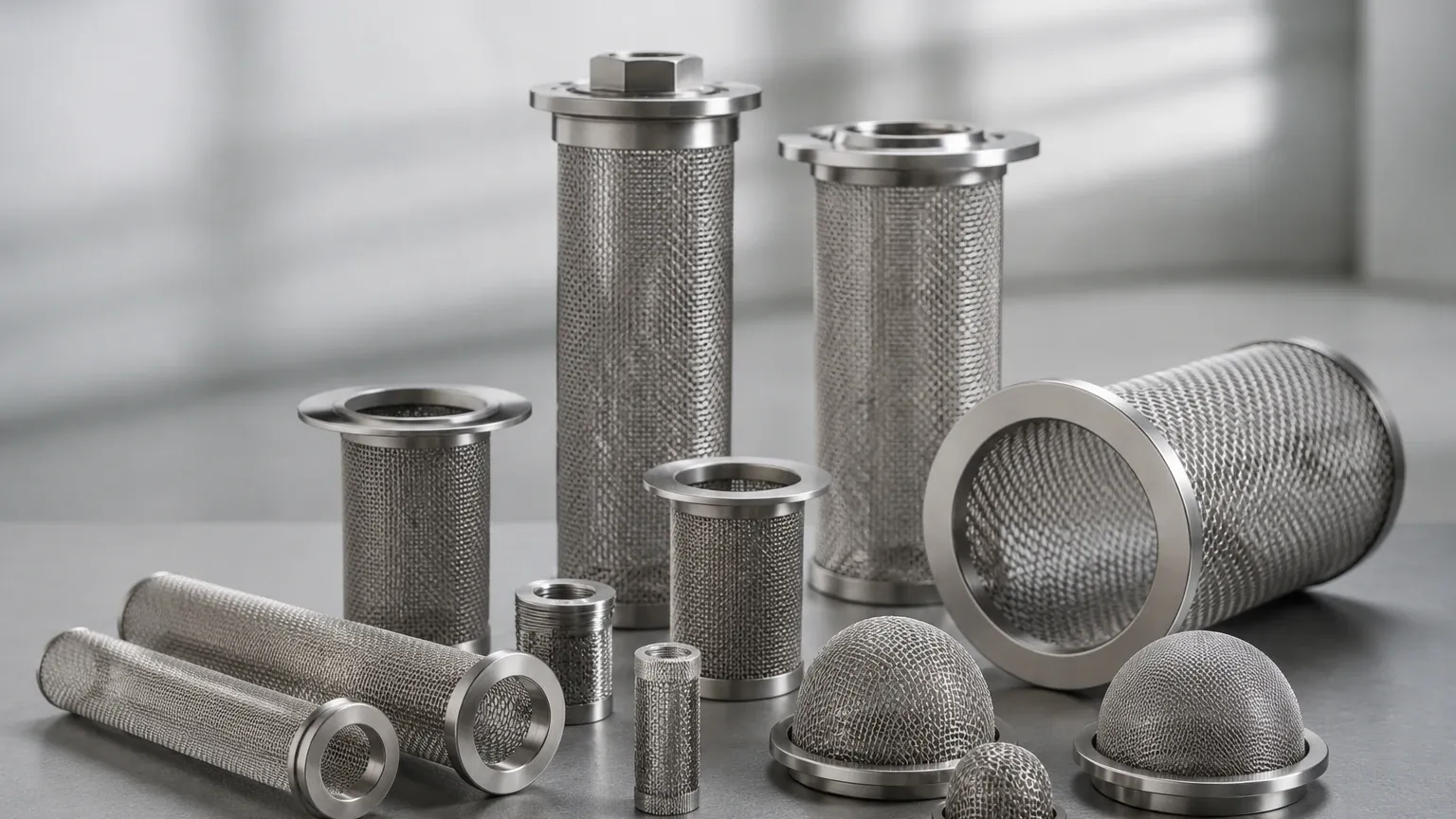
The fundamental design of a strainer xenos unit centers on the basket geometry. Unlike Y-strainers, which are typically used for smaller pipelines or lower solids concentrations, basket strainers provide a significantly larger surface area. This increased area is critical for two reasons: it extends the time between cleaning cycles and minimizes the initial pressure drop across the clean element.
From an engineering perspective, the internal volume of the strainer housing must be optimized to allow for laminar flow as the fluid enters the basket. Turbulence within the housing can lead to uneven debris distribution, which creates localized high-pressure zones on the wire mesh. A well-engineered strainer xenos utilizes a side-entry or top-entry design that ensures the fluid is distributed evenly across the entire circumference of the basket. This design philosophy is a hallmark of high-quality Strainers & Baskets, ensuring that the mechanical stress on the stainless steel mesh is minimized.
Furthermore, the structural support of the basket is a key differentiator. In high-pressure applications, the mesh alone cannot withstand the differential pressure ($ΔP$) that occurs as the strainer becomes clogged. Therefore, these units often feature a perforated metal backup cylinder that provides the necessary rigidity, while the precision wire mesh is sintered or welded to the interior to define the actual filtration rating.
Material Engineering for Industrial Strainers & Baskets
Material selection is perhaps the most critical decision in the procurement of a strainer xenos. The chemical composition of the process fluid dictates the grade of stainless steel required. While Type 304 stainless steel is suitable for many general-purpose water and oil applications, Type 316 or 316L is often the baseline for chemical processing, pharmaceutical production, and food and beverage applications.
1. Corrosion Resistance: In environments involving chlorides or acidic solutions, the molybdenum content in 316 stainless steel provides essential resistance to pitting and crevice corrosion. For highly aggressive media, specialty alloys or duplex stainless steels may be integrated into the basket design.
2. Thermal Stability: Industrial processes often operate at elevated temperatures. The thermal expansion coefficients of the strainer housing and the internal basket must be compatible to prevent bypass or mechanical binding. Stainless steel maintains its structural properties across a wide temperature range, making it the preferred material for high-temperature steam or hot oil filtration.
3. Hygienic Requirements: In the food and pharmaceutical sectors, the surface finish of the strainer xenos is as important as the material itself. Electropolishing or high-grit mechanical polishing ensures that there are no microscopic pits where bacteria can proliferate, facilitating effective Clean-in-Place (CIP) procedures.
Filtration Efficiency and Flow Dynamics
When evaluating a strainer xenos, engineers must look beyond the nominal micron rating. The efficiency of a strainer is a function of its open area ratio—the ratio of the total area of the holes in the basket to the cross-sectional area of the inlet pipe. A high-performance strainer typically aims for an open area ratio of at least 6:1 or 8:1. This ensures that even when the basket is 50% clogged, the pressure drop remains within acceptable limits.
The choice of mesh weave also impacts performance. Plain square weaves are common for coarse filtration, while Dutch weaves or twilled weaves are used when finer particles (down to 5 or 10 microns) must be captured without sacrificing the strength of the mesh. In a strainer xenos application, the mesh must be selected based on the particle size distribution (PSD) of the contaminants. If the mesh is too fine, the strainer will clog prematurely; if it is too coarse, downstream components will suffer abrasive wear.
Customization and OEM Integration
Every industrial facility has unique spatial and operational constraints. This is where the value of custom-manufactured Strainers & Baskets becomes evident. A standard catalog item may not fit into an existing piping layout or may lack the necessary porting for differential pressure gauges.
Customization options for a strainer xenos often include:
* Variable Inlet/Outlet Configurations: Offset nozzles, right-angle flows, or customized flange ratings (ANSI, DIN, JIS) to match existing infrastructure.
* Specialized Gasketing: Depending on the fluid, seals may be required in Viton, EPDM, PTFE, or Buna-N to ensure leak-proof operation and chemical compatibility.
* Multi-Basket Designs: For very high flow rates, a single housing may contain multiple baskets to increase the surface area without excessively increasing the housing's footprint.
* Magnetic Inserts: In applications where metallic wear particles are prevalent (such as hydraulic systems), magnetic rods can be added to the center of the basket to capture fine ferrous debris that might otherwise pass through the mesh.
By working with a manufacturer that specializes in OEM solutions, engineering teams can ensure that the strainer xenos is built to the exact tolerances required for their specific process, rather than forcing a standard product to fit a non-standard application.
Maintenance Protocols and Longevity
The total cost of ownership (TCO) of a strainer xenos is heavily influenced by its ease of maintenance. A basket strainer that requires hours of downtime to clean is a liability. High-quality designs often incorporate quick-opening covers, such as swing-bolt or V-band clamp closures, which allow operators to access the basket without specialized tools.
Effective maintenance of Strainers & Baskets involves monitoring the differential pressure. Most systems are equipped with a $ΔP$ gauge; when the pressure drop reaches a predetermined limit (typically 5-10 psi depending on the system), the basket must be removed and cleaned.
Cleaning methods vary by application:
* Manual Cleaning: For non-hazardous fluids, the basket is simply rinsed or pressure-washed.
* Ultrasonic Cleaning: For fine meshes or sticky contaminants, ultrasonic baths can dislodge particles trapped deep within the weave.
* Chemical Cleaning: In some chemical processes, the basket may be soaked in a solvent or mild acid to dissolve built-up scale or polymers.
Regular inspection of the basket for signs of mesh fatigue, broken welds, or bypass at the sealing surfaces is essential. A compromised basket in a strainer xenos unit can lead to "breakthrough," where the accumulated debris is suddenly released into the downstream system, often with catastrophic results for pumps and valves.
Strategic Selection and Procurement Considerations
Before finalizing the specification for a strainer xenos, procurement teams should confirm several key data points with their manufacturer. This due diligence ensures that the final product will perform as expected over its entire service life.
1. Flow Rate and Viscosity: The pressure drop is highly sensitive to the viscosity of the fluid. A strainer that works perfectly for water may be completely inadequate for a high-viscosity oil or syrup at the same flow rate.
2. Maximum Operating Pressure and Temperature: Ensure the housing and the basket are rated for the worst-case scenario, including potential pressure spikes or thermal shocks.
3. Solids Loading: Estimate the volume of solids the system will encounter. This determines the required basket size and cleaning frequency.
4. Cleaning Requirements: Will the system be shut down for cleaning (simplex), or is a continuous flow required (duplex)? While a simplex strainer xenos is more cost-effective, a duplex system allows for cleaning without interrupting the process.
In conclusion, the strainer xenos is a critical component in the industrial filtration chain. By focusing on high-quality materials, precision engineering, and application-specific customization, facilities can achieve superior protection for their equipment. Whether you are managing a chemical plant, a food processing line, or a water treatment facility, the right choice in Strainers & Baskets will pay dividends in reduced maintenance costs and improved process reliability. Engaging with a manufacturer that understands the technical demands of high-performance filtration is the first step toward optimizing your fluid handling system.
