


Strainer X
In industrial fluid handling and process engineering, the selection of mechanical separation components is a critical factor in protecting downstream equipment and ensuring product purity. Among the various configurations available, the concept of the "Strainer X"—representing high-efficiency, specialized strainer designs—has become a focal point for engineers seeking to optimize flow dynamics while maintaining rigorous debris capture. Unlike standard off-the-shelf components, industrial-grade Strainers & Baskets are engineered to withstand high-pressure environments, corrosive media, and varying flow rates that would compromise lesser equipment.
This guide examines the technical nuances of specialized strainer systems, focusing on the engineering considerations, material science, and performance metrics that define effective industrial filtration. For technical professionals and purchasing teams, understanding these variables is essential for reducing the total cost of ownership and preventing unplanned system downtime.
The Engineering Principles of Strainer X Performance
The primary function of an industrial strainer is the mechanical removal of solids from a liquid or gas stream. While the basic principle is straightforward, the execution in a "Strainer X" configuration involves complex fluid dynamics. The efficiency of a strainer is not merely determined by the size of the holes in the mesh or perforated plate, but by the relationship between the open area, the velocity of the fluid, and the structural integrity of the basket.
Open Area Ratio (OAR)
One of the most critical metrics in strainer design is the Open Area Ratio. This is the ratio of the total area of the holes in the strainer element to the cross-sectional area of the inlet pipe. A high-performance strainer typically aims for an OAR of at least 6:1 or 8:1. A higher OAR ensures that even as the strainer begins to collect debris, the pressure drop remains manageable, extending the time between cleaning cycles. If the OAR is too low, the fluid velocity through the remaining open holes increases, which can lead to particle bypass or structural deformation of the mesh.
Flow Dynamics and Pressure Drop
Every component in a piping system introduces a pressure drop ($ΔP$). For engineers, the goal is to minimize the "clean pressure drop" to ensure that the pump energy is used for process movement rather than overcoming resistance. The geometry of a Strainer X design—whether it is a Y-pattern, T-pattern, or a complex basket configuration—is optimized to reduce turbulence. Smooth internal transitions and properly sized baskets are essential to maintaining laminar flow as much as possible, which in turn reduces wear on the strainer housing and the mesh lining.
Material Selection for Demanding Environments
In B2B industrial applications, the chemical compatibility of the filtration media is non-negotiable. Kaifil specializes in stainless steel solutions because of the material's inherent durability and resistance to a wide range of industrial fluids. When specifying a Strainer X system, engineers must choose the correct grade of stainless steel based on the operating environment.
Stainless Steel 304 vs. 316L
* Type 304: This is the standard industrial grade, providing excellent strength and basic corrosion resistance. It is suitable for water treatment, hydraulic oils, and general industrial fluids where extreme chemical exposure is not a factor.
* Type 316L: Containing molybdenum, 316L offers superior resistance to chlorides and pitting. This is the preferred choice for marine environments, chemical processing, and the food and beverage industry. The "L" denotes low carbon content, which is vital for components that require extensive welding, as it prevents carbide precipitation and maintains corrosion resistance at the weld seams.
Specialized Alloys
For environments involving highly aggressive acids or extreme temperatures, specialized alloys such as Duplex stainless steel or Monel may be required. The choice of material affects not only the longevity of the strainer but also the safety of the entire process line, particularly in high-pressure hydraulic or steam applications.
Design Variations: Baskets, Cones, and Custom Geometries
The physical configuration of the strainer element—often referred to in the context of Strainer X as the core filtration component—must be matched to the specific debris load and flow direction of the system.
Basket Strainers
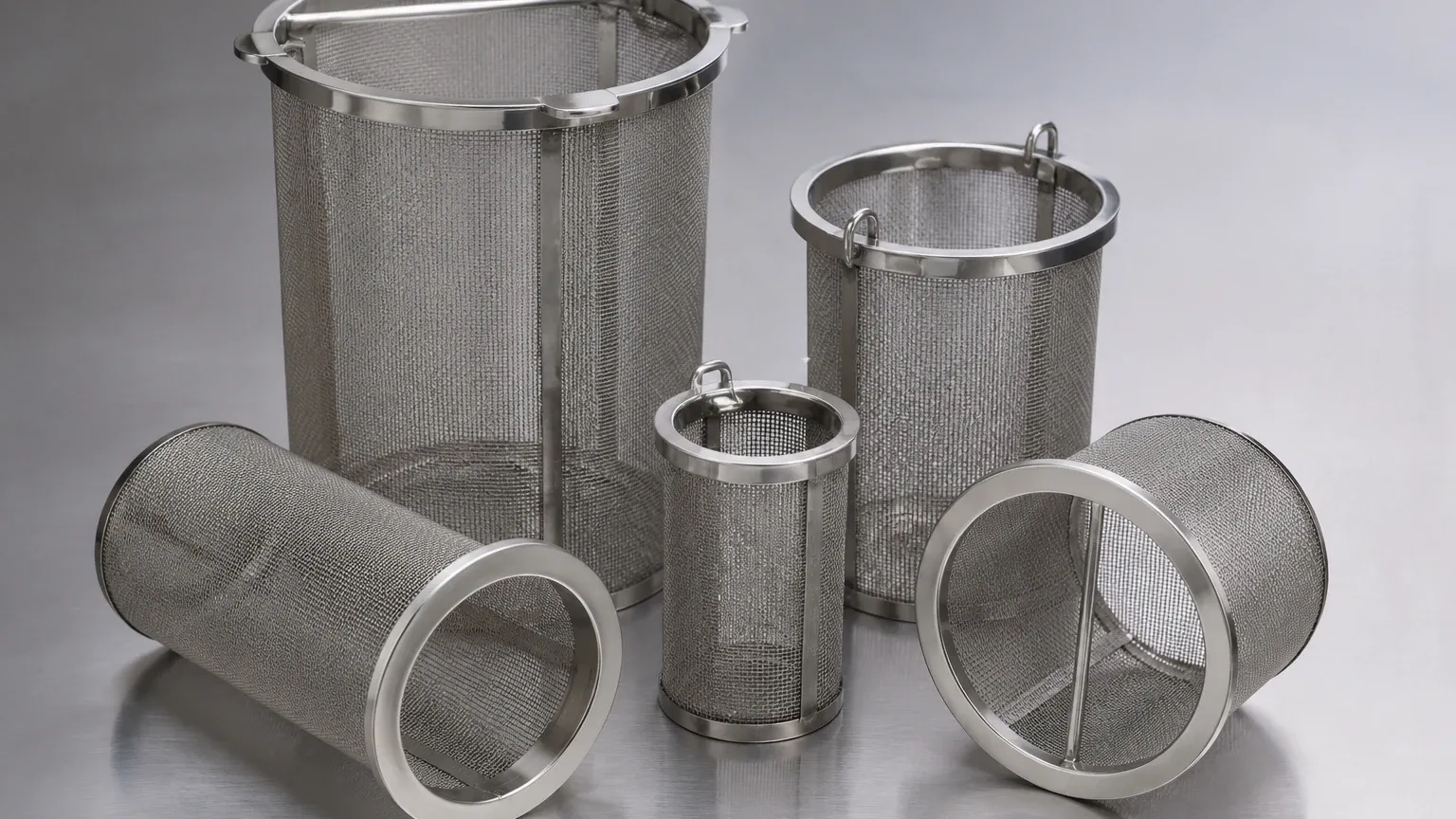
Basket strainers are designed for applications where there is a high volume of solids to be removed. The "basket" shape provides a large surface area for collection and is relatively easy to remove and clean. In many industrial settings, duplex basket strainers are used, allowing the flow to be diverted to a second basket while the first is being cleaned, ensuring continuous operation.
Y-Strainers and T-Strainers
Y-strainers are typically used in applications with lower concentrations of solids or where space is at a premium. They are often installed in steam lines or gas lines. T-strainers, or "bat-wing" strainers, offer a more compact footprint and are frequently used in larger pipe diameters where a basket strainer would be too heavy or bulky for manual servicing.
Custom Conical and Hat Strainers
For temporary or start-up applications, conical (witch's hat) strainers are inserted between flanges. While these are often considered temporary, high-quality custom versions manufactured from reinforced wire mesh can serve as permanent protection for sensitive equipment like turbines or flow meters where space for a dedicated housing is unavailable.
Filtration Accuracy: Mesh vs. Perforated Plate
Achieving the desired filtration rating requires a balance between the structural strength of perforated metal and the fine filtration capabilities of woven wire mesh. A typical Strainer X configuration might utilize a multi-layer approach.
1. Perforated Metal Support: This provides the mechanical strength to withstand the differential pressure. The hole size in the perforated plate is usually larger, acting as a skeleton for the finer media.
2. Woven Wire Mesh Lining: This is where the actual filtration occurs. Mesh is defined by the number of openings per linear inch. For example, a 100-mesh screen has 100 openings per inch, capable of capturing particles down to approximately 150 microns.
3. Sintered Mesh: For high-pressure applications where mesh migration (the shifting of wires) is a concern, sintered mesh—where multiple layers of mesh are heat-bonded together—provides the ultimate in structural stability and precise filtration.
When selecting mesh sizes, engineers must account for the viscosity of the fluid. A mesh that is too fine for a high-viscosity oil will result in an immediate and unacceptable pressure drop, regardless of the quality of the strainer design.
Maintenance and Operational Longevity
The total cost of ownership for Strainers & Baskets is largely determined by maintenance requirements. A well-designed Strainer X system includes features that simplify servicing and prevent premature failure.
Differential Pressure Monitoring
The most effective way to manage a strainer is through the use of differential pressure (ΔP) gauges. By measuring the pressure before and after the strainer, operators can determine exactly when the basket is full. Cleaning a strainer based on actual pressure data rather than a fixed schedule prevents unnecessary downtime and protects the element from collapsing under excessive load.
Cleaning Protocols
For stainless steel strainers, cleaning methods vary by industry. In the food and beverage or pharmaceutical sectors, Clean-in-Place (CIP) compatibility is essential. In heavy industrial applications, ultrasonic cleaning or high-pressure washing of the stainless steel baskets can restore them to near-original performance levels. It is vital to inspect the gaskets and seals during every cleaning cycle, as a degraded seal can allow fluid to bypass the strainer element entirely, defeating the purpose of the installation.
Common Risks and Selection Pitfalls
Failure to properly specify a strainer can lead to catastrophic downstream consequences. Engineers should be aware of the following common risks:
* Particle Bypass: This occurs when the strainer element does not fit snugly within the housing or when the mesh is torn. Even a small gap can allow large debris to pass through and damage expensive pumps or valves.
* Structural Collapse: If the differential pressure exceeds the burst strength of the basket, the element can collapse, sending both the captured debris and pieces of the strainer mesh into the downstream system.
* Corrosion Fatigue: In systems with fluctuating temperatures or corrosive chemicals, the welds on the strainer basket can become brittle. Using high-quality TIG or plasma welding, as practiced in professional manufacturing, is essential to ensure the longevity of the component.
Customization and OEM Solutions
Every industrial process has unique requirements that standard components may not meet. This is where the flexibility of a manufacturer like Kaifil becomes an asset. Customization of a Strainer X solution can involve:
* Custom Dimensions: Tailoring the height, diameter, and flange connections to fit existing piping without the need for expensive modifications.
* Reinforced Designs: Adding internal supports or outer shrouds to baskets that must operate under extreme pressure differentials.
* Specialized Coatings: While stainless steel is highly resistant, certain applications may benefit from electropolishing to reduce surface roughness, which is particularly important in sanitary applications to prevent bacterial growth.
Conclusion
Selecting the right industrial strainer is a technical decision that impacts the efficiency, safety, and reliability of an entire production facility. By focusing on the engineering fundamentals—Open Area Ratio, material compatibility, and structural design—technical teams can ensure they are implementing a solution that provides long-term value. Whether the application requires a standard basket or a highly specialized Strainer X configuration, the use of high-quality stainless steel components remains the industry standard for durability and performance.
For engineers and purchasing managers, the next step involves a detailed review of the process parameters, including flow rate, maximum allowable pressure drop, and the specific characteristics of the contaminants to be removed. Engaging with a manufacturer that understands these technical boundaries is the most effective way to secure a filtration solution that meets the rigorous demands of modern industry.
