


Strainer Xl
In high-volume industrial fluid systems, the efficiency of filtration components directly impacts the longevity of downstream equipment such as pumps, heat exchangers, and flow meters. The term "strainer xl" typically refers to extra-large capacity basket strainers designed to handle significant flow rates while maintaining a low pressure drop. These high-capacity systems are critical in sectors where process downtime for cleaning must be minimized and where the volume of particulate matter requires a larger internal surface area than standard units can provide.
Selecting the correct high-capacity filtration solution requires a deep understanding of fluid dynamics, material science, and mechanical engineering. For engineers and procurement teams, the challenge lies in balancing initial capital expenditure with long-term operational efficiency. This guide examines the technical specifications, engineering considerations, and selection criteria for high-capacity industrial strainers.
The Engineering Principles of High-Capacity Filtration
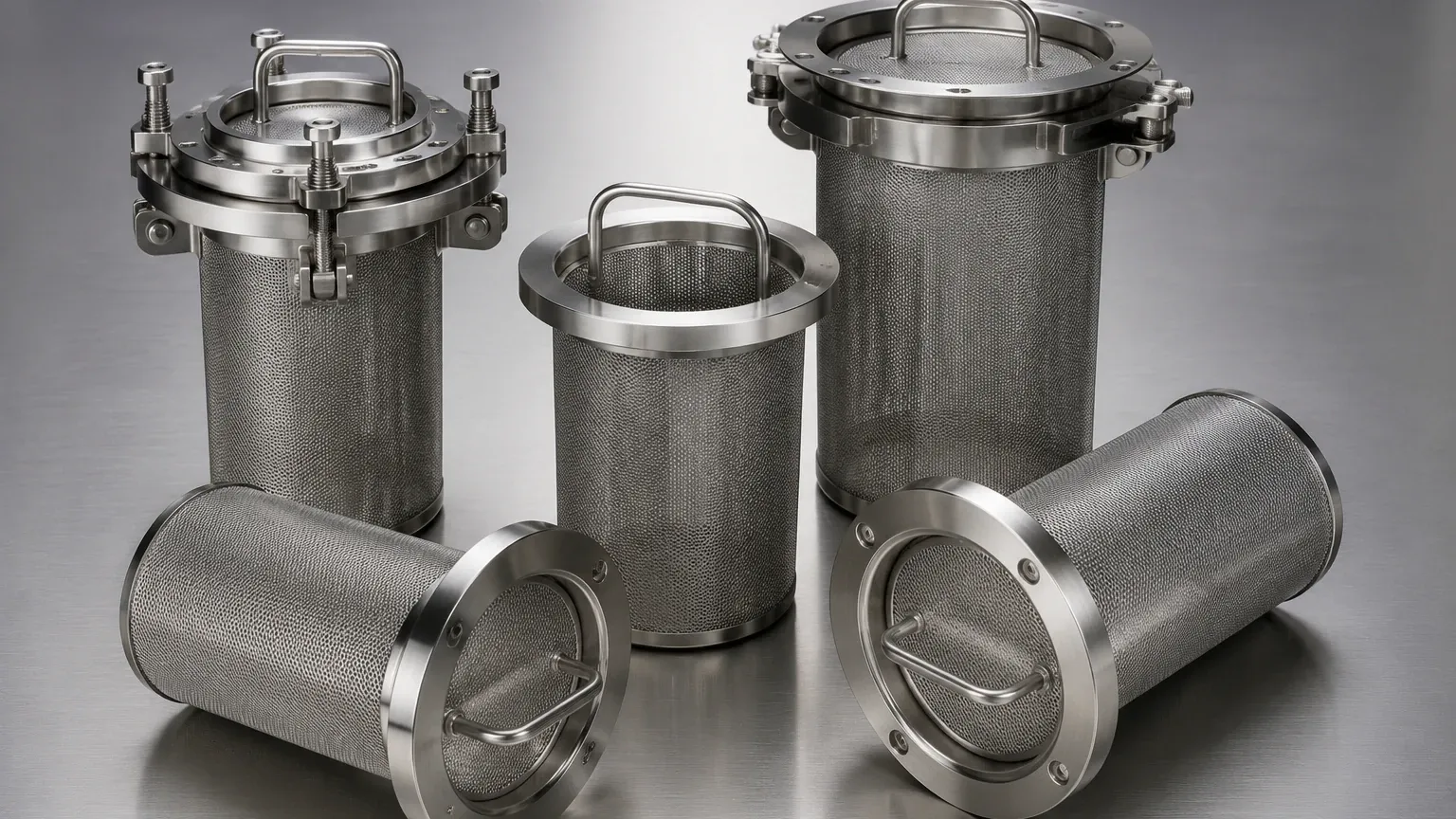
The primary function of a strainer xl system is the removal of solid contaminants from a liquid stream. Unlike fine filters that may use disposable cartridges, these industrial strainers utilize reusable stainless steel baskets. The "XL" designation usually implies an increased dirt-holding capacity, achieved through a larger basket volume and a higher ratio of open area to the pipe inlet area.
Flow Rate and Pressure Drop (Delta P)
One of the most critical engineering metrics is the clean pressure drop. As fluid passes through the mesh or perforated metal of the basket, it encounters resistance. A larger basket (XL) provides more parallel paths for the fluid, which significantly reduces the velocity through the media. This lower velocity results in a lower initial pressure drop, allowing the system to operate longer before reaching the terminal pressure drop—the point at which the basket must be cleaned.
Engineers must calculate the Open Area Ratio (OAR). A high-quality industrial strainer should ideally offer an OAR of at least 6:1 or 8:1 relative to the internal cross-sectional area of the inlet pipe. This ensures that even when the basket is 50% clogged, the pressure drop remains within acceptable operational limits.
Material Selection for Demanding Environments
Industrial applications often involve corrosive fluids, high temperatures, or strict hygienic requirements. The choice of material for both the housing and the internal Strainers & Baskets is paramount to the system's durability.
Stainless Steel Grades
1. AISI 304 Stainless Steel: This is the standard choice for general industrial applications, including water treatment and cooling systems. It offers excellent strength and good corrosion resistance against many common industrial chemicals.
2. AISI 316/316L Stainless Steel: For more aggressive environments, such as chemical processing or marine applications, 316 stainless steel is preferred due to the addition of molybdenum, which enhances resistance to pitting and crevice corrosion in chloride-rich environments. The "L" (low carbon) version is essential for components that require extensive welding to prevent carbide precipitation.
3. Specialty Alloys: In extreme cases involving highly acidic or alkaline fluids, materials like Duplex stainless steel or Monel may be required to prevent premature structural failure.
Gasket and Seal Compatibility
The integrity of a strainer xl unit also depends on its sealing components. Depending on the chemical composition and temperature of the process fluid, engineers must choose between Buna-N (nitrile), EPDM, Viton (FKM), or PTFE (Teflon). Incorrect seal selection can lead to bypass leakage or external leaks, posing safety and environmental risks.
Design Features of the Strainer XL
Beyond size, the internal architecture of the strainer determines its performance. High-capacity strainers often incorporate specific design elements to handle the mechanical stresses of high-flow environments.
Basket Construction and Reinforcement
In a strainer xl configuration, the basket is subjected to significant hydraulic forces, especially as it becomes loaded with debris. To prevent the basket from collapsing or deforming, manufacturers often use a heavy-duty perforated metal backup cylinder lined with a finer wire mesh. The mesh provides the required filtration accuracy (measured in microns or mesh count), while the perforated plate provides the structural rigidity.
Multi-Basket Configurations
In extremely large housings, a single basket may become too heavy for manual removal and cleaning. In these instances, a multi-basket design is employed. This distributes the total filtration area across several smaller baskets, making maintenance safer and more manageable for plant operators without sacrificing the total "XL" capacity of the unit.
Application-Specific Considerations
The requirements for a strainer xl vary significantly across different industrial sectors. Understanding these nuances is vital for accurate procurement.
Chemical and Petrochemical Processing
In these industries, the primary concern is often the compatibility of the strainer with volatile or hazardous fluids. Strainers must adhere to strict pressure vessel codes (such as ASME Section VIII). Features like bolted covers are often preferred over quick-opening clamps to ensure a more secure seal under high-pressure conditions.
Food and Beverage Production
For hygienic applications, the internal surfaces of the strainer must be polished to a specific Ra (Roughness Average) to prevent bacterial growth. The design must eliminate "dead legs" or areas where fluid can stagnate. Stainless steel 316L is typically mandated, and the gaskets must be FDA-compliant.
Water Treatment and Desalination
Large-scale water intake systems require strainers that can handle high volumes of organic matter, sand, and silt. In these applications, the strainer xl serves as a primary defense for expensive membrane systems or high-pressure pumps. Durability against abrasion and salt-water corrosion is the leading engineering priority here.
Maintenance and Total Cost of Ownership (TCO)
While the initial purchase price of a high-capacity strainer is an important factor, the Total Cost of Ownership (TCO) is a more accurate measure of value. TCO includes the costs associated with maintenance labor, replacement parts, and potential downtime.
Cleaning Cycles and Automation
A larger strainer xl reduces the frequency of cleaning, which directly lowers labor costs. However, for systems where manual cleaning is impractical due to the nature of the fluid or the frequency of contamination, automated self-cleaning strainers may be considered. These units use a backwashing mechanism or a mechanical scraper to remove debris without interrupting the flow.
Monitoring Performance
To optimize the maintenance schedule, industrial strainers should be equipped with differential pressure (DP) gauges. By monitoring the pressure drop across the basket, operators can identify exactly when the strainer needs cleaning. Integrating these gauges into a central control system (SCADA) allows for predictive maintenance, preventing unexpected flow restrictions that could damage pumps.
Procurement Checklist: What Engineers Must Confirm
Before finalizing a purchase for high-capacity Strainers & Baskets, technical teams should verify several key parameters to ensure the equipment is fit for purpose:
1. Connection Size and Type: Confirm flange standards (e.g., ANSI, DIN, JIS) or threaded connection types (NPT, BSPT).
2. Micron Rating vs. Perforation Size: Define the exact particle size that must be captured. Using a mesh that is too fine will lead to excessive cleaning cycles, while a mesh that is too coarse will fail to protect downstream equipment.
3. Maximum Operating Pressure and Temperature: Ensure the housing and internal components are rated for the system's peak conditions, including potential surges.
4. Flow Direction: Some strainers are designed for outside-in flow, while others are inside-out. This affects how debris is collected and how the basket is cleaned.
5. Bypass Protection: Verify that the basket seating is secure to prevent fluid from bypassing the filtration media.
The Role of Customization in Industrial Filtration
Off-the-shelf solutions often fall short in complex industrial environments. Customization allows for the optimization of the strainer xl to fit specific spatial constraints or unique fluid characteristics. Custom features may include:
* Specialized Coatings: Such as epoxy or rubber linings for added corrosion resistance.
* Steam Jackets: For maintaining the temperature of viscous fluids like resins or heavy oils.
* Magnetic Inserts: To capture fine ferrous particles that might pass through standard mesh.
* Modified Inlet/Outlet Orientations: To simplify piping installation in cramped plant layouts.
By working closely with a manufacturer that understands these technical requirements, engineers can ensure that their filtration system provides reliable, long-term performance. A well-engineered strainer xl is not just a piece of hardware; it is a critical safeguard for the entire industrial process, ensuring fluid purity and mechanical integrity across the production line.
