


Strainers Paint
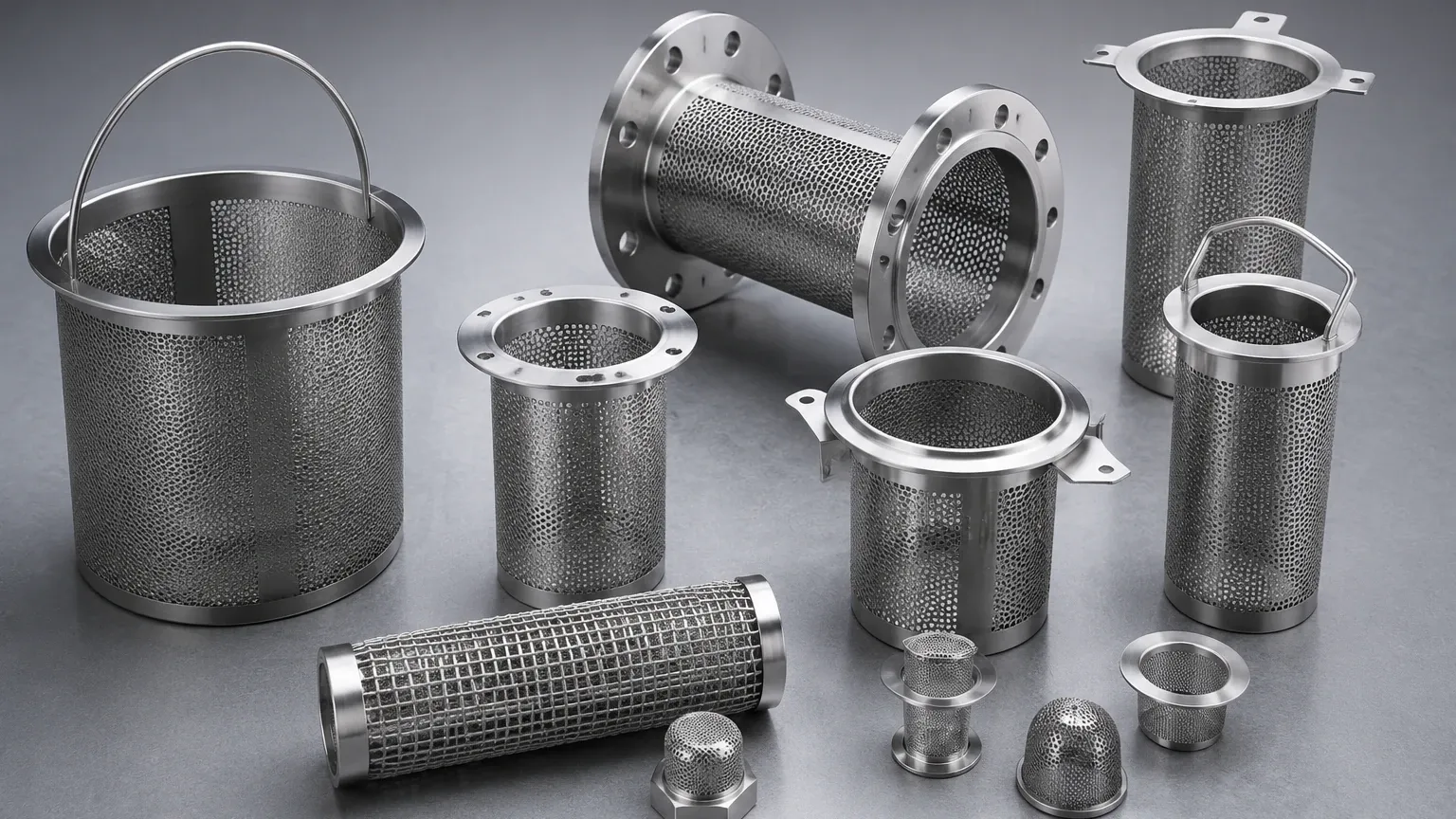
In the industrial manufacturing of coatings, inks, and resins, the quality of the final product is inextricably linked to the efficiency of the filtration process. Industrial paint production involves complex chemical formulations where pigments, binders, solvents, and additives must be perfectly blended. Any presence of oversized particles, agglomerates, or external contaminants can lead to surface defects, equipment downtime, and significant financial loss. This is where the selection of high-performance Strainers & Baskets becomes a critical engineering decision.
When discussing strainers paint applications, we are looking at a specialized subset of industrial filtration that must handle high-viscosity fluids, abrasive pigments, and often volatile solvents. Ensuring that these components are engineered to precise specifications is the only way to maintain consistent throughput and product integrity.
The Role of Filtration in Industrial Paint Production
Filtration in the paint industry is not a single-step process but a multi-stage operation. At the beginning of the production cycle, raw materials and resins must be strained to remove impurities. During the grinding and dispersion phases, pigments are broken down, and the mixture must be filtered to ensure that no large clusters remain. Finally, before packaging, the paint undergoes a finishing filtration to remove any "skin" that may have formed or any contaminants introduced during the mixing process.
Using the correct Strainers & Baskets ensures that the paint meets the required micron rating for its specific application, whether it is for automotive coatings, architectural finishes, or industrial protective layers. A failure in this stage can result in "seeds" or "nibs" on the painted surface, which are unacceptable in high-end industrial applications.
Key Technical Specifications for Strainers Paint
Selecting the right equipment for strainers paint processes requires a deep understanding of the fluid dynamics involved. Engineers must consider several technical parameters to ensure the filtration system does not become a bottleneck in the production line.
Viscosity and Flow Rate
Paint is often a non-Newtonian fluid, meaning its viscosity can change under stress or temperature fluctuations. High-viscosity paints require strainers with a larger surface area to prevent excessive pressure drops. If the strainer is too small or the mesh too fine for the viscosity, the pump must work harder, leading to potential mechanical failure or the "forcing" of contaminants through the filter media.
Micron Rating and Mesh Count
The required filtration fineness varies by product. For example, a primer might only require 100-micron filtration, while a high-gloss automotive topcoat might require filtration down to 5 or 10 microns. In stainless steel basket strainers, this is achieved by selecting the appropriate wire mesh count. A higher mesh count indicates a finer filter, but it also increases the frequency of cleaning required.
Solids Loading
The concentration of pigments and fillers in the paint—referred to as solids loading—determines how quickly a strainer will clog. In high-solids formulations, heavy-duty baskets with reinforced structures are necessary to withstand the weight and pressure of the accumulated material between cleaning cycles.
Materials of Construction: Why Stainless Steel Dominates
In the realm of strainers paint applications, material compatibility is non-negotiable. Industrial paints often contain aggressive solvents or caustic cleaning agents. Consequently, stainless steel is the industry standard for filtration components.
304 vs. 316 Stainless Steel
- SS304: Suitable for most water-based paints and general industrial coatings. It offers excellent durability and cost-effectiveness.
- SS316/316L: Required for solvent-based paints, highly acidic or alkaline formulations, and applications where corrosion resistance is paramount. The addition of molybdenum in 316 stainless steel provides superior resistance to chloride-induced pitting.
Stainless steel is preferred over plastic or lower-grade metals because it is non-reactive, easy to sterilize, and capable of withstanding high-pressure differentials without deforming. Furthermore, metal mesh can be cleaned and reused multiple times, providing a much lower total cost of ownership compared to disposable filter bags.
Comparing Strainers & Baskets for Coating Applications
Industrial filtration systems typically utilize two main configurations: inline strainers and basket strainers. Each has specific advantages depending on the layout of the paint manufacturing facility.
Basket Strainers
Basket strainers feature a "basket-shaped" element that is easily accessible from the top of the housing. This design is ideal for batch processes where the strainer needs to be cleaned frequently. The large internal volume of the basket allows for significant contaminant collection without a rapid increase in pressure. For strainers paint operations, these are often used in the final packaging stage to catch any skinning or large agglomerates.
Inline Strainers
Inline strainers are integrated directly into the piping system. They are often used for continuous flow applications where space is limited. While they generally have a smaller holding capacity than basket strainers, they are highly effective for high-velocity lines where the primary goal is protecting downstream equipment like pumps or spray nozzles.
Optimizing Flow Rates and Reducing Pressure Drop
A common challenge in paint filtration is managing the pressure drop (ΔP) across the strainer. As the mesh traps particles, the open area decreases, and the pressure on the inlet side rises. If the pressure drop becomes too high, it can cause the filter element to collapse or allow contaminants to bypass the seal.
To optimize flow in strainers paint systems, engineers should:
1. Oversize the Strainer: Selecting a strainer housing one size larger than the pipe diameter can significantly increase the surface area and reduce the frequency of cleaning.
2. Monitor Differential Pressure: Installing pressure gauges before and after the strainer allows operators to see exactly when the basket needs to be cleaned, preventing emergency shutdowns.
3. Utilize Pleated Media: For applications requiring fine filtration at high flow rates, pleated stainless steel mesh can provide significantly more surface area within the same basket footprint.
Maintenance Protocols for Industrial Paint Strainers
Maintenance is the most significant factor in the longevity of Strainers & Baskets. In the paint industry, the primary maintenance challenge is the buildup of dried paint or cured resins on the mesh.
Cleaning Procedures
Unlike water filtration, paint strainers often require chemical cleaning. The baskets should be soaked in a compatible solvent to soften the residue before being cleaned with a high-pressure water jet or ultrasonic cleaner. It is crucial to avoid using abrasive wire brushes on fine mesh, as this can damage the wire geometry and alter the micron rating.
Inspection Cycles
Regular inspection for "blinded" mesh (where particles are permanently lodged in the openings) or broken wires is essential. A single broken wire in a 50-mesh screen can allow thousands of oversized particles to pass through, compromising the entire batch of paint.
Custom Engineering for Specialized Paint Formulations
No two paint manufacturing lines are identical. Factors such as floor space, existing piping, and specific chemical recipes often necessitate custom filtration solutions. Custom-manufactured Strainers & Baskets allow for the integration of specific features that off-the-shelf products cannot provide.
- Custom Flanging: Ensuring the strainer fits perfectly into existing DIN, ANSI, or JIS piping systems.
- Reinforced Baskets: Adding perforated metal backing to fine wire mesh to handle high-pressure surges.
- Magnetic Inserts: In some paint formulations, metallic wear particles from grinding media can contaminate the product. Adding a magnetic assembly inside the basket can capture these sub-micron metallic contaminants that would otherwise pass through the mesh.
Total Cost of Ownership in Filtration
When procurement teams evaluate strainers paint solutions, the focus should shift from the initial purchase price to the total cost of ownership (TCO). While disposable filters may seem cheaper upfront, the recurring costs of replacement, disposal of hazardous waste (paint-soaked filters), and the labor required for frequent changes quickly add up.
High-quality stainless steel Strainers & Baskets represent a one-time capital investment that pays for itself through:
- Reduced Waste: Metal baskets are cleaned and reused, minimizing the volume of hazardous waste generated.
- Increased Uptime: Durable construction reduces the risk of mechanical failure and unplanned maintenance.
- Consistent Quality: Precision-engineered mesh ensures that the paint meets the required specifications every time, reducing the risk of batch rejection.
Conclusion
In the demanding world of industrial paint and coating production, the filtration system is the final line of defense against product failure. Understanding the technical nuances of strainers paint applications—from material selection and mesh geometry to pressure management—is vital for any engineer or production manager. By investing in high-quality, precision-engineered Strainers & Baskets, manufacturers can ensure a smooth, efficient production process and a flawless final finish for their customers. Whether you are handling low-viscosity stains or heavy-duty industrial epoxies, the right filtration component is the key to operational excellence.
