


Strainers Pipe
In industrial fluid handling, the integrity of downstream equipment—such as pumps, valves, flow meters, and heat exchangers—depends heavily on the effective removal of particulate matter. The integration of strainers pipe components into a system serves as the primary defense against debris, scale, and foreign objects that can cause mechanical failure or process contamination. Unlike filters, which typically target microscopic particles and often require disposable media, pipe strainers are designed to remove larger solids using cleanable, reusable screens or baskets.
Selecting the correct strainer involves more than matching a pipe diameter. It requires a comprehensive understanding of fluid dynamics, material compatibility, and the specific mechanical stresses of the application. This guide examines the technical considerations essential for engineers and procurement teams when specifying strainers for industrial piping systems.
The Role of Strainers in Piping Systems
A pipe strainer is a closed vessel with a cleanable screen element designed to remove and retain foreign particles. As fluid passes through the screen, solids are trapped while the clarified liquid or gas continues through the outlet. This process is critical in both closed-loop and open-loop systems.
In many industrial sectors, such as chemical processing and water treatment, the presence of even small amounts of pipe scale or welding slag can lead to catastrophic equipment damage. For instance, high-speed centrifugal pumps can suffer impeller erosion or seal failure if abrasive solids are present. Similarly, control valves with tight tolerances can become jammed, leading to system overpressure or loss of process control. By installing Strainers & Baskets at strategic points—usually upstream of sensitive components—operators can significantly extend the mean time between failures (MTBF) for the entire system.
Comparative Analysis of Strainer Designs
The geometry of a strainer dictates its suitability for specific pressures, flow rates, and types of debris. The three most common configurations used in industrial piping are Y-strainers, basket strainers, and T-strainers.
Y-Strainers
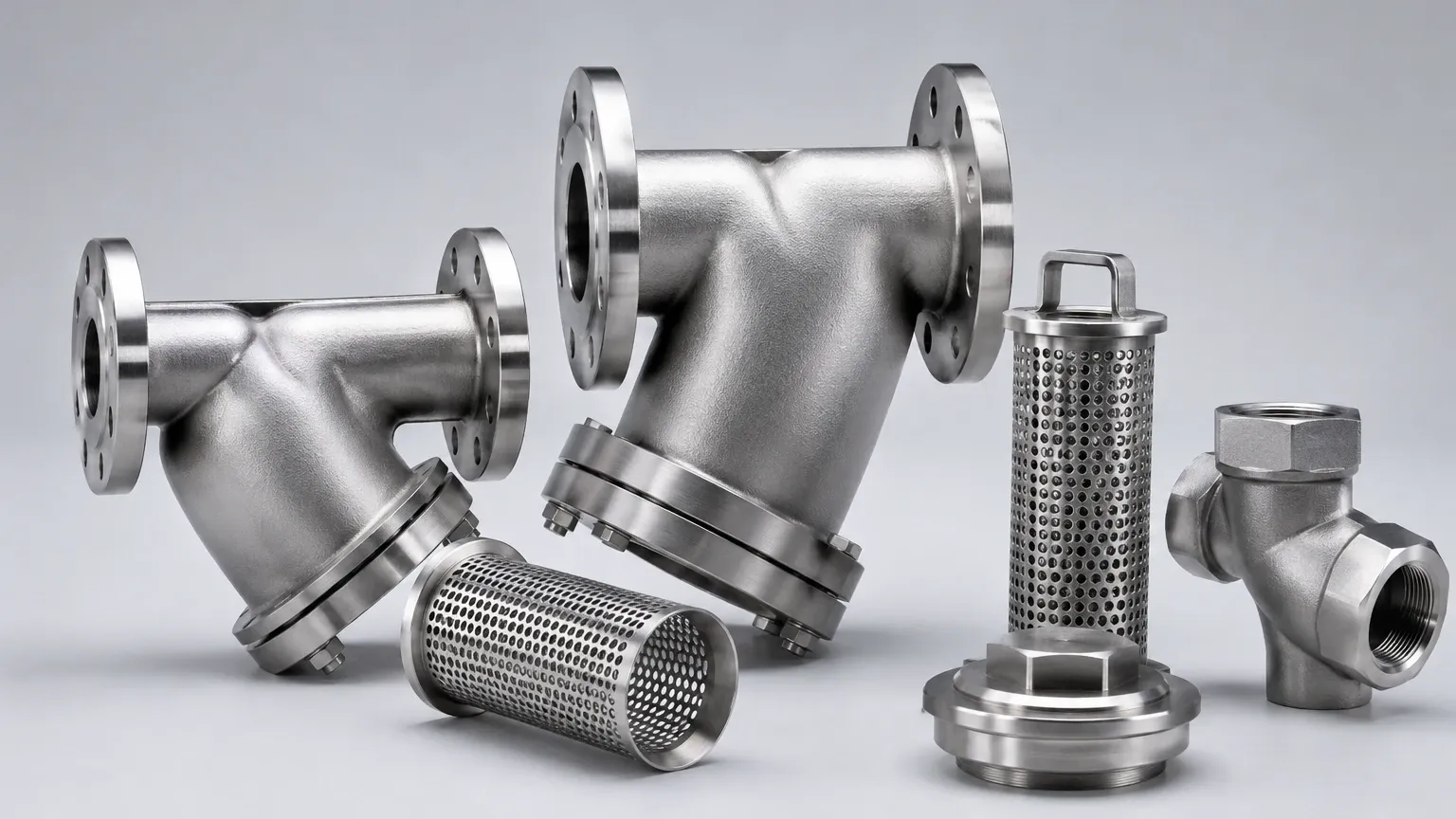
Named for their "Y" shape, these strainers are characterized by a compact design and are typically used in high-pressure applications, including steam, gas, and liquid lines. The primary advantage of the Y-strainer is its ability to be installed in either horizontal or vertical (downward flow) orientations. Because the debris collection chamber is angled, it allows for a "blow-off" connection, where a valve can be opened to flush out accumulated solids without stopping the process flow. However, Y-strainers generally have a smaller dirt-holding capacity compared to basket designs, making them better suited for systems with low concentrations of solids.
Basket Strainers
Basket strainers, or simplex strainers, feature a vertical cylinder that houses a large, removable basket. These are predominantly used in liquid applications where the concentration of solids is higher. Because the basket is larger than the screen in a Y-strainer, it offers a higher open area ratio, resulting in a lower initial pressure drop and longer intervals between cleanings. Basket strainers are typically limited to horizontal piping installations. For processes that cannot be shut down for maintenance, duplex basket strainers are utilized, allowing the flow to be diverted to a second chamber while the first basket is cleaned.
T-Strainers
T-strainers (or bat-type strainers) feature a straight-through flow path with a perpendicular branch for the screen. These are often selected for large-diameter piping where space is limited. They provide a compact footprint and can be used in both liquid and gas services, though they are generally more difficult to service than basket strainers in high-flow applications.
Engineering Parameters for Strainer Selection
When specifying strainers pipe hardware, engineers must evaluate several critical performance metrics to ensure the component does not become a bottleneck or a point of failure.
Pressure Drop (Delta P)
The most critical factor in strainer selection is the pressure drop across the unit. Every strainer introduces resistance to the flow. The initial pressure drop is a function of the fluid's velocity, viscosity, specific gravity, and the open area of the strainer screen. As the screen becomes clogged with debris, the pressure drop increases. If the pressure drop exceeds the design limits of the system, it can lead to cavitation in pumps or reduced flow rates that compromise process efficiency. It is standard engineering practice to size a strainer so that the initial pressure drop does not exceed 2 PSI (0.14 bar) under normal operating conditions.
Open Area Ratio (OAR)
The Open Area Ratio is the relationship between the total area of the holes in the strainer screen and the cross-sectional area of the inlet pipe. A higher OAR indicates that the strainer can accumulate more debris before the pressure drop becomes unacceptable. For most industrial applications, an OAR of 4:1 is considered standard, though high-viscosity fluids or systems with high dirt loading may require ratios of 6:1 or higher to maintain operational efficiency.
Flow Velocity
High fluid velocities can cause turbulence and accelerate erosion of the strainer screen and body. Generally, liquid velocities should be maintained between 5 and 10 feet per second (fps) for suction lines and up to 15 fps for discharge lines. In steam or gas service, velocities are significantly higher, requiring robust screen construction to prevent mechanical fatigue or "flutter" caused by high-velocity impingement.
Material Selection and Chemical Compatibility
The material of the strainer body and the internal screen must be compatible with the process fluid and the external environment. Common materials include:
* Carbon Steel: Suitable for non-corrosive services such as oil and high-temperature steam.
* Stainless Steel (304/316): The industry standard for chemical processing, food and beverage, and pharmaceutical applications due to its excellent corrosion resistance and ability to withstand high temperatures.
* Specialty Alloys: For highly corrosive environments involving acids or seawater, materials like Monel, Hastelloy, or Duplex Stainless Steel may be required.
In addition to chemical compatibility, engineers must consider the pressure-temperature rating of the material. A strainer body rated for 150 PSI at ambient temperature will have a significantly lower rating at 400°F. Always refer to ASME B16.34 or equivalent standards to confirm the pressure-temperature limits of the chosen alloy.
Filtration Media: Perforated Plate vs. Wire Mesh
The internal element of the strainer, often referred to as the "element" or "basket," is what determines the filtration accuracy. There are two primary types of media used:
1. Perforated Plate: These are metal sheets with punched holes. They are robust and provide excellent structural integrity, making them ideal for removing large debris. Common hole sizes range from 1/32" to 1/2".
2. Wire Mesh: For finer filtration, a woven wire mesh is lined inside a perforated plate support. Mesh is defined by the number of openings per linear inch. For example, a 100-mesh screen has 100 openings per inch, capable of removing particles down to approximately 140 microns.
When selecting mesh size, the rule of thumb is to choose an opening size that is approximately 50% of the diameter of the largest particle allowed to pass downstream. However, selecting a mesh that is too fine will lead to rapid clogging and excessive maintenance. It is vital to balance the need for protection with the practicalities of cleaning cycles.
Operational Maintenance and Pressure Monitoring
A strainer is only effective if it is maintained. The most common cause of strainer-related system failure is a ruptured screen caused by excessive differential pressure. As debris builds up, the force exerted on the screen increases exponentially.
Differential Pressure Gauges
To prevent screen failure, industrial strainers pipe installations should include differential pressure (DP) gauges or switches. These devices monitor the pressure at the inlet and outlet of the strainer. When the DP reaches a pre-set limit (typically 5-10 PSI above the clean pressure drop), it signals the operator that the basket needs cleaning or replacement. In automated systems, this signal can trigger an alarm or initiate a backwash cycle.
Cleaning Procedures
Before opening a strainer for cleaning, the line must be depressurized and drained. This is a critical safety step, especially when handling hazardous chemicals or high-temperature fluids. For basket strainers, the cover is removed, and the basket is lifted out and cleaned using a brush or high-pressure water/air. It is recommended to keep spare baskets on hand to minimize downtime during the cleaning process.
Common Risks and Mitigation
Failure to properly specify or maintain pipe strainers can lead to several operational risks:
* Screen Collapse: If the differential pressure exceeds the structural limit of the screen, it can collapse, allowing all trapped debris to rush downstream into sensitive equipment. This is mitigated by using reinforced baskets and monitoring DP.
* Gasket Leaks: Frequent opening of the strainer cover can wear out gaskets or O-rings. Always use high-quality sealing materials compatible with the process fluid and replace them regularly.
* Erosion-Corrosion: In high-velocity systems, the area where the fluid hits the screen can suffer from localized erosion. Using heavier gauge perforated plate or specialized coatings can extend the life of the element.
Custom OEM Solutions for Complex Filtration Challenges
Standard off-the-shelf strainers may not meet the requirements of every industrial application. Factors such as non-standard pipe sizes, extremely high pressures, or the need for specific sanitary finishes (common in the pharmaceutical and food industries) necessitate custom-engineered solutions.
As a professional manufacturer, Kaifil specializes in developing custom stainless steel filtration components that address these specific challenges. From selecting the appropriate grade of stainless steel to designing reinforced basket structures for high-viscosity fluids, custom manufacturing ensures that the strainer is optimized for the unique flow dynamics of the project. Whether the requirement is for a specialized wire mesh lining or a unique housing geometry to fit into an existing piping skid, engineering-led customization provides the reliability required for demanding industrial environments.
By focusing on precise filtration performance and durable construction, engineers can ensure that their strainers pipe selections provide long-term protection for their most valuable process assets.
