


Strainers Rafting
In industrial fluid handling, the efficiency of a filtration system is often determined by its ability to manage high volumes of suspended solids without experiencing premature failure or excessive downtime. One phenomenon that engineers and plant operators frequently encounter is "strainers rafting." This term refers to the accumulation and clumping of debris—such as fibrous materials, polymers, or organic matter—into cohesive masses or "rafts" on the surface of the filtration element. When these rafts form, they can significantly alter the flow dynamics and mechanical stress profiles of Strainers & Baskets.
Understanding how to mitigate the risks associated with rafting requires a deep dive into the engineering specifications of industrial strainers, the material science of stainless steel mesh, and the fluid dynamics of high-load processing environments. For technical professionals, selecting the right equipment is not just about micron ratings; it is about ensuring structural integrity and operational continuity in the face of unpredictable debris behavior.
The Role of Strainers & Baskets in Industrial Fluid Systems
Industrial strainers and baskets serve as the first line of defense in piping systems. Unlike fine membrane filters designed for sub-micron particles, these components are engineered to remove larger contaminants that could damage downstream equipment such as pumps, control valves, heat exchangers, and spray nozzles.
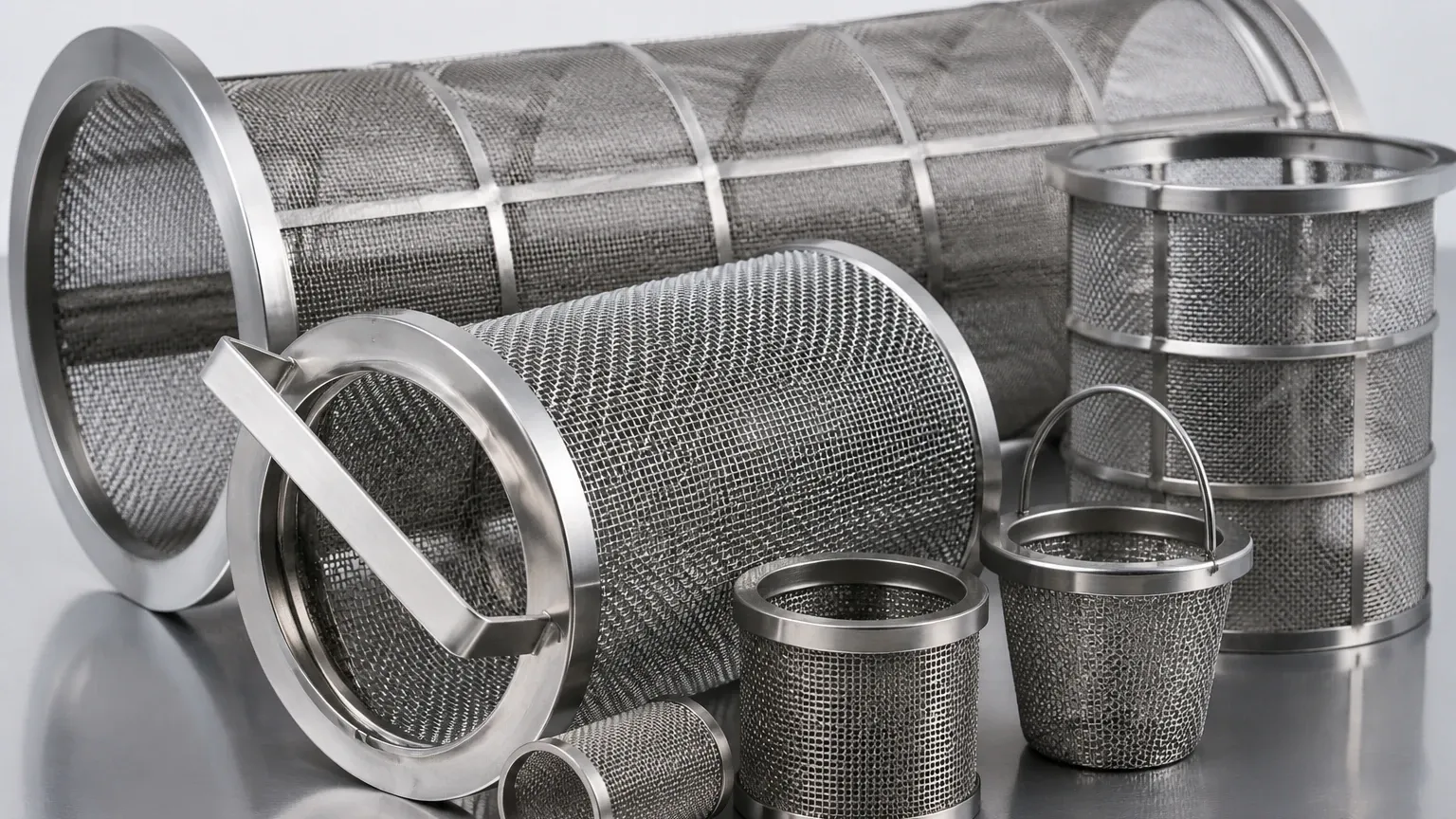
The primary function of a basket strainer is to provide a large surface area for particle collection while maintaining a low pressure drop. The design typically involves a perforated metal housing lined with a specific grade of stainless steel wire mesh. The geometry of the basket—whether it is a standard flat-bottom design, a slant-top for easier removal, or a multi-basket configuration for high-flow rates—is critical to its performance.
In B2B environments like chemical processing or water treatment, the choice of a strainer is dictated by the "Open Area Ratio" (OAR). A high-quality basket should ideally offer an OAR of at least 6:1. This means the total open area of the strainer mesh is six times the cross-sectional area of the inlet pipe. This ratio is essential for managing the initial stages of debris accumulation and delaying the onset of rafting, which can rapidly diminish the available flow path.
Analyzing the Dynamics of Strainers Rafting and Debris Accumulation
Strainers rafting occurs when the physical characteristics of the contaminants cause them to interlock or adhere to one another rather than passing through or settling individually. In industries such as pulp and paper, food processing, or wastewater management, the presence of long-chain fibers or sticky resins often leads to this condition.
As fluid passes through the mesh, the first layer of particles creates a "filter cake." In many applications, this cake actually improves filtration efficiency by capturing smaller particles. However, when rafting begins, the accumulation becomes non-uniform. Large "rafts" of debris can block entire sections of the basket, forcing the remaining fluid through a smaller area at a much higher velocity. This leads to several technical challenges:
1. Localized High Velocity: As parts of the strainer become blinded by rafts, the fluid velocity through the open mesh increases. This can lead to "particle bypass," where contaminants are forced through the mesh due to sheer kinetic energy.
2. Increased Differential Pressure (ΔP): The most immediate sign of strainers rafting is a sharp spike in differential pressure. If the pressure exceeds the structural limits of the basket, the mesh can collapse or burst, leading to catastrophic downstream contamination.
3. Turbulence and Erosion: Rafting creates irregular flow patterns within the strainer housing. This turbulence can cause localized erosion on the basket walls and the housing interior, especially if the fluid contains abrasive particles like sand or metal shards.
Engineering Specifications for High-Load Filtration Components
To combat the effects of rafting, engineers must look beyond standard catalog items and consider customized filtration solutions. The structural design of the basket is paramount. For heavy-duty applications, a simple wire mesh is rarely sufficient. Instead, a multi-layered approach is employed.
Perforated Support Backing
High-performance baskets utilize a heavy-gauge perforated metal plate as a support structure. This plate provides the mechanical strength necessary to withstand high differential pressures caused by rafting. The wire mesh is then sintered or spot-welded to the interior of this support. This prevents the mesh from flexing or tearing under the weight of accumulated debris.
Mesh Weave and Wire Diameter
The type of weave—plain, twilled, or Dutch weave—affects how easily a "raft" can be dislodged during cleaning. A plain square weave offers the highest open area but may be less durable. In contrast, a Dutch weave provides superior strength and finer filtration but may be more prone to permanent blinding if sticky rafts are allowed to dry on the surface.
Reinforcement Rings and Handles
Because baskets in high-load environments can become extremely heavy when filled with rafted debris, they must be equipped with reinforced lifting handles and structural rings at the top and bottom. These components ensure that the basket maintains its circularity and seal within the housing, preventing fluid bypass around the edges of the strainer.
Material Integrity: The Importance of Stainless Steel in Heavy-Duty Straining
Material selection is a critical factor in managing the long-term effects of strainers rafting. Stainless steel is the industry standard due to its combination of mechanical strength and corrosion resistance. The two most common grades used in industrial filtration are 304 and 316L.
* Grade 304 Stainless Steel: Suitable for general-purpose applications, providing excellent strength and basic corrosion resistance. It is often used in food and beverage applications where hygiene is a priority but chemical aggression is low.
* Grade 316L Stainless Steel: Contains molybdenum, which provides superior resistance to chlorides and pitting. In applications involving seawater, chemical processing, or pharmaceutical manufacturing, 316L is essential to prevent the structural degradation of the strainer mesh over time.
In environments where rafting is frequent, the mechanical fatigue of the metal must be considered. Constant pressure fluctuations—caused by the buildup and subsequent cleaning of debris rafts—can lead to work hardening and eventual cracking of the wire mesh. Utilizing high-quality, annealed stainless steel ensures that the filtration element remains ductile enough to handle these stresses without failing.
Operational Management: Mitigating Risks Associated with Rafting
Effective management of strainers rafting involves both proactive design and rigorous operational protocols. For purchasing teams and maintenance engineers, the goal is to maximize the interval between cleanings while ensuring the safety of the system.
Differential Pressure Monitoring
The most effective way to manage rafting is through the installation of differential pressure sensors. By setting clear thresholds for "clean," "dirty," and "critical" pressure levels, operators can remove and clean baskets before the rafts cause a total blockage or structural failure. Automated systems can even trigger a bypass or a backwash cycle based on these readings.
Cleaning and Maintenance Cycles
When rafting occurs, the debris is often difficult to remove with simple rinsing. High-pressure washing, ultrasonic cleaning, or chemical soaking may be required to restore the basket to its original flow capacity. It is vital to inspect the mesh for "pinholing" or wire displacement after every cleaning cycle, as the mechanical force of the raft can sometimes shift the wires, altering the micron rating of the strainer.
Redundancy and Duplex Systems
In critical processes where flow cannot be interrupted, a duplex strainer system is the preferred solution. A duplex system consists of two separate strainer housings connected by a diverter valve. When one basket becomes loaded with rafted material, the flow is switched to the clean basket, allowing for maintenance without shutting down the entire line.
Selection Criteria for Custom Filtration Solutions
When specifying Strainers & Baskets for an application prone to rafting, engineers should confirm several key data points with their manufacturer:
* Fluid Viscosity and Temperature: Higher viscosity fluids exacerbate the pressure drop across a rafted strainer. Temperature affects the material strength and the behavior of the contaminants (e.g., fats or waxes may congeal at lower temperatures).
* Particle Loading and Characteristics: Knowing the concentration of solids (ppm) and their physical nature (fibrous, granular, or gelatinous) allows for the selection of the optimal mesh weave and open area ratio.
* Flow Rate Requirements: Both the normal operating flow and the maximum potential surge flow must be accounted for to ensure the strainer is not undersized.
* Customization Needs: Does the application require a specific flange type, a magnetic insert to capture ferrous particles, or a specialized coating for extreme chemical resistance?
By addressing these factors during the design phase, companies can significantly reduce the total cost of ownership. A well-engineered strainer may have a higher initial purchase price, but the savings in reduced downtime, lower maintenance labor, and protected downstream equipment provide a rapid return on investment.
Conclusion
Strainers rafting is a complex challenge that requires a technical approach to filtration design. By understanding the mechanics of debris accumulation and the structural requirements of industrial baskets, engineers can implement solutions that maintain high flow rates and protect sensitive equipment. Whether dealing with fibrous waste in a processing plant or particulate matter in a hydraulic system, the key to success lies in selecting high-quality stainless steel components tailored to the specific demands of the environment. Through precise material selection, robust structural engineering, and proactive operational monitoring, the risks of rafting can be effectively managed, ensuring long-term system reliability.
