


Strainers Rescue
In industrial fluid handling, the difference between a smooth-running operation and a catastrophic system failure often hinges on the performance of a single component: the strainer. While often viewed as simple mechanical barriers, industrial strainers and baskets are critical safeguards for pumps, valves, heat exchangers, and sensitive downstream instrumentation. A "strainers rescue" scenario typically occurs when an existing filtration system fails to meet process demands, resulting in excessive pressure drops, bypass of contaminants, or structural collapse of the basket. For engineers and procurement teams, understanding the technical nuances of these components is essential for maintaining system integrity and optimizing operational uptime.
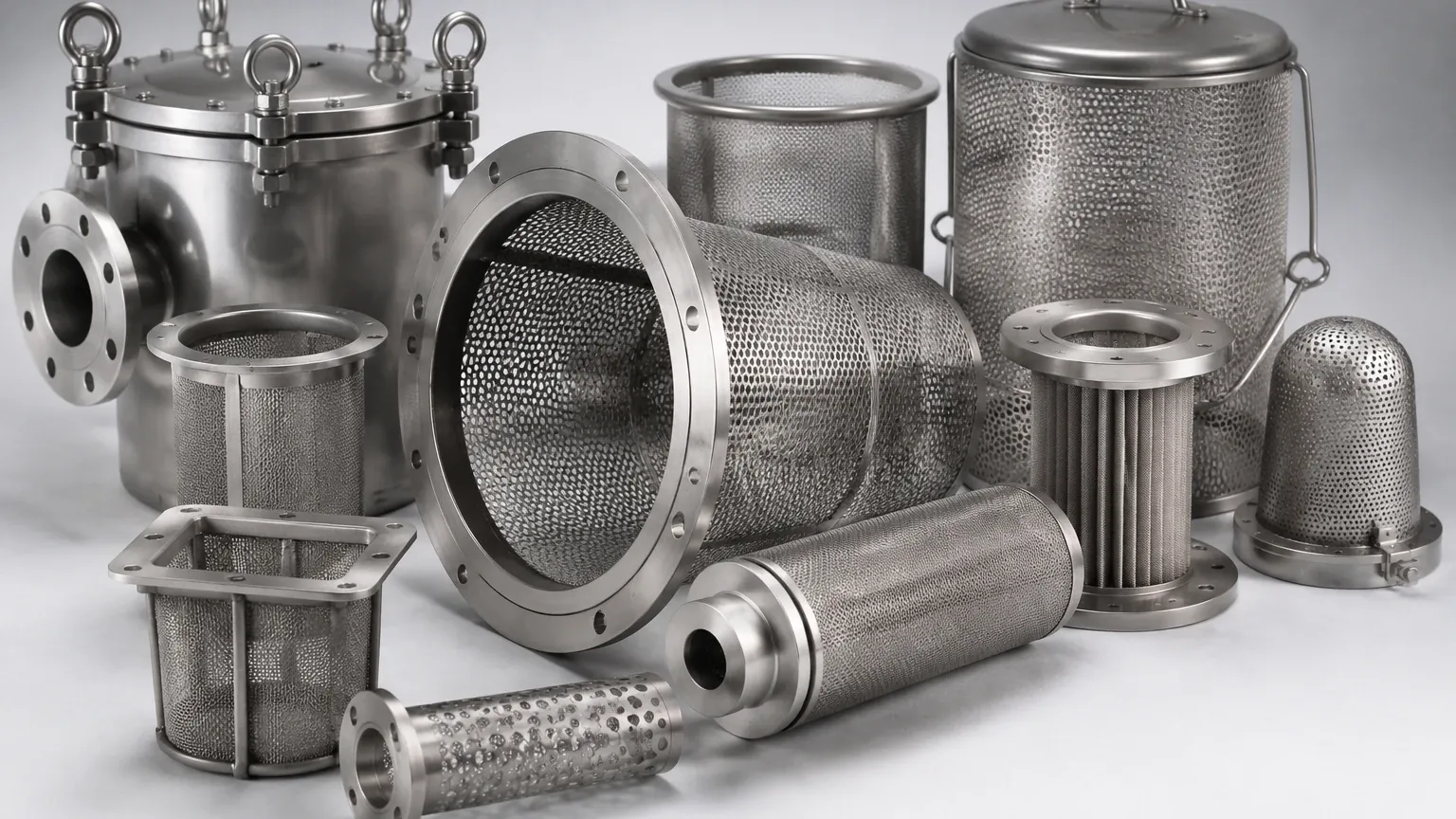
Industrial filtration environments are demanding. Whether in chemical processing, water treatment, or food and beverage production, the primary role of Strainers & Baskets is to remove coarse solids from a liquid stream. Unlike fine filters that may target sub-micron particles, strainers are designed for high-flow applications where the removal of larger debris is necessary to protect expensive mechanical equipment. When a system is underperforming, a strategic rescue involves evaluating the material, design, and mesh configuration to ensure the component is fit for purpose.
The Critical Role of Strainers in Industrial Process Protection
Strainers serve as the first line of defense in a piping system. Their primary function is the mechanical removal of unwanted solids from fluids. This protection is vital for several reasons. First, it prevents the erosion of pump impellers and the clogging of spray nozzles. Second, it ensures that heat exchangers maintain their thermal efficiency by preventing the buildup of scale or debris on heat transfer surfaces.
In many B2B industrial contexts, the term "strainers rescue" refers to the rapid intervention required when a standard off-the-shelf strainer fails to handle the specific debris load or chemical nature of the process fluid. For instance, in a hydraulic system, a collapsed suction strainer can lead to pump cavitation, which quickly destroys the pump's internal components. A professional filtration partner like Kaifil provides the engineering expertise to analyze these failures and implement a robust solution that "rescues" the process from further downtime.
Common Failure Modes: When Do You Need a Strainers Rescue?
Identifying the need for a strainer upgrade or replacement requires a keen understanding of common failure modes. Engineers should monitor the following signs that indicate a system is in need of a rescue:
1. Excessive Differential Pressure (ΔP): If the pressure drop across the strainer increases rapidly, it suggests that the open area of the basket is insufficient for the flow rate or that the mesh is blinding too quickly.
2. Structural Deformation: In high-pressure applications, if a basket is not properly reinforced, the force of the fluid can cause it to buckle or tear. This allows unfiltered fluid to bypass the element, defeating the purpose of the strainer.
3. Corrosion and Erosion: In chemical processing, using the wrong grade of stainless steel can lead to pitting or stress corrosion cracking. Erosion occurs when high-velocity particles wear down the mesh wires over time.
4. Bypass Leakage: If the strainer basket does not seat correctly within the housing, fluid will take the path of least resistance around the basket rather than through it.
Addressing these issues requires more than just a direct replacement; it requires an engineering evaluation of the application’s specific parameters, including flow rate, viscosity, temperature, and particle characteristics.
Engineering Specifications for Durable Strainers & Baskets
The performance of a strainer is dictated by its geometry and the materials used in its construction. When specifying a basket for a rescue operation, several technical factors must be considered:
Open Area Ratio
The open area ratio (OAR) is the relationship between the total area of the holes in the mesh or perforated plate and the cross-sectional area of the inlet pipe. A high OAR (typically 4:1 or higher) is desirable to minimize pressure drop and extend the time between cleanings. If a system is experiencing frequent clogs, increasing the OAR is a primary step in the strainers rescue process.
Mesh vs. Perforation
Most industrial baskets utilize a perforated metal sheet as a structural base, often lined with a finer wire mesh. The perforated plate provides the mechanical strength to withstand high differential pressures, while the wire mesh determines the filtration accuracy. Common perforation sizes range from 1/32" to 1/2", while wire mesh can range from coarse 20 mesh to fine 400 mesh depending on the application.
Support Structures
For heavy-duty applications, baskets may require internal or external reinforcement. This can include longitudinal ribs, circumferential rings, or heavy-gauge backing screens. These additions prevent the basket from bursting or collapsing under the weight of accumulated solids or high-velocity surges.
Material Selection: Balancing Chemical Compatibility and Mechanical Strength
Material selection is perhaps the most critical factor in ensuring the longevity of a strainer. Stainless steel is the industry standard due to its balance of strength and corrosion resistance. However, not all stainless steels are created equal.
* Type 304 Stainless Steel: Suitable for general-purpose applications, including water treatment and some food processing. It offers good corrosion resistance but may struggle in high-chloride environments.
* Type 316/316L Stainless Steel: Contains molybdenum, which provides superior resistance to chlorides and acids. This is the preferred choice for marine environments, pharmaceutical manufacturing, and aggressive chemical processing.
* Specialty Alloys: For extreme conditions, materials like Monel, Hastelloy, or Duplex stainless steel may be required to prevent rapid degradation.
In a strainers rescue scenario, upgrading from 304 to 316L or a specialty alloy can often double or triple the service life of the component, significantly reducing the total cost of ownership.
Customization and OEM Solutions for Specialized Applications
One of the primary challenges in industrial maintenance is finding a replacement strainer that fits an aging or proprietary housing. Many large-scale industrial plants operate with equipment that is decades old, making it difficult to source original parts. This is where custom manufacturing becomes essential.
Kaifil specializes in providing OEM and customized filtration solutions that allow for a seamless strainers rescue. Customization options include:
* Dimensional Tailoring: Adjusting the height, diameter, and flange dimensions to fit existing housings perfectly.
* Handle Configurations: Adding specialized handles (e.g., slant handles, bar handles) to facilitate easier removal and cleaning in tight spaces.
* Gasket and Seal Integration: Incorporating specific sealing materials like Viton, EPDM, or PTFE to ensure zero-bypass performance.
* Multi-Stage Filtration: Designing baskets with multiple layers of different mesh sizes to capture a broad range of particle sizes in a single pass.
By working with a manufacturer that understands these technical requirements, engineers can ensure that their "rescue" solution is not just a temporary fix but a permanent improvement to the system.
Maintenance and Operational Best Practices
Even the best-engineered strainer will fail if not maintained properly. A proactive maintenance strategy is the best way to avoid the need for an emergency strainers rescue. Key practices include:
* Differential Pressure Monitoring: Installing DP gauges upstream and downstream of the strainer allows operators to see exactly when the basket is reaching its dirt-holding capacity. Cleaning should occur before the DP reaches a critical threshold that could damage the basket.
* Regular Inspection: During scheduled shutdowns, baskets should be inspected for signs of mesh fraying, weld failure, or bypass. Even small holes can lead to significant downstream damage.
* Proper Cleaning Techniques: Depending on the contaminant, cleaning may involve backflushing, ultrasonic cleaning, or chemical soaking. Abrasive mechanical cleaning should be avoided as it can damage fine wire mesh.
* Spares Management: Always maintaining a set of high-quality spare baskets on-site ensures that a system can be returned to service immediately during a cleaning cycle.
Total Cost of Ownership: Beyond the Initial Purchase
When evaluating strainers and baskets, it is tempting to focus solely on the initial purchase price. However, for B2B procurement, the total cost of ownership (TCO) is a much more accurate metric. TCO includes the purchase price, installation costs, maintenance labor, the cost of downtime, and the potential cost of damage to downstream equipment.
Investing in a high-quality, custom-engineered strainer might have a higher upfront cost, but it often pays for itself many times over by preventing a single hour of unscheduled downtime. A robust "strainers rescue" strategy involves choosing components that are built to last, reducing the frequency of replacements and the risk of catastrophic system failure.
Conclusion: Selecting the Right Partner for Your Filtration Needs
Effective industrial filtration is not a "one-size-fits-all" endeavor. It requires a deep understanding of fluid dynamics, material science, and mechanical engineering. Whether you are designing a new system or seeking a strainers rescue for an underperforming process, the quality of your filtration components is paramount.
Kaifil provides the technical expertise and manufacturing precision needed to develop reliable Strainers & Baskets for the most demanding industrial environments. By focusing on durability, customized design, and precise filtration performance, Kaifil helps engineers and purchasing teams achieve efficient and cost-effective operations. When your process depends on the integrity of your filtration system, choosing a partner with a proven track record in custom stainless steel solutions is the most effective way to ensure long-term success.
