


Strainers Roof
In industrial facility management and process engineering, the management of runoff and the protection of drainage systems are critical to maintaining structural integrity and operational continuity. Roof drainage systems, particularly in large-scale manufacturing plants, chemical processing units, and warehouses, require robust filtration solutions to prevent debris from entering internal piping networks. The application of strainers roof components serves as the primary defense mechanism, ensuring that rainwater is effectively managed while solid contaminants are intercepted before they can cause downstream blockages or equipment damage.
Selecting the appropriate filtration hardware for roof applications involves more than simply choosing a cover for a drain. It requires a detailed understanding of fluid dynamics, material science, and the specific environmental stressors present in an industrial setting. For engineers and procurement specialists, evaluating the technical specifications of these components is essential to ensure long-term reliability and low maintenance overhead.
Understanding the Function of Industrial Roof Strainers
Industrial roof strainers are designed to manage high volumes of water while filtering out large solids such as leaves, gravel, wind-blown debris, and industrial particulates. Unlike residential gutters, industrial systems often feed into complex gray water recovery systems, cooling towers, or high-capacity municipal storm drains. If the filtration at the roof level fails, the resulting buildup can lead to standing water, which increases the structural load on the roof and risks leaks into the production floor.
The primary objective of a roof strainer is to maximize the flow rate while maintaining a specific filtration threshold. This balance is achieved through the geometry of the strainer and the selection of the filtration medium. In many industrial contexts, a simple flat grate is insufficient. Instead, elevated or dome-shaped strainers are utilized to ensure that even if some debris accumulates at the base, water can still pass through the upper sections of the mesh or perforated metal.
Material Engineering for Harsh Environments
The environment on an industrial roof is exceptionally demanding. Components are exposed to constant UV radiation, extreme temperature fluctuations, and potentially corrosive atmospheric conditions—especially in chemical processing zones or coastal areas. Consequently, the material selection for strainers roof applications is a critical engineering decision.
Stainless steel is the industry standard for high-performance filtration. Specifically, Grade 304 and Grade 316 stainless steel offer the necessary mechanical strength and corrosion resistance. Grade 304 is suitable for most general industrial environments, providing excellent resistance to oxidation. However, for facilities located near the ocean or those dealing with acidic exhaust fumes, Grade 316 is preferred due to its molybdenum content, which provides superior resistance to pitting and chloride corrosion.
Beyond the alloy type, the manufacturing process—such as TIG (Tungsten Inert Gas) welding or resistance welding—ensures that the joints of the filter remain intact under the weight of heavy debris or during high-pressure cleaning cycles. A robustly constructed stainless steel strainer will outlast plastic or cast-iron alternatives, providing a lower total cost of ownership (TCO) over the facility's lifespan.
Technical Specifications: Mesh Size and Open Area Ratio
When specifying filtration components, engineers must calculate the "Open Area Ratio." This is the ratio of the total area of the holes in the strainer to the total area of the strainer itself. A higher open area ratio results in a lower pressure drop and a higher flow capacity. However, the ratio must be balanced against the structural integrity of the component and the size of the particles that need to be excluded.
In the context of Strainers & Baskets, the filtration medium can vary from coarse perforated metal to fine wire mesh. For roof applications, the following factors are typically considered:
1. Perforation Patterns: Round holes are the most common due to their structural stability, but staggered patterns can increase the open area without compromising strength.
2. Mesh Count: If the roof drainage is part of a water reclamation system, a secondary layer of fine wire mesh may be integrated into the basket to capture smaller particulates.
3. Debris Loading Capacity: The design must account for the volume of debris expected between maintenance intervals. A deeper basket design allows for significant accumulation without impeding the water flow.
Structural Varieties: Comparing Strainers & Baskets for Roof Applications
While the terms are often used interchangeably, there are distinct structural differences between standard strainers and basket filters in industrial drainage. Selecting the right configuration depends on the specific plumbing architecture and the volume of solids anticipated.
Dome Strainers
Dome-shaped strainers are the most common for direct roof drain installation. Their hemispherical design ensures that if leaves or plastic film cover the bottom of the drain, the vertical surface area remains open for water passage. This is a fail-safe design critical for preventing roof ponding during heavy storms.
Basket Strainers
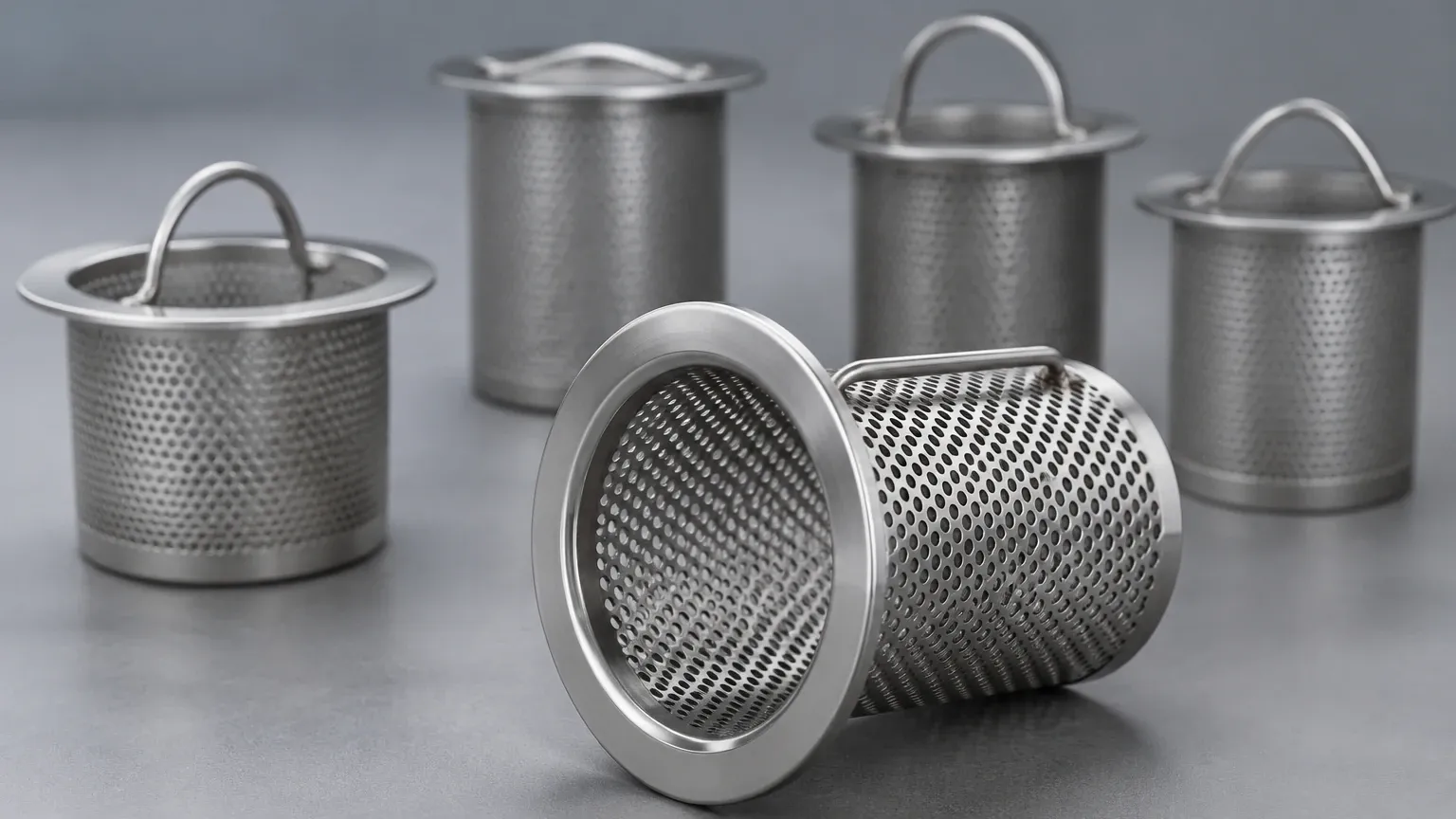
In systems where the roof drain leads into a specialized collection pipe or a pre-treatment tank, industrial basket strainers are often employed. These are typically removable, allowing maintenance crews to lift the entire basket out to dispose of collected waste. The basket design provides a much larger surface area than a flat or dome strainer, making it ideal for facilities with high debris loads, such as those near wooded areas or those with significant airborne industrial waste.
Custom Insert Strainers
For retrofitting existing industrial structures, custom-engineered inserts are often required. These are designed to fit into specific pipe diameters or non-standard drain sumps. Manufacturers like Kaifil specialize in creating custom-dimensioned stainless steel components that ensure a precision fit, preventing bypass—where water and debris flow around the filter rather than through it.
Flow Dynamics and Pressure Considerations
A critical aspect of engineering strainers roof systems is understanding the hydraulic impact of the filtration medium. Every filter introduces a degree of resistance to the flow, known as pressure drop (ΔP). In a gravity-fed roof drainage system, an excessive pressure drop can lead to slow drainage and water backup.
Engineers must ensure that the "effective filtration area" is significantly larger than the cross-sectional area of the drain pipe. A common rule of thumb in industrial filtration is to have a filtration area that is at least 3 to 4 times the area of the pipe opening. This compensates for the inevitable partial clogging that occurs between cleaning cycles. By utilizing high-quality stainless steel mesh with precise wire diameters, manufacturers can optimize this ratio, ensuring maximum flow even as the strainer captures debris.
Customization and OEM Manufacturing Capabilities
No two industrial facilities are identical, and off-the-shelf drainage products often fail to meet the rigorous standards of specific sectors like pharmaceutical or food grade manufacturing. This is where the value of a specialized manufacturer becomes apparent. Customization options for strainers and baskets include:
* Variable Micron Ratings: Tailoring the mesh size to capture specific types of industrial byproduct.
* Reinforced Structures: Adding support rods or external skeletons to baskets that must withstand high-velocity water flow or heavy mechanical loads.
* Specialized Coatings: While stainless steel is inherently resistant, certain chemical environments may require additional passivization or electropolishing to enhance corrosion resistance and ease of cleaning.
* Connection Types: Designing strainers with specific flange, threaded, or slip-fit connections to integrate seamlessly with existing industrial plumbing.
Kaifil’s expertise in OEM and customized filtration solutions allows for the development of high-performance components that meet these exacting requirements. By working closely with global customers, they ensure that the material selection and filtration accuracy are perfectly aligned with the application’s demands.
Maintenance Protocols for Industrial Drainage Systems
Even the most advanced stainless steel strainer requires a maintenance regimen to remain effective. In an industrial B2B context, unplanned downtime or facility damage due to drainage failure is a significant risk. A proactive maintenance schedule should include:
1. Visual Inspections: Quarterly inspections of all roof strainers, with increased frequency during autumn or after major storm events.
2. Manual Cleaning: Removing accumulated debris from the baskets. Stainless steel’s smooth surface makes this process efficient, as debris is less likely to become embedded in the material compared to cast iron or plastic.
3. Integrity Checks: Inspecting for signs of mechanical wear, such as broken wires in a mesh or compromised weld points. Early detection of wear allows for scheduled replacement rather than emergency repairs.
4. Flow Testing: Periodically checking that the drainage rate meets the original design specifications, ensuring that no internal pipe blockages have formed downstream of the strainer.
Conclusion: Selecting the Right Partner for Industrial Filtration
The selection of strainers roof components is a vital decision for the protection of industrial infrastructure. By focusing on high-quality materials like stainless steel and prioritizing engineering metrics such as open area ratio and flow dynamics, facility managers can ensure reliable performance in the most demanding environments.
When evaluating suppliers, it is essential to look for manufacturers who provide technical transparency and customization capabilities. Reliable filtration is not just about the hardware; it is about the engineering expertise that goes into the design and production of every component. For those seeking durable, high-precision solutions, reviewing the available Strainers & Baskets options is the first step toward optimizing industrial drainage and filtration performance. Through careful selection and a commitment to quality, engineers can safeguard their facilities against the risks of debris-related drainage failures.
