


3 Wire Screen
In the landscape of industrial filtration and separation, the efficiency of a system often hinges on the precise geometry of the filtration media. Among the various configurations available to engineers, the 3 wire screen—a specific designation often referring to profile wire dimensions or series within the broader category of Wedge Wire Screens—represents a critical component for high-load, high-precision applications. These screens are engineered to provide a unique combination of mechanical strength, open area, and non-clogging characteristics that traditional woven mesh or perforated plates cannot match.
Understanding the technical nuances of a 3 wire screen is essential for procurement teams and plant engineers who must balance initial capital expenditure with long-term operational reliability. This guide examines the engineering principles, material considerations, and application-specific advantages of these specialized filtration components.
Engineering Principles of Wedge Wire Screens
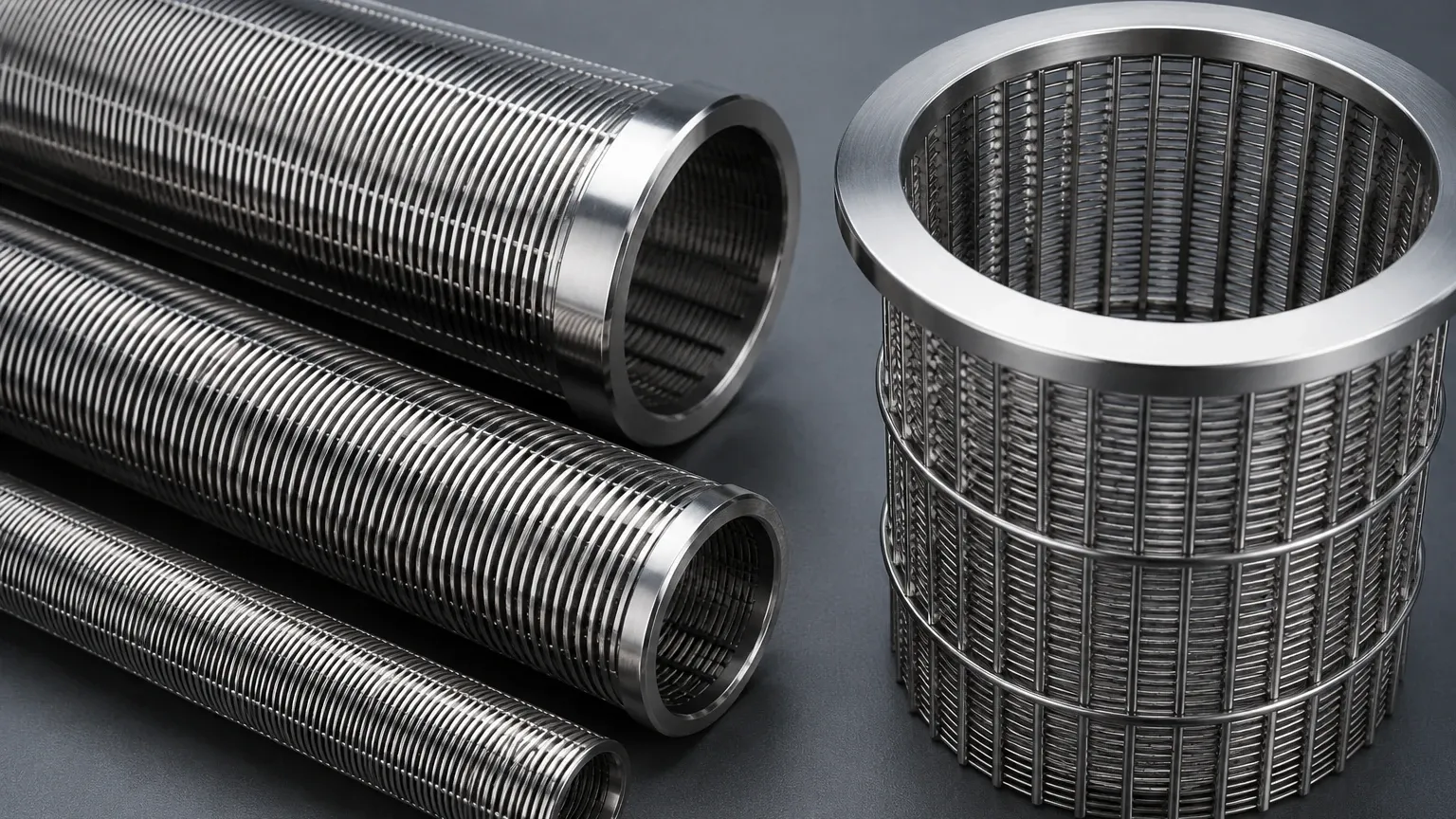
The fundamental advantage of a 3 wire screen lies in its "V-shaped" profile wire construction. Unlike woven wire, where the intersecting threads create pockets that can trap particles, wedge wire is manufactured through a continuous resistance welding process. The profile wires are welded to perpendicular support rods at every intersection, creating a rigid, two-dimensional structure.
The V-Shaped Profile
The "3" in 3 wire screen typically refers to the width of the profile wire (often 3.0mm) or a specific wire code used in heavy-duty industrial settings. The V-shape is oriented so that the widest part of the wire faces the incoming flow. As particles pass through the narrowest point of the slot, the opening immediately widens. This design ensures that any particle capable of entering the slot will pass through freely, significantly reducing the risk of "blinding" or clogging.
Structural Integrity and Support
The mechanical strength of the screen is determined by the relationship between the profile wire and the support rods. For a 3 wire screen configuration, the support rods must be spaced and sized to withstand the specific differential pressure of the application. In high-pressure hydraulic systems or deep-well water intakes, the collapse strength of the screen is a primary engineering concern. By varying the frequency of the welds and the thickness of the support rods, manufacturers like Kaifil can customize the screen to meet specific structural requirements without compromising the effective filtration area.
Material Selection and Chemical Compatibility
Industrial environments often expose filtration components to corrosive fluids, extreme temperatures, and abrasive solids. Selecting the correct alloy for a 3 wire screen is as important as the mechanical design itself. Stainless steel remains the industry standard due to its versatility and durability.
1. Grade 304 Stainless Steel: This is the most common material for general industrial use. It offers excellent strength and good corrosion resistance for applications involving fresh water, food processing (where high-temperature sanitation is required), and basic chemical filtration.
2. Grade 316L Stainless Steel: For environments involving chlorides, such as seawater or acidic chemical processing, 316L is preferred. The addition of molybdenum provides superior resistance to pitting and crevice corrosion. The "L" designation (low carbon) is critical in wedge wire manufacturing because it prevents carbide precipitation during the welding process, maintaining the integrity of the weld points.
3. Duplex and Super Duplex Steels: In highly aggressive environments, such as oil and gas extraction or advanced wastewater treatment, duplex stainless steels offer nearly double the yield strength of austenitic grades and exceptional resistance to stress corrosion cracking.
When specifying a 3 wire screen, engineers must confirm the chemical composition of the process fluid and the cleaning agents used during maintenance cycles to ensure material longevity.
Performance Metrics: Flow Rate and Slot Precision
The performance of a 3 wire screen is measured by its ability to maintain a consistent flow rate while capturing solids of a specific size. This is governed by two main factors: slot width and open area percentage.
Slot Width Precision
Slot widths in wedge wire screens can be manufactured to tolerances as tight as ±0.05mm. In a 3 wire screen setup, maintaining this precision across the entire surface area is vital for ensuring that downstream equipment is protected from oversized particles. For example, in a catalyst recovery system, even a slight deviation in slot width can lead to the loss of expensive media or the contamination of the final product.
Calculating Open Area
The open area is the ratio of the total slot area to the total screen surface area. It is calculated using the formula:
Open Area % = (Slot Width / (Slot Width + Wire Width)) × 100
Because a 3 wire screen utilizes a relatively wide profile wire (3mm), the slot width must be carefully balanced to achieve the required open area. While wider wires offer greater mechanical strength and a longer wear life in abrasive applications, they may reduce the total open area if the slot width is very small. Engineers must perform hydraulic calculations to ensure the resulting pressure drop (ΔP) remains within the system’s operational limits.
Common Applications for 3 Wire Screen Systems
Due to their robust nature, 3 wire screens are utilized in some of the most demanding industrial sectors. Their ability to be fabricated into various shapes—including flat panels, cylinders, and conical baskets—makes them highly versatile.
Water Treatment and Intake
In municipal and industrial water treatment, these screens are used in intake structures to protect pumps and downstream piping from debris. The non-clogging V-wire design is particularly effective in preventing organic matter, such as leaves and aquatic life, from adhering to the screen surface.
Food and Beverage Processing
The hygienic properties of stainless steel, combined with the smooth surface of the wedge wire, make the 3 wire screen ideal for the food industry. They are commonly used in sugar refining, brewery lautering, and vegetable processing. The lack of crevices (common in woven mesh) allows for more effective Clean-In-Place (CIP) procedures, reducing the risk of bacterial growth.
Petrochemical and Mining
In mining, screens are subjected to extreme abrasion. A 3 wire screen with a heavy-duty profile provides the sacrificial material needed to withstand years of contact with ore slurries. In the petrochemical sector, these screens serve as support grids for catalyst beds in reactors, where they must maintain structural stability under high temperatures and heavy loads.
Procurement Checklist for Engineering Teams
Before ordering a custom 3 wire screen, technical professionals should verify several key parameters to ensure the component is fit for purpose. Relying on the expertise of a manufacturer like Kaifil during the design phase can prevent costly field failures.
* Flow Direction: Will the flow be from out-to-in (FOTI) or in-to-out (FITO)? This determines the orientation of the V-wire and the placement of the support rods.
* Mechanical Load: What is the maximum expected differential pressure? Does the screen need to support the weight of a catalyst or filter cake?
* Slot Size: What is the minimum particle size that must be retained? Is there a tolerance requirement for the slot width?
* Surface Treatment: Does the application require electropolishing to improve corrosion resistance or a specific coating to reduce friction?
* Connection Type: How will the screen be integrated into the existing system? Common options include flanges, threaded fittings, or reinforced end rings.
Maintenance and Operational Lifespan
One of the primary reasons for selecting a 3 wire screen over other filtration media is the total cost of ownership. While the initial investment may be higher than woven mesh, the durability and ease of cleaning often lead to a lower lifecycle cost.
Cleaning Methods
Because the slots widen inwardly, these screens respond exceptionally well to backwashing or back-pulsing. In automated systems, a momentary reversal of flow can dislodge the filter cake and restore the original pressure drop. For manual cleaning, the smooth surface allows for easy scraping or pressure washing without damaging the media.
Wear and Replacement
In abrasive applications, the top surface of the profile wire will gradually wear down. However, because the wire is solid stainless steel, the slot width remains relatively constant even as the wire height decreases. This ensures consistent filtration performance throughout the life of the screen. Regular inspections should focus on the integrity of the welds and any signs of localized erosion, particularly near the inlet points where velocities are highest.
Conclusion
The 3 wire screen is a pinnacle of industrial filtration engineering, offering a robust solution for separation challenges that demand both precision and strength. By leveraging the inherent benefits of Wedge Wire Screens, facilities can achieve higher throughput, reduced downtime, and more reliable process control. Whether used in a simple floor drain or a complex chemical reactor, the selection of the right profile wire, material, and structural support is the key to optimizing filtration performance in any industrial environment.
