


Gujarat Wedge Wire Screens Ltd Turnover
In the global industrial filtration market, the performance and reliability of wedge wire components are critical to the operational efficiency of heavy industries. When procurement teams and engineers evaluate potential suppliers, they often look beyond technical specifications to assess market presence and financial stability. Metrics such as the gujarat wedge wire screens ltd turnover are frequently used as indicators of a manufacturer's capacity to handle large-scale projects, invest in advanced machinery, and maintain a consistent supply chain. For B2B buyers, understanding the economic landscape of the wedge wire industry is as important as understanding the engineering behind the screens themselves.
Wedge Wire Screens represent a specialized segment of the filtration industry, characterized by high-precision manufacturing and robust structural requirements. These components are not merely consumables; they are engineered assets that determine the throughput and downtime of entire processing plants. This article examines the technical fundamentals of wedge wire technology, the economic factors influencing the industry, and the critical criteria for selecting a manufacturing partner capable of delivering high-performance filtration solutions.
The Engineering Principles of Wedge Wire Technology
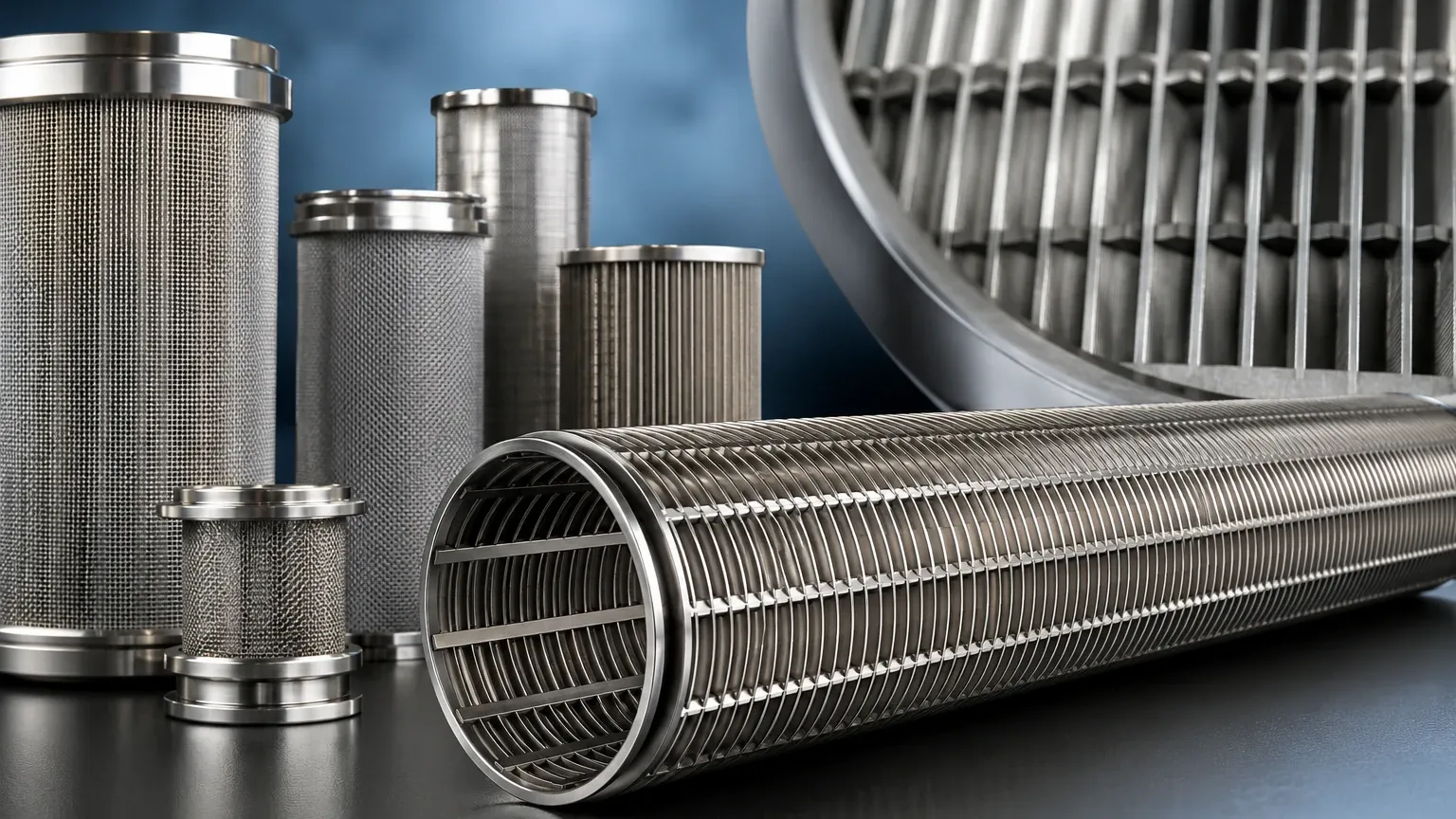
Wedge wire, also known as profile wire, is a unique filtration medium constructed by welding V-shaped stainless steel wires onto support rods. This design creates a continuous slot that widens inwardly, a feature that distinguishes it from traditional woven wire mesh or perforated plate. From an engineering perspective, the V-shaped profile is essential for preventing clogging and ensuring a high rate of flow.
Non-Clogging Characteristics
The primary advantage of the wedge wire design is its "two-point" contact. Because the slot is narrowest at the surface and widens toward the discharge side, any particle that passes through the initial opening will continue through the screen without becoming wedged. This self-cleaning property is vital in applications involving sticky materials, fibrous solids, or high-viscosity fluids where traditional filters would require frequent backwashing or manual cleaning.
Structural Integrity and Load Capacity
Unlike woven mesh, which relies on the tension of the wires, wedge wire screens are fusion-welded at every intersection of the profile wire and support rod. This creates a rigid, self-supporting structure. In high-pressure environments, such as deep-well water intake or high-flow hydraulic systems, the structural integrity of the screen prevents deformation. Engineers must calculate the collapse strength and burst pressure requirements based on the spacing of the support rods and the gauge of the profile wire used.
Market Dynamics and the Significance of Manufacturer Turnover
In the competitive landscape of industrial manufacturing, financial metrics like the gujarat wedge wire screens ltd turnover provide insight into the scale of operations and the ability to sustain research and development. For a B2B purchaser, a manufacturer's turnover is often a proxy for their ability to hold significant raw material inventory, such as specialized stainless steel alloys, which mitigates the risk of price volatility and lead time delays.
Scaling for Global Demand
Large-scale infrastructure projects, such as municipal water treatment plants or petrochemical refineries, require thousands of square meters of screen surface. A manufacturer with a substantial turnover typically possesses the automated welding lines and quality control infrastructure necessary to ensure uniformity across large batches. When evaluating a supplier, it is important to confirm that their financial health supports the continuous operation of high-precision CNC welding machines, which are essential for maintaining slot tolerances as tight as 20 microns.
Investment in Material Science
The turnover of leading firms in the sector also fuels the adoption of advanced materials. While SS304 and SS316L remain industry standards, demanding applications in the mining and chemical sectors often require Duplex stainless steels or Super Duplex alloys. Manufacturers with a strong market position are better equipped to source these specialized materials and provide the welding expertise required to work with them without compromising the corrosion resistance of the heat-affected zone (HAZ).
Technical Selection Criteria for Industrial Applications
Selecting the correct wedge wire screen requires a detailed analysis of the process conditions. Engineers must balance the need for filtration fineness with the requirement for mechanical strength and flow rate. The following factors are primary considerations during the specification phase:
Slot Opening Precision
The slot opening, or aperture, is the distance between adjacent profile wires. This dimension determines the filtration rating. In precision applications, such as catalyst recovery in refineries, even a minor deviation in slot width can lead to the loss of expensive materials or downstream equipment damage. High-quality manufacturers utilize optical measurement systems to verify slot consistency throughout the entire length of the screen.
Open Area Calculation
The percentage of open area is a critical factor in determining the pressure drop across the screen. It is calculated by the formula:
`Open Area % = [Slot Width / (Slot Width + Wire Width)] x 100`.
A higher open area reduces the velocity of the fluid passing through the slots, which in turn reduces the rate of abrasion and extends the service life of the screen. However, increasing the open area often requires thinner profile wires, which may reduce the overall mechanical strength. Finding the optimal balance is a core engineering challenge.
Flow Direction and Surface Orientation
Wedge wire screens can be manufactured for flow from "out-to-in" or "in-to-out." In cylindrical screens, the orientation of the profile wires—whether they run axially (parallel to the cylinder) or radially (wrapped around the cylinder)—affects how the screen interacts with cleaning scrapers or backwash flows. For example, in an internally fed rotary screen, the profile wires are typically placed on the inside of the cylinder to provide a smooth surface for solids removal.
Industrial Applications of High-Performance Screens
The versatility of wedge wire technology allows it to be utilized across a broad spectrum of industries. Each sector presents unique challenges that dictate the design of the screen.
* Water Treatment: In intake systems for desalination plants or power stations, large-scale wedge wire intake screens protect aquatic life while providing a reliable flow of water. The low-velocity design prevents impingement and entrainment.
* Food and Beverage: Sugar processing and starch production rely on wedge wire for dewatering and solids separation. The smooth surface and stainless steel construction meet stringent hygienic standards and allow for effective Clean-in-Place (CIP) procedures.
* Mining and Aggregates: Vibrating screens used for dewatering ores and minerals must withstand extreme abrasive forces. In these environments, heavy-duty profile wires with high wear resistance are utilized to maximize the interval between replacements.
* Petrochemicals: Reactor internals, such as center pipes and scale traps, utilize wedge wire to retain catalyst beds while allowing for high-temperature and high-pressure gas or liquid flow.
Quality Assurance and Compliance in Manufacturing
When sourcing filtration components, verifying the manufacturer's quality management system is paramount. A high turnover or a large facility is only beneficial if it is coupled with rigorous testing protocols. Essential quality checks include:
1. Material Traceability: Every batch of stainless steel wire should be accompanied by Mill Test Reports (MTRs) to confirm chemical composition and mechanical properties.
2. Dimensional Inspection: Using calibrated calipers and digital imaging to ensure slot widths remain within the specified tolerance (often ±0.05mm or better).
3. Weld Integrity Testing: Non-destructive testing (NDT) methods, such as dye penetrant inspection, can be used to ensure there are no cracks or voids in the fusion welds, which could lead to premature failure under stress.
4. Pressure Testing: For components integrated into pressurized vessels, hydrostatic testing may be required to verify the structural limits of the assembly.
Evaluating Total Cost of Ownership (TCO)
While the initial purchase price is a significant factor, the total cost of ownership of a wedge wire screen includes maintenance, downtime, and replacement frequency. A screen that is poorly engineered or made from inferior materials may have a lower upfront cost but will result in higher operational expenses due to clogging, mechanical failure, or corrosion.
Manufacturers that demonstrate stability—comparable to the market presence suggested by the gujarat wedge wire screens ltd turnover—are often more capable of providing long-term technical support and replacement parts. Choosing a partner who understands the nuances of fluid dynamics and material science ensures that the filtration solution is optimized for the specific life cycle of the plant.
Conclusion
Wedge wire screens are foundational to modern industrial processing, offering a level of durability and efficiency that other filtration media cannot match. Whether the application involves delicate food processing or harsh mining environments, the precision of the V-wire profile and the strength of the welded structure are indispensable.
By focusing on technical specifications such as slot precision, material grade, and structural design, and by evaluating the market stability of suppliers, engineers can secure filtration solutions that enhance productivity and reduce risk. As a dedicated manufacturer of custom stainless steel filtration components, Kaifil provides the engineering expertise and manufacturing precision required to meet the world’s most demanding industrial standards. For detailed specifications and custom design assistance, professionals are encouraged to Review product options and application support to find the optimal solution for their specific filtration challenges.
