


Gujarat Wedge Wire Screens
In the landscape of industrial filtration and separation, wedge wire technology stands as a cornerstone for high-efficiency processing. For engineers and procurement specialists sourcing Gujarat wedge wire screens, the focus typically lies on finding a balance between precision engineering and robust durability. As a regional hub for metal fabrication and industrial manufacturing, the demand for high-quality filtration components in this area reflects the broader needs of the global chemical, pharmaceutical, and water treatment sectors.
Understanding the technical nuances of wedge wire screens is essential for ensuring operational efficiency and minimizing downtime. This guide explores the engineering principles, material considerations, and selection criteria that define high-performance wedge wire solutions, providing the technical context necessary for informed industrial purchasing decisions.
Understanding the Technical Architecture of Wedge Wire Screens
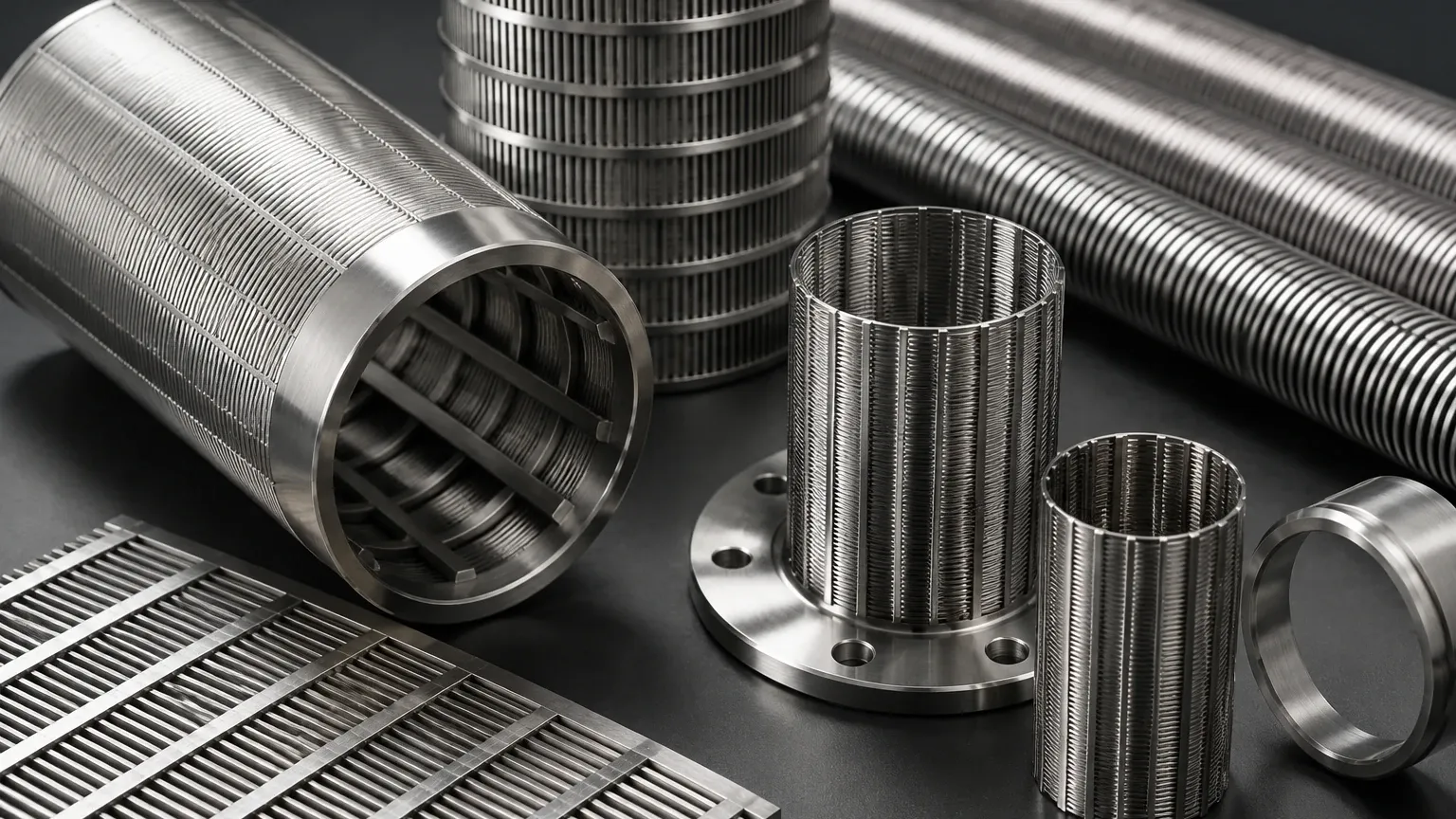
Wedge wire screens, often referred to as V-wire screens, are manufactured through a sophisticated resistance welding process. The structure consists of two primary components: the surface profile wire and the support rods. The profile wire is typically V-shaped, which is where the technology derives its name. These wires are resistance-welded onto the support rods at every intersection, creating a rigid, one-piece component.
The V-shaped profile is not merely an aesthetic choice; it is a critical engineering feature. The narrowest part of the V-shape faces the incoming flow, while the opening widens toward the discharge side. This design creates a "two-point contact" for particles, which significantly reduces the risk of blinding or clogging. If a particle passes the initial slot opening, it is unlikely to get stuck further down because the space widens immediately, allowing the particle to be carried away by the filtrate.
When evaluating Wedge Wire Screens, engineers must consider the slot opening precision. Slot widths can range from as small as 20 microns to several millimeters, depending on the application. The consistency of these slots across the entire surface of the screen is a primary indicator of manufacturing quality. Inconsistent slot widths lead to uneven flow distribution, premature wear, and compromised filtration accuracy.
Material Selection and Chemical Compatibility
The performance of Gujarat wedge wire screens is heavily dependent on the metallurgy used in their construction. Because these components are often deployed in corrosive or high-temperature environments, selecting the correct stainless steel grade is paramount.
1. Stainless Steel 304/304L
This is the standard grade for many industrial applications. It offers good corrosion resistance and is suitable for most water treatment and food processing environments where chemical exposure is moderate. The "L" variant (low carbon) is preferred for welded structures to prevent sensitization and intergranular corrosion.
2. Stainless Steel 316/316L
For more demanding environments, such as chemical processing or marine applications, SS 316 is the industry standard. The addition of molybdenum provides superior resistance to chlorides and pitting. This material is essential for pharmaceutical applications where stringent cleaning protocols and chemical resistance are required.
3. Duplex Stainless Steels
In applications involving high pressure and highly corrosive media (such as oil and gas or desalination), Duplex stainless steels offer nearly double the strength of austenitic grades and significantly higher resistance to stress corrosion cracking.
4. Specialty Alloys
In extreme cases involving high temperatures or highly acidic environments, alloys like Monel, Hastelloy, or Inconel may be specified. While more costly, these materials ensure the longevity of the filtration system in conditions where standard stainless steels would fail within weeks.
Key Applications Across Industrial Sectors
The versatility of wedge wire technology allows it to be integrated into various stages of production. Its mechanical strength and self-cleaning properties make it ideal for several critical sectors.
Water Treatment and Management
Wedge wire is widely used in intake screens for water treatment plants. The high open area allows for large volumes of water to be processed with minimal pressure drop. Additionally, the smooth surface prevents aquatic life and debris from becoming permanently lodged in the screen, facilitating easier cleaning via backwashing or mechanical scraping.
Food and Beverage Processing
In the sugar industry, wedge wire screens are used for juice filtration and centrifugal liners. In breweries, they serve as the false bottoms in lauter tuns. The non-clogging nature of the V-wire ensures that solids (such as spent grains or pulp) are efficiently separated from the liquid without impeding the flow rate.
Petrochemical and Refining
Reactor internals, such as center pipes and scale traps, frequently utilize wedge wire. These components must withstand high temperatures and pressures while maintaining precise slot openings to prevent catalyst migration. The structural integrity of a well-manufactured wedge wire screen is vital here, as a failure could lead to catastrophic downstream equipment damage.
Mining and Aggregate
For dewatering and sizing applications, wedge wire offers the durability needed to handle abrasive materials. The high mechanical strength of the resistance-welded rods allows the screens to support heavy loads of ore or coal while maintaining consistent separation performance.
Critical Performance Metrics for Engineering Evaluation
When specifying wedge wire screens for a project, engineers should focus on several performance metrics that go beyond simple dimensions. These factors determine the total cost of ownership and the overall efficiency of the filtration system.
Open Area Calculation
The percentage of open area is a function of the slot width and the width of the profile wire. A higher open area results in a lower pressure drop and higher flow capacity. However, there is a trade-off: using thinner profile wires to increase open area can reduce the mechanical strength and wear life of the screen. Engineers must calculate the optimal balance based on the expected flow velocity and the abrasiveness of the media.
Collapse Strength and Burst Pressure
In pressurized systems, the screen must be able to withstand the differential pressure created as solids accumulate on the surface. The spacing and diameter of the support rods are the primary factors determining the collapse strength. Manufacturers often provide pressure ratings, but site-specific conditions (such as pressure surges) must be accounted for during the design phase.
Surface Smoothness and Finish
For pharmaceutical and food-grade applications, the surface finish is critical. Electropolishing or mechanical polishing can be applied to wedge wire screens to reduce surface roughness. A smoother surface not only prevents bacterial growth but also improves the efficiency of cleaning-in-place (CIP) cycles.
Sourcing Considerations: Why Manufacturers Like Kaifil Matter
While many suppliers offer wedge wire products, the difference in performance often stems from the manufacturing process. Sourcing from a specialist like Kaifil ensures that the screens are produced with advanced resistance welding technology, which guarantees a consistent bond between the profile wire and the support rods.
Customization is another key factor. Industrial applications rarely follow a one-size-fits-all model. Whether it is a specific diameter for a cylindrical filter cartridge, a unique flange connection, or a reinforced frame for a flat panel, the ability to produce custom-engineered solutions is what separates a commodity supplier from a technical partner. Engineers should look for manufacturers who can provide:
* Detailed Technical Drawings: To ensure seamless integration into existing systems.
* Material Certification: Providing traceability for the stainless steel grades used.
* Quality Testing: Including slot width verification and pressure testing where applicable.
By focusing on these technical benchmarks, procurement teams can ensure that the Gujarat wedge wire screens they select will perform reliably under the specific stresses of their industrial environment.
Maintenance and Operational Longevity
One of the primary advantages of wedge wire is its low maintenance requirement compared to woven wire mesh or perforated plate. However, proper care is still necessary to maximize the service life of the component.
Cleaning Methods
* Backwashing: Reversing the flow of the filtrate is the most common method for removing surface cake. The V-wire profile makes this particularly effective as the particles are easily dislodged.
* Ultrasonic Cleaning: For screens used in fine filtration (under 100 microns), ultrasonic baths can remove microscopic particles trapped in the slots without damaging the metal structure.
* Mechanical Cleaning: Brushes or scrapers can be used on the surface of the screen. Because the surface of a wedge wire screen is relatively smooth and the wires are rigid, mechanical cleaning is less likely to cause the deformation that often occurs with woven mesh.
Inspection Cycles
Regular inspection for signs of erosion or mechanical wear is recommended, especially in abrasive applications. If the edges of the V-wire become rounded over time, the non-clogging characteristics may diminish. Monitoring the pressure differential across the screen is the most effective way to determine when a cleaning cycle or a replacement is necessary.
Conclusion: Optimizing Your Filtration Strategy
Selecting the right wedge wire screen involves more than just picking a slot size. It requires a deep understanding of fluid dynamics, material science, and the mechanical stresses of the specific application. For those sourcing Gujarat wedge wire screens, prioritizing technical excellence and manufacturing precision is the key to achieving long-term operational success.
By partnering with experienced manufacturers like Kaifil, engineers can access customized filtration solutions that are built to last. Whether you are designing a new water treatment facility or upgrading a chemical reactor, the right wedge wire screen will provide the durability and precision required to keep your processes running at peak efficiency. For detailed specifications and engineering support, you can Review product options and application support to find the ideal configuration for your project needs.
