


J Wedge
In the field of industrial solid-liquid separation, the efficiency of a filtration system is often determined by the microscopic geometry of the filter media. Among the various configurations available to engineers, the J wedge profile—a specialized variation of the wire shapes used in Wedge Wire Screens—represents a critical engineering choice for high-demand applications. Understanding the technical nuances of the j wedge is essential for procurement teams and plant engineers who require precise filtration, mechanical durability, and minimal maintenance in sectors ranging from mineral processing to municipal water treatment.
Technical Anatomy of the J Wedge Profile
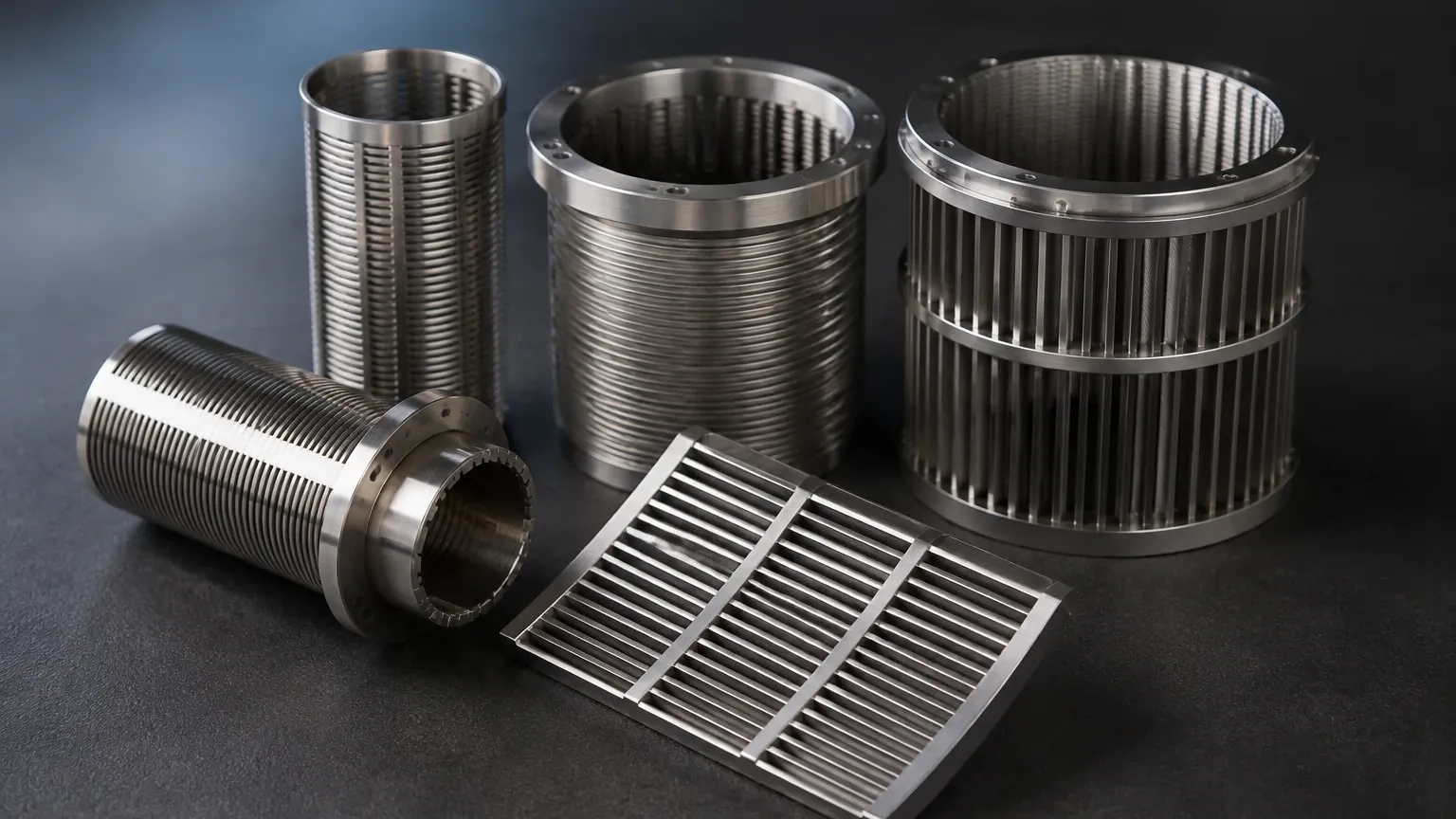
At its core, a wedge wire screen is a precision-welded structure composed of surface profiles (wires) and support profiles (rods). The j wedge refers to a specific cross-sectional geometry of the surface wire. While the standard V-shaped wire is the most common, the J-profile is engineered with a deeper vertical leg or a specific asymmetrical taper that provides unique mechanical and hydrodynamic properties.
Geometry and Slot Formation
The J-shaped wire is designed to create a "two-point contact" for particles. As these wires are resistance-welded onto support rods at set intervals, the gap between them—known as the slot opening—forms a continuous, inward-widening aperture. In a j wedge configuration, the relief angle (the angle at which the wire tapers away from the slot) is optimized to ensure that any particle capable of passing through the narrowest point of the slot will continue through the screen without becoming wedged.
Structural Integrity
The "J" designation often implies a wire with a higher height-to-width ratio compared to standard profiles. This increased vertical depth provides a significantly higher moment of inertia. For engineers, this translates to greater load-bearing capacity and resistance to deflection under high pressure or heavy abrasive loads. This makes the j wedge an ideal candidate for heavy-duty vibratory screens or high-pressure intake systems.
Engineering Advantages in Industrial Filtration
Selecting a j wedge profile over a standard V-wire or perforated plate involves evaluating the specific stresses of the application. The technical advantages of this profile are rooted in its ability to balance flow efficiency with structural longevity.
1. Non-Plugging Characteristics
The primary failure mode of traditional mesh or perforated screens is "blinding" or "pegging," where particles of a size similar to the opening become trapped. The j wedge geometry mitigates this by providing a sharp, well-defined leading edge and a rapid increase in the flow path width immediately after the point of contact. This ensures that the screen remains self-cleaning under consistent flow conditions.
2. High Open Area and Flow Efficiency
Despite its robust vertical profile, the j wedge allows for a high percentage of open area. This is critical for reducing the pressure drop across the filtration media. In hydraulic systems or gravity-fed intake screens, maintaining a low pressure drop is essential for reducing energy consumption and preventing cavitation in downstream pumps.
3. Precision Slot Tolerances
Manufacturing J-profile screens requires advanced resistance welding technology. Because the wire is thicker and deeper, maintaining a consistent slot width (often measured in microns) requires precise control over the welding current and pressure. Industrial manufacturers like Kaifil utilize automated systems to ensure that the slot tolerance remains within strict engineering limits, providing predictable filtration performance across the entire surface of the screen.
Material Selection and Corrosion Resistance
The performance of a j wedge screen is heavily dependent on the metallurgy of the stainless steel used. Since these components are often deployed in aggressive chemical environments or submerged in seawater, material selection is a primary engineering consideration.
* Grade 304 Stainless Steel: Suitable for general industrial applications where cost-effectiveness is a priority and the environment is only mildly corrosive.
* Grade 316L Stainless Steel: The standard for pharmaceutical, food and beverage, and chemical processing. The addition of molybdenum and a lower carbon content provides superior resistance to pitting and crevice corrosion, especially in chloride-rich environments.
* Duplex Stainless Steels: For extreme applications, such as desalination or deep-sea oil and gas filtration, duplex alloys offer nearly double the yield strength of austenitic steels and exceptional resistance to stress corrosion cracking.
Key Applications for J Wedge Screens
While Wedge Wire Screens are versatile, the specific j wedge profile is favored in scenarios where structural failure is not an option and filtration accuracy is paramount.
Mineral and Aggregate Processing
In mining operations, screens are subjected to massive abrasive forces and high-frequency vibrations. The deep profile of the j wedge provides the necessary wear life to withstand the constant impact of ores and minerals while maintaining accurate sizing of the material.
Water Intake Systems
Power plants and desalination facilities use large-scale intake screens to prevent debris and aquatic life from entering the system. The j wedge profile is often used here because its structural strength allows for larger unsupported spans between framing members, reducing the overall weight and complexity of the intake structure.
Pulp and Paper Industry
In the processing of wood pulp, screens must handle high-consistency slurries. The non-clogging nature of the j wedge ensures that fibers do not bridge across the slots, which would otherwise lead to frequent downtime for manual cleaning.
Selection Criteria: What Engineers Should Confirm
Before specifying a j wedge solution, purchasing teams and engineers should evaluate several variables to ensure the component is fit for purpose. A mismatch between the wire profile and the application can lead to premature wear or system inefficiency.
Slot Width vs. Particle Size
The slot width should typically be sized based on the "d90" or "d95" of the particle size distribution (the size at which 90% or 95% of the particles are larger than the opening). For the j wedge, the precision of the slot is critical; engineers must confirm that the manufacturer can maintain the required tolerance across the entire length of the screen.
Flow Direction and Orientation
J-wedge profiles can be configured for flow from "out-to-in" or "in-to-out." The orientation of the wire—whether it is parallel to the flow or perpendicular—affects both the filtration efficiency and the self-cleaning properties. In rotating drum screens, for example, the wire orientation is vital for the effective removal of solids by the internal spray bars.
Support Rod Spacing
The distance between the support rods (the structures the j wedge wires are welded to) determines the burst strength and collapse pressure of the screen. For high-pressure hydraulic applications, closer rod spacing is required to support the j wedge wires against hydraulic shock.
Maintenance and Total Cost of Ownership
From a B2B perspective, the initial purchase price of a j wedge screen is only one component of the total cost of ownership (TCO). Because these screens are designed for durability, the long-term savings are realized through:
1. Reduced Downtime: The self-cleaning geometry minimizes the need for backwashing or manual scraping.
2. Extended Service Life: The increased wear volume of the J-profile means the screen can lose a significant amount of material to abrasion before the slot width begins to change or structural integrity is compromised.
3. Energy Savings: Lower pressure drops mean pumps can operate at lower RPMs, reducing electricity costs over the life of the equipment.
4. Ease of Cleaning: When cleaning is required, the smooth surface of the stainless steel and the widening slots allow for highly effective CIP (Clean-in-Place) or ultrasonic cleaning.
Conclusion
The j wedge is more than just a component; it is a precision-engineered solution for complex industrial challenges. By choosing the correct profile height, material grade, and slot width, engineers can significantly optimize the performance of their Wedge Wire Screens.
As a professional manufacturer, Kaifil provides the technical expertise necessary to navigate these selection criteria. Whether your application involves the fine filtration of pharmaceutical ingredients or the heavy-duty sieving of mineral ores, understanding the mechanical advantages of the j wedge profile ensures a reliable, cost-effective, and high-performance filtration outcome. When consulting with a manufacturer, always provide detailed data regarding flow rates, particle characteristics, and chemical exposure to ensure the resulting custom filtration solution meets the rigorous demands of your industrial environment.
