


K Wire Sizes
In the field of industrial filtration and solid-liquid separation, the term "K wire" frequently refers to the specific profile wires used in the construction of high-performance screens. While the term is occasionally used in medical contexts for Kirschner wires, in the engineering and manufacturing sector, it designates the V-shaped or wedge-shaped profiles that form the working surface of Wedge Wire Screens. Selecting the correct k wire sizes is a critical engineering decision that directly impacts the structural integrity, flow efficiency, and service life of a filtration system.
For engineers and procurement teams, understanding the nuances of profile wire dimensions is essential for optimizing filtration performance. This guide examines the technical specifications of K-profile wires, the relationship between wire geometry and filtration efficiency, and the factors that dictate size selection in demanding industrial environments.
Understanding K Wire Profiles in Wedge Wire Construction
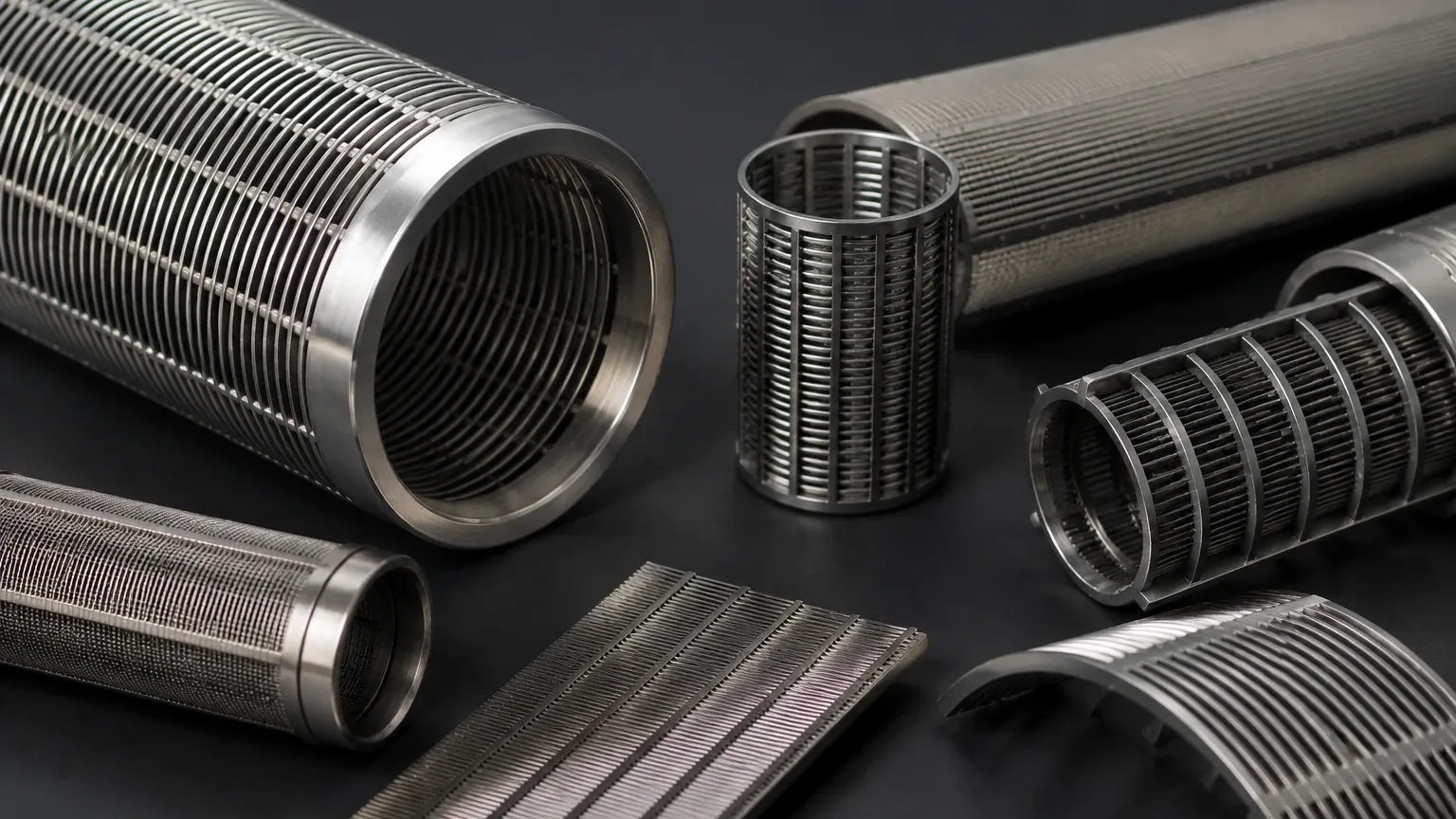
Wedge wire screens are manufactured by resistance-welding V-shaped profile wires onto perpendicular support rods. The "K" designation typically refers to a specific range of profile shapes characterized by their triangular cross-section. The geometry of these wires is designed to create a slot that widens inwardly, which is the foundational principle of non-clogging filtration.
When discussing k wire sizes, we are looking at three primary dimensions:
1. Wire Width (W): The width of the flat or slightly rounded top surface that faces the flow.
2. Wire Height (H): The total depth of the wire from the top surface to the apex of the triangle.
3. Relief Angle: The angle at which the sides of the wire taper away from the slot opening.
The combination of these dimensions determines the mechanical properties of the screen. A larger wire width provides more surface area for wear but reduces the available open area for a given slot size. Conversely, a taller wire height increases the moment of inertia, providing greater resistance to bending and pressure surges.
Technical Specifications and Standard K Wire Sizes
Industrial manufacturers like Kaifil produce a wide array of profile wires to meet diverse application needs. While custom sizes are common in OEM applications, standard K-profile sizes generally fall within specific ranges used across the chemical processing, mining, and water treatment industries.
Common Profile Dimensions
Standard profile wires are often categorized by their width-to-height ratio. For example:
* Small Profiles (e.g., 1.0mm to 1.8mm width): These are typically used for fine filtration where high open area is required and mechanical stress is relatively low. They are common in pharmaceutical and food-grade applications.
* Medium Profiles (e.g., 2.0mm to 3.5mm width): These represent the industry standard for general water treatment, starch production, and pulp and paper processing. They offer a balance between flow capacity and durability.
* Heavy-Duty Profiles (e.g., 4.0mm to 5.5mm+ width): Used in mining, aggregate processing, and heavy industrial vibrating screens where the wire must withstand significant abrasive impact and high material loads.
Tolerances and Precision
In precision filtration, tolerances are as important as the nominal size. High-quality k wire sizes are maintained within strict limits—often +/- 0.05mm or tighter—to ensure that the resulting slot openings remain consistent across the entire surface of the screen. Inconsistent wire widths lead to variable slot sizes, which compromises the "cut point" of the filter and allows oversized particles to pass through the system.
Engineering Considerations for Selecting K Wire Sizes
Selecting the appropriate wire size is not merely a matter of matching a previous specification; it requires a holistic evaluation of the operating environment. Engineers must weigh several competing factors to arrive at the optimal configuration.
1. Structural Integrity and Pressure Differential
The wire profile must be strong enough to withstand the maximum expected differential pressure ($ΔP$) without deforming. As the wire width and height increase, the structural strength of the screen increases exponentially. In high-pressure hydraulic applications or deep-well intake screens, larger wire profiles are necessary to prevent mechanical failure under the weight of the overburden or the force of the pump.
2. Abrasive Wear and Service Life
In applications involving abrasive slurries, such as mineral processing or sand control, the top surface of the wire is gradually eroded. Choosing a wider K wire size provides a larger "wear volume." This means the screen can lose a significant amount of material before the slot geometry is altered to the point of needing replacement. Engineers must calculate the expected wear rate to determine the total cost of ownership (TCO) versus the initial loss in open area.
3. Open Area and Flow Velocity
The "Open Area" is the ratio of the total slot area to the total screen surface area. It is calculated using the formula:
$$Open Area \% = \frac{Slot Width}{Slot Width + Wire Width} \times 100$$
Using a smaller wire width for a fixed slot size increases the open area, which reduces the approach velocity of the fluid. Lower velocities result in lower pressure drops and reduced turbulence, which is critical for sensitive processes like fish diversion or delicate chemical separations.
The Relationship Between Wire Size and Slot Opening
The interaction between the k wire sizes and the slot opening (the gap between wires) defines the filtration capability. In wedge wire design, the slot opening is usually determined by the particle size that needs to be retained. Once the slot opening is fixed, the wire size is chosen to provide the necessary strength.
However, there are technical limits to these combinations. For instance, welding a very large, heavy profile wire onto a support rod while maintaining an extremely fine slot (e.g., 20 microns) is a manufacturing challenge. The heat from the resistance welding process can cause slight distortions in very thin slots if the wire mass is too high. Kaifil’s advanced manufacturing capabilities allow for the precise calibration of these variables, ensuring that even heavy-duty screens maintain high-precision slot tolerances.
Furthermore, the relief angle of the K wire is vital. A steeper angle (wider opening at the back) allows particles that have passed the initial gap to clear the screen easily, preventing "near-size" particles from becoming wedged in the slot. The choice of wire size often influences the maximum relief angle that can be achieved without compromising the base of the wire where it attaches to the support rod.
Material Selection and Environmental Compatibility
While the physical dimensions of k wire sizes are paramount, the material of construction determines how those dimensions hold up over time. Stainless steel is the standard, but the specific grade must be matched to the chemical environment.
* Grade 304/304L: Suitable for general purpose applications where corrosion risk is moderate.
* Grade 316/316L: The preferred choice for pharmaceutical, food and beverage, and marine environments due to its superior resistance to chlorides and organic acids.
* Duplex Stainless Steels: For extreme environments involving high stress and highly corrosive media, duplex alloys provide nearly double the yield strength of standard austenitic grades, allowing for the use of smaller wire profiles without sacrificing structural safety.
When selecting a wire size, engineers must also consider the potential for "corrosion allowance." In aggressive chemical processing, a slightly larger wire profile may be specified to ensure that even after years of surface leaching, the screen retains sufficient mechanical strength.
Customization and OEM Solutions with Kaifil
Every industrial application has unique constraints, which is why a "one size fits all" approach to profile wires is rarely effective. Customization is at the core of efficient filtration. Whether a project requires a non-standard width-to-height ratio to fit a specific housing or a specialized alloy for high-temperature gas filtration, working with an experienced manufacturer is essential.
Kaifil provides comprehensive OEM support, assisting engineers in the selection of Wedge Wire Screens that are tailored to specific operational parameters. This includes:
* Profile Optimization: Designing custom K wire shapes to maximize flow while meeting specific load-bearing requirements.
* Support Rod Integration: Selecting the appropriate support rod size and spacing (pitch) to complement the chosen wire profile, ensuring the entire assembly acts as a rigid, durable unit.
* Precision Manufacturing: Utilizing state-of-the-art welding technology to maintain slot consistency across large surface areas, regardless of the wire size chosen.
By focusing on technical precision and material quality, Kaifil ensures that the selected k wire sizes contribute to a filtration solution that minimizes maintenance downtime and maximizes throughput.
Conclusion: Making Informed Purchasing Decisions
For the technical professional, the selection of k wire sizes is a balancing act between hydraulic performance and mechanical durability. A wire that is too thin may offer excellent flow but fail prematurely under pressure or wear. A wire that is too thick may last for decades but significantly restrict production capacity due to a low open area.
Before finalizing a specification, engineers should confirm:
1. The maximum differential pressure the screen will encounter.
2. The abrasive nature of the media and the required wear life.
3. The minimum required flow rate and maximum allowable pressure drop.
4. The chemical compatibility of the alloy with the process fluid.
By understanding these variables and the technical characteristics of K-profile wires, purchasing teams can procure filtration components that offer the best total value and operational reliability. For detailed technical consultations and to explore the full range of available profiles, engineers are encouraged to review product options and application support to ensure their filtration systems are built to the highest industry standards.
