


Wedge Wire Screen Lateral
In industrial liquid-solid separation and media retention systems, the efficiency of the process often depends on the precision of the underdrain or distribution system. A wedge wire screen lateral is a critical component used in vessels to collect treated liquid or distribute flow across a media bed. These components, often arranged in hub-and-lateral or header-and-lateral configurations, utilize the inherent advantages of Wedge Wire Screens to ensure uniform flow, prevent media migration, and withstand significant mechanical stress.
For engineers and technical professionals, selecting the correct lateral design is not merely a matter of sizing but involves a deep understanding of fluid dynamics, material compatibility, and the specific mechanical requirements of the vessel. This guide explores the technical specifications, engineering considerations, and application-specific advantages of wedge wire laterals in industrial environments.
Understanding the Role of Wedge Wire Screen Laterals
A wedge wire screen lateral serves as the interface between the process fluid and the treatment media, such as ion exchange resins, activated carbon, or sand. Its primary function is twofold: to provide a barrier that prevents the media from escaping the vessel (media migration) and to ensure that the fluid is collected or distributed evenly across the entire cross-section of the tank.
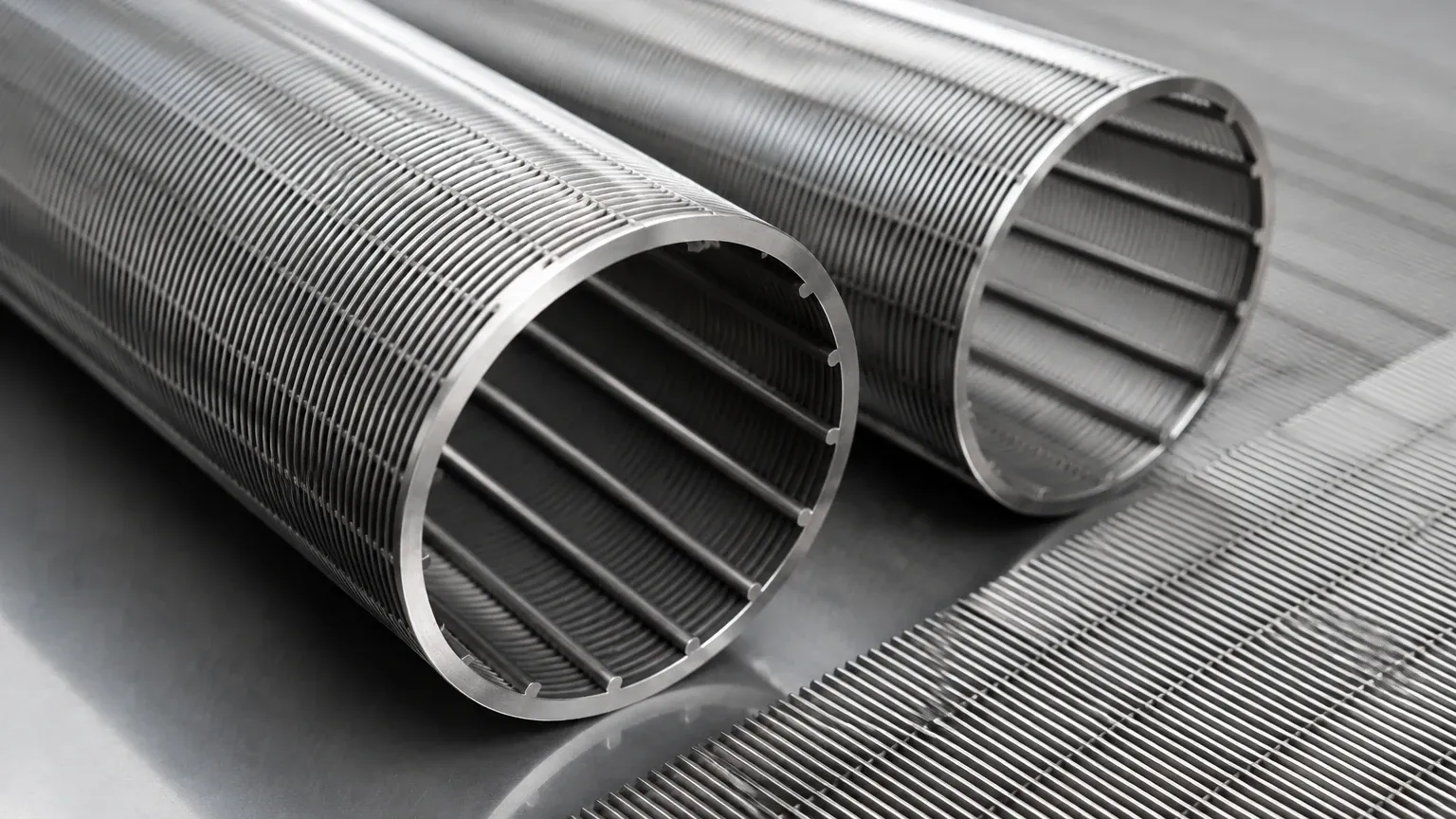
Unlike perforated pipes or mesh-wrapped plastic laterals, wedge wire laterals are constructed from stainless steel V-shaped wires resistance-welded to support rods. This creates a continuous slot that narrows toward the outside and widens toward the inside (or vice versa, depending on flow direction). This geometry is essential for preventing "blinding" or clogging, as any particle that passes through the narrowest point of the slot will easily clear the rest of the screen.
In high-volume industrial applications, such as large-scale water treatment or chemical processing, the structural integrity of the lateral is paramount. The lateral must support the weight of the media bed and resist the hydraulic forces exerted during backwashing or high-velocity flow cycles.
Technical Construction and Engineering Advantages
The performance of a wedge wire screen lateral is defined by its construction parameters. Engineering teams must specify several variables to ensure the component meets the operational demands of the system.
The V-Wire Profile
The V-shaped profile of the wire is the hallmark of wedge wire technology. By providing a two-point contact for particles, it minimizes the risk of entrapment. In a lateral assembly, the wire is typically wrapped around internal support rods. The choice of wire profile (width and height) affects the open area and the mechanical strength of the lateral. A larger wire profile increases durability but may reduce the available open area for a given slot size.
Slot Size Precision
Slot sizes for laterals are often measured in microns or thousandths of an inch. Precision is vital because the slot must be smaller than the smallest particle of the media bed. For example, in ion exchange applications, resins can be as small as 0.3 mm. If the slot size is inconsistent due to poor manufacturing tolerances, resin loss can occur, leading to downstream contamination and expensive media replacement costs.
Structural Support Rods
Internal support rods provide the longitudinal strength for the lateral. In long laterals or those subject to high differential pressures, the frequency and diameter of these rods must be calculated to prevent bending or collapse. For heavy-duty industrial applications, reinforced support structures are often integrated into the lateral design to handle the stresses of backwashing.
Comparing Hub-and-Lateral vs. Header-and-Lateral Systems
The arrangement of laterals within a vessel depends on the vessel's geometry and the flow requirements. There are two primary configurations used in industrial filtration.
Hub-and-Lateral Systems
In a hub-and-lateral configuration, several laterals radiate outward from a central hub, similar to the spokes of a wheel. This design is most commonly used in vertical cylindrical tanks with dished or conical bottoms.
* Flow Dynamics: The hub-and-lateral design is excellent for radial flow distribution. It ensures that fluid reaches the outer edges of the vessel, preventing "dead zones" where media might remain underutilized.
* Installation: These systems are typically easier to install in smaller vessels and can be designed with threaded or flanged connections for quick assembly.
Header-and-Lateral Systems
A header-and-lateral system consists of a main central pipe (the header) with several laterals attached at right angles along its length. This configuration is ideal for large rectangular gravity filters or horizontal cylindrical vessels.
* Scalability: This design can be extended to cover very large surface areas, making it the standard for municipal water treatment and large-scale industrial sand filters.
* Uniformity: By carefully calculating the spacing and diameter of the laterals, engineers can achieve highly uniform flow across a long vessel, which is critical for maintaining a level media bed during backwash cycles.
Critical Selection Criteria: Materials and Flow Rates
When specifying a wedge wire screen lateral, material selection and flow calculations are the two most significant factors impacting the total cost of ownership and system longevity.
Material Compatibility
Stainless steel is the standard material for wedge wire laterals due to its strength and corrosion resistance. However, the specific grade must be chosen based on the chemical environment:
* 304 Stainless Steel: Suitable for general water treatment and non-corrosive industrial fluids.
* 316L Stainless Steel: Preferred for pharmaceutical, food and beverage, and mildly corrosive chemical applications due to its higher molybdenum content, which provides better resistance to pitting and crevice corrosion.
* Duplex and Super Duplex: Reserved for highly aggressive environments, such as seawater desalination or high-chloride chemical processing, where standard austenitic steels would fail prematurely.
Flow Rate and Pressure Drop
The total open area of the lateral determines the pressure drop across the screen. A low open area increases the velocity of the fluid as it passes through the slots, which can lead to turbulence and potential erosion of the media. Engineers typically aim for a design that balances a sufficient open area (usually between 10% and 30%) with the mechanical strength required to support the bed. Calculating the "slot velocity" is a standard part of the design process to ensure the lateral does not become a bottleneck in the system.
Common Operational Risks and Mitigation Strategies
Despite their durability, wedge wire laterals can face challenges in demanding industrial environments. Understanding these risks allows for better system design and maintenance planning.
Mechanical Fatigue and Vibration
In systems with high-frequency backwashing or rapid changes in flow direction, laterals can be subject to mechanical fatigue. If the laterals are not properly supported or if the welding quality is sub-par, the constant cycling can lead to weld failure.
* Mitigation: Ensure that the laterals are designed with a safety factor that accounts for peak hydraulic loads. Using high-quality resistance welding ensures that every contact point between the wire and the rod is structurally sound.
Abrasive Wear
In applications involving sand or other abrasive media, the constant movement of particles during backwashing can wear down the edges of the wedge wire. Over time, this increases the slot width, eventually leading to media migration.
* Mitigation: Selecting a harder alloy or increasing the wire profile thickness can extend the service life in abrasive environments. Regular inspection of the media for "fines" or escaped particles can serve as an early warning sign of lateral wear.
Chemical Fouling and Scaling
In water treatment, calcium carbonate scale or biological growth can accumulate on the screen surface, reducing the open area and increasing differential pressure.
* Mitigation: The V-wire design makes cleaning easier than with woven mesh. Chemical cleaning (CIP) or air scouring during backwash are effective methods for removing scale and biofilm without damaging the stainless steel structure.
Customization and Integration in OEM Filtration Systems
Industrial filtration requirements are rarely "one size fits all." Customization is often necessary to integrate a wedge wire screen lateral into existing infrastructure or new specialized equipment.
Tailored End Fittings
Laterals can be manufactured with various end fittings, including NPT/BSPT threaded ends, flanged connections, or plain ends for socket welding. The choice of fitting depends on the vessel's internal piping and the ease of maintenance required. For systems that require frequent inspection, quick-connect or threaded fittings are often preferred.
Variable Slot Openings
In some advanced applications, it may be beneficial to have variable slot openings along the length of the lateral to compensate for pressure drops within the lateral pipe itself. This ensures that the flow rate is identical at the beginning and the end of the lateral, leading to perfectly uniform media utilization.
Diameter and Length Constraints
Manufacturing capabilities allow for laterals ranging from a few centimeters to several meters in length. The diameter must be chosen to fit within the vessel's manways for installation while providing enough internal volume to handle the required flow without excessive internal friction.
Conclusion: Optimizing Performance with Precision Engineering
The selection of a wedge wire screen lateral is a foundational decision for any media-based filtration or ion exchange system. By utilizing the non-clogging characteristics and structural strength of Wedge Wire Screens, industrial facilities can achieve more reliable flow distribution, reduce media loss, and extend the intervals between maintenance cycles.
When evaluating suppliers, engineers should prioritize manufacturers who can provide detailed technical data on slot tolerances, material certifications, and pressure drop calculations. A well-designed lateral system does more than just hold media; it optimizes the entire hydraulic performance of the vessel, ensuring that the chemical or physical treatment processes occur as efficiently as possible. Whether for a new installation or a retrofit of a failing underdrain system, high-quality stainless steel wedge wire laterals represent a long-term investment in process stability and operational efficiency.
