


Vadodara Wedge Wire Screens Pvt Ltd
In the landscape of industrial filtration and separation, procurement specialists and process engineers often look toward established manufacturing hubs to source critical components. Vadodara, Gujarat, has long been recognized as a center for engineering excellence in India, housing numerous specialized firms such as Vadodara Wedge Wire Screens Pvt Ltd. When searching for high-performance Wedge Wire Screens, understanding the technical nuances, manufacturing standards, and evaluation criteria is essential for ensuring long-term operational efficiency.
This guide examines the technical requirements of wedge wire technology, the strategic considerations when evaluating regional suppliers like Vadodara Wedge Wire Screens Pvt Ltd, and the engineering benchmarks that define a high-quality filtration solution.
Understanding the Technical Architecture of Wedge Wire Screens
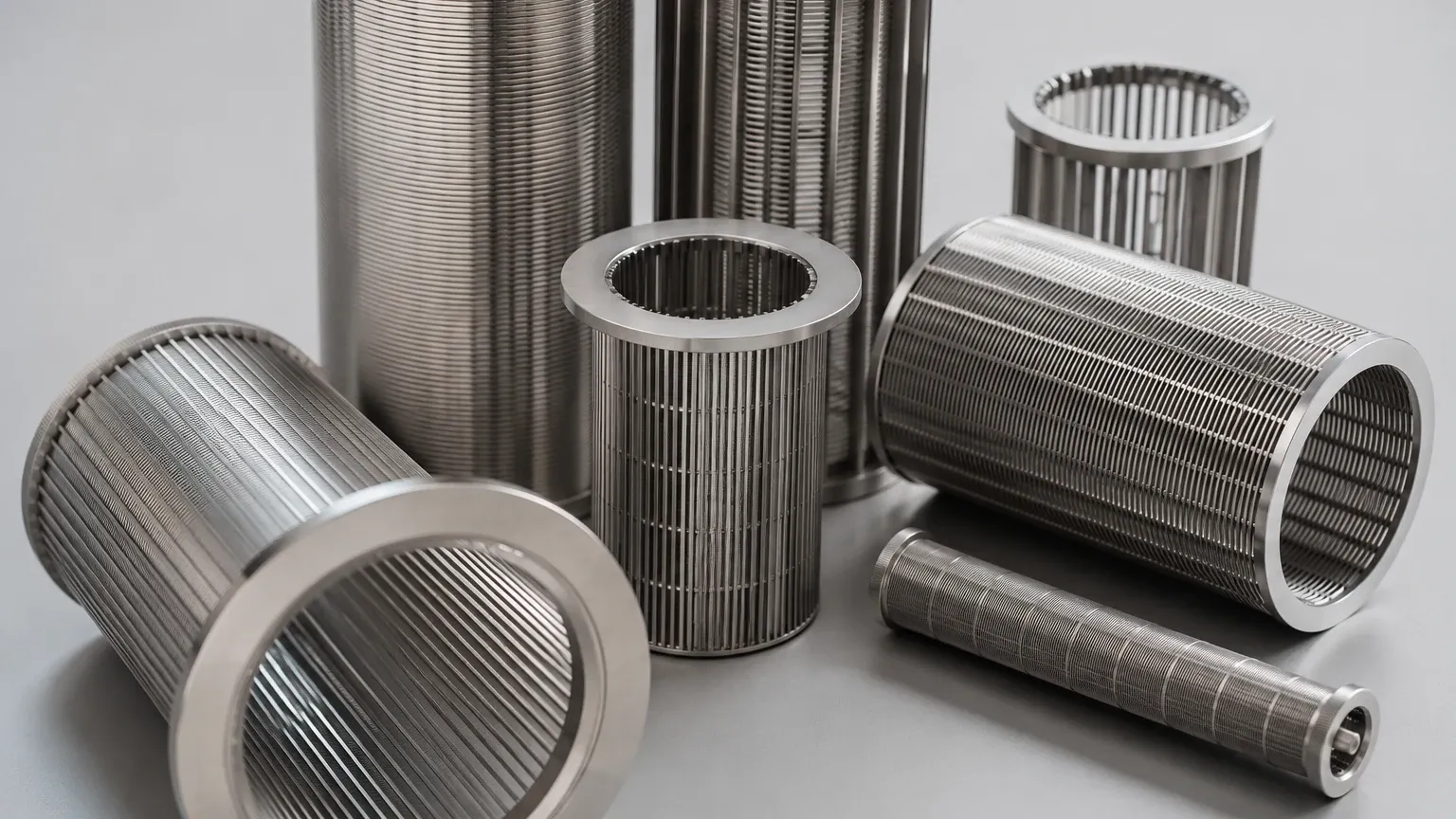
Wedge wire, also known as V-wire or profile wire, is a specialized filtration medium characterized by its unique geometry. Unlike traditional woven wire mesh, wedge wire is constructed by welding V-shaped stainless steel wires onto support rods at each intersection. This creates a continuous slot that widens inwardly, which is a critical design feature for industrial applications.
The V-Profile Advantage
The primary benefit of the V-shaped profile is its resistance to blinding and clogging. Because the slot opening is narrowest at the surface and widens toward the interior, particles that pass through the initial opening are unlikely to become trapped within the screen. This "self-cleaning" property is vital in continuous flow systems where downtime for manual cleaning must be minimized.
Structural Integrity and Support
For engineers evaluating suppliers like Vadodara Wedge Wire Screens Pvt Ltd, the ratio of surface wire to support rod is a key metric. The support rods provide the mechanical strength necessary to withstand high differential pressures. In heavy-duty applications, such as mining or large-scale water intake, the frequency and diameter of these rods must be precisely calculated to prevent structural deformation under load.
Evaluating Suppliers: Regional Expertise vs. Global Standards
When a procurement team identifies a potential partner like Vadodara Wedge Wire Screens Pvt Ltd, the evaluation process must go beyond geographical proximity or basic price points. The technical complexity of wedge wire manufacturing requires a high degree of precision in both welding and slot consistency.
Material Certification and Traceability
Industrial filtration often occurs in corrosive or high-temperature environments. It is imperative to confirm that a manufacturer uses certified stainless steel grades, such as AISI 304, 316L, or specialized Duplex steels. For industries like pharmaceutical or food processing, material traceability (MTRs) is non-negotiable. Engineers should verify that the supplier can provide full documentation for the raw materials used in the fabrication of their screens.
Precision of Slot Openings
The efficiency of a wedge wire screen is determined by the accuracy of its slot openings. Even a minor deviation in slot width can lead to bypass (where oversized particles pass through) or increased pressure drop. When vetting a supplier, ask for their tolerance standards. High-precision manufacturers typically maintain slot tolerances within microns, ensuring that the filtration performance matches the theoretical design specifications.
Key Engineering Considerations for Selection
Selecting the right wedge wire solution involves more than choosing a part number. It requires a deep dive into the specific dynamics of the process fluid and the mechanical requirements of the system.
Open Area Calculations
The "open area" refers to the percentage of the screen surface that allows fluid to pass. A higher open area results in a lower pressure drop and higher flow capacity. However, increasing the open area often requires using thinner profile wires, which may reduce the mechanical strength of the screen. Engineers must balance the need for flow efficiency with the requirement for durability, especially in high-pressure hydraulic or chemical processing applications.
Flow Direction: FOTI vs. FITO
Wedge wire screens can be designed for two primary flow directions:
1. FOTI (Flow Out-To-In): The fluid moves from the exterior of the cylinder to the interior. This is common in well screens and intake filters.
2. FITO (Flow In-To-Out): The fluid moves from the interior to the exterior. This configuration is often used in centrifuge baskets and internal drum filters.
Confirming the flow direction during the design phase is critical, as it dictates the orientation of the V-wire (whether the flat side or the point of the V faces the flow).
Common Risks in Wedge Wire Procurement
While regional hubs like Vadodara offer competitive manufacturing options, there are inherent risks that technical teams must mitigate during the procurement process.
Inconsistent Weld Quality
The strength of a wedge wire screen depends entirely on the integrity of the resistance welds between the profile wire and the support rods. Poor welding can lead to "wire shifting," where the slots become uneven over time, or complete structural failure under pressure surges. It is advisable to request samples or perform a factory audit to inspect the consistency of the welding points.
Surface Finish and Passivation
In chemical and food-grade applications, the surface finish of the stainless steel is paramount. Rough surfaces can harbor bacteria or accelerate localized corrosion (pitting). Ensure that the manufacturer performs proper pickling and passivation to restore the chromium oxide layer after the welding process. For high-purity applications, electropolishing may be required to achieve a mirror-like finish.
Application-Specific Requirements
The utility of Wedge Wire Screens spans across various demanding sectors. Each industry brings unique challenges that a manufacturer must be equipped to handle.
Water Treatment and Intake
In municipal and industrial water treatment, wedge wire is used for intake screens to protect pumps and downstream equipment from debris. These screens must be designed to handle large volumes of water while maintaining low through-slot velocities to protect aquatic life and minimize sediment entrainment.
Chemical and Petrochemical Processing
In these environments, chemical compatibility is the primary concern. Suppliers like Vadodara Wedge Wire Screens Pvt Ltd must be able to work with high-nickel alloys or provide specialized coatings if standard stainless steel is insufficient for the process chemistry. The screens are often used in catalyst bed supports, where they must withstand extreme temperatures and cyclic loading.
Food and Beverage Industry
Hygiene is the priority here. Wedge wire used in mash tuns for brewing or sugar juice filtration must be easily cleanable and free of crevices. The design should facilitate CIP (Clean-In-Place) cycles to ensure that no organic matter remains trapped in the filtration assembly.
Total Cost of Ownership (TCO) vs. Initial Purchase Price
For B2B buyers, the initial quote from a company like Vadodara Wedge Wire Screens Pvt Ltd is only one part of the financial equation. The Total Cost of Ownership (TCO) includes maintenance costs, replacement frequency, and the impact on process energy consumption.
1. Durability: A cheaper screen that requires replacement every six months is significantly more expensive than a high-quality screen that lasts three years.
2. Energy Efficiency: A screen with a precisely engineered open area reduces the load on pumps, leading to lower electricity consumption over the life of the equipment.
3. Downtime: The cost of stopping a production line to replace a failed filter often dwarfs the cost of the filter itself. Investing in precision-manufactured components is a strategy for risk mitigation.
Information to Confirm Before Finalizing a Purchase
Before moving forward with a supplier, engineers and purchasing agents should confirm the following data points to ensure the product meets the application's demands:
* Detailed Technical Drawings: Ensure the drawing specifies wire dimensions, support rod spacing, and overall tolerances.
* Pressure Rating: What is the maximum collapse pressure and burst pressure for the specific screen design?
* Cleaning Compatibility: Is the screen compatible with the intended cleaning methods (e.g., backpulsing, ultrasonic cleaning, or chemical soaking)?
* Lead Times and Logistics: For international projects, consider the impact of shipping times and customs on the project schedule.
Conclusion
Whether sourcing from a regional specialist like Vadodara Wedge Wire Screens Pvt Ltd or a global manufacturer like Kaifil, the success of a filtration system depends on technical rigor and clear communication of requirements. Wedge wire screens are high-precision engineering components that require a deep understanding of fluid dynamics and material science. By focusing on slot accuracy, structural integrity, and material quality, engineers can ensure they select a filtration solution that provides reliable performance in the most demanding industrial environments.
