


Wedge Wire Rotary Screen
In the landscape of industrial liquid-solid separation, the efficiency of a filtration system often determines the overall productivity and cost-effectiveness of a processing plant. Among the various technologies available, the wedge wire rotary screen has emerged as a critical component for continuous, high-volume filtration. These systems rely on the precision engineering of Wedge Wire Screens to provide a robust, non-clogging surface that can withstand the mechanical rigors of rotating operations. For engineers and procurement teams, understanding the technical nuances of these components is essential for optimizing system performance and minimizing long-term maintenance costs.
Understanding the Engineering Principles of Wedge Wire Screens
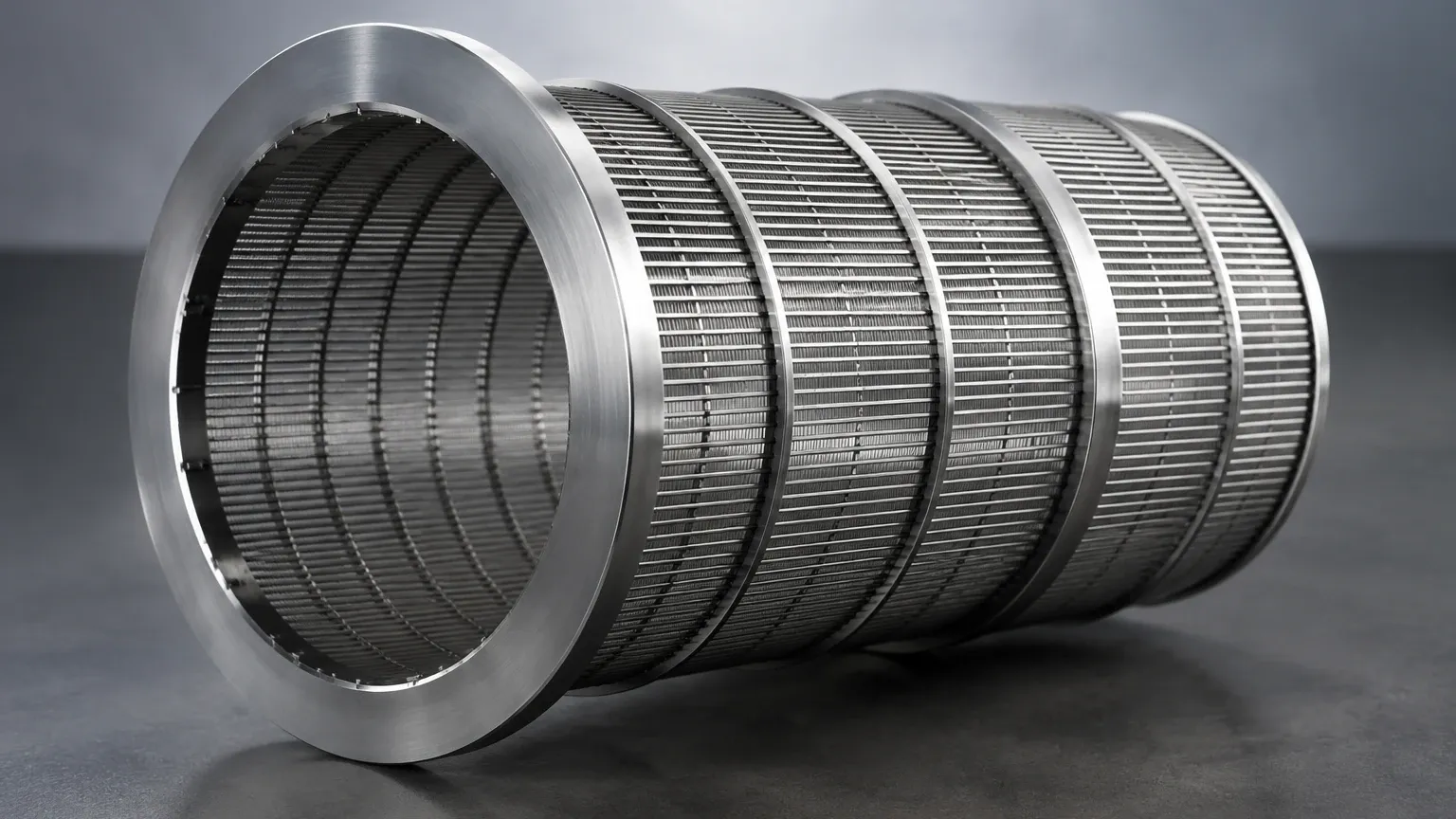
The foundation of any high-performance rotary screen lies in the geometry of the filtration media itself. Unlike standard woven wire mesh, which consists of intersecting wires that can trap particles at the junction points, wedge wire is constructed using a series of V-shaped profile wires. These wires are resistance-welded onto support rods at precise intervals.
The V-shaped profile is the defining characteristic of wedge wire screens. This design creates a slot that widens inwardly. When a solid particle passes through the narrowest point of the slot—the surface—it immediately moves into a larger space, significantly reducing the likelihood of "blinding" or clogging. For industrial applications where downtime for manual cleaning is a major cost factor, this self-cleaning property is a primary engineering advantage.
Furthermore, the structural integrity of these screens is superior to many other media. Because the profile wires and support rods are fused at every intersection through controlled welding, the resulting cylinder is exceptionally rigid. This rigidity is crucial in a rotary screen application, where the drum must maintain its concentricity under the weight of the slurry and the torque of the drive system.
The Mechanics of the Wedge Wire Rotary Screen
A wedge wire rotary screen operates on a relatively simple yet highly effective mechanical principle. The system typically consists of a large, horizontal or slightly inclined cylindrical drum made of wedge wire. As the drum rotates, the influent (the liquid containing solids) is introduced either to the interior or the exterior of the drum, depending on the specific machine design.
Internal vs. External Feed Systems
In an internal feed system, the slurry enters the center of the rotating drum. The liquid passes through the wedge wire slots by gravity or centrifugal force, while the solids are retained on the inner surface. As the drum turns, internal flights or the natural rotation of the cylinder move the solids toward the discharge end.
Conversely, in an external feed system, the liquid is poured onto the outside of the rotating drum. The filtered liquid passes into the center of the drum and is collected, while the solids remain on the outer surface and are typically removed by a fixed doctor blade or scraper. The choice between these designs often depends on the solids loading and the specific characteristics of the waste stream, such as the presence of fibrous materials or fats.
Flow Dynamics and Slot Orientation
For a wedge wire rotary screen to function optimally, the orientation of the profile wires relative to the flow is a critical design consideration. In most rotary applications, the profile wires run parallel to the axis of the drum (axially) or wrap around the circumference (radially). Radial wrapping is more common for rotary drums as it provides greater structural hoop strength and allows for easier mechanical scraping of the surface. Engineers must specify the "flow direction"—either from out-to-in (FOTI) or in-to-out (FITO)—to ensure the V-profile is oriented correctly to facilitate the non-clogging effect.
Material Selection and Corrosion Resistance
Industrial filtration environments are frequently harsh, involving corrosive chemicals, extreme temperatures, or abrasive particles. Consequently, the material used to manufacture the wedge wire rotary screen is as important as the mechanical design. Stainless steel is the industry standard due to its balance of strength and chemical resistance.
1. Grade 304 Stainless Steel: This is the most common choice for general industrial applications, including food processing and municipal wastewater. It offers excellent mechanical properties and good resistance to atmospheric corrosion.
2. Grade 316L Stainless Steel: For applications involving chlorides, acids, or high-salinity environments (such as chemical processing or marine applications), 316L is preferred. The addition of molybdenum provides enhanced resistance to pitting and crevice corrosion.
3. Duplex and Super Duplex: In extremely aggressive environments, such as high-temperature chemical reactors or specialized mineral processing, duplex stainless steels may be required to prevent stress corrosion cracking.
Beyond the base alloy, surface treatments such as passivation or electropolishing can be applied. Electropolishing, in particular, smooths the microscopic peaks and valleys of the metal surface, further reducing the adhesion of sticky solids and improving the overall hygiene of the filter in food and pharmaceutical applications.
Key Performance Indicators for Rotary Filtration Systems
When evaluating a wedge wire rotary screen for a specific project, engineers must focus on several technical parameters that dictate the system's throughput and efficiency.
Slot Opening Precision
Slot openings in wedge wire can range from as small as 20 microns up to several millimeters. The precision of these slots is vital. If the slots are inconsistent, the screen will either allow oversized particles to pass through or will experience premature clogging in areas where the slots are too narrow. High-quality manufacturing processes ensure that the slot width is maintained across the entire surface area of the drum.
Open Area Percentage
The "open area" refers to the ratio of the total slot area to the total surface area of the screen. A higher open area results in lower pressure drops and higher flow capacities. However, there is a trade-off: increasing the open area usually requires using thinner profile wires or wider slot widths, which can impact the mechanical strength and the filtration fineness. Engineering teams must calculate the optimal balance to meet flow requirements without compromising the drum's lifespan.
Mechanical Load and Torque Resistance
A rotary screen is a dynamic component. It must withstand the weight of the liquid, the impact of the influent, and the mechanical stress of the cleaning scrapers. In heavy-duty industrial applications, the support rods must be spaced closely enough to prevent the profile wires from deforming under pressure. Deformed wires lead to inconsistent slot widths and eventual mechanical failure.
Customization Options for Specific Industrial Applications
No two industrial filtration requirements are identical. Kaifil specializes in providing customized Wedge Wire Screens tailored to specific OEM requirements. Customization often involves more than just selecting a slot size; it encompasses the entire mechanical integration of the screen into the larger system.
* Reinforcement Rings: For large-diameter rotary drums, heavy-duty reinforcement rings are often welded to the exterior to ensure the drum remains perfectly circular during rotation.
* Flanges and Fittings: Custom end-flanges, mounting brackets, and drive shafts can be integrated directly into the screen assembly to simplify installation in existing machinery.
* Variable Slot Widths: In some specialized processes, a single rotary drum may feature different slot widths along its length to achieve staged filtration or thickening of the solids.
* Internal Flights and Baffles: For internal feed systems, the addition of spiral flights can help control the residence time of the solids within the drum, ensuring maximum dewatering before discharge.
Maintenance, Cleaning, and Operational Longevity
One of the primary reasons engineers specify a wedge wire rotary screen is the reduction in maintenance requirements compared to other filtration media. However, "low maintenance" does not mean "no maintenance." To ensure a long service life, several operational factors must be managed.
Cleaning Mechanisms
While the V-wire profile is inherently resistant to clogging, certain substances—such as oils, fats, or biological growth—can eventually build up on the surface. Most rotary screen systems incorporate a spray bar that uses high-pressure water to backwash the screen from the opposite side of the flow. In some cases, mechanical brushes or scrapers are used. Because wedge wire is made of solid metal, it can withstand the abrasive action of these cleaning tools far better than synthetic mesh.
Wear and Abrasion
In applications like mineral processing or sand removal, the abrasive nature of the solids will eventually wear down the profile wires. As the wires wear, the slot width at the surface will slowly increase. Monitoring the filtrate quality is the most effective way to determine when a screen has reached the end of its functional life. Because of the thickness of the profile wires used in wedge wire construction, these screens typically last significantly longer than thin-wire mesh alternatives.
Procurement Considerations and Technical Verification
Before finalizing a purchase order for a wedge wire rotary screen, technical professionals should confirm several key details with the manufacturer to ensure the component is fit for purpose.
1. Slot Tolerance: Request the manufacturing tolerance for the slot openings. For precision applications, a tight tolerance is essential for process consistency.
2. Weld Integrity: Inquire about the welding technology used. Resistance welding provides the strongest bond between the wire and the support rod, which is critical for the structural integrity of a rotating drum.
3. Material Certification: Ensure the manufacturer provides material test reports (MTRs) to verify the grade of stainless steel, especially if the application involves corrosive chemicals.
4. Total Cost of Ownership (TCO): While wedge wire may have a higher initial capital cost than perforated plate or woven mesh, the TCO is often lower due to reduced downtime, fewer replacement cycles, and lower energy consumption resulting from lower pressure drops.
By focusing on these technical specifications and working with an experienced manufacturer like Kaifil, engineering teams can implement filtration solutions that provide reliable, long-term performance in the most demanding industrial environments. Whether the application is in food processing, chemical manufacturing, or water treatment, the wedge wire rotary screen remains a gold standard for efficient liquid-solid separation.
