


Pro Slot Wedge Wire Screens
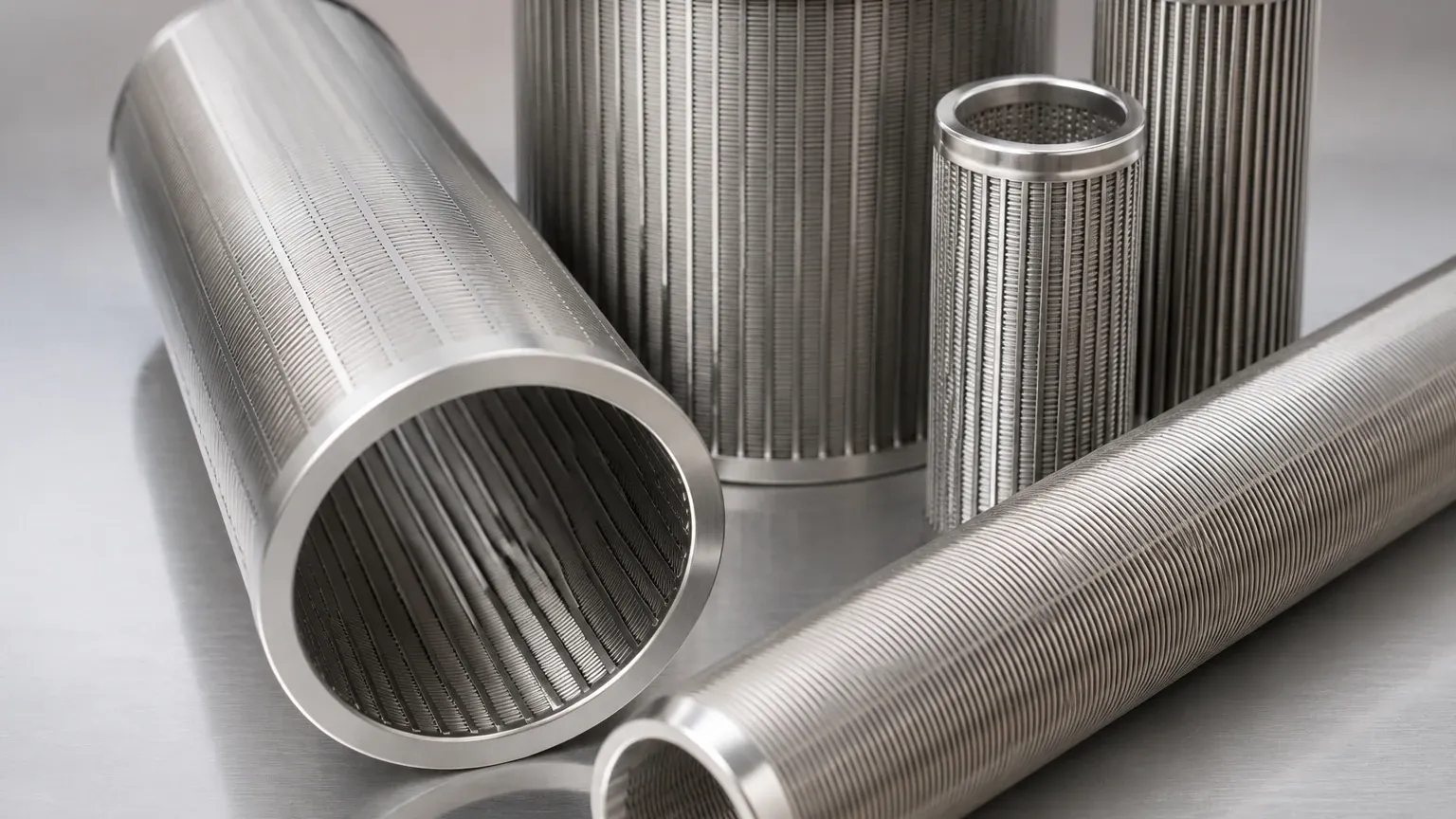
In the landscape of industrial filtration and separation, the efficiency of a process often hinges on the precision of the screening media. Pro slot wedge wire screens represent a specialized category of high-performance filtration components designed to address the challenges of high-volume flow, particle retention accuracy, and mechanical durability. Unlike standard woven wire mesh, these screens utilize a unique V-shaped profile wire that is resistance-welded onto support rods, creating a continuous slot that minimizes clogging and maximizes throughput.
For engineers and procurement teams, selecting the right Wedge Wire Screens involves a deep understanding of hydraulic dynamics, material science, and mechanical stress. This guide examines the technical nuances of pro slot wedge wire screens, providing the factual foundation necessary for informed decision-making in demanding industrial environments.
Engineering Fundamentals of Pro Slot Wedge Wire Screens
The fundamental advantage of pro slot wedge wire screens lies in their geometric configuration. The screen is composed of two primary elements: the surface profile wire and the support rod. The profile wire is typically V-shaped or wedge-shaped, which creates a slot that widens inwardly.
The Non-Clogging V-Wire Design
One of the most critical engineering features is the two-point contact system. In traditional mesh, particles can easily become wedged between the wires, leading to "blinding" or clogging. With the V-shaped profile used in pro slot designs, any particle that passes through the narrowest point of the slot (the aperture) will continue to move freely through the widening gap. This self-cleaning characteristic is essential for continuous processes where downtime for manual cleaning is not feasible.
Precision Resistance Welding
The manufacturing of these screens involves advanced resistance welding techniques. Each intersection of the profile wire and the support rod is welded with high precision to ensure structural integrity. This process allows for extremely tight tolerances in slot widths, which is the defining characteristic of "pro slot" quality. High-precision slotting ensures that the filtration cutoff is consistent across the entire surface area, preventing the bypass of oversized contaminants.
Material Selection and Chemical Compatibility
Industrial filtration often occurs in aggressive environments involving corrosive chemicals, extreme temperatures, or high pressures. Therefore, material selection is a primary consideration in the specification of pro slot wedge wire screens.
1. Stainless Steel 304: The standard choice for general industrial applications, offering good corrosion resistance and mechanical strength at a cost-effective price point.
2. Stainless Steel 316L: Preferred for pharmaceutical, food and beverage, and marine applications. The addition of molybdenum provides superior resistance to chlorides and pitting corrosion.
3. Duplex Stainless Steels: For high-stress and highly corrosive environments, such as seawater filtration or acidic chemical processing, duplex alloys offer nearly double the yield strength of austenitic steels and exceptional resistance to stress corrosion cracking.
4. Specialty Alloys: In extreme cases, materials like Monel, Hastelloy, or Titanium may be used to withstand specific chemical profiles that would degrade standard stainless steels.
Engineers must confirm the pH levels, temperature ranges, and chemical concentrations of the process fluid before finalizing the material grade to ensure the longevity of the filtration component.
Key Performance Indicators (KPIs) for Industrial Filtration
When evaluating pro slot wedge wire screens for a specific application, several technical metrics must be calculated to ensure the screen meets the operational requirements of the system.
Effective Open Area
The open area is the ratio of the slot width to the sum of the slot width and the wire width. A higher open area results in lower entrance velocities and reduced pressure drops. Pro slot designs are engineered to maximize this area without compromising the structural rigidity of the screen. For high-capacity water intake or wastewater treatment, maximizing the open area is critical to reducing energy consumption in pumping systems.
Slot Width Precision
In precision filtration, the slot width (measured in microns or millimeters) determines the filtration rating. Pro slot manufacturing allows for slot openings as small as 20 microns. Maintaining a uniform slot width across the entire screen is vital; even a minor deviation can lead to significant downstream contamination.
Collapse Strength and Burst Pressure
Because wedge wire screens often operate under high differential pressures, the mechanical design must account for the forces exerted by the fluid. The spacing and diameter of the support rods determine the screen's resistance to collapse or bursting. Engineers use finite element analysis (FEA) to verify that the screen can withstand the maximum expected pressure surges during startup or filter cake buildup.
Customization and Structural Configurations
Pro slot wedge wire screens are rarely "off-the-shelf" products. Their efficacy depends on how well they are integrated into the existing machinery. Customization options typically fall into several categories:
Flow Direction (FITO vs. FOTI)
* Flow In-To-Out (FITO): The filtration surface is on the inside of the cylinder. This is common in screw press separators and internal drum filters.
* Flow Out-To-In (FOTI): The filtration surface is on the outside. This is the standard configuration for well screens, intake screens, and most cartridge-style filters.
Radial vs. Axial Slot Orientation
Depending on the mechanical action of the system—such as a scraper blade or a rotating brush—the slots can be oriented parallel to the axis (axial) or perpendicular to it (radial). For example, in systems using mechanical cleaning scrapers, an axial slot orientation prevents the scraper from catching on the wires, thereby extending the life of both the screen and the cleaning mechanism.
End Fittings and Reinforcements
Screens can be supplied with various end treatments, including flanges, threaded fittings, weld rings, or reinforced bands. These components must be manufactured to the same exacting standards as the screen itself to ensure a leak-proof seal within the filter housing.
Application-Specific Considerations
The versatility of pro slot wedge wire screens allows them to be used across diverse industries, each with unique requirements.
Food and Beverage Processing
In this sector, hygiene is paramount. Screens must be designed with smooth surfaces and minimal crevices to prevent bacterial growth. Electropolishing is often used as a post-manufacturing treatment to achieve a high-quality surface finish (Ra < 0.8 µm) that meets sanitary standards. Applications include mashing tuns in brewing, juice extraction, and dairy processing.
Chemical and Petrochemical Refining
These industries require screens that can handle high temperatures and abrasive catalysts. Pro slot screens are used in reactor internals, such as center pipes and scale traps, where they must maintain their shape under the weight of catalyst beds and the force of high-velocity gas or liquid flows.
Mining and Mineral Processing
Abrasion resistance is the primary concern here. The profile wires may be treated with specialized coatings or manufactured from harder alloys to withstand the constant impact of ore and slurry. Pro slot screens are commonly used in vibrating sifters, dewatering presses, and centrifugal separators.
Total Cost of Ownership and Maintenance
While the initial capital expenditure for high-quality pro slot wedge wire screens may be higher than for disposable media or standard woven mesh, the total cost of ownership (TCO) is often significantly lower.
Durability and Longevity
The robust welded construction of wedge wire means these screens can last for years, if not decades, in environments where other media would fail within months. This reduces the frequency of replacement and the associated labor and shipping costs.
Cleaning and Maintenance Cycles
The non-clogging nature of the V-wire profile simplifies the cleaning process. Most systems can be cleaned in-situ using backwashing (reversing the flow) or mechanical scraping. This minimizes downtime and eliminates the need for expensive chemical cleaning agents in many cases. When manual cleaning is required, the smooth surface of the wedge wire allows for rapid debris removal.
Energy Efficiency
By maintaining a lower pressure drop over the life of the filter, pro slot screens reduce the load on pumps and compressors. Over the lifespan of a large-scale industrial facility, the energy savings can be substantial, contributing to both cost reduction and sustainability goals.
Conclusion: Confirming Technical Requirements
Before proceeding with the procurement of Wedge Wire Screens, engineering teams should confirm several key data points with the manufacturer:
* Exact Slot Width: What is the required filtration rating and the allowable tolerance?
* Mechanical Load: What is the maximum differential pressure the screen will encounter?
* Fluid Chemistry: Are there trace elements that could cause stress corrosion cracking or accelerated wear?
* Interface Dimensions: Are the end fittings compatible with existing housings or piping?
By focusing on these factual engineering parameters, organizations can ensure they implement a filtration solution that provides reliable performance and long-term value. Pro slot wedge wire screens offer the precision and durability required for modern industrial processes, provided they are correctly specified and manufactured to high standards.
