


Wedge Wire Screen Application
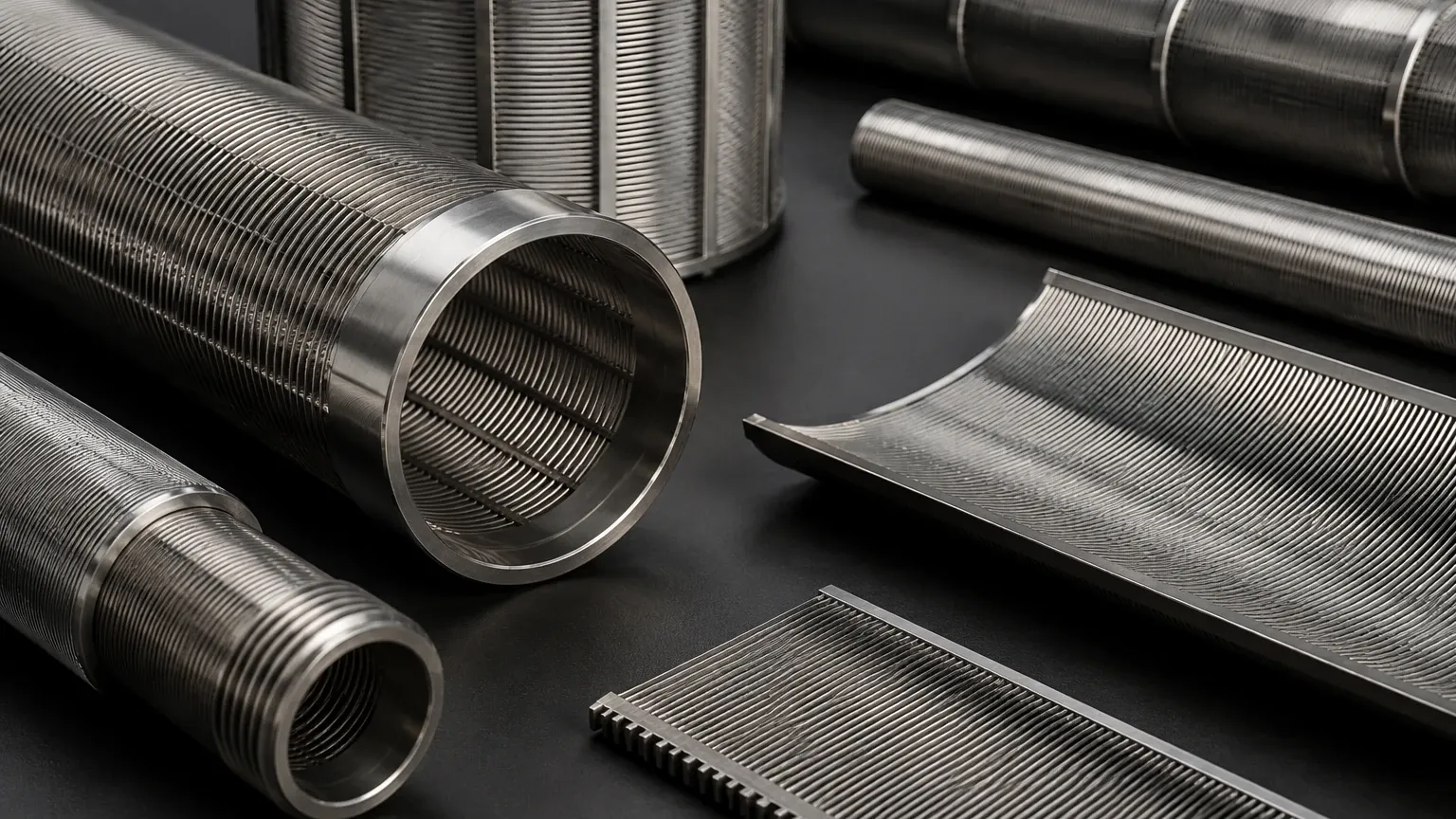
In the landscape of industrial filtration and separation, the wedge wire screen stands as a critical component for processes requiring high precision, structural durability, and minimal maintenance. Engineered from V-shaped stainless steel wires resistance-welded to support rods, these screens are designed to overcome the common limitations of woven wire mesh and perforated plates. Understanding the nuances of wedge wire screen application is essential for engineers and procurement teams tasked with optimizing flow rates, ensuring particle retention, and extending the service life of filtration equipment.
As a specialized manufacturer, Kaifil provides custom stainless steel filtration solutions that address the rigorous demands of modern industry. The effectiveness of a wedge wire screen is not merely a product of its material composition but is deeply rooted in its mechanical design, which provides a unique combination of high open area and mechanical strength.
Engineering Fundamentals of Wedge Wire Screens
The core advantage of wedge wire technology lies in the geometry of the "V" profile wire. Unlike traditional mesh, where particles can easily become wedged between horizontal and vertical wires, the wedge wire profile creates a two-point contact system. As particles pass through the slot, the widening gap behind the narrowest point allows them to pass freely, significantly reducing the risk of blinding or clogging.
The Non-Clogging Design
From an engineering perspective, the continuous slot formed by the V-shaped wires ensures that only two points of contact exist for any particle attempting to pass through the screen. If a particle is small enough to enter the slot, it will continue through without getting stuck, as the space between the wires widens in the direction of the flow. This self-cleaning property is vital for applications involving viscous fluids or high concentrations of solids.
Structural Integrity and Precision
Wedge wire screens are fabricated using advanced resistance welding, where each intersection of the profile wire and the support rod is fused. This creates a rigid, single-piece construction capable of withstanding high pressure differentials and heavy loads. Unlike woven mesh, which may shift or fray under stress, wedge wire maintains a consistent slot width, ensuring reliable filtration accuracy over long operational cycles.
Primary Industries for Wedge Wire Screen Application
The versatility of this technology allows for a broad wedge wire screen application spectrum across diverse industrial sectors. Each industry presents unique challenges, from corrosive chemical environments to strict hygienic standards in food processing.
Water and Wastewater Treatment
In municipal and industrial water treatment, wedge wire screens are used for intake, dewatering, and filtration. They are frequently employed in intake systems to protect pumps and downstream equipment from debris while maintaining low approach velocities to protect aquatic life. Furthermore, in ion exchange and carbon filtration systems, wedge wire resin traps prevent the loss of expensive media in the event of a primary filter failure.
Food and Beverage Processing
For the food and beverage industry, hygiene and cleanability are paramount. Wedge wire screens are used in sugar refining, malting, and fruit juice extraction. In breweries, they serve as the foundation for lauter tun screens, where the precise slot width allows for efficient wort separation while supporting the weight of the grain bed. The smooth surface of the stainless steel wires facilitates Clean-in-Place (CIP) procedures, ensuring compliance with food safety regulations.
Chemical and Petrochemical Sectors
Chemical processing often involves aggressive media and high temperatures. Wedge wire screens are utilized as reactor internals, catalyst support grids, and distributor laterals. Their ability to be manufactured from high-grade alloys like 316L or Duplex stainless steel ensures resistance to pitting and stress corrosion cracking. In petrochemical refineries, they are essential for separating catalysts from hydrocarbon streams, where mechanical failure could lead to catastrophic downtime.
Mining and Mineral Processing
Dewatering and sizing in the mining industry require screens that can handle abrasive materials and high-volume throughput. Wedge wire vibrating screens and sieve bends are used to separate liquids from solids in coal, iron ore, and potash processing. The durability of the welded construction ensures that the screens can withstand the constant impact and abrasion inherent in these environments.
Key Technical Evaluation Criteria
When selecting Wedge Wire Screens for a specific project, engineers must evaluate several technical parameters to ensure the component meets the application's performance requirements.
Slot Width and Tolerance
The slot width is the most critical dimension, determining the size of the particles to be retained. Precision manufacturing allows for slot widths as small as 20 microns. It is essential to confirm the tolerance of these slots, as variations can lead to bypass of oversized particles or premature clogging. For critical applications, such as pharmaceutical filtration, high-precision slot consistency is mandatory.
Open Area Calculations
The open area is the ratio of the total slot area to the total screen surface area. A higher open area results in lower pressure drops and higher flow capacities. However, increasing the open area often requires using thinner wires or wider slots, which may compromise the mechanical strength of the screen. Engineers must find the optimal balance between hydraulic performance and structural rigidity.
Flow Direction and Orientation
Wedge wire screens can be designed for flow from the outside in (FOTI) or from the inside out (FITO). The orientation of the V-profile wire relative to the support rods determines whether the flat surface of the screen is on the interior or exterior. This choice is dictated by the cleaning mechanism (e.g., internal scrapers vs. external backwashing) and the physical constraints of the housing.
Material Selection and Corrosion Resistance
Material selection is a cornerstone of successful wedge wire screen application. While standard 304 stainless steel is suitable for many general-purpose applications, more demanding environments require specialized alloys.
* Grade 304 Stainless Steel: Suitable for fresh water and basic industrial applications where corrosion is not a primary concern.
* Grade 316L Stainless Steel: Contains molybdenum, providing enhanced resistance to chlorides and organic acids. This is the standard for food, pharmaceutical, and many chemical applications.
* Duplex and Super Duplex: Used in seawater or highly acidic environments where high mechanical strength and exceptional corrosion resistance are required.
* Surface Treatments: Beyond the base alloy, treatments such as electropolishing or passivating can further enhance corrosion resistance and reduce the adhesion of organic materials, which is particularly useful in wastewater and food processing.
Installation and Operational Best Practices
Proper installation and operation are as important as the quality of the screen itself. Even the most robust wedge wire screen can fail if subjected to conditions beyond its design limits.
Managing Differential Pressure
Every filtration system experiences a pressure drop across the media. As solids accumulate, the differential pressure increases. It is vital to monitor this pressure and initiate cleaning cycles before the limit is reached. Exceeding the maximum design differential pressure can lead to mechanical deformation of the screen or "breakthrough," where particles are forced through the slots.
Cleaning and Maintenance Cycles
One of the primary benefits of wedge wire is its ease of cleaning. Methods include:
1. Backwashing: Reversing the flow of fluid to dislodge accumulated solids.
2. Mechanical Scraping: Using a brush or blade to physically remove debris from the screen surface.
3. Ultrasonic Cleaning: For fine-slot screens used in laboratory or high-precision industrial settings.
Establishing a regular maintenance schedule based on the specific solids loading and flow characteristics of the application will prevent permanent fouling and extend the lifecycle of the component.
Addressing Common Risks in Industrial Filtration
In any wedge wire screen application, certain risks must be mitigated through careful engineering and material selection.
Abrasion and Wear
In industries like mining or pulp and paper, abrasive particles can wear down the edges of the V-profile wires over time. This wear increases the slot width, leading to a loss of filtration accuracy. Using hardened alloys or thicker profile wires can mitigate this risk, but periodic inspection is necessary to ensure the screen still meets its original specifications.
Fatigue and Vibration
In applications involving high-frequency vibrations or rapid pressure pulsations, the welds between the profile wires and support rods are subject to fatigue. Ensuring that the screen is properly supported within its housing and that the support rod spacing is sufficient for the load is critical to preventing structural failure.
Chemical Incompatibility
Selecting the wrong alloy for a chemical stream can lead to rapid failure through localized corrosion. It is essential to provide a full chemical profile of the process fluid, including temperature and concentration, to the manufacturer during the design phase.
Total Cost of Ownership Considerations
While wedge wire screens often carry a higher initial purchase price compared to woven mesh or disposable cartridges, their total cost of ownership (TCO) is typically much lower. The durability of the stainless steel construction and the ability to clean and reuse the screen reduce the frequency of replacements and the costs associated with downtime.
When evaluating TCO, engineers should consider:
* Reduced Downtime: Longer intervals between cleaning and fewer replacements.
* Energy Savings: Lower pressure drops resulting from high open areas reduce the energy requirements for pumping.
* Product Recovery: In applications like catalyst recovery or mineral processing, the precision of wedge wire ensures maximum recovery of valuable materials.
Conclusion: Selecting the Right Solution
The successful implementation of a wedge wire screen application requires a deep understanding of both the process requirements and the mechanical capabilities of the filtration media. From the initial material selection to the final determination of slot tolerances and support structures, every detail impacts the efficiency and reliability of the industrial process.
Kaifil specializes in bridging the gap between complex engineering requirements and high-quality manufacturing. By providing customized stainless steel filtration components, we ensure that our customers receive solutions tailored to their specific operational challenges. Whether you are designing a new system or looking to optimize an existing process, careful consideration of the technical factors outlined in this guide will lead to superior filtration performance.
For technical specifications and to explore how custom-engineered solutions can benefit your specific project, you can Review product options and application support to find the most effective configuration for your industrial needs.
