


Wedge Wire Screen Intake
In industrial water sourcing, the efficiency and reliability of an intake system are fundamental to the operation of power plants, desalination facilities, and municipal water treatment works. A wedge wire screen intake serves as a passive filtration barrier, designed to extract water from surface sources—such as rivers, lakes, and oceans—while minimizing the impact on the surrounding environment and protecting downstream equipment from debris.
Unlike active intake systems that require mechanical raking or continuous movement, wedge wire screens rely on their geometric design and hydraulic properties to maintain flow. For engineers and procurement teams, selecting the right intake system requires a deep understanding of fluid dynamics, material science, and the specific operational constraints of the site.
Understanding the Mechanics of Wedge Wire Screens
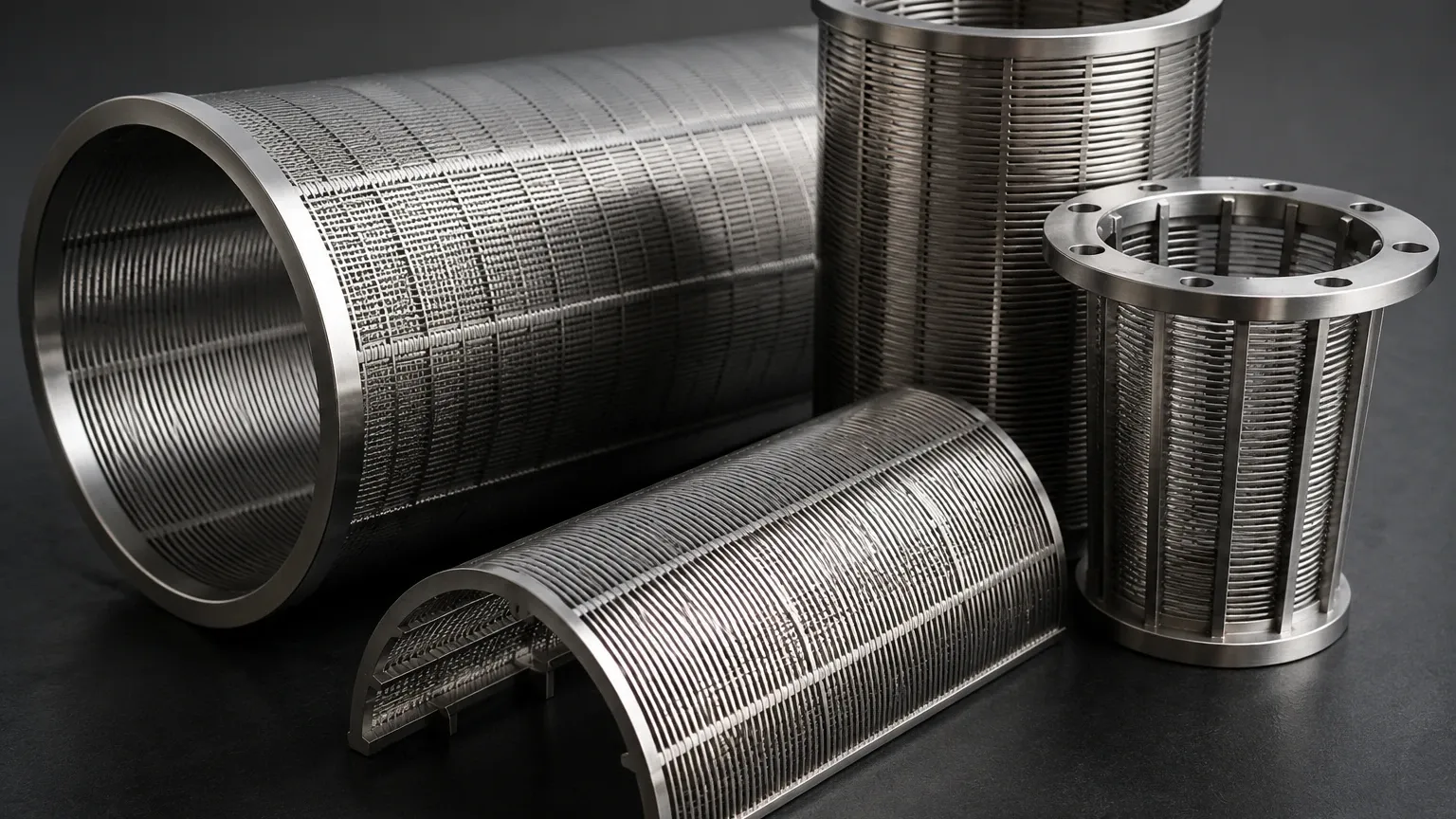
The core of any Wedge Wire Screens system is the V-shaped profile wire. These wires are resistance-welded onto support rods at precise intervals to create a continuous slot. This design is inherently superior to traditional perforated plates or woven wire mesh for intake applications due to several technical factors.
Non-Clogging Geometry
The V-shaped profile creates a slot that widens inwardly. This means that any particle small enough to pass through the narrowest point of the slot (the surface) will continue through the screen without becoming wedged. In contrast, square or round openings in other filter types often trap near-sized particles, leading to rapid blinding and increased pressure drops.
High Open Area
Because the support rods are located behind the profile wires, the majority of the screen surface remains open for fluid passage. A high open area is critical for maintaining low entrance velocities, which is a primary requirement for both environmental compliance and mechanical longevity.
Key Engineering Considerations for Wedge Wire Screen Intake Systems
When designing a wedge wire screen intake, engineers must balance hydraulic performance with structural integrity. The following parameters are critical during the specification phase:
Through-Slot Velocity and Impingement
One of the most significant advantages of a passive wedge wire intake is its ability to meet strict environmental regulations regarding fish and aquatic life protection. By distributing the intake flow over a large surface area, the "through-slot velocity" can be kept extremely low—typically below 0.15 meters per second (0.5 feet per second). This low velocity prevents the impingement of small organisms and debris against the screen surface, allowing them to swim away or be carried past by the natural ambient current.
Slot Width Precision
Slot widths are typically measured in microns or millimeters. For intake applications, slot sizes usually range from 1mm to 10mm, depending on the level of protection required for downstream pumps and the local regulatory requirements for biota protection. Precision in manufacturing is vital; inconsistent slot widths can lead to localized high-velocity zones, which increase the risk of clogging and environmental non-compliance.
Hydrodynamic Loading
Intake screens located in open water bodies must withstand significant hydrodynamic forces, including wave action, river currents, and potential impacts from large floating debris. The structural design must account for these external loads, often requiring reinforced support rods and heavy-duty end caps to ensure the screen does not collapse or deform under pressure.
Material Selection for Industrial and Marine Environments
The longevity of a wedge wire screen intake is heavily dependent on the materials used in its construction. At Kaifil, we emphasize the use of high-grade alloys to combat the specific corrosive and erosive challenges of different water sources.
1. Stainless Steel 304/304L: Suitable for freshwater applications where corrosion risks are relatively low. It offers excellent structural strength and cost-effectiveness.
2. Stainless Steel 316L: The industry standard for most industrial and brackish water environments. The addition of molybdenum provides enhanced resistance to pitting and crevice corrosion.
3. Duplex and Super Duplex Stainless Steels: For seawater intakes and desalination plants, Duplex alloys (such as 2205 or 2507) are preferred. These materials offer superior resistance to chloride-induced stress corrosion cracking and have higher yield strengths than standard austenitic steels.
4. Copper-Nickel Alloys: In environments where biofouling (the growth of algae, mussels, and barnacles) is a major concern, copper-nickel alloys can be used for their natural antimicrobial properties, though they are generally more expensive and less structurally robust than stainless steel.
Customization Options and OEM Capabilities
No two intake sites are identical. Factors such as water depth, current direction, and debris load necessitate customized engineering. As a specialized manufacturer, Kaifil provides tailored solutions that go beyond standard catalog dimensions.
Configuration Varieties
* T-Intake Screens: Feature two screen cylinders mounted on a central tee-piece, providing a balanced flow and a large surface area in a compact footprint.
* Half-Intake Screens: Designed for shallow water applications where a full cylinder would be exposed to air or buried in the silt.
* Drum Screens: Often used in vertical orientations or within intake towers.
Connection and Interface
Customization also extends to how the screen interfaces with the piping system. Whether the project requires flanged connections, slip-on couplings, or specialized threading, the intake must be designed for ease of installation by commercial divers or remote-operated vehicles (ROVs).
Maintenance and Fouling Mitigation Strategies
While wedge wire screens are "passive," they are not "maintenance-free." Over time, even the best-designed screens can experience fouling from silt, organic matter, or chemical scaling. To ensure continuous operation, several cleaning strategies are commonly integrated into the intake system.
Air Burst Systems
An air burst system is the most common method for cleaning a wedge wire screen intake. A perforated pipe is installed inside the screen cylinder, connected to a high-pressure air compressor on the shore. Periodically, a large volume of air is released into the screen. The resulting turbulence and outward pressure surge displace accumulated debris from the screen surface, which is then carried away by the ambient current.
Manual and Chemical Cleaning
In cases of severe biofouling or mineral scaling, periodic manual cleaning by divers may be necessary. In some industrial closed-loop systems, mild chemical cleaning agents can be used to dissolve scale, provided that environmental regulations allow for such treatments.
Monitoring Performance
Engineers should specify the inclusion of differential pressure sensors. By monitoring the pressure drop across the screen, operators can determine the optimal frequency for air burst cycles, reducing energy consumption and wear on the compressor system.
Evaluating Total Cost of Ownership in Filtration Procurement
When evaluating a wedge wire screen intake, the initial purchase price is only one component of the total cost of ownership (TCO). Procurement teams should consider the following when making a selection:
* Operational Downtime: A screen that clogs frequently or requires constant manual intervention can cost thousands of dollars in lost production or emergency maintenance.
* Pump Longevity: High-quality filtration protects expensive downstream pumps from erosion and damage. A failure in the intake screen can lead to catastrophic pump failure.
* Energy Efficiency: Screens with a higher open area result in lower head loss. Over the lifespan of a facility, the energy savings from reduced pumping requirements can be substantial.
* Durability: Choosing a lower-grade material to save on CAPEX often leads to premature replacement. Investing in the correct alloy (like 316L or Duplex) for the specific water chemistry ensures a service life that often exceeds 20 years.
Conclusion
The selection of a wedge wire screen intake is a critical decision that impacts the environmental footprint and operational reliability of an industrial facility. By focusing on precision-engineered V-wire geometry, appropriate material selection, and robust cleaning mechanisms, engineers can ensure a steady supply of clean water while protecting sensitive aquatic ecosystems.
Kaifil’s expertise in manufacturing high-performance Wedge Wire Screens allows us to support complex industrial projects with customized designs that meet the most demanding specifications. Whether for a small-scale irrigation project or a massive industrial cooling water system, our commitment to quality and technical precision ensures that your filtration infrastructure performs reliably year after year.
