


Wedge Wire Screen Manufacturers in India
In the landscape of industrial separation and filtration, wedge wire screens represent a pinnacle of mechanical engineering. These components are critical in industries ranging from mineral processing and wastewater treatment to food production and petrochemicals. For procurement managers and engineers searching for wedge wire screen manufacturers in India, understanding the technical nuances, material standards, and manufacturing capabilities is essential to ensuring long-term operational efficiency and reduced downtime.
India has emerged as a significant hub for industrial manufacturing, driven by internal demand in the sugar, mining, and water treatment sectors. However, selecting a partner among the many wedge wire screen manufacturers in India requires a deep dive into their engineering processes, quality control measures, and ability to meet precise custom specifications.
The Role of Wedge Wire Screens in Modern Industrial Filtration
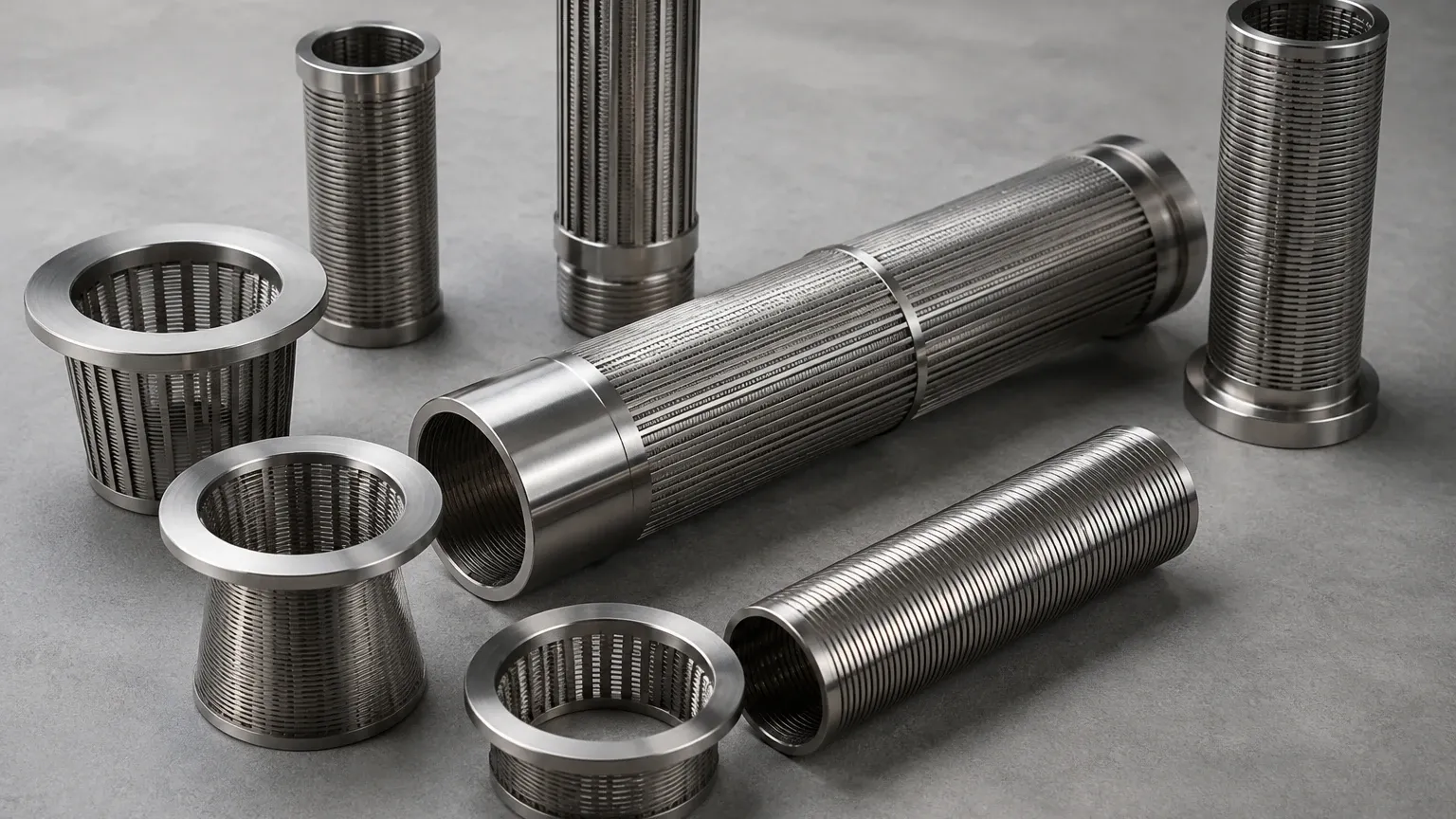
Wedge Wire Screens are characterized by their unique V-shaped profile wires. Unlike traditional woven wire mesh, wedge wire is constructed by resistance-welding these V-shaped wires onto support rods at consistent intervals. This design creates a continuous slot that widens inwardly, which is the primary reason for its non-clogging performance.
In the context of the Indian industrial market, these screens are often used in high-stress environments. The self-cleaning property of the V-shaped wire is particularly valuable in applications involving heavy solids loading or viscous fluids. Because the contact point between the particle and the screen is minimal, particles that pass through the initial opening are unlikely to become lodged further down the slot. This mechanical advantage reduces the frequency of backwashing and manual cleaning, which is a major consideration for facilities looking to optimize their Total Cost of Ownership (TCO).
Key Technical Parameters for Evaluating Wedge Wire Screen Manufacturers in India
When evaluating wedge wire screen manufacturers in India, engineers must look beyond the surface level of "available sizes." The performance of a wedge wire screen is dictated by the precision of its construction. Small deviations in slot width can lead to significant bypass of contaminants or premature blinding of the screen.
Slot Width Precision
Slot openings in wedge wire can range from as small as 20 microns to several millimeters. A reputable manufacturer must demonstrate the ability to maintain tight tolerances across the entire surface of the screen. In high-precision applications like catalyst recovery or fine mineral separation, even a 5% variance in slot width can compromise the integrity of the process.
Welding Integrity
The strength of a wedge wire screen comes from the fusion between the profile wire and the support rod. In India, manufacturing methods vary from manual assembly to fully automated CNC resistance welding. Automated processes generally yield more consistent weld points, which are crucial for screens subjected to high pressure or mechanical vibration, such as those used in vibrating sifters or centrifugal dryers.
Open Area Calculations
The efficiency of a filtration system is often limited by its open area. Engineers must work with manufacturers who can accurately calculate the percentage of open area based on the wire width and slot size. A higher open area allows for higher flow rates and lower pressure drops, but it must be balanced against the mechanical strength required for the specific application.
Material Selection and Durability Standards
The Indian industrial environment often involves corrosive fluids, high temperatures, and abrasive materials. Therefore, material selection is a non-negotiable aspect of the procurement process. Most wedge wire screen manufacturers in India offer standard grades of stainless steel, but high-performance applications require more specialized alloys.
* SS 304/304L: The standard for general-purpose applications where moderate corrosion resistance is required.
* SS 316/316L: Preferred for chemical processing and marine environments due to its superior resistance to pitting and crevice corrosion.
* Duplex Stainless Steels: Used in highly aggressive environments, such as desalination plants or high-pressure oil and gas filtration, where both high strength and extreme corrosion resistance are necessary.
* Specialty Alloys: For extreme temperatures or specific chemical compatibility, materials like Monel or Hastelloy may be required.
When sourcing from wedge wire screen manufacturers in India, it is imperative to request material test reports (MTRs) to verify the chemical composition of the steel. Lower-quality alloys may lead to premature stress corrosion cracking, especially in the heat-affected zones near the welds.
Common Applications Across Indian Industries
The diversity of the Indian economy means that wedge wire screens are utilized in a vast array of configurations. Understanding these applications helps in specifying the right screen design.
Sugar Industry
India is one of the world's largest sugar producers. Wedge wire screens are used extensively in centrifugal baskets and DSM (Dutch State Mines) screens for juice screening. The high abrasive nature of sugar cane fibers requires screens with exceptional wear resistance and precise slotting to maximize juice recovery.
Water and Wastewater Treatment
From intake screens in rivers to fine screens in municipal treatment plants, wedge wire is the preferred medium for solids-liquid separation. In these applications, the durability of the screen ensures that the system can handle seasonal variations in debris load without failure.
Mining and Mineral Processing
In the mining sector, wedge wire is used for dewatering, sizing, and media recovery. The screens must withstand heavy impact and constant abrasion. Manufacturers catering to this sector often provide reinforced support structures to prevent mechanical deformation under heavy loads.
Food and Beverage
Hygiene is paramount in food processing. Stainless steel wedge wire screens provide a smooth, easy-to-clean surface that meets stringent sanitary standards. They are used in everything from brewery lauter tuns to vegetable washing systems.
Engineering Challenges and Customization Options
One of the main reasons engineers seek out specialized wedge wire screen manufacturers in India is the need for customization. Off-the-shelf solutions rarely meet the specific hydraulic or mechanical requirements of a complex industrial system.
Direction of Flow
Depending on the equipment design, the flow can be from the inside out (FOTI) or from the outside in (FITO). The orientation of the V-wire (whether the flat side or the point is facing the flow) must be correctly engineered to ensure the self-cleaning property is utilized. For example, in an internally fed rotary screen, the V-wire must be positioned so that the slot widens toward the outside of the drum.
Support Structures and Reinforcements
For large-scale installations, such as intake screens or large flat panels, the internal pressure or the weight of the filtered cake can cause the screen to bow or collapse. Manufacturers should provide engineering support to design integrated frames, stiffeners, and support grids that maintain the screen's geometry without significantly obstructing the flow path.
Surface Treatments
To further enhance performance, various surface treatments can be applied. Electropolishing is common in the pharmaceutical and food industries to remove surface imperfections and improve corrosion resistance. Hard chrome plating or ceramic coatings may be used in mining to extend the life of screens handling highly abrasive slurries.
Procurement Checklist: What to Confirm Before Ordering
Before finalizing a contract with any wedge wire screen manufacturers in India, technical teams should conduct a thorough audit of the supplier’s capabilities. Below is a checklist of critical factors to confirm:
1. Manufacturing Technology: Does the supplier use automated resistance welding? This is a key indicator of slot consistency and weld strength.
2. Quality Management Systems: Is the manufacturer ISO 9001 certified? Do they have in-house testing facilities for slot measurement and pressure testing?
3. Material Traceability: Can the supplier provide heat numbers and mill certificates for all stainless steel used in production?
4. Design Support: Can the manufacturer provide CAD drawings and flow calculations? A supplier that acts as an engineering partner is far more valuable than a simple component fabricator.
5. Reference Cases: Does the manufacturer have a proven track record in your specific industry? Ask for case studies or references from similar applications.
6. Lead Times and Logistics: Given the global nature of supply chains, understand the lead times for custom fabrications and the manufacturer’s experience with international shipping if the project is located outside of India.
The Global Perspective: Why Precision Matters
While there are many wedge wire screen manufacturers in India, the global market for high-precision filtration is demanding. Companies like Kaifil emphasize that the value of a wedge wire screen is not found in its purchase price, but in its performance over time. A screen that lasts 20% longer or provides 5% better filtration efficiency can save a facility millions in energy costs and lost production.
Customization is the cornerstone of effective filtration. Whether you are looking for a standard cylinder or a complex, multi-stage filtration assembly, the engineering behind the Wedge Wire Screens determines the success of the entire process. By focusing on technical specifications, material integrity, and application-specific design, engineers can ensure they select a manufacturing partner capable of delivering reliable, high-performance solutions.
In conclusion, sourcing from wedge wire screen manufacturers in India offers a range of options, but the burden of technical due diligence remains with the buyer. By adhering to strict engineering standards and prioritizing quality over initial cost, industrial operators can secure filtration components that stand up to the rigors of modern manufacturing and processing environments.
